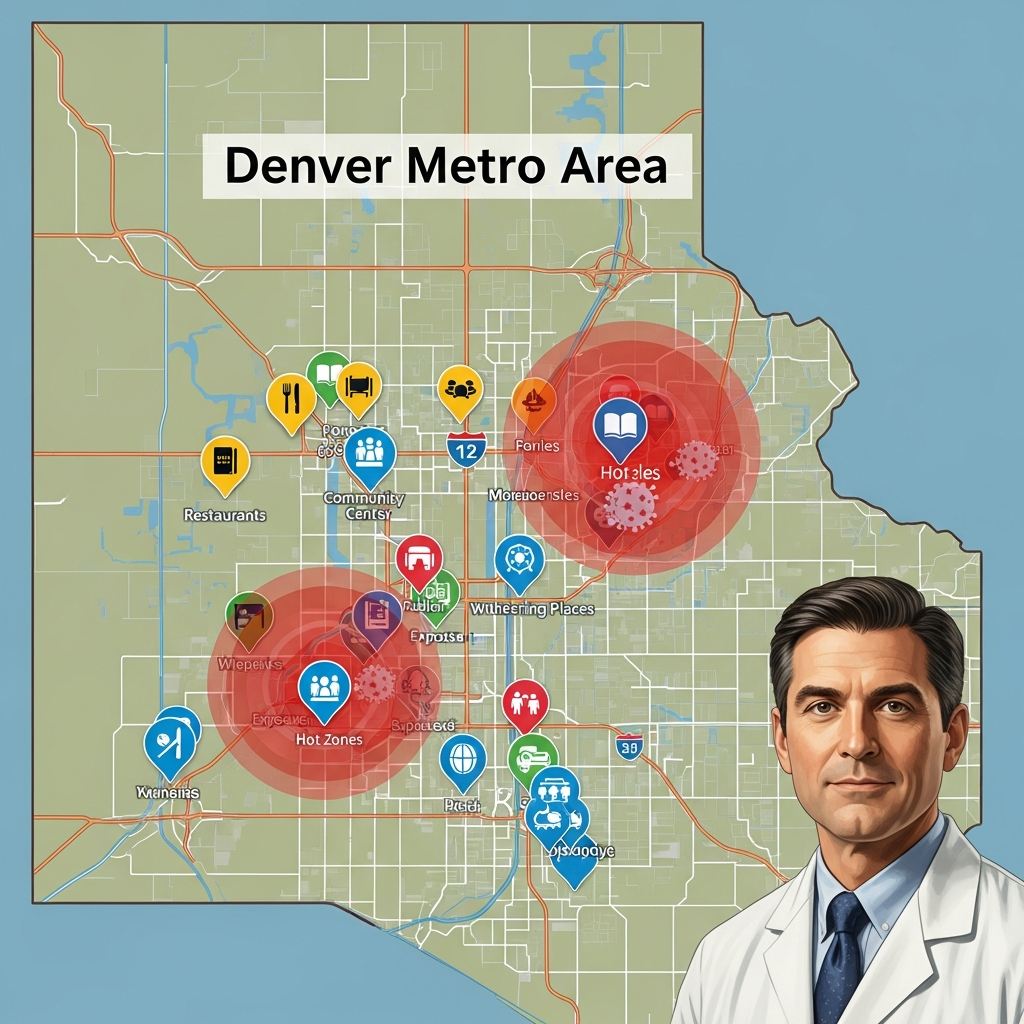
Colorado faces its first major measles outbreak of 2026, prompting an urgent public health alert. Multiple potential exposure locations, including schools, restaurants, and community centers across the Denver metro area, have been identified. Health officials are calling for vigilance, especially among unvaccinated individuals, as the highly contagious virus spreads. This comprehensive guide details the affected areas, critical measles symptoms, and essential steps to protect yourself and your community during this Colorado measles outbreak.
Colorado Confronts Growing Measles Threat in 2026
The Colorado Department of Public Health and Environment (CDPHE) has confirmed a significant measles outbreak centered in Broomfield. Three initial cases, all linked to students at Broomfield High School, tested positive for the virus. Importantly, all infected individuals were unvaccinated against measles, mumps, and rubella (MMR). This cluster has officially been declared an outbreak, meeting the U.S. Centers for Disease Control and Prevention’s (CDC) definition of three or more related cases.
Colorado has now recorded four measles cases in 2026, a worrying start to the year. This follows a concerning trend from 2025, which saw 36 cases – the highest total in decades for the state. Previously, annual figures typically ranged from zero to just two cases. This local situation reflects a broader national resurgence, with nearly 1,000 measles cases reported across the U.S. in 2026 so far. Experts attribute this rise primarily to declining vaccination rates.
Understanding Measles: Symptoms, Transmission, and Contagious Periods
Measles is a highly contagious respiratory virus. It spreads easily through the air when an infected person coughs or sneezes. The virus can remain airborne in a room for up to two hours after the infected person has left. This means many people can be exposed without direct contact.
Initial measles symptoms can take up to three weeks (21 days) to appear after exposure. These early signs are often non-specific, making diagnosis challenging. Watch for:
High fever
Cough
Runny nose
Red, watery eyes
A characteristic measles rash typically emerges about four days after these initial symptoms, starting at the hairline and spreading downwards across the face and body. A crucial aspect of measles transmission is its contagious window. An infected person can spread the virus for four days before the rash appears and four days after it develops. This lengthy contagious period, often before symptoms are clear, makes containing outbreaks particularly difficult.
Urgent Public Health Alert: Confirmed Exposure Locations
The CDPHE has released a detailed list of potential public exposure sites across Broomfield, Lafayette, Louisville, and Westminster. If you were at any of these locations during the specified dates and times, health officials urge you to monitor closely for symptoms.
Broomfield Exposure Sites:
Broomfield Heights Middle School (1555 Daphne St.):
February 17-19, 8:30 a.m. – 6 p.m. (Monitor symptoms through March 12)
Broomfield High School (1 Eagle Way):
February 19-20, 8 a.m. – 6 p.m. (Monitor symptoms through March 13)
February 23-27, 8 a.m. – 6 p.m. (Monitor symptoms through March 20)
King Soopers (1150 US-287):
February 19, 1-5 p.m. (Monitor symptoms through March 12)
February 21, 9 a.m. – 1 p.m. (Monitor symptoms through March 14)
Broomfield Community Center (280 Spader Way):
February 19, 7:35-10:30 p.m. (Monitor symptoms through March 12)
Advanced Urgent Care (3950 W. 144th Ave.):
February 24, 1:30-4:30 p.m. (Monitor symptoms through March 17)
UCHealth Broomfield Hospital Emergency Department (11820 Destination Drive):
February 24, 2:45-6 p.m. (Monitor symptoms through March 17)
Chick-fil-A (4260 W. 121st Ave.):
February 25, 11:30 a.m. – 2 p.m. (Monitor symptoms through March 18)
Westminster Exposure Sites:
Petsmart Walnut Creek (10460 Town Center Dr.):
February 22, 7:30-10 a.m. (Monitor symptoms through March 15)
Chipotle (5160 W. 120th Ave.):
February 26, 11:30 a.m. – 2 p.m. (Monitor symptoms through March 19)
Lafayette Exposure Sites:
Efrains Mexican Restaurant (101 E. Cleveland St.):
February 22, 5-10 p.m. (Monitor symptoms through March 15)
Louisville Exposure Sites:
CU Medicine Family Medicine Clinic (361 Centennial Parkway):
February 25, 10:45 a.m. – 2:30 p.m. (Monitor symptoms through March 18)
What to Do If You Suspect Measles Exposure or Symptoms
Public health officials provide clear, actionable advice for anyone concerned about measles:
- Monitor for Symptoms: Watch for the initial signs (fever, cough, runny nose, red eyes) for 21 days after your last potential exposure.
- Call Ahead Before Medical Care: If you develop symptoms, do NOT go directly to an emergency room or doctor’s office. Instead, call your healthcare provider or local health department first. This critical step helps prevent further spread of the virus within healthcare settings.
- Emergency Contact: For guidance, you can contact the CDPHE directly at 720-653-3369.
- Post-Exposure Protection (Unvaccinated Individuals):
MMR Vaccine: If you are unvaccinated and potentially exposed, receiving the MMR vaccine within approximately 72 hours (3 days) of exposure can offer partial protection or prevent the illness entirely.
Immunoglobulin (IG): In some cases, immunoglobulin (IG) administered within six days of exposure can reduce the severity or prevent the disease. Consult your doctor immediately.
Unvaccinated or immunocompromised individuals should also avoid public gatherings and high-risk settings during the monitoring period.
The Power of Vaccination: Protecting Yourself and Your Community
Vaccination remains the most effective defense against measles. The measles vaccine, typically administered as part of the MMR (measles, mumps, rubella) vaccine in two doses, offers approximately 97% protection against infection.
The current Colorado measles outbreak highlights the critical importance of maintaining high community vaccination rates. While Boulder Valley School District, which includes Broomfield High School, boasts a 95.7% MMR vaccination rate (exceeding the 95% threshold often considered necessary for herd immunity), even small pockets of unvaccinated individuals can fuel an outbreak. Almost all confirmed measles cases (97%) in recent outbreaks occurred in individuals who were either unvaccinated or whose vaccination status was unknown.
Measles is not a benign childhood illness. It can lead to severe complications, especially in unvaccinated individuals. These include:
Ear infections
Seizures
Pneumonia
Immune amnesia (a temporary weakening of the immune system)
Brain damage
In rare cases, death
The impact of this outbreak on the Broomfield community is evident. As of early March, 26 Broomfield High School students were excluded from attending classes due to unverified vaccination statuses. School officials strongly recommend MMR vaccination to mitigate the risk and reduce exclusion periods.
Broader Context and Ongoing Vigilance
This Colorado measles outbreak underscores a worrying trend of measles resurgence across the United States. Historically, measles cases plummeted after the vaccine’s introduction in 1963. However, lower vaccination rates in recent years have led to the highest number of cases in over 30 years.
Health experts continuously emphasize that getting vaccinated is the best way to protect yourself, your family, and your community from this preventable, yet potentially dangerous, disease. If you were vaccinated before 1968, consult your healthcare provider about a booster shot, as earlier vaccine formulations were less effective. Vigilance and prompt action are key to containing this outbreak and safeguarding public health.
Frequently Asked Questions
What are the main symptoms of measles and how long do they take to appear after exposure?
Measles symptoms typically begin with a high fever, cough, runny nose, and red, watery eyes. These initial symptoms can be non-specific and may take up to 21 days (three weeks) to appear after exposure. A characteristic red, blotchy rash usually develops about four days after these initial symptoms, starting at the hairline and spreading downwards across the body. An individual is contagious for four days before and four days after the rash appears.
Where are the confirmed measles exposure sites in Colorado, and what should I do if I was there?
The CDPHE has identified eleven public exposure sites across Broomfield, Westminster, Lafayette, and Louisville. These include schools (Broomfield High, Broomfield Heights Middle), grocery stores (King Soopers), community centers, restaurants (Chick-fil-A, Chipotle, Efrains Mexican Restaurant), and healthcare facilities. A comprehensive list with specific dates and times is detailed within this article. If you were present at any of these locations during the specified times, you should monitor for symptoms for 21 days from your last exposure. If symptoms develop, call your healthcare provider or local health department immediately before seeking in-person medical care to prevent further spread.
What immediate steps should unvaccinated individuals take if they suspect measles exposure?
Unvaccinated individuals who suspect they have been exposed to measles should act quickly. The measles, mumps, and rubella (MMR) vaccine can still offer partial protection if administered within approximately 72 hours (3 days) of potential exposure. In some situations, an immunoglobulin (IG) shot, given within six days of exposure, can also reduce the severity or prevent the illness. It is crucial to contact a healthcare provider or the CDPHE at 720-653-3369 without delay for personalized advice and to ensure appropriate protective measures are taken. Avoid public places to prevent potential transmission.