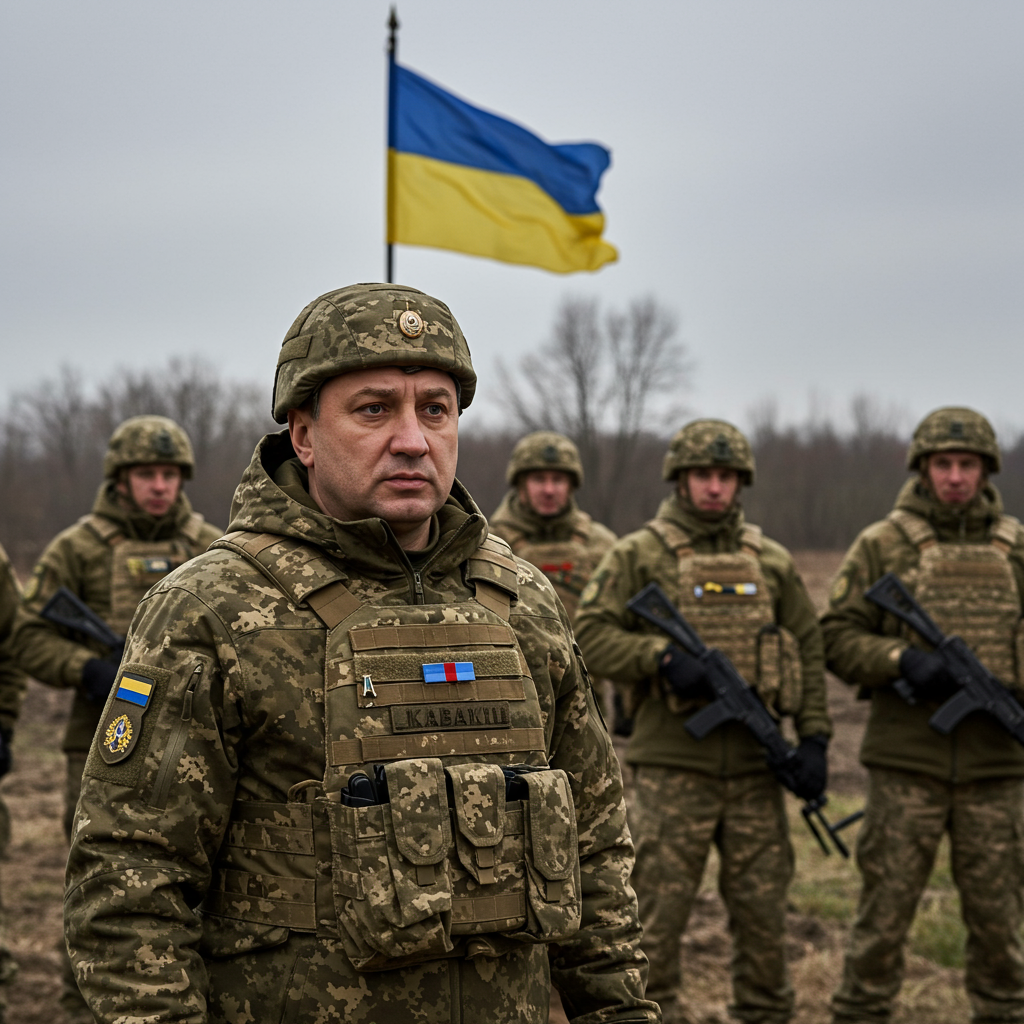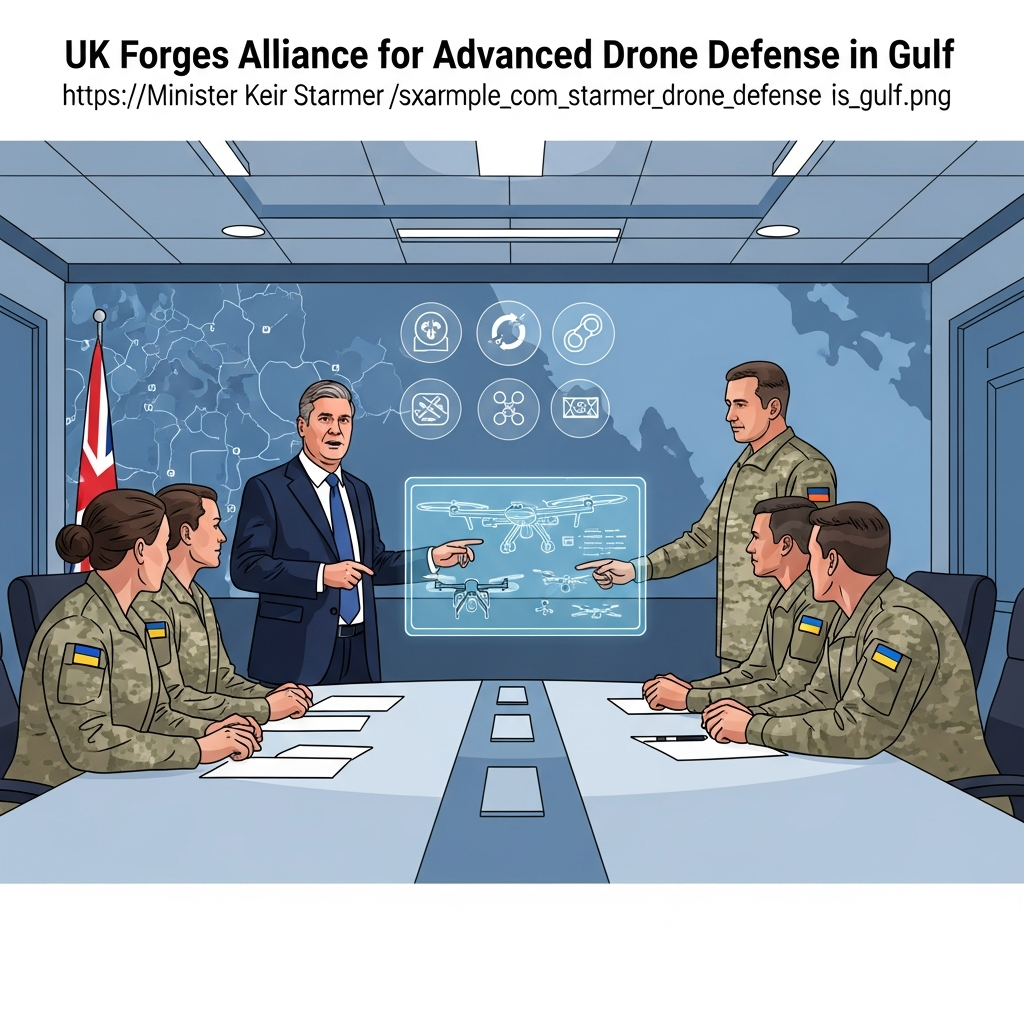
The geopolitical landscape surrounding the Ukraine conflict is rapidly evolving, with significant developments impacting global security. UK Prime Minister Keir Starmer recently announced a pivotal initiative: Ukrainian specialists will collaborate with British counterparts to enhance drone defense capabilities for Gulf allies. This move comes as regional tensions escalate following US-Israeli actions against Iran, underscoring a commitment to defensive measures without direct military engagement. Simultaneously, Russia’s aggression against Ukraine reached new heights in February 2026, alongside crucial diplomatic efforts and international actions against sanctions circumvention.
UK Fortifies Gulf Drone Defense with Ukrainian Expertise
In a strategic move to bolster regional stability, UK Prime Minister Keir Starmer confirmed that Ukrainian experts would provide critical guidance on intercepting Iranian-designed drones targeting Gulf allies. This announcement, made on Sunday night, highlights a collaborative effort aimed at enhancing Gulf security in response to escalating tensions. Starmer clarified the UK’s position, stating, “We are not joining these strikes, but we will continue with our defensive actions in the region.” The initiative pairs seasoned Ukrainian professionals, possessing invaluable combat experience against sophisticated drone attacks, with British specialists to support Gulf partners. Ukraine has yet to issue an official comment regarding this newly forged alliance.
A Proactive Stance in a Volatile Region
The decision to integrate Ukrainian expertise in drone defense stems directly from the ongoing Ukraine war, where Ukrainian forces have developed extensive countermeasures against Iranian-supplied Shahed-type drones utilized by Russia. This direct experience offers a unique advantage for Gulf nations facing similar threats. The move is a defensive posture, aiming to mitigate risks in a volatile Middle East. It underscores how lessons learned in one conflict zone are being rapidly applied to address emerging threats in another, fostering international cooperation for collective security. This collaboration effectively leverages Ukraine’s battlefield innovation to address broader geopolitical tensions.
Russia’s Intensified Aerial Assaults on Ukraine
February 2026 marked an alarming escalation in Russian aggression against Ukraine, characterized by an unprecedented volume of missile and drone attacks. Analysis by Agence France-Presse (AFP), drawing on daily figures from the Ukrainian air force, revealed that Russia launched more missiles in February than in any other month since early 2023. A staggering 288 missiles were fired at Ukraine, representing a significant 113% increase from January’s 135 missiles. Furthermore, Russia deployed 5,059 long-range drones during its night-time assaults on Ukrainian cities and towns, a 13% rise compared to the previous month. These intensified attacks primarily targeted Ukraine’s vital energy infrastructure, aiming to inflict widespread disruption and suffering.
Energy Infrastructure Under Relentless Attack
The deliberate targeting of Ukraine’s energy infrastructure has had devastating consequences. Cities like Kremenchuk, a central industrial hub, experienced widespread power and water outages following combined air strikes. Beyond immediate utility disruptions, critical infrastructure such as the protective shield over the Chornobyl disaster nuclear reactor sustained damage from a drone strike in February, as reported by the International Atomic Energy Agency (IAEA). The €1.5bn “new safe confinement” structure, completed in 2019, now has a hole, raising significant environmental and safety concerns about radiation containment. These attacks on crucial infrastructure underscore Russia’s strategy to undermine Ukrainian resilience and destabilize the nation.
Zelenskyy’s Commentary on Iran and Global Diplomacy
Ukrainian President Volodymyr Zelenskyy weighed in on the unfolding situation with Iran, suggesting that the changes brought about by US and Israeli strikes should be “used properly” to benefit the Iranian populace. In his nightly video address, Zelenskyy asserted that Iran had “predetermined the way it is treated” by consistently supplying attack drones to Russia for its four-year conflict in Ukraine. He also accused Iran of “fomenting wars in the region.” Zelenskyy emphasized the importance of seizing this opportunity for change, acknowledging the Iranian people’s prolonged endurance against their own regime. He revealed that Moscow has deployed over 57,000 Iranian-designed Shahed-type drones against Ukraine since the conflict began, highlighting the scale of Iran’s involvement.
Ukraine’s Call for Strategic Global Engagement
Zelenskyy’s remarks highlight a broader Ukrainian plea for international actors to hold nations accountable for their contributions to global instability. By linking Iran’s internal dynamics to its external actions, particularly its support for Russian aggression, Ukraine seeks to frame the conflict within a wider struggle for international norms and justice. This perspective encourages world leaders to consider the cascading effects of actions in one region on global geopolitical tensions and security frameworks, advocating for a coordinated approach to challenge regimes that fuel conflict.
Cracking Down on Russia’s Shadow Fleet
In a significant victory against sanctions evasion, Belgian special forces, supported by French helicopters, successfully seized an oil tanker believed to be part of Russia’s so-called “shadow fleet.” The clandestine operation occurred in the North Sea on Saturday night, intercepting the tanker, identified as the Ethera. Prosecutors confirmed the vessel was falsely flying the flag of Guinea and was thought to be returning to Russia when it was seized within Belgium’s exclusive economic zone. Ukrainian President Zelenskyy swiftly praised Belgium’s decisive action, describing it as a “strong action against Moscow’s floating purse.” He noted that the Ethera had long been under US, EU, and UK sanctions for illegally transporting Russian oil using deceptive practices and forged documents.
International Efforts Against Sanctions Evasion
The seizure of the Ethera is part of ongoing international efforts to disrupt Russia’s attempts to circumvent Western sanctions imposed due to the Ukraine war. These “shadow fleets” often operate with false flags, forged documents, and lax safety standards, posing both economic and environmental risks. Other tankers, such as the Kairos and Virat, previously attacked in the Black Sea and identified as part of this illicit network, underscore the pervasive nature of this challenge. Such decisive actions by nations like Belgium are crucial for enforcing international law and ensuring the effectiveness of economic sanctions aimed at curbing Russian aggression.
Complex Diplomatic Maneuvers and Elusive Peace
The diplomatic landscape surrounding the Ukraine conflict remains incredibly complex, with numerous attempts at peace negotiations yielding mixed results. Ukrainian President Volodymyr Zelenskyy characterized recent discussions with US representatives, including Donald Trump’s special envoy Steve Witkoff and son-in-law Jared Kushner, as “constructive, although not easy.” These talks, while agreeing on next steps, did not produce an immediate breakthrough. Zelenskyy is now shifting his focus to European allies, with crucial meetings scheduled in London with UK Prime Minister Keir Starmer, French President Emmanuel Macron, and German leader Friedrich Merz to discuss pathways to a lasting peace.
The prospect of a US-proposed peace plan, championed by Donald Trump, has generated considerable international debate. European leaders, including Macron, expressed strong reservations, characterizing Trump’s initiative as a “one-sided plan” that lacks “broader consultation” to ensure genuine security for Ukrainians and Europeans. The Reuters draft of this proposal reportedly mandates Ukraine to concede territory, accept military limitations, and abandon its ambition to join NATO. Conversely, Russian President Vladimir Putin welcomed the plan as an “encouraging change of policy,” aligning with Russian strategic thinking and dismissing Western hopes for a strategic defeat on the battlefield. Trump himself has pressured Zelenskyy to accept the deal, while Zelenskyy firmly insists that “real” or “dignified” peace must be founded on “guaranteed security and justice,” refusing compromises that would strip Ukraine of its “freedom, dignity and justice.” Even US Vice President JD Vance emphasized that while a peace plan should uphold Ukrainian sovereignty, it’s a “fantasy” that more aid alone guarantees victory.
Europe’s Unified Stance on Ukraine’s Sovereignty
Amidst these intricate negotiations, European leaders, including EU foreign policy chief Kaja Kallas, have stressed the vital importance of the war’s conclusion, viewing Russian aggression as an “existential threat to Europe.” They collectively affirm that any agreement must be “genuinely fair” and respect Ukraine’s “red lines,” firmly rejecting the notion that Russia has a legal right to concessions from the country it invaded. Hungarian Prime Minister Viktor Orbán, however, maintains a divergent stance, planning a business delegation to Russia in anticipation of the war’s end and envisioning a post-war economic landscape where the US reintegrates Russia. This highlights the divisions within Europe regarding long-term strategies for peace and economic reintegration.
Escalation Beyond Borders: Attacks on Russian Soil
The Ukraine war continues to broaden its scope, with Ukrainian drone attacks increasingly targeting Russian territory. Local authorities in Novorossiysk, a key Russian Black Sea city, reported injuries to two women and a man from falling drone debris. The Russian defense ministry claimed to have intercepted a significant 172 Ukrainian drones overnight across Russian regions, the Black Sea, and the Azov Sea, including 67 over the Black Sea and 66 over the Krasnodar region, where Novorossiysk is located. The intensity of these attacks even led to the postponement of a Russian Premier League football match in Sochi due to multiple missile alerts, demonstrating the direct impact on civilian life within Russia. Furthermore, Bulgaria lodged a diplomatic protest after the crippled tanker Kairos, previously hit in a Ukrainian drone attack and identified as part of the “shadow fleet,” was towed into its waters by a Turkish ship.
The Widening Scope of the Conflict
These escalating attacks on Russian soil signify Ukraine’s expanding defensive and retaliatory capabilities. While Russia claims widespread interceptions, the consistent strikes demonstrate Ukraine’s ability to project force beyond its borders, adding another layer of complexity to the Ukraine conflict. The incidents, coupled with diplomatic spats over maritime operations, underscore the widening geographical and operational scope of the conflict and its intricate web of geopolitical tensions.
Frequently Asked Questions
What is the UK’s new drone defense initiative in the Gulf region?
The UK, under Prime Minister Keir Starmer, has announced a collaborative initiative where Ukrainian experts will work with British specialists to help Gulf allies intercept Iranian-designed drones. This partnership aims to enhance drone defense capabilities and Gulf security amidst heightened regional tensions following US-Israeli strikes on Iran. The UK clarifies it is a defensive action, leveraging Ukraine’s extensive battlefield experience against similar drone threats.
How has Russia’s military strategy in Ukraine evolved in early 2026?
Russia’s military strategy has seen a significant escalation in aerial assaults. In February 2026, Russia launched a record 288 missiles and 5,059 long-range drones at Ukraine, primarily targeting energy infrastructure. This represents a substantial increase compared to previous months, indicating a renewed and intensified campaign to disrupt Ukrainian utilities and inflict widespread damage. The attacks also extended to critical sites like the Chornobyl nuclear shield.
What are the key obstacles to a lasting peace agreement for Ukraine?
Achieving a lasting peace agreement for Ukraine faces numerous obstacles. A central challenge is the divergence over proposed peace plans, particularly Donald Trump’s initiative which suggests territorial concessions, military limitations, and abandoning NATO ambitions for Ukraine. European leaders express concern that such terms would leave Ukraine vulnerable, while Ukrainian President Zelenskyy insists on “guaranteed security and justice,” refusing to compromise on “freedom, dignity, and justice.” Russia’s “maximalist territorial and security demands” further complicate negotiations, making genuine mutual agreement elusive.
Conclusion
The Ukraine war continues to shape global dynamics, with multifaceted developments ranging from strategic defense collaborations in the Gulf to intensified aerial assaults and complex diplomatic maneuvers. The UK’s initiative to leverage Ukrainian drone defense expertise in the Middle East highlights a pragmatic approach to Gulf security in an increasingly interconnected world. Simultaneously, Russia’s escalating aggression against Ukraine, particularly its targeting of energy infrastructure, underscores the brutal realities of the conflict. Amidst these challenges, international efforts to enforce sanctions and pursue diplomatic resolutions face significant hurdles, with the pursuit of a just and lasting peace for Ukraine remaining a paramount, yet elusive, global objective. The continuous evolution of geopolitical tensions demands vigilance and adaptive strategies from all involved parties.