The Middle East is gripped by intense conflict as US President Donald Trump issues a stark warning of more American casualties following the deaths of three US service members. This escalation, stemming from joint US-Israeli strikes on Iran and the killing of its Supreme Leader, Ayatollah Ali Khamenei, has plunged the region into profound instability. With Iran-backed Hezbollah actively engaging and missile barrages impacting multiple nations, the unfolding crisis triggers global shockwaves, disrupting oil markets, air travel, and prompting urgent international concern.
Unprecedented Strikes and Trump’s Dire Warning
The current surge in hostilities began with a massive, coordinated military operation, dubbed “Operation Epic Fury” by the Pentagon and “Roaring Lion” by Israel, targeting Iranian assets. This sweeping offensive, launched early Saturday, March 1, 2026, saw widespread explosions in Tehran and across Iran. Central to these strikes was the killing of Supreme Leader Ayatollah Ali Khamenei, ending his 36-year rule and igniting immediate national mourning in Iran. Top Iranian security officials, including the defense minister and the commander of the Revolutionary Guard Corps, were also reportedly killed in these precision operations.
Trump’s Stark Warnings and Strategic Claims
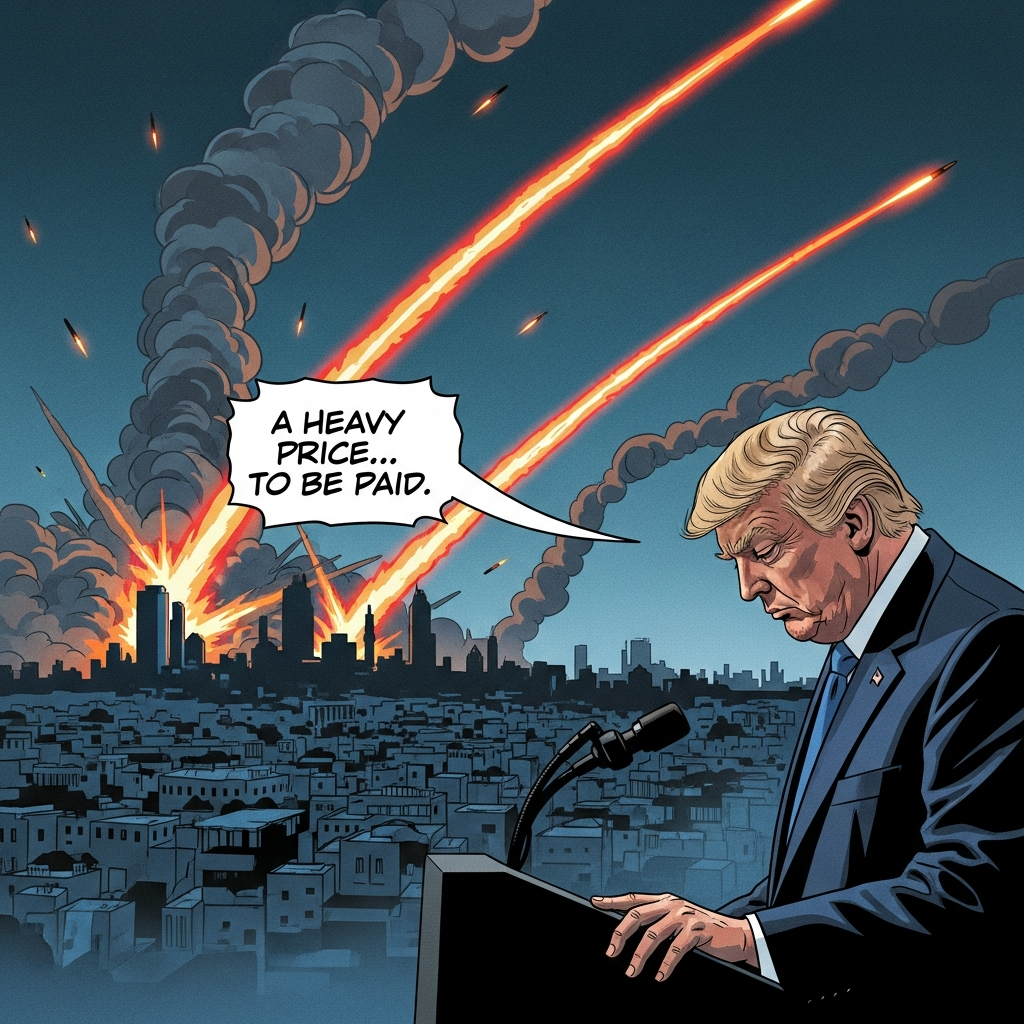
President Trump confirmed the deaths of three US service members in the conflict, expressing grief but vowing to avenge their sacrifices. He explicitly warned the American public that “sadly, there will likely be more [deaths] before it ends,” acknowledging the potential for further casualties in the intensifying US-Iran war. Trump estimated the conflict could last “four weeks or so.” Posting on Truth Social, he asserted that the US-Israeli offensive was “one of the largest, most complex, most overwhelming military offensives the world has ever seen,” claiming hundreds of targets hit, including Revolutionary Guard facilities and naval assets.
Trump justified the strikes by citing “imminent threats from the Iranian regime,” which he described as “a vicious group.” He also controversially claimed Iran was attempting to rebuild its nuclear program, a statement widely contradicted by international nuclear experts. The President’s objective, he stated, was to defend American lives, destroy Iran’s missile capabilities, and facilitate the toppling of the Iranian regime. He issued a blunt warning to Iran against retaliation, threatening an unprecedented force, and called on the Iranian people to “take back your country.”
Regional Retaliation and Expanding Fronts
In response to the US-Israeli actions, Iran launched its own wave of missile and drone attacks. Air raid sirens blared across Israel, with Tel Aviv and Jerusalem targeted, resulting in one death and 121 injuries in the initial 24 hours of the conflict. The reach of the strikes quickly expanded across the region, with Iran-backed militant group Hezbollah joining the fray. Hezbollah claimed responsibility for firing projectiles into Israel, prompting Israel’s military to intensify its strikes on Lebanon, including its capital, Beirut, and reinforce troop deployment along the border.
Mounting Casualties Across the Region
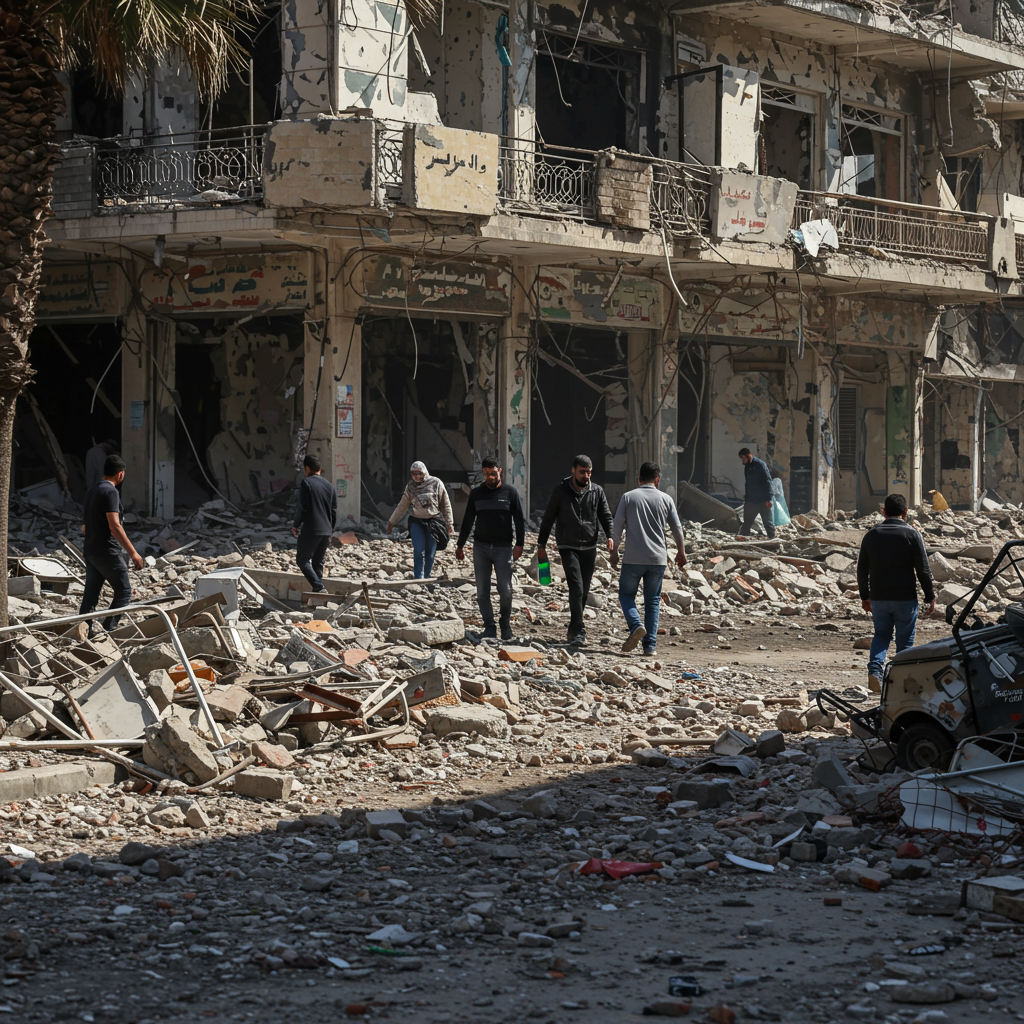
The human cost of this escalating conflict is rapidly mounting. Beyond the three US service members killed in “Operation Epic Fury,” reports indicate significant casualties elsewhere. In Israel, a missile strike in Beit Shemesh killed nine people. Iranian officials, meanwhile, claimed at least 153 people, including children at a school, were killed in a strike they attributed to the US and Israel—a claim the US is investigating and Israel denies. The United Arab Emirates reported three fatalities from Iranian attacks since Saturday, while Kuwait confirmed one death. Dubai also experienced visible smoke from its airport and port, with debris from air defense systems causing injuries, and a US naval base in Bahrain and a residential area in Abu Dhabi sustained hits, resulting in one fatality in the UAE.
Global Ripples: Economic and Humanitarian Impacts
The escalating Middle East conflict has generated profound global ripples, impacting economies and humanitarian efforts far beyond its immediate borders. A major concern is the disruption of global oil supplies. Iran’s threats to choke off the Strait of Hormuz, a critical shipping route for crude from major producers like Saudi Arabia and Kuwait, have analysts warning of a significant global energy crisis. Such a closure would trigger sharp price increases and severely impact economies reliant on imported oil.
China’s Economic Stakes in the Conflict
Among the nations facing potential severe economic fallout, China stands out as a major loser. Both Venezuela and Iran supply a substantial portion of their crude oil to China, accounting for approximately 15% of China’s total oil imports. With Venezuelan President Nicolás Maduro having been seized by the US in January, and now the death of Iranian Supreme Leader Ali Khamenei, China’s strategic oil partners are severely compromised. Analysts emphasize that beyond higher prices, the physical supply disruption is critical, as China’s economy heavily relies on crude imports. Beijing has condemned the US-Israeli actions but has yet to comment on the potential economic consequences.
The war has also paralyzed air travel across a wide corridor of airspace over the Middle East. Major airports, including Dubai International and Abu Dhabi’s Zayed International, have sustained damage from Iranian strikes, leading to tens of thousands of flight cancellations and stranded travelers. Countries worldwide face immense challenges in evacuating their citizens from the region, with nations like Thailand, Pakistan, India, and Japan scrambling to devise repatriation strategies for their large populations of migrant workers and nationals living in Gulf states, Israel, and Jordan. The UAE has offered to cover accommodation costs for stranded travelers.
Political Fault Lines: International and Domestic Reactions
The military operations have sparked widespread international condemnation and a deeply divided reaction within the United States. UN Secretary-General António Guterres unequivocally condemned both the US-Israeli strikes and Iran’s retaliatory actions, warning of a “grave threat to international peace and security” and an uncontrollable “chain of events.” He called for peaceful dialogue and negotiations to settle the crisis. Israel, meanwhile, has closed its airspace, activated civil defense, and declared a 48-hour state of emergency.
Congressional Divide on War Powers
Domestically, President Trump’s unilateral initiation of major military strikes without congressional authorization has drawn significant backlash from US lawmakers. Many legislators, including Marine veteran Senator Ruben Gallego, invoked the heavy human and financial costs of previous Middle Eastern wars, arguing against young Americans paying the “ultimate price for regime change” without clear justification. Representative Thomas Massie labeled the strikes “acts of war unauthorized by Congress,” with lawmakers preparing to force votes on war powers resolutions aimed at restricting the administration’s ability to engage in military action against Iran.
While some congressional figures, such as Senate Majority Leader John Thune and Senator Lindsey Graham, lauded the strikes as “necessary” and a step towards “getting new leadership” in Iran, many Democrats and some Republicans expressed deep reservations. House Minority Leader Hakeem Jeffries cautioned against the US being drawn into “another failed, foreign forever war” in the Middle East, emphasizing the inevitable cost in American lives. The debate highlights a profound national struggle over presidential authority in initiating warfare and the lessons learned from past military interventions.
Immediate Aftermath and Iran’s Stance
In the immediate aftermath of the strikes, the situation remains fluid and highly volatile. Reports from Iranian state media indicated patients were evacuated from a hospital in northern Tehran after it was badly damaged in strikes, a claim the WHO is investigating. Iran’s state-affiliated Fars News Agency also released propaganda videos showcasing what it claimed were underground drone tunnels storing weapons used against US bases, a clear demonstration of its resolve.
Despite suggestions of intermediaries attempting to resume talks, Iran’s top national security official, Ali Larijani, firmly stated that Tehran “will not negotiate with the United States.” He accused President Trump of plunging the region into chaos and sacrificing American soldiers for Israel’s agenda. Iran’s Foreign Minister also condemned the US and Israel’s military operation as a “gross violation” of international law in a letter to the United Nations, asserting Iran’s inherent right to defend its sovereignty.
Frequently Asked Questions
What prompted the recent escalation in the US-Iran conflict?
The recent escalation was primarily triggered by a major joint US-Israeli military operation, codenamed “Operation Epic Fury,” which targeted various Iranian assets. This offensive notably resulted in the death of Iran’s Supreme Leader Ayatollah Ali Khamenei and other senior security officials. President Trump justified these strikes by citing “imminent threats” from Iran, leading to immediate retaliatory missile and drone attacks from Iran and its proxies, further intensifying the US-Iran war.
Which countries have reported missile strikes or disruptions due to the Middle East conflict?
Multiple countries have reported direct missile strikes or significant disruptions. Israel has faced barrages targeting cities like Tel Aviv and Jerusalem. Iran has reported widespread strikes within its borders, including a hospital in Tehran and civilian areas. The United Arab Emirates and Kuwait both reported fatalities from Iranian attacks, with Dubai and Abu Dhabi experiencing hits and air travel disruptions. Lebanon has also been targeted by Israeli strikes in retaliation for Hezbollah’s actions. Additionally, Jordan claimed to have downed numerous drones and ballistic missiles.
What are the key economic consequences of the escalating Iran conflict?
The escalating Iran conflict carries significant economic consequences, primarily impacting global energy markets and international travel. There’s a major threat to global oil supply due to potential disruptions or closure of the Strait of Hormuz, a crucial shipping route, which could trigger a global energy crisis and higher prices. China, heavily reliant on Iranian and Venezuelan oil, faces substantial economic vulnerability. Furthermore, widespread air travel paralysis has resulted from damaged airports in the Gulf, such as Dubai and Abu Dhabi, leading to thousands of flight cancellations and challenges for countries evacuating citizens.
The situation remains highly volatile, with both sides intensifying military actions and diplomatic tensions running high. The coming days will be critical in determining the trajectory of this deeply concerning and rapidly expanding conflict.