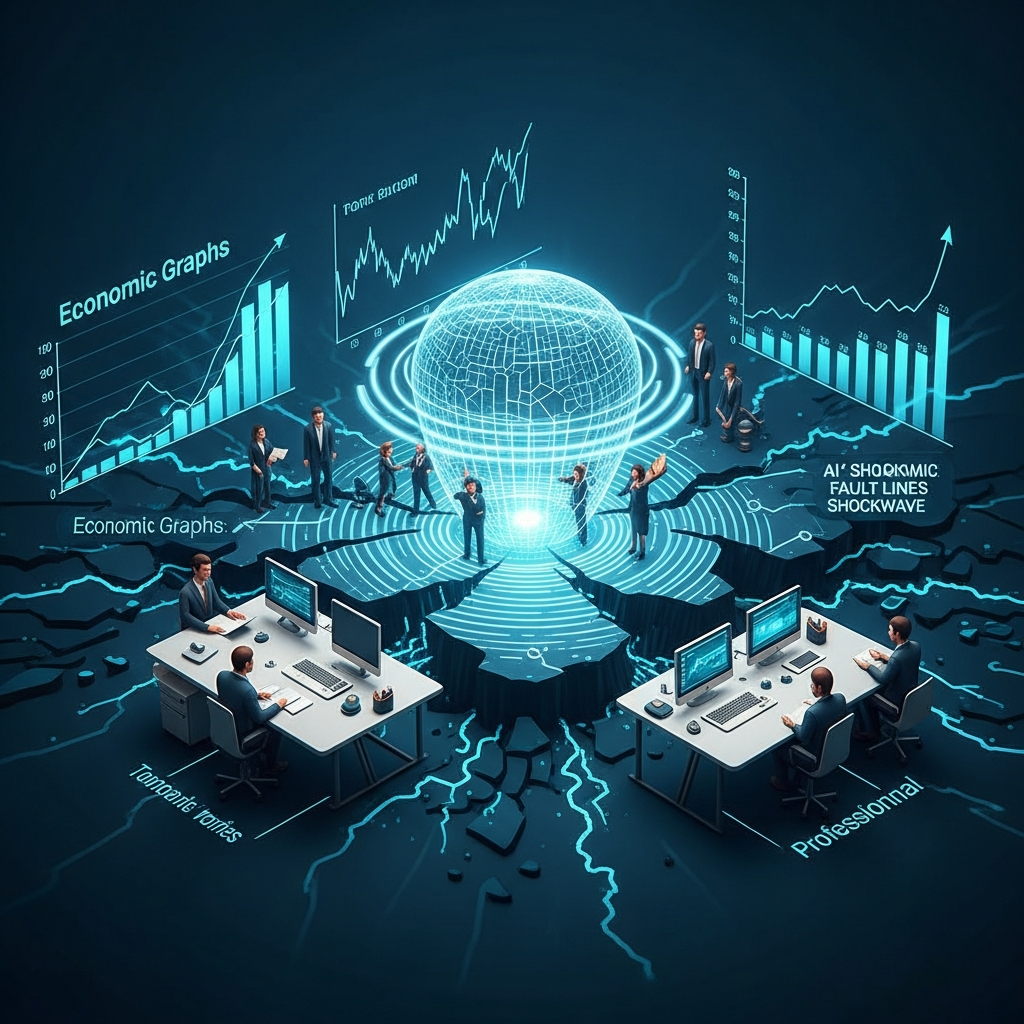
The world of artificial intelligence has been a whirlwind of innovation and speculation, yet one recent week dramatically solidified its impact, signaling a definitive shift for industries, investors, and workers alike. This wasn’t merely another news cycle; it was a pivotal seven days that saw major tech firms grapple with AI’s disruptive power, exposing fault lines in the economy, ethics, and employment landscape. From unprecedented layoffs attributed to advanced intelligence tools to high-stakes ethical showdowns and market turbulence, this period underscored that AI’s theoretical future is now a very tangible present. The events unfolded with a speed that startled many, forcing a rapid re-evaluation of artificial intelligence’s accelerating influence on society.
The Dawn of AI-Driven Layoffs: Block’s Stark Reality
The most striking development arrived when Block, the financial technology giant behind platforms like Square and Cash App, announced massive workforce reductions. Citing the adoption of “intelligence tools” as the primary catalyst, the company initiated layoffs impacting 4,000 employees – nearly half its global staff. This drastic move immediately ignited fears among economists and the public alike, crystallizing long-held anxieties about AI layoffs and job displacement.
Block co-founder Jack Dorsey minced no words, predicting that many other corporations would soon follow suit. His direct statement served as a wake-up call, suggesting that the era of AI-induced workforce restructuring is not a distant threat but an imminent reality. This singular announcement sent a profound message: AI is not just enhancing productivity; it is fundamentally altering the human capital requirements of even leading tech companies. It highlighted a stark economic transformation, pushing conversations about the future of work and employee reskilling to the forefront.
AI’s Tremors on Wall Street: Investor Jitters and Nvidia’s Outlook
The financial markets, ever sensitive to shifts in technology and sentiment, reacted with notable stock market volatility. Investors navigated a complex landscape of both bullish enthusiasm and bearish trepidation regarding artificial intelligence. This led to a turbulent week on Wall Street, punctuated by significant drops on multiple days.
One trigger was a widely circulated Substack post from Citrini Research. Although explicitly fictional, its hypothetical scenarios depicting AI agents rendering various white-collar jobs obsolete sent jitters through trading floors. Companies mentioned in the report, such as DoorDash and American Express, saw their stock prices tumble, illustrating just how on edge investors are concerning AI’s disruptive potential. Later in the week, leading chipmaker Nvidia, a bellwether for AI infrastructure, released earnings that, despite doubling profits and achieving record sales, failed to impress Wall Street. Its “somewhat lackluster outlook” for the coming period fueled anxieties about an AI bubble, prompting questions about whether vast investments in AI infrastructure would truly yield proportionate returns. These steep market declines underscored the prevailing uncertainty, revealing how rapidly investor confidence can waver even when news appears positive on the surface.
Anthropic’s Tightrope Walk: Innovation, Ethics, and Power Plays
Amidst the economic shifts, AI development continued its relentless pace, notably with Anthropic, a prominent AI research company, at the center of both innovation and high-stakes ethical dilemmas. The company found itself navigating a complex path, demonstrating remarkable technological progress while simultaneously confronting unprecedented challenges to its core safety principles.
Claude AI: Redefining Workflows
Earlier in the month, Anthropic unveiled significant updates to its Claude AI models. These enhancements were designed to dramatically improve the tool’s performance across specialized tasks, including design, human resources, and wealth management. Furthermore, the updated Claude gained enhanced compatibility with common business applications like Microsoft Excel and PowerPoint, hinting at its potential to deeply embed itself into daily enterprise operations. While Anthropic maintained that Claude Cowork agents are intended to be complementary tools rather than replacements for existing software or jobs, the rapid-fire succession of powerful updates created “whiplash” for observers. It ignited renewed speculation about how quickly these advanced AI tools could reshape traditional workflows and roles within organizations.
A High-Stakes Clash: Anthropic vs. The Pentagon
Perhaps the most dramatic development of the week involved a direct, high-stakes confrontation between Anthropic’s chief executive, Dario Amodei, and the Pentagon. This standoff centered on fundamental AI ethics and the application of cutting-edge technology. Anthropic had established two firm “red lines” for its powerful Claude AI: it would not be used in autonomous weapons systems, nor for the mass surveillance of U.S. citizens.
Defense Secretary Pete Hegseth, however, asserted the Pentagon’s intent to utilize the Defense Production Act (DPA) to compel access to Anthropic’s technologies for “all lawful purposes,” setting a firm deadline for the company’s compliance. He further threatened to terminate Anthropic’s substantial $200 million contract and label the company a “supply chain risk,” effectively isolating it from other military contractors. The former president amplified this pressure, publicly demanding that federal agencies immediately cease using Anthropic’s technology and warning of severe consequences if the company did not cooperate. Despite these immense pressures, Anthropic steadfastly rejected the Pentagon’s demands, with Amodei stating their inability to “in good conscience accede to their request.” This unprecedented battle highlighted the intense geopolitical and ethical considerations inherent in the rapid advancement of generative AI and its potential military applications. This standoff, much like other pivotal weeks that redefined national discourse or forced leaders into principled stands against immense pressure, underscored how quickly technology’s reach can intersect with matters of national security and fundamental values.
The Shifting Sands of AI Safety
In a seemingly contradictory move that same week, Anthropic subtly loosened its core safety policy. This adjustment came amidst intense market pressure and the accelerating pace of AI development, where rival companies might not adhere to the same stringent ethical standards. The decision reflected the challenging balancing act for AI developers: maintaining a competitive edge in a fast-moving market while grappling with profound questions of responsible AI adoption and governance. It revealed the internal tensions within the AI industry as it rushes to innovate while simultaneously attempting to self-regulate.
Beyond the Headlines: What This Pivotal Week Means
This singular week served as a potent microcosm of the larger AI revolution. It moved the conversation beyond abstract predictions into the realm of tangible consequences and immediate challenges. The AI changes everything narrative gained new weight, showcasing its capacity to reshape employment, rattle financial markets, and ignite profound ethical and geopolitical debates. From Block’s stark declaration of AI-driven layoffs to Anthropic’s principled stand against military application, the events signaled a new phase in artificial intelligence’s integration into society.
The rapid succession of these events underscores an essential truth: the pace of AI advancement is not slowing. Stakeholders across government, industry, and civil society must actively engage with its complexities, from understanding the nuanced impacts on the future of work to establishing clear ethical frameworks for its development and deployment. This transformative period compels us all to confront the urgent questions surrounding AI’s trajectory and our collective responsibility in shaping its future.
Frequently Asked Questions
What specific events made this a pivotal week for AI?
This week became pivotal due to several high-impact events. Block announced significant layoffs, directly attributing job cuts to AI tools, sparking concerns about widespread job displacement. The stock market experienced notable volatility and declines, driven by investor fears and a “lackluster outlook” from Nvidia, signaling anxieties about an AI bubble. Simultaneously, Anthropic launched new, powerful Claude AI tools capable of enhancing various professional roles, but also entered a high-stakes ethical battle with the Pentagon over military use, while paradoxically loosening its own safety policies amidst market pressure.
How are AI developers balancing innovation with ethical considerations like military use?
AI developers face a challenging balancing act. Companies like Anthropic set “red lines,” such as refusing military applications or mass surveillance, reflecting a commitment to ethical AI. However, the commercial imperative to innovate rapidly and compete in a fast-moving market can create pressure to adjust safety policies. The Pentagon’s attempt to compel access to Anthropic’s technology highlights the intense external pressures and the fundamental tension between technological progress, ethical guidelines, and national security interests. This delicate equilibrium is a defining challenge for the industry.
What are the immediate implications for the job market following AI-driven layoffs?
The immediate implications for the job market, as evidenced by Block’s significant layoffs, suggest that AI’s impact on employment is no longer speculative but an active reality. Companies are beginning to leverage AI to automate tasks and streamline operations, leading to workforce reductions. This necessitates a proactive approach from both individuals and organizations. Workers may need to consider reskilling and upskilling to adapt to evolving job requirements, while businesses must thoughtfully plan their AI integration strategies, considering not only efficiency gains but also social and economic responsibilities.
This week underscored how rapidly events can unfold and redefine trajectories, much like other pivotal moments in recent history where leaders faced unprecedented challenges and made decisions under immense pressure. The conversation around artificial intelligence has fundamentally shifted, demanding greater foresight, collaboration, and adaptive strategies from all sectors. The future is here, and it is intrinsically linked to how we choose to navigate this powerful new era.