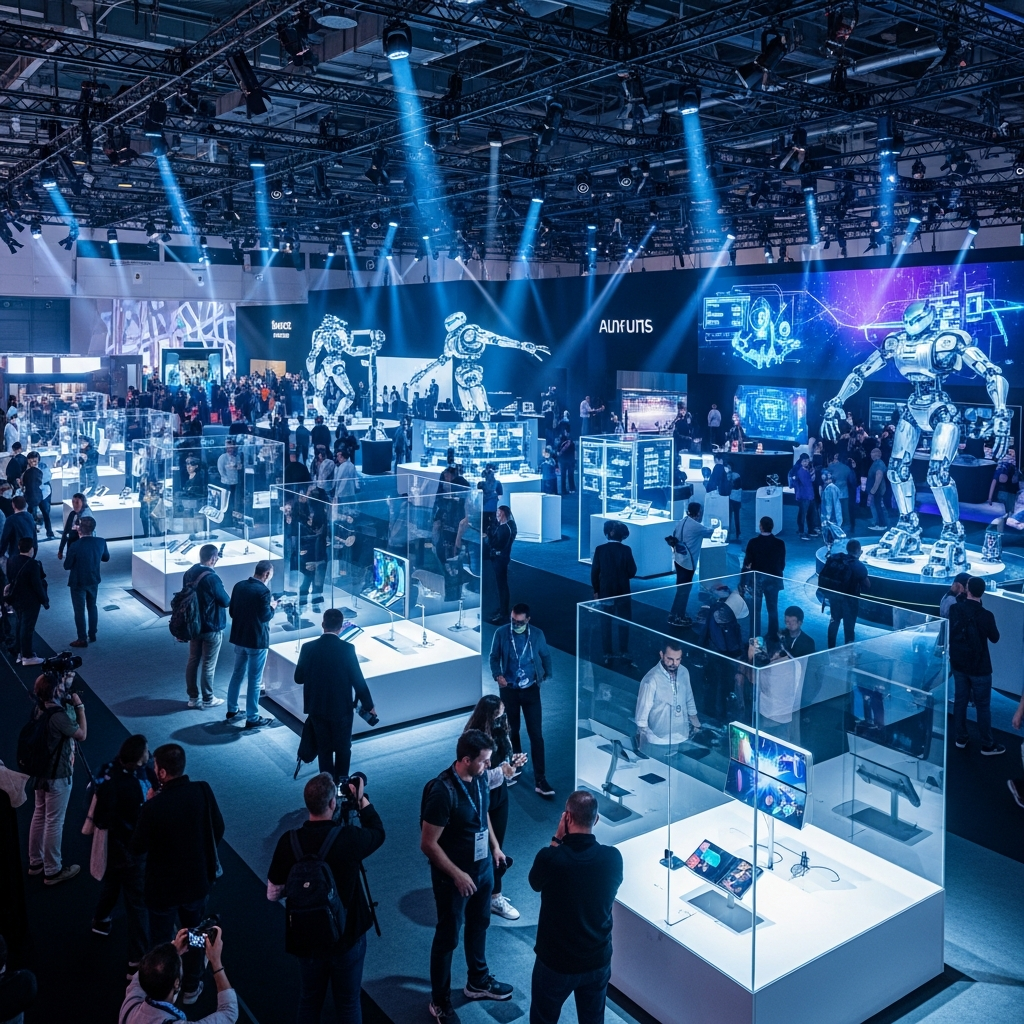
Mobile World Congress (MWC) 2026 has transformed Barcelona into the epicenter of groundbreaking mobile innovation, setting the stage for a future where our devices are smarter, more flexible, and increasingly integrated with artificial intelligence. From March 2 to March 5, industry giants and ambitious startups alike are showcasing everything from revolutionary foldable phones and AI-powered gadgets to ambitious robotics and concept devices that push the boundaries of what’s possible. This comprehensive guide delves into the most exciting announcements, offering a first look at the technology poised to redefine our digital lives. Prepare for a deep dive into the innovations debuting in Spain, highlighting trends and products that will shape the telecommunications landscape for years to come.
MWC 2026: A Global Catalyst for Mobile Innovation
For over two decades, Barcelona has hosted Mobile World Congress, solidifying its reputation as the world’s most influential trade show for the mobile industry. MWC isn’t just about new smartphones; it’s a dynamic platform where the future of wireless technologies, including 5G, 6G, eSIM, IoT, and generative AI, takes center stage. Features unveiled here often become mainstream, impacting how billions of people connect and interact daily. This year marks another milestone, with a palpable buzz around devices that merge cutting-edge silicon with intelligent software, promising a future of seamless and intuitive user experiences.
Core Trends Shaping MWC 2026
This year’s MWC highlights several overarching trends that signal a significant shift in mobile technology:
Pervasive AI Integration: Artificial intelligence is no longer just a buzzword; it’s deeply embedded in new devices, from enhanced camera features and privacy settings to personal assistants and even physical robots. AI is becoming a foundational element, moving beyond software to influence hardware design and interaction.
The Foldable Evolution: Foldable smartphones and tablets continue to mature, pushing boundaries in thinness, durability, and display technology. Companies are refining designs, making them more practical and robust, while exploring new form factors like foldable gaming handhelds.
Beyond the Smartphone: MWC 2026 reinforces that the mobile ecosystem extends far beyond traditional handsets. Wearables, smart glasses, gaming devices, and humanoid robots are integral parts of the evolving mobile landscape, hinting at a “silicon-carbon civilization” where technology acts as an active companion.
Enhanced Performance & Power: Devices are boasting more powerful chipsets, larger batteries with advanced silicon-carbon technology, and improved cooling systems, especially for gaming-centric phones, ensuring sustained high performance.
Photography Prowess: Camera technology in smartphones continues its relentless advancement, featuring larger sensors, mechanical zoom capabilities, and sophisticated AI algorithms to rival professional-grade cameras.
Headline Reveals: A Deep Dive into MWC’s Biggest Announcements
Companies like Honor, Lenovo, Xiaomi, and Motorola are showcasing a remarkable array of products and concepts, many revealed even before the official MWC opening.
Honor’s “ALPHA PLAN” & The Rise of Robotic Devices
Honor made a significant splash with its ambitious “ALPHA PLAN,” signaling a strategic pivot towards integrating AI not just in software but also in physical forms. The company’s vision aims to blend silicon power with robotics to genuinely enhance daily life.
The star of Honor’s presentation was the highly anticipated Honor Robot Phone. This revolutionary device challenges conventional smartphone design, featuring a camera mounted on a mobile 4-degrees-of-freedom gimbal that cleverly tucks into the phone’s back. This “robot head” camera can perform amazing feats like bobbing to music, responding to gestures, and automatically tracking subjects for cinematic video calls. Equipped with a 200-megapixel primary sensor and three-axis stabilization, it promises super steady video and AI object tracking. While not yet available, a launch is planned for later this year.
Beyond the Robot Phone, Honor also unveiled a humanoid Honor Robot capable of backflips and choreographed dances, indicating plans for industrial and domestic applications.
In the realm of traditional smartphones, Honor introduced the Magic V6, claiming it to be one of the thinnest foldables available. When closed, it measures a mere 8.75mm thick, shrinking to an astonishing 4.0mm when open (for the white colorway). The Magic V6 boasts enhanced durability with IP68 and IP69 certifications for water and dust resistance. It integrates fifth-generation silicon-carbon battery technology, delivering a substantial 6,660mAh capacity (with a China-exclusive version exceeding 7,000mAh). This ensures extended usage without compromising its ultra-slim profile. Powering the device is the Snapdragon 8 Elite Gen 5 processor, paired with 16GB RAM and 512GB storage, optimized for demanding tasks and next-generation gaming. Its high-end LTPO displays achieve an impressive 6,000 nits peak brightness.
Honor further expanded its ecosystem with the MagicPad 4, touted as the world’s thinnest Android tablet at just 4.8mm thick. This sleek device features a 12.3-inch 165Hz OLED display, weighs 450g, and runs on Qualcomm’s Snapdragon 8 Gen 5 chipset. It also offers spatial audio with eight speakers and a 10,100 mAh battery.
Lenovo’s Visionary Concepts & Powerful Hardware Refreshes
Lenovo showcased a fascinating blend of audacious concepts and updated production models, highlighting innovation across gaming, productivity, and AI.
The most attention-grabbing concept was the Legion Go Fold, a revolutionary foldable gaming handheld. Its flexible display can unfurl to a large 11.6 inches or fold in half to a more compact 7.7 inches. It features detachable controllers with multiple mounting points, allowing for both landscape and portrait gaming, and the gamepads can even combine into a single controller. Innovatively, the right gamepad doubles as a mouse, complete with a scroll wheel and a tiny circular OLED display for widgets or as a touchpad.
Another ambitious concept, the Modular AI PC, showcased a laptop with two displays, a detachable keyboard, and hot-swappable ports, designed for ultimate adaptability. While groundbreaking, both the Legion Go Fold and Modular AI PC remain concepts, without immediate production plans.
Lenovo also refreshed several existing product lines with new hardware and AI capabilities. The Yoga 9i 2-in-1 Aura Edition Gen 11 introduced a Canvas Mode, starting at $1,949. The new 15.3-inch Yoga Pro 7a ($2,099) and the more affordable IdeaPad Slim 5i Ultra ($799) all integrate Copilot+ features, showcasing AI’s role in everyday computing. For students, the 13-inch Idea Tab Pro Gen 2 ($419) includes the Quira AI assistant and AI tools.
Gaming enthusiasts can look forward to the updated Legion Tab Gen 5 gaming tablet, launching in May for $849. It boasts an 8.8-inch display, Snapdragon 8 Gen 5 chipset, 16GB RAM, 512GB storage, and a 9,000mAh battery.
Xiaomi’s Photography Powerhouses & Expanding Ecosystem
Xiaomi globally launched its highly anticipated photography-focused Xiaomi 17 Ultra smartphone in Europe, developed in partnership with the iconic German camera brand Leica. This device is a true camera-first phone, featuring a massive 1-inch 50-megapixel main camera sensor with LOFIC technology for superior low-light and HDR performance, a 200MP 1/1.4-inch telephoto setup, and a 50MP ultrawide camera. A standout feature is its newly designed mechanical optical zoom, which can physically move between 75mm and 100mm, offering unprecedented photographic flexibility. It sports a 6.9-inch OLED 120Hz display with an impressive peak brightness of 3,500 nits and a 6,000mAh silicon-carbon battery.
Leica also presented its distinct Leica Leitzphone by Xiaomi, sharing many specifications with the 17 Ultra, including the Snapdragon 8 Elite Gen 5 chip and the 1-inch sensor. Its unique appeal lies in prominent Leica branding, a dedicated Leica-designed camera interface with physical controls, monochrome shooting, and classic Leica filters.
Xiaomi further expanded its tablet lineup with the Pad 8 and Pad 8 Pro, both remarkably thin at 5.75mm and lightweight at 485g, featuring a 9,200mAh battery. The Pro model includes a Snapdragon 8 Elite chip, while the standard Pad 8 uses the Snapdragon 8s Gen 4, enhancing workstation mode and offering a new floating keyboard. Complementing these devices, Xiaomi introduced the UltraThin Magnetic Power Bank 5000 15W (just 6mm thick) and the Xiaomi Tag, a versatile Bluetooth item tracker compatible with both Apple Find My and Google Find Hub. The company also surprised many by showcasing its Xiaomi Vision Gran Turismo hypercar concept, highlighting its growing automotive presence.
Motorola’s Razr Fold and Samsung’s Galaxy S26 Ultra Innovations
Motorola used MWC 2026 to finally unveil the full details of its highly anticipated Razr Fold smartphone. Following a brief preview at CES, Motorola provided a comprehensive disclosure of its book-style folding phone, poised to compete directly with Samsung’s Z Fold series. The device features a 6.6-inch cover display and a larger 8.1-inch main inner display with 2K resolution. It boasts an advanced triple-camera system, including a 50MP Sony Lytia LYT-828 primary sensor, a 50MP Lytia LYT-600 with 3x optical zoom, and a 50MP ultrawide lens that also functions as a macro lens.
Samsung, while often hosting its own pre-MWC events, still had a significant presence with its new Galaxy S26 series. The Galaxy S26 Ultra showcased several key innovations, notably its new Privacy Display setting. This built-in hardware feature prevents onlookers from seeing your screen content, customizable for specific apps or even just pop-up notifications. This offers a practical, flexible approach to privacy. The S26 Ultra also impressed with its new Horizontal lock video recording feature, which keeps the video horizon level regardless of how the phone is moved. The standard Galaxy S26 and S26 Plus emphasize smarter, AI-driven cameras, compensating for more modest hardware upgrades.
Other Notable Revelations at MWC 2026
The innovation continued beyond the major players with several unique and practical devices:
Oukitel WP63 Rugged Phone: This device targets the digital nomad with an astounding 20,000mAh battery, a powerful LED lamp, and, incredibly, a built-in fire-starting electric coil. Running Android 16 with a 6.7-inch Full HD display, it’s a massive 27mm thick, offering extreme durability and utility.
ZTE Nubia Neo 5 Series: ZTE introduced a trio of budget-friendly gaming phones that borrow premium features from its RedMagic line. The Neo 5 and Neo 5 Max offer capacitive shoulder buttons, cooling layers, and large screens (the Max boasts a 7.5-inch display). The Neo 5 GT is the cream of the crop, inheriting an internal cooling fan and a 6.8-inch AMOLED 144Hz display with 4,500 nits brightness, typically found in much more expensive devices.
Memomind Memo One AI Glasses: Xgimi debuted these lightweight smart glasses featuring a customizable head-up display for real-time information. They showcased effective Chinese-to-English translation and a teleprompter feature, priced competitively at $599.
Clicks Keyboard Case: For those who miss physical keyboards, Clicks unveiled its BlackBerry-like Communicator phone case, offering various keyboard layouts including Arabic, English, French, German, and Korean.
Tecno’s Modular Concept: Tecno presented a bold modular concept smartphone design with a base thickness of 4.9mm, allowing users to attach up to 10 different magnetic modules like camera lenses, gaming accessories, or power banks.
Beyond the Hype: Concepts That Inspire
MWC isn’t just about products hitting shelves; it’s a showcase for visionary concepts that hint at future possibilities. While some, like Motorola’s flexible wrist-worn phone or Lenovo’s solar-charging laptop, may never move beyond the development stage, they ignite imagination and demonstrate the industry’s drive for innovation. Similarly, the Humane AI Pin, though not a MWC 2026 debut, reminds us that the quest for new interaction paradigms continues, even if initial implementations are imperfect.
Apple’s Strategic Timing
While major players showcased their innovations in Barcelona, Apple traditionally bypasses MWC for direct participation. Instead, Apple strategically announced new product updates starting the same Monday, leading up to a March 4 event. This timing allows Apple to capture attention in parallel, with speculation focusing on a potential iPhone 17E or even its first foldable iPhone, though rumors suggest a foldable device might still be some time away.
Frequently Asked Questions
What were the biggest trends or standout products at MWC 2026?
MWC 2026 was defined by pervasive AI integration across devices, the continued evolution of thinner and more durable foldable phones, and a significant expansion beyond traditional smartphones to include advanced wearables, gaming handhelds, and even humanoid robots. Standout products included Honor’s Robot Phone with its mobile gimbal camera, Lenovo’s foldable Legion Go Fold gaming handheld, Xiaomi’s photography-focused 17 Ultra with its mechanical optical zoom, and Motorola’s fully unveiled Razr Fold. These innovations highlight a future where devices are more intelligent, flexible, and integrated into our daily lives.
Which companies made major announcements at MWC 2026, and what were their key reveals?
Several tech giants made significant announcements at MWC 2026. Honor unveiled its “ALPHA PLAN,” featuring the groundbreaking Robot Phone with a mobile gimbal camera, the ultra-slim Magic V6 foldable, and the MagicPad 4 tablet. Lenovo showcased visionary concepts like the Legion Go Fold gaming handheld and a Modular AI PC, alongside refreshes to its Yoga and ThinkPad laptop lines. Xiaomi globally launched its Leica-partnered 17 Ultra photography smartphone and the distinct Leica Leitzphone, plus new Pad 8 tablets. Motorola provided full details on its Razr Fold smartphone, while Samsung highlighted the Galaxy S26 Ultra’s innovative Privacy Display and Horizontal Lock video feature. Other notable reveals came from Oukitel (rugged WP63 with fire starter), ZTE (budget-friendly Nubia Neo 5 gaming phones), and Xgimi (Memomind AI glasses).
How will the innovations showcased at MWC 2026 impact future smartphone technology and consumer choices?
The innovations from MWC 2026 will profoundly impact future smartphone technology and consumer choices. The advanced AI integration will lead to more intuitive user interfaces, smarter camera capabilities, and enhanced privacy features, making devices more personalized and secure. The continued refinement of foldable technology, with thinner designs and improved durability, will likely drive wider adoption, offering consumers new form factors and multitasking possibilities. The emergence of specialized devices like gaming handhelds and AI-powered smart glasses indicates a diversification of the mobile ecosystem. Consumers can expect a broader range of choices, with devices tailored to specific needs, blurring the lines between phones, cameras, PCs, and even personal robots, ultimately leading to more powerful, versatile, and context-aware mobile experiences.
The Future is Mobile
MWC 2026 reaffirms Barcelona’s status as the quintessential stage for showcasing the future of mobile technology. The sheer volume and diversity of announcements, from the practical to the wildly conceptual, underscore an industry relentless in its pursuit of innovation. As these groundbreaking devices and technologies move from concept to reality, they will undoubtedly shape how we work, play, and connect for years to come. The mobile world is not just evolving; it’s accelerating, promising a future that’s more connected, intelligent, and exciting than ever before.