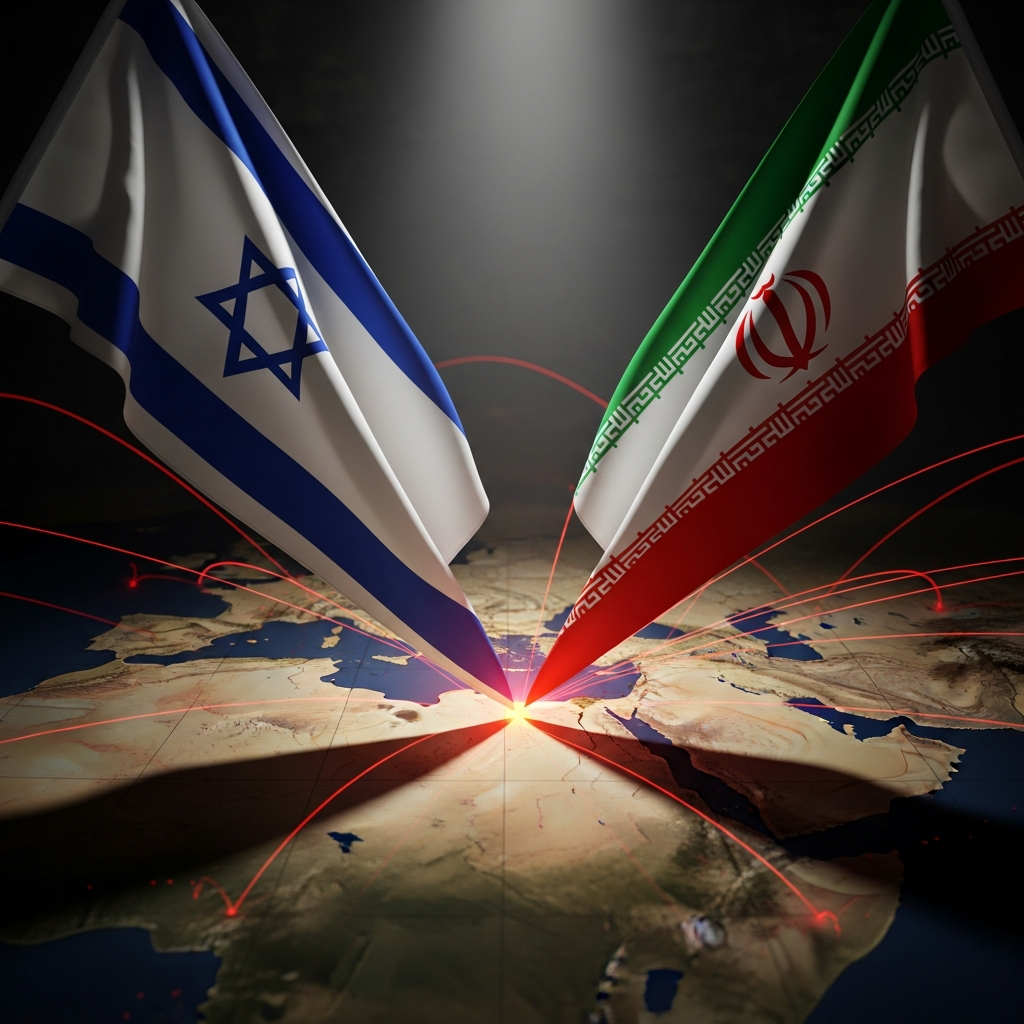
The simmering rivalry between Israel and Iran has long shaped the geopolitical landscape of the Middle East, often playing out through proxy forces and indirect confrontations. However, recent events signal a dramatic and dangerous escalation, pushing the two nations closer to direct conflict and sending shockwaves across the globe. Understanding this complex, high-stakes dynamic is crucial for grasping the region’s future. This article delves into the roots of their animosity, the powerful networks involved, and the recent flashpoints that have brought the Israel-Iran conflict to a critical juncture.
Roots of a Volatile Rivalry
The animosity between Israel and Iran, once allies under the Shah, intensified dramatically after Iran’s 1979 Islamic Revolution. Ideological differences and clashing regional ambitions ignited a Cold War-style struggle for dominance. Iran views Israel as a Western outpost and a primary adversary, while Israel perceives Iran’s nuclear program and support for militant groups as existential threats. This foundational distrust has fueled decades of shadow wars, cyberattacks, and targeted assassinations. Both nations have extensively utilized proxy forces, avoiding direct, full-scale military engagements until recently.
The Axis of Resistance: Iran’s Strategic Network
At the heart of Iran’s regional strategy is the “Axis of Resistance,” an informal but highly coordinated military network. Primarily supported by Iran’s Islamic Revolutionary Guard Corps (IRGC), this alliance of militant groups and state-controlled armed forces spans across the Middle East. It explicitly opposes the influence of Israel, Saudi Arabia, and the United States, viewing them as destabilizing forces.
Key Members and Evolution
The core components of the Axis of Resistance include:
Hezbollah in Lebanon
Hamas and Palestinian Islamic Jihad (PIJ) in Gaza and the West Bank
Various Shiʿi militias in Iraq
Houthi forces in Yemen
Historically, the Syrian armed forces under Bashar al-Assad also played a pivotal role, providing a vital land bridge for Iran to the Mediterranean. The network’s genesis traces back to the 1980s during the Lebanese Civil War. Post-1979 Iranian Revolution Shiʿi clerics fostered militias to combat the Israeli invasion, leading to Hezbollah’s formation by 1985. Hezbollah grew into Lebanon’s dominant armed force and a significant political player, developing into the most heavily armed nonstate actor globally. Its late leader, Hassan Nasrallah (assassinated in 2024), often served as a key coordinator, advising other Axis members.
Expanding Influence: The Shiʿah Crescent
The 2003 Iraq War, which toppled Saddam Hussein, removed a major obstacle, allowing Iran to establish direct connectivity to Syria and Hezbollah. This created what some term the “Shiʿah Crescent,” a territorial contiguity extending from Iran through Iraq and Syria to Lebanon. The IRGC’s Quds Force was instrumental in arming and training Iraqi Shiʿi militias like the Badr Organization and Mahdi Army. These groups later gained legitimacy within Iraq’s Popular Mobilization Forces (PMF), even as some maintained independent ties to Iran.
The Axis further expanded to include Hamas in Gaza and the West Bank, receiving Iranian and Hezbollah backing. While relations faced strains (2012-2017) due to Hamas’s support for the Syrian rebellion, they were later restored. In Yemen, Iran empowered the Houthi rebels, extending its influence into Saudi Arabia’s vicinity and over the strategic Bab el-Mandeb Strait. This enabled Houthi forces to target Israel and international shipping in the Red Sea following the October 2023 Israel-Hamas War.
Unified Action and Recent Setbacks
By the early 2020s, the Axis demonstrated unprecedented coordination. A joint operations center in Beirut facilitated collaboration, evidenced by Hamas launching rockets from Lebanon in April 2023. This cohesion was most powerfully showcased after the October 7, 2023, attacks on Israel by Hamas and PIJ. In response to Israel’s war, Hezbollah and the Houthi movement launched retaliatory strikes, highlighting the Axis’s function as a unified alliance.
However, 2024 brought significant shifts to the Israel-Iran conflict landscape. The unexpected collapse of the Assad regime in Syria in December 2024 threatened to isolate a weakened Hezbollah, impacting the Axis’s crucial land connectivity and strategic depth.
Escalation Beyond Borders: Recent Flashpoints
The past year has witnessed a marked shift from proxy skirmishes to direct confrontations and a broader regional impact.
Direct Iranian Aggression in the Gulf
In a significant escalation, missile and drone attacks attributed to Iran have widened the conflict to include multiple Gulf states. Saudi Arabia successfully intercepted ballistic missiles and drones targeting Riyadh, its Eastern Province, and Jizan. These projectiles aimed at strategic oil facilities and residential areas, prompting concerns over regional stability.
Neighboring Oman also experienced drone attacks on the commercial port of Duqm and an oil tanker in Qasab. One drone injured a foreign worker, while another’s wreckage landed near fuel storage tanks. Saudi Arabia condemned these as “brutal attacks” and “blatant violations of Omani sovereignty,” pledging solidarity. Bahrain reported multiple missile and drone strikes over a 48-hour period, with most intercepted. Incidents included strikes near Bahrain International Airport, the Crowne Plaza Hotel, and the Ira Tower in Manama, causing damage but no fatalities. Iran also reportedly targeted a service center associated with the United States Fifth Fleet in Juffair.
High-Profile Assassinations and Retaliations
The year 2024 saw a dramatic increase in high-profile targeting. The assassination of Hamas diplomatic head Ismail Haniyeh in Tehran in July and the killing of Hezbollah leader Hassan Nasrallah by Israel in September intensified the cycle of violence. These events were followed by an Israeli ground invasion of Lebanon and an Iranian ballistic missile retaliation, marking an unprecedented level of direct exchange between the two nations.
The Death of a Supreme Leader
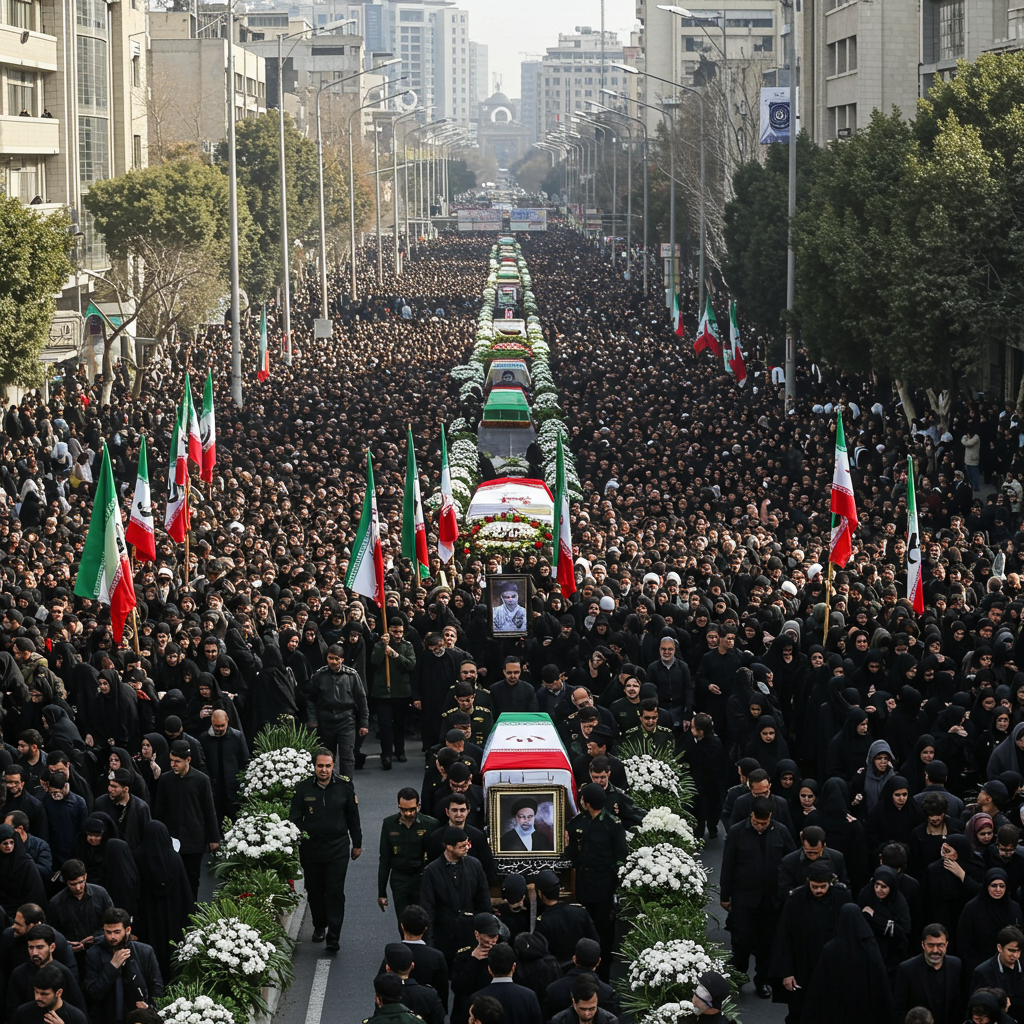
In a momentous development, Iranian state television confirmed the death of Supreme Leader Ayatollah Ali Khamenei in a US-Israel attack. His death, at 86, ended his 36-year rule, ushering in 40 days of national mourning. Sources also indicated his daughter, son-in-law, and grandson were killed in the same strike. Former US President Donald Trump claimed US and Israeli responsibility, highlighting sophisticated tracking systems. The UN Secretary-General reported strikes on 20 Iranian cities, including Tehran and Isfahan, resulting in at least 85 deaths, including many civilians. This event leaves a significant leadership vacuum and profound uncertainty regarding Iran’s future, especially amidst recent internal crackdowns.
Past Tensions: The Drone Incident
The 2019 downing of a U.S. unmanned military drone by Iran using a surface-to-air missile remains a poignant example of the ongoing tension. The incident sparked a major international dispute over whether the drone was in international waters (U.S. claim) or had violated Iranian airspace (Iran’s assertion). U.S. officials maintained the drone was 34 kilometers from the Iranian coast, flying legally over international waters. Iran’s foreign minister, Mohammad Javad Zarif, claimed the drone entered Iranian airspace near Kouh-e Mobarak, asserting sections were retrieved from Iran’s territorial waters. This dispute, framed by international law governing maritime territory (UNCLOS), underscored the volatile nature of aerial surveillance and military presence in the region.
Global Ripple Effects: Economic and Geopolitical Impact
The escalating Israel-Iran conflict has far-reaching consequences beyond the immediate battlegrounds.
Market Volatility and Safe Havens
Geopolitical tensions directly impact global markets. The US Dollar (USD), a traditional safe-haven asset, has recently experienced a significant rally. Market analysts, like Elior Manier, attribute this to a shift in market flows driven by the uncertainty surrounding Middle East tensions. Major currency pairs like EUR/USD and GBP/USD have seen intermediate tops, while USD/JPY tested a key psychological level. Demand generated from US Treasury Bond auctions further reinforced the dollar’s strength, highlighting investor flight to safety during turbulent times.
International Diplomacy and Calls for De-escalation
The widening conflict has triggered alarm bells worldwide. UN Secretary-General Antonio Guterres, alongside leaders from France, China, and Russia, collectively condemned the escalating violence. India’s External Affairs Minister engaged in discussions with Iranian and Israeli counterparts, advocating for de-escalation. Britain’s Labour leader acknowledged UK forces’ involvement in defensive operations. These international reactions underscore the global community’s deep concern over regional instability and the potential for a broader conflict.
The Road Ahead: Uncertainties and Challenges
The future of the Israel-Iran conflict and Middle East stability remains profoundly uncertain. With Iran’s Supreme Leader gone and a leadership vacuum created, the country faces internal and external challenges. The weakening of key Axis players, such as Hezbollah following the collapse of the Assad regime, could alter regional power dynamics. However, the foundational ideological clashes and proxy network structures are deeply entrenched. The risk of miscalculation, unintended consequences, and further direct confrontations looms large, necessitating vigilant international engagement and sustained diplomatic efforts to prevent a wider conflagration.
Frequently Asked Questions
What is the “Axis of Resistance” and who are its key members?
The “Axis of Resistance” is a loose military network primarily supported by Iran and its Islamic Revolutionary Guard Corps (IRGC). It aims to counter the influence of Israel, Saudi Arabia, and the United States in the Middle East. Its core members include Hezbollah in Lebanon, Hamas and Palestinian Islamic Jihad (PIJ) in the Gaza Strip and West Bank, various Shiʿi militias in Iraq, and Houthi forces in Yemen. Historically, Syrian armed forces under Bashar al-Assad were also a crucial component, though the regime’s recent collapse impacts this connectivity.
How have recent events escalated the Israel-Iran conflict geographically?
Recent escalations have seen the conflict expand significantly beyond traditional proxy battlegrounds. Iran, through direct or attributed actions, has launched missile and drone attacks targeting strategic sites and residential areas in Saudi Arabia, Oman (including the port of Duqm and an oil tanker), and Bahrain (including near its international airport and US Fifth Fleet facilities). This demonstrates a wider regional footprint for the conflict, impacting Gulf states and threatening vital shipping lanes. Direct exchanges between Israel and Iran, including ballistic missile retaliations, also mark a dangerous geographical expansion.
What are the broader economic and political implications of the ongoing Israel-Iran tensions?
The escalating tensions have profound economic and political implications. Economically, they lead to global market volatility, driving investors towards safe-haven assets like the US Dollar, which has seen a significant rally. Politically, the conflict creates immense regional instability, risking a wider conflagration and threatening international shipping routes, particularly in the Red Sea. The death of Iran’s Supreme Leader, Ayatollah Ali Khamenei, also introduces a major leadership vacuum, creating uncertainty for Iran’s future domestic and foreign policy, and necessitating intensified international diplomatic efforts for de-escalation.