Prepare for an awe-inspiring celestial event! On February 28, 2026, skygazers worldwide will witness a rare six-planet parade. Mercury, Venus, Saturn, Jupiter, Uranus, and Neptune will appear together in the evening sky. This ultimate guide offers essential tips, timing, and tools to maximize your viewing experience.
Understanding the 2026 Planetary Parade Phenomenon
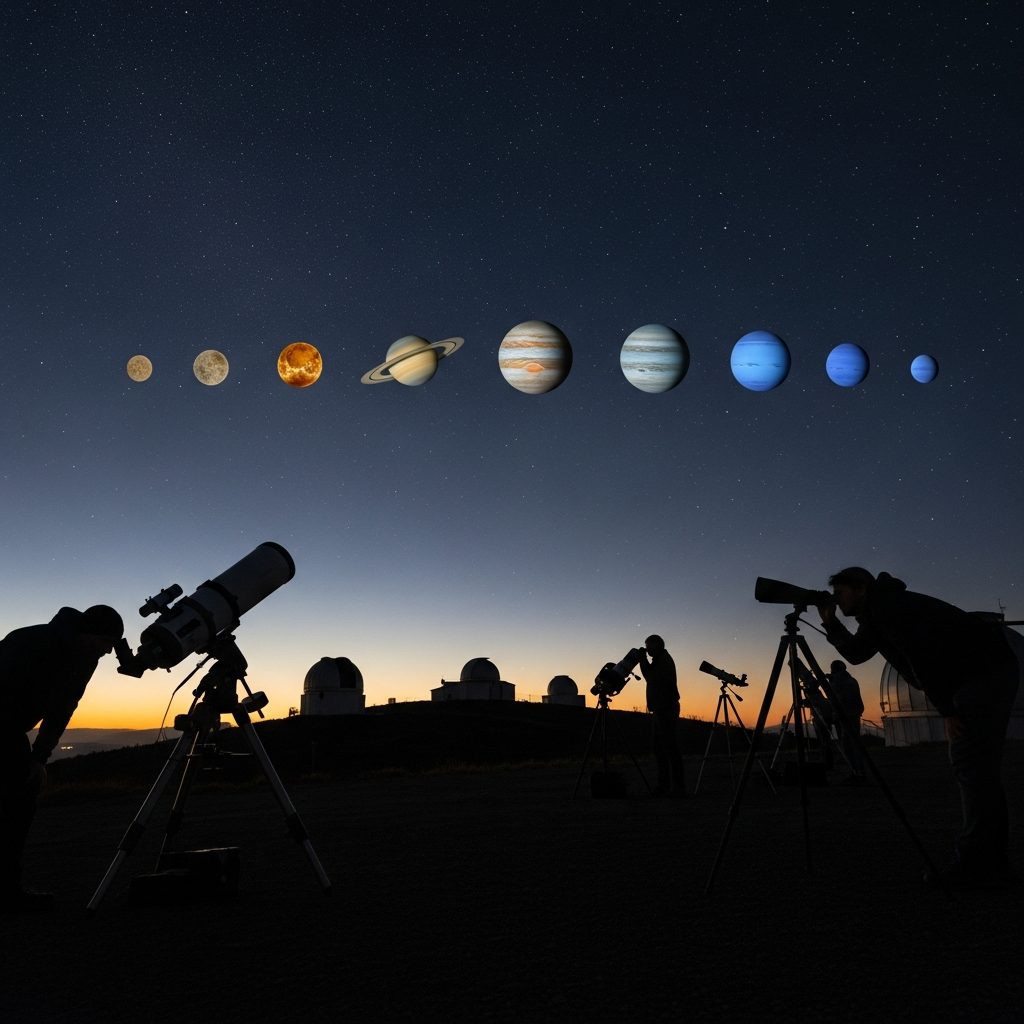
A “planetary parade” describes multiple planets visible simultaneously from Earth. This phenomenon is an optical illusion, not a literal straight alignment in space. As Dr. Becky Smethurst explains, all planets orbit within the same flat plane. This makes them appear to line up when “on the same side of the solar system,” offering a rare glimpse into our solar system’s intricate mechanics. Observing six planets together is truly exceptional.
When and Where to Witness the Spectacle (February 28, 2026)
Mark your calendars! The peak viewing for this remarkable six-planet parade is February 28, 2026. This celestial alignment remains visible for approximately a week, offering multiple observation opportunities. The best time to look is about 30 to 60 minutes after sunset, focusing towards the western horizon. While globally visible, optimal viewing depends on clear local skies and an unobstructed western view.
Spotting the Planets: Naked Eye or Optical Aid?
Six planets will be visible during the 2026 planetary parade: Mercury, Venus, Saturn, Jupiter, Uranus, and Neptune. Their visibility varies, with some easily seen and others requiring special equipment.
Naked-Eye Planets
Four planets are generally discernible without binoculars or a telescope:
Jupiter: Brightest and easiest, Jupiter shines brilliantly high in the sky.
Venus: The “Evening Star,” incredibly bright with a steady, white glow on the western horizon.
Saturn: A distinct yellowish hue, visible low on the western horizon, near Venus and Mercury.
Mercury: Challenging due to its small size and dimness, appearing white and low on the western horizon.
Planets Requiring Binoculars or a Telescope
For the distant ice giants, Uranus and Neptune, optical assistance is essential:
Uranus: Generally requires binoculars or a telescope, appearing as a small, faint point within the constellation Taurus.
Neptune: The most elusive, virtually impossible to see without a powerful telescope, being very low in the western sky near Saturn.
Expert Tips for an Unforgettable Stargazing Experience
Maximize your view of this rare planetary parade with these practical tips:
Find Dark Skies: Escape city lights to reduce light pollution, enhancing visibility.
Clear Western Horizon: Choose an unobstructed spot; buildings or trees can block low-lying planets.
Adjust Your Eyes: Allow 5-10 minutes for your eyes to adapt to darkness, improving night vision.
Dress Warmly: Stargazing involves long periods outdoors; dress in layers for comfort.
Use Red Light Apps: Stargazing apps (e.g., Stellarium) in red light mode preserve night vision.
Check Weather Forecasts: Clear skies are critical; monitor local reports for cloud cover.
Patience is Key: Planets move slowly; enjoy the subtle spectacle.
Crucial Safety Warning: Protect Your Eyes!
When observing planets low on the horizon near sunset, exercise extreme caution. NEVER look directly at the sun, especially through binoculars or a telescope. This can cause immediate and permanent eye damage. Always wait until the sun has completely disappeared before aiming optical equipment towards the western sky.
Enhancing Your View: Recommended Equipment & Apps
Equipment can significantly enrich your planetary parade experience.
Binoculars: Quality binoculars sharpen views of Mercury, aid Uranus location, and clarify Jupiter/Saturn details. They are a budget-friendly entry point for beginners.
Telescopes: For detailed views of Saturn’s rings, Jupiter’s moons, and elusive Neptune, a telescope is necessary. Beginner-friendly models (often over $500 from reputable brands) offer optimal performance.
Stargazing Apps: Apps like Stellarium or Sky Safari use your phone’s GPS to create interactive sky maps, invaluable for pinpointing planet locations.
Other Celestial Wonders: The March 3rd Lunar Eclipse
The cosmic show continues just after the planetary parade. On Tuesday, March 3, 2026, a total lunar eclipse will grace the skies. Professor Douglas Leonard describes this “truly spectacular event.” During this “blood moon,” Earth’s shadow covers the full moon, causing it to glow a deep crimson red or orange. This awesome sight is well worth staying up for!
The Rarity of Multi-Planet Parades
Planetary parades, especially involving six worlds, are infrequent. Planets orbit at vastly different speeds. Such alignments from Earth’s perspective are due to specific orbital mechanics. After 2026, a similar multi-planet parade isn’t expected until 2028, with a seven-planet alignment projected for 2034. Each event offers a unique opportunity.
Frequently Asked Questions
What makes the 2026 six-planet parade special, and what exactly is it?
The 2026 six-planet parade on February 28th is special because six planets – Mercury, Venus, Saturn, Jupiter, Uranus, and Neptune – will simultaneously appear visible in the evening sky. This isn’t a literal straight line in space; instead, it’s an optical illusion from Earth where planets seem to gather in one area due to their shared orbital plane around the sun. This makes it a rare and anticipated celestial spectacle.
What’s the best way to prepare and where should I go to view the planetary parade?
To prepare for the parade, first check local weather forecasts for clear skies. Then, find a dark location away from city lights, ensuring a completely unobstructed view of the western horizon after sunset. Allow your eyes at least 5-10 minutes to adjust to the darkness. Dress warmly for comfort and consider using a stargazing app with a red light mode to preserve your night vision.
Do I need special equipment to see the 2026 planetary parade, and is it worth investing in?
While Mercury, Venus, Saturn, and Jupiter are visible to the naked eye, you will need binoculars or a telescope to spot Uranus and Neptune, and to enhance views of Mercury. Investing in quality binoculars (a cost-effective option) or a beginner-friendly telescope (e.g., lens-based models over $500) can greatly enrich your experience of this rare event, making it easier to observe and appreciate the subtle details of each planet.
Conclusion
The 2026 six-planet parade on February 28th offers an incredible opportunity for skygazers worldwide. This rare celestial event reminds us of our solar system’s beautiful mechanics. By utilizing expert tips for timing, location, and equipment, you can fully immerse yourself in this cosmic spectacle. Don’t miss this extraordinary chance to witness multiple planetary neighbors dancing across our night sky.