The United States is grappling with a concerning resurgence of measles, a highly contagious disease once declared eliminated. This unexpected comeback presents a critical challenge for healthcare professionals, many of whom have no firsthand experience with the virus, making timely diagnosis and effective isolation increasingly difficult. The result is a growing risk of widespread community transmission and strain on healthcare systems already under pressure.
The Alarming Return of Measles to the U.S.
Measles, eliminated in the U.S. since 2000, is making a worrying return. National figures reveal a significant increase, with over 3,000 cases reported nationwide since early 2025. The year 2025 alone saw more than 2,200 cases and three deaths, with a staggering 93% of these infections occurring in unvaccinated individuals. The trend continues into 2026, with nearly 1,000 cases already confirmed, pushing the nation towards losing its critical “measles elimination status.”
Outbreaks are striking across the country. North Carolina has reported over 20 cases since mid-December, and one county in South Carolina has tragically seen over 900 cases in its current outbreak, surpassing Texas’s total for all of 2025. Ohio is also experiencing multiple outbreaks in 2026, including cases linked to travel and others without clear travel history. Virginia health officials recently issued an alert after a confirmed measles case at Washington Dulles International Airport, marking the fourth such case in the state for 2026. These numbers underscore a grim reality: measles is back, and it’s spreading rapidly.
Hospitals Unprepared: The Diagnostic Dilemma
A significant hurdle in controlling this resurgence is the unfamiliarity many modern medical professionals have with measles. Dr. Theresa Flynn, president of the North Carolina Pediatric Society, with decades of experience, admits she has never personally seen a measles case. This lack of direct exposure means that doctors often struggle to differentiate measles from other common winter viral infections. Symptoms are frequently described as “morbilliform,” meaning “measles-like,” and can easily be mistaken for a common cold in early stages.
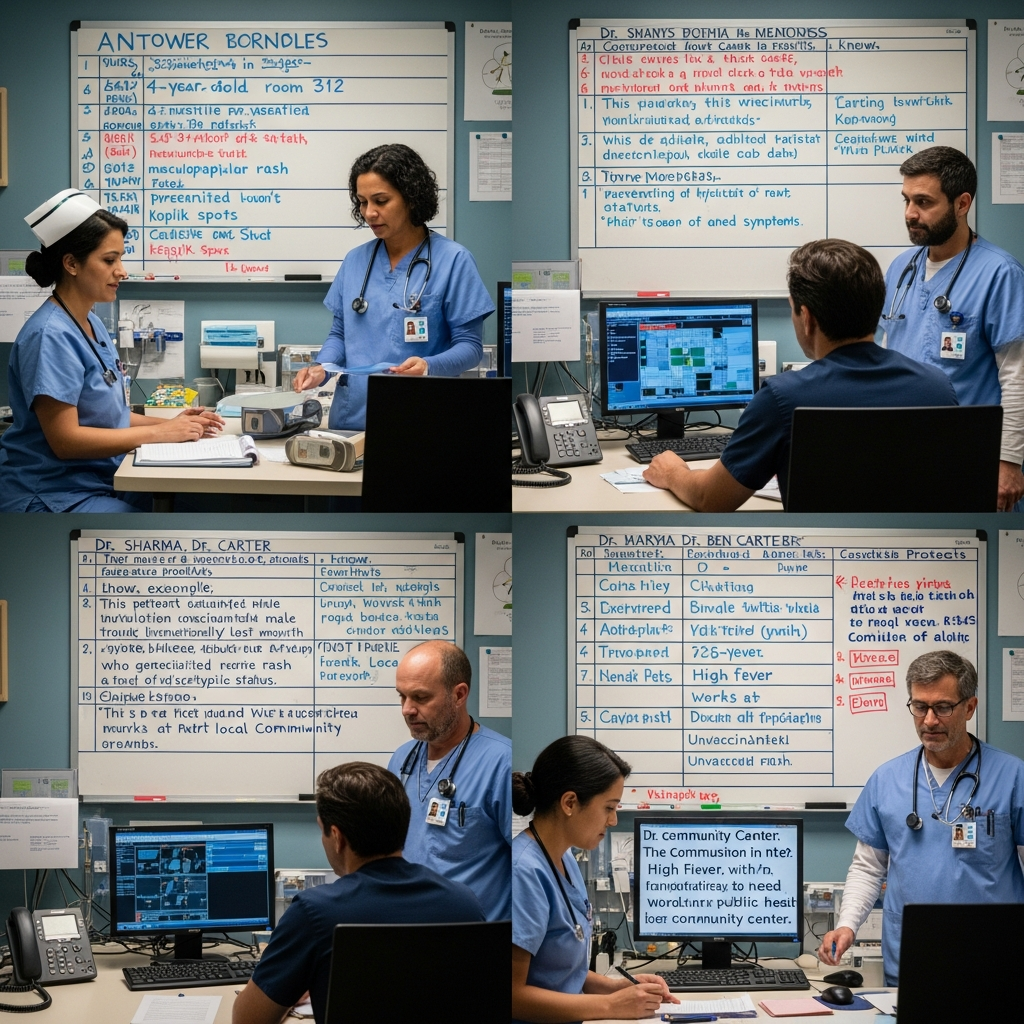
This diagnostic challenge can lead to critical delays, as tragically exemplified at Mission Hospital in Asheville, North Carolina. Seven-year-old twin brothers arrived at 2 a.m. with classic measles symptoms: fever, cough, rash, pink eye, and cold symptoms. Disturbingly, it took over four hours and a call to a state epidemiologist for the boys to be isolated and correctly diagnosed. This delay exposed at least 26 other individuals within the hospital. Federal investigators from the Centers for Medicare & Medicaid Services (CMS) subsequently placed Mission Hospital in “Immediate Jeopardy,” a severe sanction threatening federal funding, citing failures in isolation procedures and the absence of a designated negative-airflow isolation area.
Federal Policy and Eroding Public Trust
The current measles crisis is deeply intertwined with a concerning erosion of public trust in vaccines and perceived inadequate federal guidance. The Trump administration, particularly Health and Human Services Secretary Robert F. Kennedy Jr., a vocal anti-vaccine activist, has actively sown doubt about vaccine effectiveness. Under his leadership, the Centers for Disease Control and Prevention (CDC) has reportedly reduced the number of recommended childhood vaccinations. Kennedy has also publicly suggested unproven treatments for measles, further complicating public health messaging.
This climate of skepticism has contributed to a significant decline in national Measles, Mumps, and Rubella (MMR) vaccination rates. A 2025 study from Johns Hopkins University indicated that the U.S. is now below the desired herd immunity rate for measles in most counties. Low immunization rates leave children especially vulnerable, as seen in a private school in Buncombe County, North Carolina, where only 41% of students were immunized before an exposure led to the quarantine of approximately 100 students. Infectious disease experts and healthcare workers frequently report feeling unsupported by the CDC, with a KFF Health News investigation noting difficulties in communication during outbreaks.
Understanding Measles: A Serious Threat
Measles is one of the most contagious diseases known, posing a severe threat, especially to unvaccinated individuals. It spreads through the air when an infected person breathes, coughs, or sneezes, and the virus can remain active in a room for up to two hours after the person has left.
Initial symptoms often mimic a cold: fever, cough, runny nose (coryza), and red, watery eyes (conjunctivitis)—often referred to as the “three C’s.” These are typically followed several days later by a characteristic blotchy rash that starts on the face and spreads downwards. While symptoms usually last seven to ten days, complications can be severe and even fatal. These include ear infections, pneumonia, and brain swelling (encephalitis), which can lead to death. Historically, 1 to 3 deaths occur per 1,000 cases in children. Tragically, in 2025, two children in Texas and one adult in New Mexico died from measles.
The MMR vaccine remains the most effective defense. Two doses provide 97% protection, reducing the chance of infection to a mere 3% after exposure. In stark contrast, an unvaccinated person exposed to the virus faces a 90% chance of infection. While individuals born before 1957 are generally considered immune due to widespread exposure in childhood, anyone else who is unvaccinated or incompletely vaccinated is at high risk.
Localized Action and Proactive Strategies
In the absence of strong, clear federal guidance, state and local public health departments are stepping up. Connecticut’s Public Health Commissioner, Dr. Manisha Juthani, has publicly endorsed the American Academy of Pediatrics’ (AAP) vaccination recommendations over recent changes proposed by the CDC, affirming the state’s commitment to established, science-driven protocols. This highlights a trend where states are prioritizing consistency with long-standing, evidence-based guidelines.
Locally, healthcare providers are implementing proactive strategies to curb the spread. Mission Hospital, despite initial failings, stated its staff was trained and followed federal rules for airborne sickness. However, federal inspectors found issues with negative-airflow isolation. To address this, clinics like Asheville Children’s Medical Center have developed their own protocols, including screening patients over the phone and in their cars before they enter the facility. Public health officials in Buncombe County are using social media livestreams to educate parents, debunk misinformation, and urge vaccination. They anticipate a trajectory of “explosive growth” in cases, similar to South Carolina, without aggressive intervention.
These local efforts underscore the critical importance of community-level engagement, swift diagnostic protocols, and consistent public health messaging. Health workers advise immediate isolation of suspected measles patients in special rooms with controlled airflow to prevent further spread.
The Path Forward: Rebuilding Immunity and Awareness
Combating the current measles resurgence demands a concerted effort to rebuild community immunity and counteract vaccine misinformation. The primary defense remains widespread vaccination with the MMR vaccine. For those potentially exposed, especially unvaccinated individuals, immediate contact with a healthcare provider or local health department is crucial to discuss post-exposure options and monitor for symptoms.
Healthcare professionals face the ongoing challenge of educating parents who dismiss the severity of measles, often influenced by diluted federal recommendations. Re-establishing trust in medical science and promoting vaccination are paramount. Public health agencies must coordinate more effectively, ensuring clear, consistent messaging about risks and vaccine efficacy. As the U.S. teeters on the brink of losing its measles elimination status, proactive measures at all levels of healthcare and public health are essential to protect the most vulnerable and prevent further avoidable illness and death.
Frequently Asked Questions
What are the common symptoms of measles, and why is it difficult to diagnose now?
Measles typically begins with a fever, cough, runny nose (coryza), and red, watery eyes (conjunctivitis)—often called the “three C’s.” A characteristic blotchy rash appears several days later, starting on the face and spreading. Diagnosis is challenging today because many current doctors lack firsthand experience with measles, as it was eliminated in the U.S. in 2000. Its early symptoms can easily be mistaken for other common winter viral infections that cause “morbilliform” (measles-like) rashes.
What immediate steps should parents take if they suspect their child has measles symptoms?
If you suspect your child has measles symptoms (fever, cough, runny nose, red eyes, rash), it is critical to call ahead to your healthcare provider or local health department before seeking in-person care. This allows the facility to prepare for isolation, preventing potential exposure to other patients and staff. Do not simply arrive at an emergency room without prior communication, as this risks spreading the highly contagious virus.
How effective is the MMR vaccine against measles, and why are vaccination rates concerning?
The Measles, Mumps, and Rubella (MMR) vaccine is highly effective. Two doses provide 97% protection against measles, reducing the chance of infection after exposure to just 3%. In contrast, an unvaccinated person exposed to measles has a 90% chance of contracting the virus. Vaccination rates are concerning because they have declined significantly, leaving many communities below the herd immunity threshold needed to prevent widespread outbreaks, making children especially susceptible to infection and severe complications.