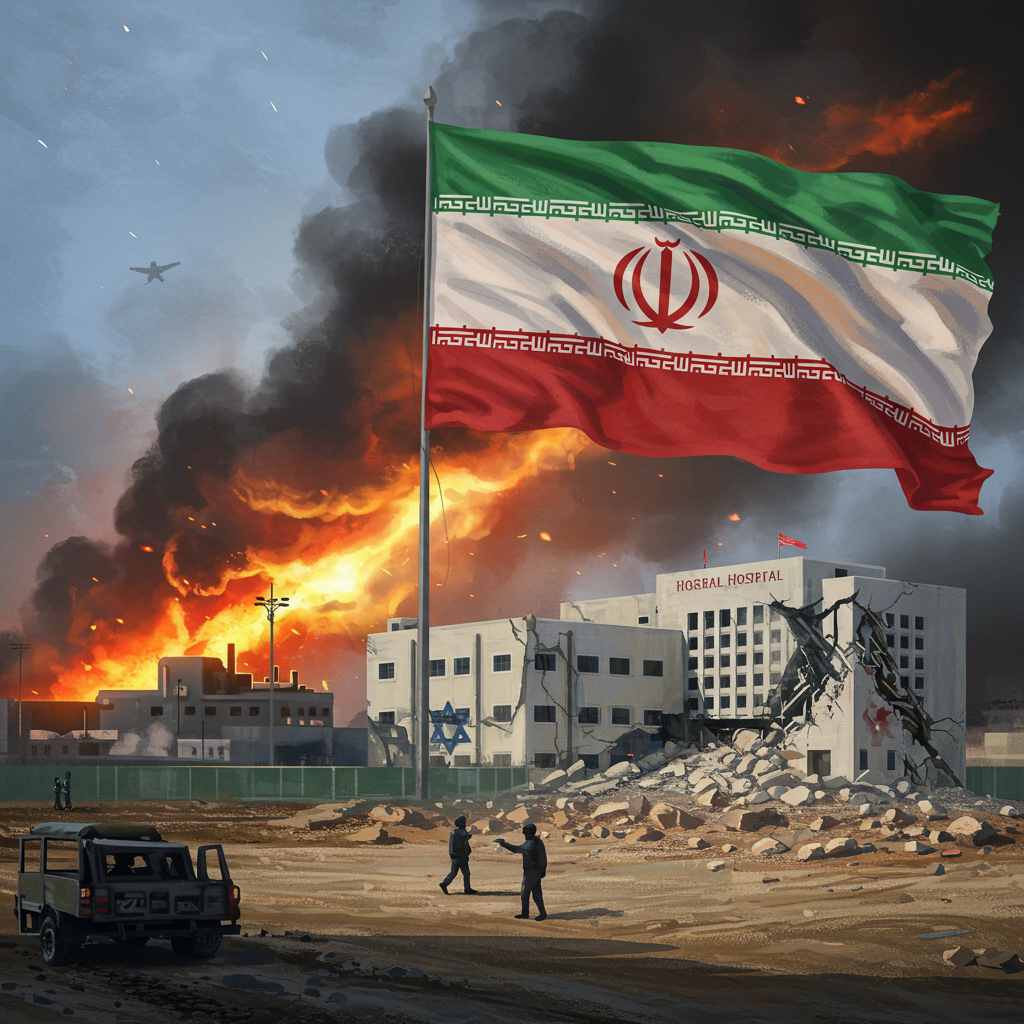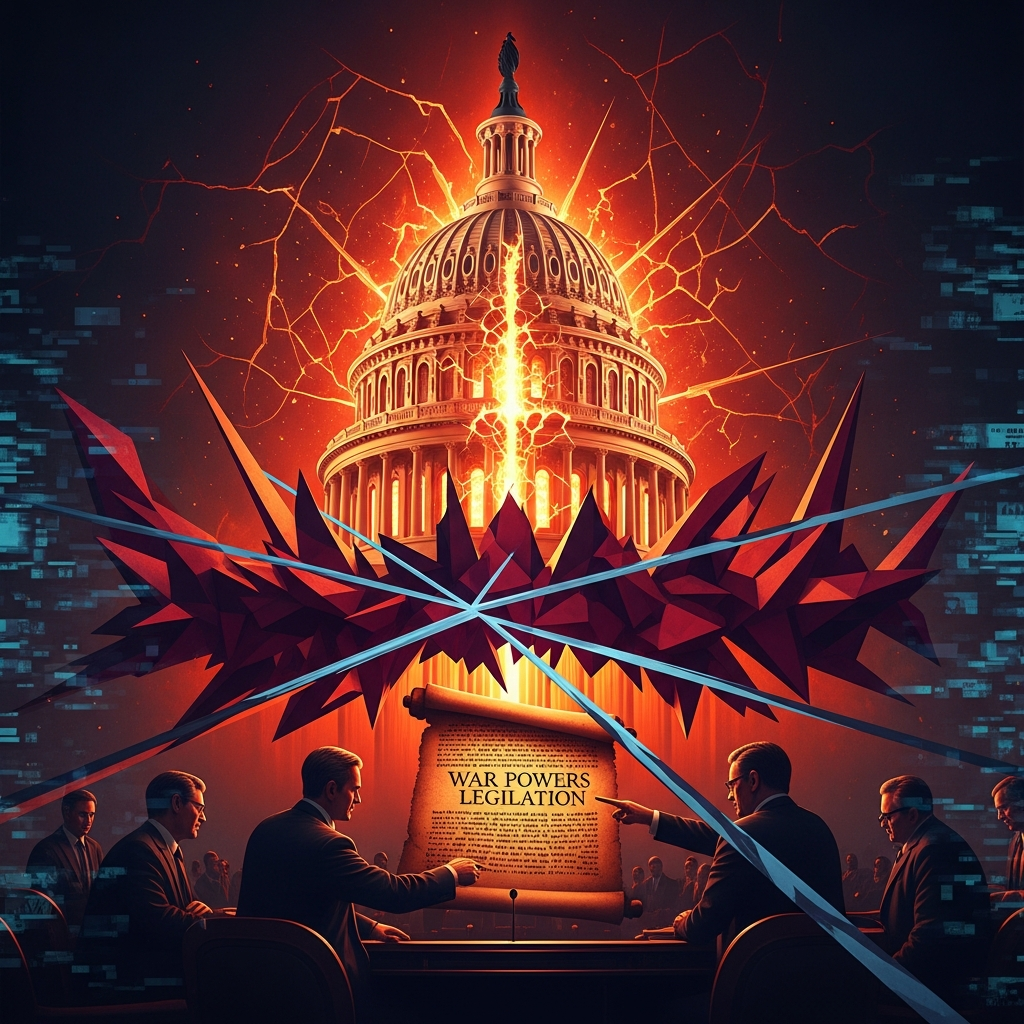
Recent US military actions against Iran have dramatically intensified calls within the US Congress for renewed war powers legislation, igniting a critical debate over executive authority and the constitutional right to declare war. These legislative demands arrive amidst a highly volatile geopolitical landscape, underscored by the significant, recent death of Iran’s Supreme Leader, Ayatollah Ali Khamenei, following a major joint attack by US and Israeli forces. The unfolding crisis highlights deep concerns among lawmakers regarding the scope and legality of presidential military initiatives, particularly in a region already grappling with profound instability.
Congressional Outcry: Unpacking the Legislative Backlash
The immediate aftermath of the US strikes saw widespread condemnation from a bipartisan coalition in Congress. Democratic lawmakers, in particular, swiftly denounced the actions as a “dangerous,” “unnecessary” escalation and a “colossal mistake,” emphasizing the glaring absence of congressional approval. This unified legislative front is pushing for an immediate Senate vote on a War Powers Resolution designed to significantly restrict the President’s ability to undertake further military action without explicit congressional authorization.
Senator Tim Kaine, a key architect of the proposed War Powers Resolution and a prominent member of the Senate Armed Services and Foreign Relations Committees, unequivocally called for every senator to “go on the record” regarding what he termed an “idiotic action.” Echoing this sentiment, House of Representatives Minority Leader Hakeem Jeffries committed House Democrats to forcing a floor vote on a similar measure. Jeffries strongly criticized the President for bypassing Congress and launching a “massive military attack,” warning that such actions left American troops vulnerable to Iranian retaliation.
Bipartisan Momentum for Oversight
Despite the Republican Party holding a slim majority in the Senate, the push for legislative checks on executive power has gained significant, albeit rare, bipartisan traction. Senate Minority Leader Chuck Schumer publicly demanded immediate congressional briefings on the Iran attacks, including a classified session for all senators and public testimony. Schumer sharply criticized the administration for failing to provide crucial details about the alleged threat’s scope and immediacy, fueling lawmakers’ concerns about transparency and accountability.
Senator Mark Warner, Vice Chairman of the Senate Select Committee on Intelligence, characterized the strikes as a “deeply consequential decision” that risks plunging the United States into another protracted Middle East conflict. Warner explicitly warned against repeating past “mistakes,” drawing parallels to the Iraq War. He highlighted a familiar “playbook”: “claims of urgency, misrepresented intelligence, and military action that pulls the United States into regime change and prolonged, costly nation-building.”
Even within Republican ranks, a growing contingent has signaled a break from the White House. Representative Thomas Massie, a vocal critic, condemned the strikes as “acts of war unauthorised by Congress,” declaring his opposition with the statement, “This is not America First.” Similarly, Senator Rand Paul, a co-sponsor of the War Powers Resolution, grounded his opposition in constitutional principles, affirming that his “oath of office” compelled him to oppose “another Presidential war.” This collective legislative action underscores a powerful reassertion of Congress’s constitutional authority over warmaking.
The Legacy of Khamenei and Iran’s Uncertain Future
The heightened tensions and legislative demands are set against the backdrop of an unprecedented event: the death of Iran’s Supreme Leader, Ayatollah Ali Khamenei, at 86. His passing followed a “major joint attack by Israel and the United States,” with President Donald Trump claiming Khamenei was killed in the operation. Khamenei’s three-decade rule profoundly shaped the Islamic Republic, solidifying the revolutionary vision and transforming the paramilitary Revolutionary Guard into the nation’s most powerful institution, pervasive in both military and economic spheres.
Domestically, Khamenei’s reign was marked by escalating political repression and persistent economic woes, triggering successive waves of mass protests, including significant demonstrations following the 2022 death of Mahsa Amini and widespread anti-government chants of “Death to Khamenei” in early 2026. In foreign policy, he established the “Axis of Resistance,” a network of proxy forces like Hezbollah and Yemen’s Houthi rebels, projecting Iranian power across the region. Khamenei maintained deep suspicion of the U.S., which he labeled the “Great Satan,” and defied UN sanctions to advance Iran’s nuclear program, accumulating near-weapons-grade uranium after Trump unilaterally withdrew from the 2015 nuclear deal in 2018.
His death leaves a significant power vacuum and an uncertain future for the Islamic Republic, with no clear successor emerging from the hard-line Assembly of Experts. The stability of Iran now largely hinges on the Revolutionary Guard, which has repeatedly demonstrated its willingness to use overwhelming force to maintain control amidst deep public disenchantment.
Escalation Risks: Navigating a Dangerous Crossroads
The recent strikes and Khamenei’s death significantly amplify the risks of a broader conflict. US military planning, according to Reuters, has been in “advanced stages,” including options for targeted attacks and even regime change, contingent on presidential approval. This “military countdown” mentality, coupled with the largest US force deployment to the Middle East since the 2003 Iraq War, underscores the gravity of the situation.
Analysts warn against military intervention, however. Strategy expert Damon Golriz cautions that even “limited military strikes” could easily spiral out of control. He argues that a regime facing existential threats might view escalation as essential for survival, potentially triggering a “chain reaction” through its regional proxies and further destabilizing the Middle East. Similarly, Danny Citrinowicz from the Atlantic Council believes US military action is unlikely to catalyze mass political mobilization within Iran. Instead, it would more likely consolidate elite cohesion around the regime, marginalize protesters, and reinforce Tehran’s narrative of external siege.
The prospect of externally imposed regime change is also viewed with skepticism. Kamran Matin from the University of Sussex points to the US National Security Strategy’s shift away from “nation-building,” suggesting that without a clear political alternative, an agreement with the existing regime might still be preferred. Citrinowicz contends that Iran lacks a credible, organized opposition, and any US attempt at forceful regime change, such as assassinating Khamenei, would likely lead to catastrophic outcomes like an IRGC takeover or civil war, resulting in a more repressive and unstable Iran.
The Diplomatic Tightrope: Hopes and Hurdles
Amidst the escalating military tensions, efforts to renew US-Iran diplomacy continue, albeit precariously. Recent reports detail shifting negotiation conditions from Iran, including proposals to move talks from Istanbul to Oman and limit discussions strictly to the nuclear program, excluding its missile development and support for regional armed groups. These demands directly contradict broader US and allied calls for comprehensive discussions. Internally, Iran’s leadership faces “paralysis,” driven by conflicting signals and opposing vested interests, further complicating any diplomatic breakthrough.
The White House has confirmed that talks are still scheduled, but press secretary Karoline Leavitt reiterated that military options remain “on the table.” Israeli Prime Minister Benjamin Netanyahu has voiced strong distrust, asserting Iran “cannot be trusted to keep its promises.”
A central diplomatic battle revolves around the scope of the talks. While mediators favor limiting initial discussions to Iran’s nuclear program as the most realistic path to agreement, the Trump administration insists on a comprehensive deal covering nuclear limits, missile development, and regional militias. Key sticking points include Iran’s enriched uranium stockpile, its unyielding stance on its missile program, and its relationships with regional proxy forces. The current period is defined by “strategic fatigue” rather than diplomatic momentum, with the immediate goal being to establish a communication channel and prevent further escalation before direct confrontation becomes inevitable.
The Path Forward: Expert Recommendations for US Policy
Navigating the complexities of US-Iran relations, especially in the wake of Khamenei’s death and heightened military actions, requires a multifaceted approach. Experts present divergent strategies for the US.
Jason Brodsky advocates for a more interventionist “whole-of-government approach,” combining diplomatic, economic, military, kinetic, cyber, and covert tools. His recommendations include freezing diplomacy (as a deal could bolster the regime), intensifying diplomatic isolation, levying the MAHSA Act to sanction the Supreme Leader personally, seeking criminal indictments for human rights abuses, and considering targeted military action to erode the regime’s capacity and deter aggression. Brodsky believes sustained external pressure can empower the Iranian people to reclaim their country.
Conversely, Danny Citrinowicz emphasizes strategic patience and the long-term efficacy of economic and diplomatic pressure. He views military action as high-risk for regional escalation and costly. Citrinowicz recommends preserving and tightening the sanctions regime, particularly on Iranian oil exports, until Iran shows genuine willingness for concessions. He advises against conditioning diplomacy on Iran’s stance toward Israel to avoid foreclosing breakthroughs. While acknowledging the need for deterrence, Citrinowicz stresses that military strikes should remain a last resort due to the high escalation risk, preferring to encourage political change from within the existing system rather than externally imposed regime change.
Ultimately, the US confronts a “narrowing decision space” where no pathway offers an easy solution. A negotiated settlement risks temporary de-escalation, comprehensive Iranian compliance could accelerate regime fragmentation, and indefinite military pressure is fiscally and strategically unsustainable.
Frequently Asked Questions
What are the key reasons Congress is demanding war powers legislation regarding Iran?
Congress is demanding war powers legislation primarily due to concerns over the executive branch’s military actions in Iran without explicit congressional approval. Lawmakers, including Senator Tim Kaine and Representative Hakeem Jeffries, have condemned recent strikes as “dangerous” and “unnecessary” escalations, arguing they bypass constitutional authority. They fear repeating past “mistakes” like the Iraq War and believe the administration has not provided sufficient details on threats, leading to a bipartisan push to reassert Congress’s constitutional role in declaring war.
How has the death of Ayatollah Ali Khamenei impacted the US-Iran situation?
The death of Ayatollah Ali Khamenei, following a joint US-Israeli attack, has introduced significant instability and uncertainty into the US-Iran situation. Khamenei’s long rule provided continuity, and his passing creates a power vacuum with no clear successor. This event, combined with existing internal dissent, economic woes, and the enduring power of the Revolutionary Guard, could lead to unpredictable outcomes, from increased internal repression to shifts in regional policy and potentially escalating conflicts, making congressional oversight even more critical.
Should the US pursue military action or diplomatic solutions with Iran given the current tensions?
Experts present differing views on whether the US should pursue military action or diplomatic solutions with Iran. Some, like Jason Brodsky, advocate for a multi-faceted approach including targeted military action and sustained pressure to weaken the regime. Others, such as Danny Citrinowicz, warn against military intervention due to high escalation risks and the likelihood of strengthening the regime internally. They argue that economic and diplomatic pressure, with strategic patience, are more effective for encouraging internal change, highlighting the high costs and unpredictable nature of military conflict.
Conclusion
The current geopolitical climate surrounding US-Iran relations is unprecedented, marked by high-stakes military actions, the profound death of Iran’s Supreme Leader, and a vigorous congressional push for constitutional oversight. Lawmakers’ demands for war powers legislation are not merely procedural; they reflect deep concerns about executive authority, the potential for dangerous escalation, and the imperative to learn from past conflicts. As both diplomatic efforts and military postures intensify, the balance between national security interests and constitutional principles remains a critical, defining challenge for the United States, shaping the future stability of the Middle East.