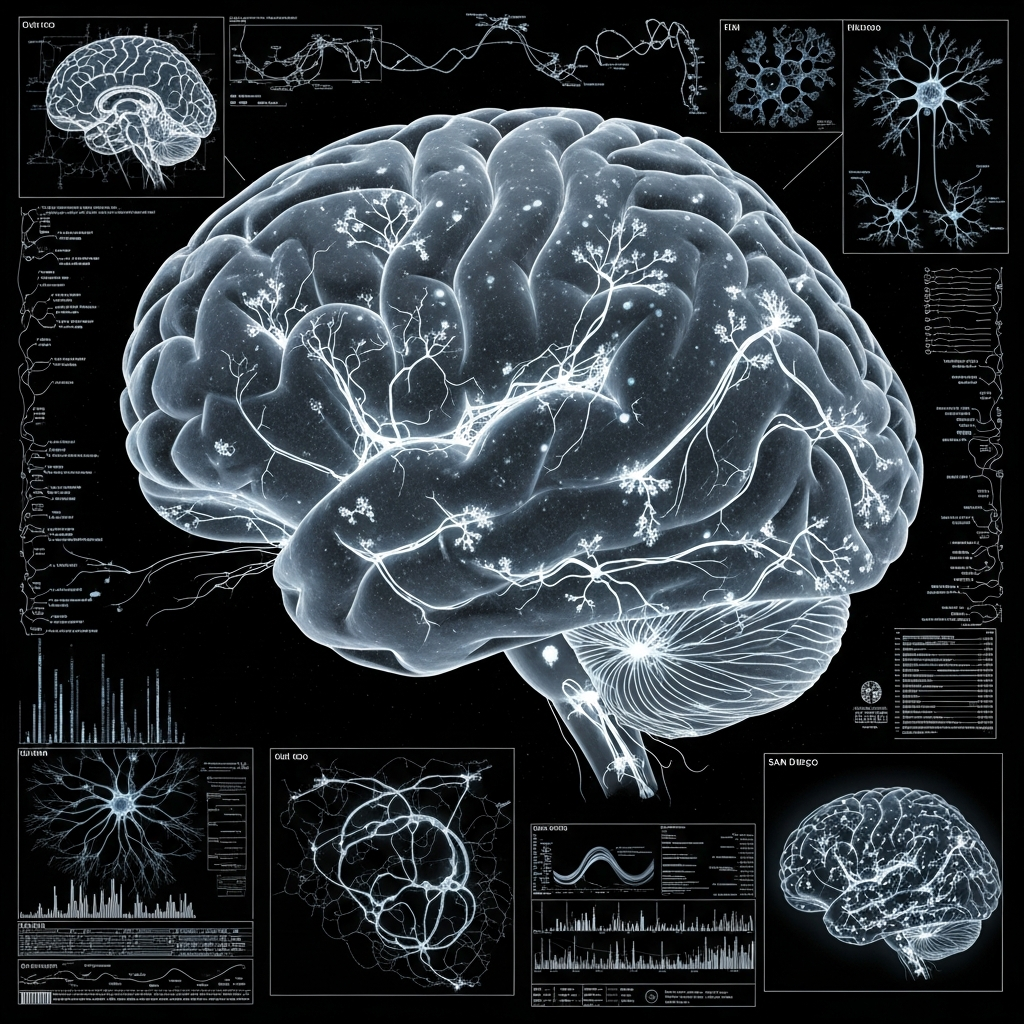
For decades, a fundamental question puzzled scientists: can the adult human brain generate new cells? This long-standing debate, often met with skepticism, has finally been resolved with groundbreaking new research. A landmark multiomic study, detailed in Nature and highlighted by institutions like UIC, Northwestern University, and the University of Washington, provides definitive evidence that our brains continue to produce new neurons throughout life, even into advanced age. This discovery offers immense hope for understanding memory, aging, and the fight against Alzheimer’s disease.
The Enduring Mystery of New Brain Cells
The idea of “neurogenesis”—the birth of new neurons—in the adult brain was once a controversial concept. While early findings in rodents in the 1960s hinted at this ability, technical limitations made it difficult to confirm in humans. Many believed that we are born with a finite number of brain cells, and that decline is inevitable. However, recent advancements in sophisticated techniques, including multiomic single-cell sequencing and machine learning, have finally provided the crucial evidence, confirming that neural stem cells (NSCs), neuroblasts, and immature neurons are actively present in the adult human hippocampus, the brain’s vital memory center. This confirms a developmental journey for new brain cells.
Mapping the Brain’s New Cell Journey
Researchers meticulously analyzed nearly 356,000 nuclei from post-mortem hippocampal samples. These samples came from diverse groups: young adults with sharp memories, healthy older adults, those with preclinical Alzheimer’s disease (AD), individuals with full-blown AD, and a remarkable group known as “SuperAgers”—individuals aged 80+ with memory as strong as people decades younger.
The study first mapped the trajectory of new brain cell growth in young adults. It identified neural stem cells (NSCs) as the starting point. These stem cells then differentiate into neuroblasts, which are early-stage neurons, and finally mature into immature granule neurons. This clear developmental path, similar to what’s seen in younger brains, validates the ongoing process of neurogenesis in adulthood. The researchers observed shifts in the activity of specific transcription factors, from those promoting stem cell maintenance in NSCs to those regulating neuronal differentiation and maturation in immature neurons, underscoring the dynamic nature of this process.
Aging, Alzheimer’s, and the Decline of New Brain Cells
The groundbreaking study revealed significant changes in new brain cell growth associated with aging and Alzheimer’s disease. While healthy aging saw some natural shifts, the most dramatic alterations appeared in individuals with cognitive decline.
Crucially, the study found that early alterations linked to dysregulated neurogenesis were largely associated with changes in chromatin accessibility. Chromatin is the complex of DNA and proteins that forms chromosomes. Its “accessibility” dictates which genes can be read and activated. The research showed that these epigenetic changes in chromatin accessibility were detectable even in neurogenic cells from individuals with preclinical Alzheimer’s disease. These changes became even more pronounced in full-blown AD cases, suggesting that epigenetic modifications might serve as a more robust and earlier molecular signature for cognitive decline than changes in gene expression alone.
Specifically, the number of neuroblasts and immature neurons significantly dropped in individuals with AD compared to healthy adults. The brain’s ability to create these new cells appears to be severely compromised as Alzheimer’s pathology progresses. This direct correlation highlights robust new brain cell growth as a “resilience signature” and a vital defense against age-related cognitive deterioration.
The SuperAger Secret: A “Resilience Signature”
Perhaps the most exciting finding concerned SuperAgers. These individuals, despite their advanced age, exhibited a remarkable capacity for new brain cell growth. The study found that SuperAgers produced new neurons in their hippocampus at twice the rate of other healthy older adults. This exceptional “neuronal fertility” is a key biological mechanism behind their superior cognitive abilities.
The unique neurogenic profile in SuperAgers was primarily driven by distinct epigenetic signatures, particularly in chromatin accessibility. Thousands of regions in their immature neurons and neuroblasts showed upregulated chromatin accessibility compared to other groups. This suggests their cells are better programmed to respond to environmental changes and stress. SuperAgers maintained a “young-like” neurogenic state, sharing some gene regulatory networks (eRegulons) with young adults. This special profile, distinct from both healthy older adults and those with cognitive decline, may reflect a unique “resilience signature” that protects their memories.
Beyond New Brain Cells: The Broader Brain Network
The study also looked beyond new neuron formation to other crucial brain components. It identified specific “hippocampal cognitive integrity” (HIPPI) signals that distinguish successful aging from pathological aging. Most changes in gene expression (DEGs) were found in CA1 neurons, which are vital for memory formation. These changes related to neuronal function and neurotransmission. Meanwhile, most changes in chromatin accessibility (DARs) were observed in astrocytes, brain support cells.
The research emphasized that maintaining efficient neurotransmission, synaptic plasticity (the ability of synapses to strengthen or weaken over time), and redox balance in CA1 neurons is crucial for successful cognitive aging. Furthermore, enhanced synaptic adhesion and glutamatergic communication—a key type of brain signaling—were characteristic of SuperAgers and healthy older adults, but significantly weakened in preclinical AD and AD. This underscores the critical role of preserving excitatory synapse integrity in healthy cognitive aging and suggests these pathways as potential targets for future treatments.
Implications: A Future of Hope for Brain Health
This groundbreaking research offers a profound and hopeful perspective on brain aging. It refutes the notion that brain decline is an inevitable part of getting older. By establishing a comprehensive multiomic molecular framework for human hippocampal neurogenesis, the study opens new avenues for understanding, preventing, and potentially treating age-related cognitive decline and Alzheimer’s disease.
Understanding the specific molecular and epigenetic networks that govern new brain cell growth in SuperAgers could pave the way for developing targeted therapeutics. These interventions could aim to stimulate neurogenesis, enhance chromatin accessibility in crucial regions, or bolster glutamatergic pathways to preserve memory and cognitive function. The study also supports the idea that while genetics play a role, lifestyle factors such as diet, exercise, and inflammation might influence this vital process, offering practical takeaways for promoting brain health.
While this study is a monumental step, it also highlights areas for future exploration. The inherently small sample sizes for human brain studies and significant inter-sample variability are limitations. Further research will delve into how best to activate and sustain new brain cell growth, precisely characterize the maturation process of these human-born neurons, and fully unravel their physiological roles in cognition and mood. The ultimate goal is to unlock strategies that help a broader population maintain memory and cognitive vitality throughout their lives.
Frequently Asked Questions
What is human hippocampal neurogenesis and why was it debated?
Human hippocampal neurogenesis refers to the process of generating new neurons in the hippocampus, a brain region critical for memory, learning, and emotion, even in adulthood. For decades, its existence in adult humans was fiercely debated. Early studies in animals hinted at it, but proving it in the complex human brain was challenging due to technical limitations and a prevailing belief that adults are born with a fixed number of neurons. Recent advanced multiomic single-cell sequencing techniques have now definitively confirmed that humans continue to produce new brain cells throughout life, even into old age, laying the debate to rest.
How do ‘SuperAgers’ maintain exceptional memory through neurogenesis?
SuperAgers—individuals over 80 with memory capabilities comparable to people 20-30 years younger—maintain their cognitive prowess by producing new neurons in their hippocampus at a significantly higher rate, roughly twice that of other healthy older adults. Their new brain cells possess distinct epigenetic signatures, particularly in chromatin accessibility, which suggests these cells are better programmed to adapt to environmental changes and stress. This unique “resilience signature” involves specific gene regulatory networks that enable a maintained “young-like” neurogenic state, contributing to their remarkable resistance against age-related cognitive decline.
Can understanding neurogenesis lead to treatments for Alzheimer’s and cognitive decline?
Yes, understanding human hippocampal neurogenesis offers significant therapeutic potential for combating Alzheimer’s disease and age-related cognitive decline. The study revealed that a decline in new brain cell growth is directly correlated with cognitive impairment and Alzheimer’s pathology, and that epigenetic changes in neurogenic cells are early indicators of the disease. By identifying the molecular and epigenetic networks governing robust neurogenesis in SuperAgers, scientists can explore interventions aimed at stimulating new brain cell growth, enhancing chromatin accessibility, or bolstering crucial brain signaling pathways (like glutamatergic communication). This could lead to strategies for preserving memory and cognitive function, potentially even preventing or slowing the progression of neurodegenerative diseases.