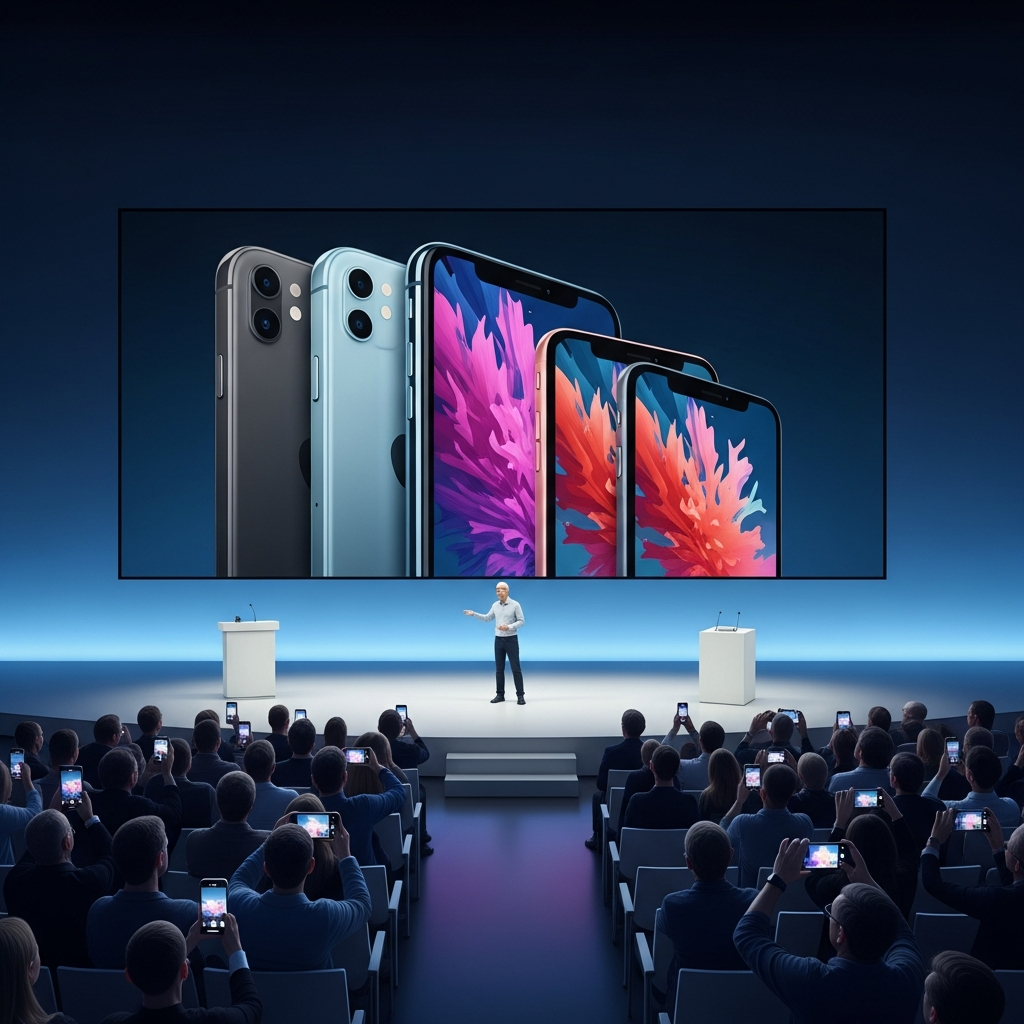
Apple enthusiasts worldwide are buzzing with anticipation! CEO Tim Cook recently teased a “big week ahead,” signaling a wave of new product announcements starting Monday, March 2, 2026. This isn’t a single keynote but a strategic multi-day unveiling, culminating in a “Special Experience” for media on Wednesday, March 4th, across global hubs like New York, Shanghai, and London. Expect a flurry of press releases introducing refreshed iPhones, MacBooks, and iPads, each packed with targeted upgrades designed to excite existing users and attract new ones. From an innovative low-cost MacBook designed for students to an upgraded iPhone 17e finally gaining MagSafe, let’s dive into what’s expected from this pivotal Apple Launch week.
Introducing Apple’s Game-Changing Low-Cost MacBook
Apple is poised to disrupt the affordable laptop market with an all-new Low-Cost MacBook. This machine isn’t just an update; it’s a strategic entry designed to directly compete with popular Chromebooks, particularly in the educational sector. Rumors suggest it will closely resemble the MacBook Air, featuring a sleek aluminum chassis available in a vibrant array of colors. Think light yellow, green, blue, pink, silver, and dark gray – a fun palette to appeal to younger users.
Design, Display, and Performance
This budget-friendly MacBook is expected to boast a 12.9-inch or 13-inch display. To maintain its low price point, it will likely feature a thicker chassis compared to the super-thin MacBook Air. This design choice, while potentially less premium visually, could offer advantages like extended battery life. Furthermore, Apple may employ older, less expensive display technology, meaning no True Tone support or the highest brightness levels. The keyboard is also anticipated to forgo backlighting to keep costs down.
Under the hood, this innovative MacBook will feature an A18 Pro chip, a significant departure from Apple’s typical M-series processors for Macs. The A18 Pro, which first debuted in the iPhone 16 Pro, utilizes a second-generation 3-nanometer process. It includes a 6-core CPU, 6-core GPU, and a 16-core Neural Engine for AI tasks. Benchmarks indicate it impressively outperforms the M1 chip and offers single-core performance comparable to the M4.
For daily activities like web browsing, document creation, video playback, and even light photo or video editing, the A18 Pro MacBook will be more than sufficient. However, it won’t be ideal for intensive tasks like 4K video editing, 3D rendering, or high-end gaming. This positioning aligns perfectly with its target audience of students and casual users.
Connectivity, Storage, and Pricing
The A18 Pro chip does not support Thunderbolt, so the new MacBook will be limited to standard USB-C (10GB/s) and will only support a single external display. Storage options might start as low as 128GB, though 256GB is also a possibility. It’s expected to include at least 8GB of RAM, ensuring compatibility with Apple Intelligence features.
The most exciting aspect for many will be the price. Current MacBook Air models start at $999. This low-cost MacBook is projected to land somewhere between $599 and $799. This pricing positions it attractively against the iPad Air and popular Chromebooks, making it a compelling entry point into the macOS ecosystem.
The Evolved iPhone 17e: MagSafe and More
The iPhone 17e, Apple’s most affordable new iPhone, is due for a refresh from its 2025 predecessor. While largely retaining the familiar 6.1-inch design with black and white color options, it brings crucial internal upgrades.
Core Upgrades and Display Features
Powering the iPhone 17e will be the A19 chip, the same processor found in the flagship iPhone 17. This offers a noticeable 5-10% performance boost over the A18 chip. While a slightly downclocked version or a GPU downgrade is possible to maintain its “e” tier status, it will still deliver a swift user experience. RAM is expected to remain at 8GB, supporting Apple Intelligence features.
The display will likely retain the same panel as the iPhone 16e, meaning a 60Hz refresh rate. Users hoping for 120Hz ProMotion or Always-On display technology will need to look to Apple’s more premium iPhone models, as these features require an OLED panel with 1-nit minimum brightness.
Dynamic Island and MagSafe Integration
A key design discussion point is the Dynamic Island. Some rumors suggest the iPhone 17e could finally ditch the notch for this more integrated, pill-shaped cutout, enhancing its modern aesthetic. However, other reports indicate it might retain the notch, so this upgrade isn’t a guaranteed feature.
Perhaps the most significant functional enhancement for the iPhone 17e is the expected addition of MagSafe compatibility. This addresses a major limitation of its predecessor, enabling 15W wireless charging speeds and opening up compatibility with a vast ecosystem of MagSafe cases and accessories. The device will also adopt Apple’s faster and more efficient C1X modem, and there’s a strong possibility of the N1 Wi-Fi/Bluetooth chip being included for improved connectivity.
The camera setup is likely to remain a single 48-megapixel Wide Angle rear camera and a 12-megapixel front-facing camera. Pricing is anticipated to stay consistent at $599, solidifying its position as Apple’s accessible iPhone offering.
iPad Innovations: Air and Entry-Level Updates
Apple’s iPad lineup is also getting some love, with both the iPad Air and the entry-level iPad receiving crucial updates focused on performance and smart features.
iPad Air: Power Boost with M4 Chip
The iPad Air is set to receive a significant performance bump with the adoption of the powerful M4 chip. This upgrade from the M3 offers substantial speed and efficiency improvements, including up to 10 CPU cores, a faster Neural Engine, and increased memory bandwidth.
Despite the internal overhaul, the physical design is expected to remain largely unchanged, maintaining the familiar 11-inch and 13-inch size options. It will continue to use a standard LED display, meaning ProMotion and OLED technology remain exclusive to the iPad Pro line. Connectivity will feature USB-C, a Touch ID top button, and existing camera setups. Expect the integration of Apple’s N1 networking chip (for Wi-Fi 7, Bluetooth 6, and Thread support) and the C1X modem for cellular models, ensuring cutting-edge wireless capabilities. Pricing is projected to hold steady at $599 for the 11-inch model and $799 for the 13-inch.
Entry-Level iPad: Apple Intelligence for All
The 12th-generation low-cost iPad is getting arguably one of the most impactful upgrades: the inclusion of an A18 or A19 chip. This is a game-changer because it enables support for Apple Intelligence for the very first time on Apple’s most affordable tablet. To facilitate this, the device’s RAM will increase from 6GB to a minimum of 8GB.
Design-wise, the 12th-generation iPad will largely mirror its predecessor, featuring an 11-inch edge-to-edge display with Touch ID in the side button and Apple’s characteristic thick bezels. It will retain its Retina LCD display without ProMotion, P3 wide color, or lamination, contributing to its accessible price point. New color options are a possibility. Like the iPad Air, it may also gain the N1 chip and an Apple-designed modem. Starting at an expected $349, this updated iPad offers incredible value, bringing advanced AI capabilities to a broader audience.
MacBook Lineup Revamps: Air and Pro Get M5 Chips
The Mac family is also on the refresh agenda, with new chips making their way into both the MacBook Air and the higher-end MacBook Pro models.
MacBook Air: Stepping Up with M5 Performance
The MacBook Air will integrate the powerful M5 chip, which Apple previously introduced in the iPad Pro and entry-level MacBook Pro models. This is a significant leap from the M4, leveraging third-generation 3-nanometer technology. The M5 boasts up to a 10-core CPU and 10-core GPU, delivering substantially faster multi-threaded CPU performance (up to 15% faster than M4) and even more impressive GPU gains (up to 30% faster).
Crucially, the M5 includes a Neural Accelerator in each GPU core, boosting AI workloads, and features improved unified memory bandwidth. RAM will continue to start at 16GB, with options up to 32GB. Storage tiers remain consistent, beginning at 256GB. Design-wise, expect the familiar 13-inch and 15-inch aluminum unibody designs, complete with fanless thermal systems and Retina LCD displays. Pricing for the MacBook Air is expected to remain at $1,099 for the base model.
MacBook Pro: M5 Pro/Max and a Glimpse into the Future
For those needing uncompromising power, the higher-end 14-inch and 16-inch MacBook Pro models are receiving the advanced M5 Pro and M5 Max chips. These chips, built on an advanced 3-nanometer process, promise substantial performance gains over their M4 counterparts, with up to 20% faster CPU and 30% faster GPU performance. They also benefit from enhanced Neural Accelerators for AI, improved ray-tracing, dynamic caching, and increased memory bandwidth.
However, a critical piece of expert advice for potential buyers: if you don’t urgently need a new MacBook Pro, consider waiting. The next generation of MacBook Pro models, anticipated after these M5 refreshes, is rumored to feature groundbreaking upgrades. These include OLED displays, touchscreen capabilities, and a Dynamic Island, alongside new M6 Pro/Max chips. These upcoming models represent a much more significant design and feature overhaul, making the M5 Pro/Max refresh feel incremental in comparison. Waiting could mean experiencing a truly transformative MacBook Pro.
Beyond the Core: Other Possible Unveilings
While the focus for this Apple Launch event is primarily on the iPhone, iPads, and MacBooks, a few other products have been the subject of ongoing rumors. The timing for these, however, remains less certain, often tied to the broader evolution of Apple’s software ecosystem.
HomePod Mini and Apple TV
A refreshed HomePod mini and a new Apple TV have been whispered about for some time. Both are expected to receive updated chips and potentially new color options (for the HomePod mini), but significant design changes are not anticipated. Their launch might be delayed, as their full potential is likely linked to the rollout of a more capable version of Siri in iOS, which has faced its own reliability hurdles. These devices could appear at a later, more home-focused event once Siri’s enhanced capabilities are finalized.
Frequently Asked Questions
What makes the new Low-Cost MacBook a game-changer for Apple’s lineup, and who is it designed for?
The new Low-Cost MacBook is a game-changer because it marks Apple’s strategic entry into the highly competitive budget laptop market, directly challenging Chromebooks. It’s designed primarily for students, casual users, and those seeking an affordable entry point into the macOS ecosystem without compromising on a traditional laptop form factor. Its expected A18 Pro chip offers excellent performance for everyday tasks, web browsing, and light content creation, making it a powerful yet accessible tool for productivity and learning.
What are the most significant upgrades to expect from the iPhone 17e, and is it a worthwhile upgrade from previous models?
The most significant upgrades for the iPhone 17e include the powerful A19 chip, offering improved performance over the A18, and crucially, the addition of MagSafe compatibility. MagSafe enables faster 15W wireless charging and opens up access to Apple’s wide array of magnetic accessories. While the display will remain 60Hz and may retain a notch, the MagSafe integration alone makes it a worthwhile upgrade for users coming from older iPhone models without this convenient feature, enhancing its utility and ecosystem compatibility.
Should users considering a new MacBook Pro wait for future models, and what major features are anticipated?
Yes, for most users not in urgent need of an immediate upgrade, it is strongly recommended to wait for the next generation of MacBook Pro models. While the M5 Pro and M5 Max chips in the upcoming refresh offer performance gains, the subsequent models are anticipated to feature transformative upgrades. These include revolutionary OLED displays, touchscreen capabilities, and the integration of a Dynamic Island instead of the traditional notch. These features, along with next-generation M6 Pro/Max chips, represent a much more significant leap in user experience and display quality.
The Future is Now: Apple’s Strategic Vision
Apple’s “big week” in early March 2026 underscores a clear strategic vision: making powerful, intuitive technology accessible across a wider spectrum of price points while continually pushing the envelope in core categories. From the budget-friendly MacBook aiming to capture the educational market to the crucial MagSafe addition to the iPhone 17e, and the significant AI enablement for the entry-level iPad, these announcements are more than just spec bumps. They represent Apple’s commitment to evolving its ecosystem, attracting new users, and solidifying its market position.
While many of these updates are internal, focusing on chip advancements and feature integration, their impact on daily usability and future-proofing these devices cannot be overstated. Users will benefit from faster performance, enhanced connectivity, and the power of Apple Intelligence spreading across the lineup. Stay tuned as Apple rolls out these exciting new products, setting the stage for yet another year of innovation.