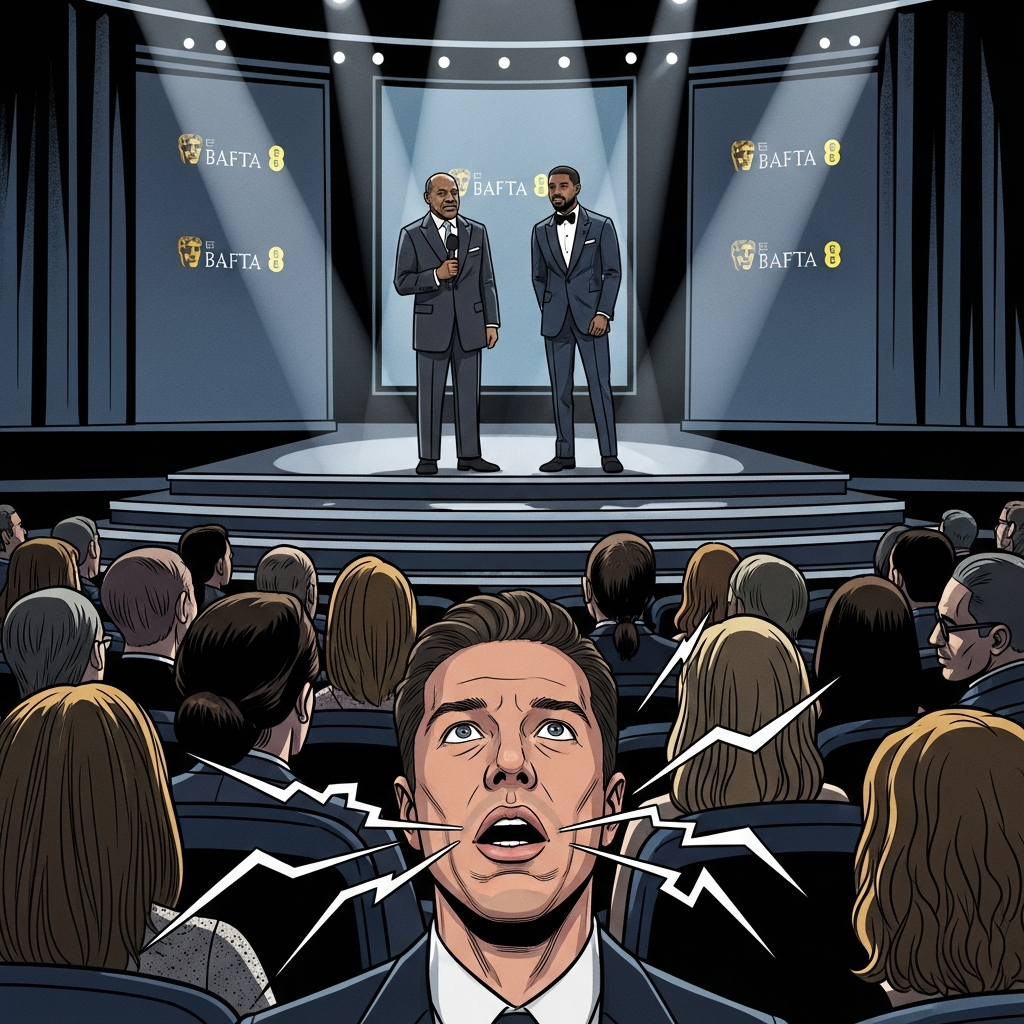
The 79th BAFTA Awards stirred significant global discussion when Scottish Tourette’s syndrome activist John Davidson experienced involuntary vocal tics, including racial slurs, during the ceremony. This incident, occurring as “Sinners” stars Michael B. Jordan and Delroy Lindo presented, thrust Davidson, the real-life inspiration behind the BAFTA-nominated film “I Swear,” into an unwelcome spotlight. This deep dive explores Davidson’s exclusive interview, the complexities of Tourette’s syndrome, and the crucial conversations sparked around disability, media responsibility, and accountability. His candid reflections offer vital insights into living with an often-misunderstood neurological condition and navigating public scrutiny.
The BAFTA Incident Unpacked: An Involuntary Outcry
The atmosphere at the 2026 BAFTA Awards shifted dramatically when John Davidson’s involuntary tics became audible. While actors Michael B. Jordan and Delroy Lindo were on stage, Davidson, seated 40 rows back, uttered several offensive phrases. Among these was a racial slur, which subsequently ignited a firestorm of controversy. Davidson describes feeling an immediate “wave of shame and embarrassment” as his coprolalia tics emerged, wishing the “floor to swallow” him whole. Despite his personal distress, the incident quickly led to “widespread outrage” from the film community and online users alike, prompting a critical review of the broadcast’s handling.
Davidson’s team promptly reached out to the studio behind “Sinners” to offer direct apologies to Jordan, Lindo, and production designer Hannah Beachler. He later decided to leave the auditorium to prevent further upset, finding a private room to watch the remainder of the awards. For Davidson, this highly public event was a “heightened version of his everyday life,” echoing the anxieties that have often kept him from leaving his home.
Understanding Tourette’s: Dispelling Harmful Stereotypes
Many people’s perception of Tourette’s syndrome is narrowly shaped by stereotypes, frequently focusing on coprolalia — the involuntary utterance of obscene or offensive language. John Davidson, a prominent campaigner for Tourette’s awareness, clarifies that this symptom affects only 10% to 30% of individuals with the condition and is not a diagnostic criterion. While incredibly distressing and difficult to manage, often leading to discrimination and isolation, the true challenge lies in public misconceptions rather than the tics themselves. Davidson emphasizes that Tourette’s is a “condition,” a term preferred by the community over “disability.”
He vividly explains the involuntary nature of tics, comparing suppression to shaking a full bottle of Coca-Cola; the pressure eventually builds and “bursts out,” sometimes leading to a tic attack. For Davidson, whose brain works rapidly with aggressive tics, he possesses “almost no ability to suppress,” especially under stress, making tics “burst out… like a gunshot.” He recalls a terrifying instance of involuntarily punching his beloved second mother, Dottie, in the face while she was driving, nearly causing a collision. This harrowing example underscores how Tourette’s can compel his body and voice to perform actions completely contrary to his will or affection.
Intent vs. Involuntary Response: A Crucial Distinction
A central message from John Davidson is the critical distinction between personal intent and an involuntary neurological response. He firmly asserts that his tics “have absolutely nothing to do with what I think, feel or believe.” These are “involuntary neurological misfires,” not choices, intentions, or reflections of his core values. Davidson highlights that Tourette’s can feel “spiteful,” often causing the most upsetting tic to emerge. He states that what he shouts is “literally the last thing in the world I believe; it is the opposite of what I believe.” The specific offensive word uttered at the BAFTAs, for instance, is a term he would “completely condemn” if he did not have Tourette’s syndrome.
He also explains echolalia, a tic trigger where he is prompted by what he sees or hears. At the BAFTAs, this included shouting “Boring” when the BAFTA chair spoke. Another instance involved homophobic tics and a “pedophile” shout, likely triggered by Alan Cumming’s joke about a “hairy Peruvian bear” and Paddington Bear, a children’s character. Davidson stressed that he uttered “perhaps 10 different offensive words” that night, correcting the media’s focus solely on one particular slur. Understanding this inherent lack of intent is paramount to reducing stigma and fostering genuine empathy.
Media Responsibility and the Broadcast Controversy
The BAFTA incident sparked intense scrutiny over the BBC and BAFTA’s handling of the live-delayed broadcast. Despite a two-hour delay, the BBC initially aired the racial slur uncensored. This editorial decision was a major point of contention, especially given that the BBC later removed the offensive language from the version available on BBC iPlayer, attributing the oversight to “involuntary verbal tics associated with Tourette syndrome” and stating it “was not intentional.” However, critics, including BAFTA jury member Jonte Richardson who resigned in protest, deemed the handling “utterly unforgivable,” citing BAFTA’s “long history of systemic racism” and its failure to acknowledge the harm caused.
Disability advocate Jhónelle Bean, a Black woman with Tourette’s syndrome, provided powerful insights into the controversy. She powerfully refuted online assumptions that Davidson’s tic implies racism. Instead, Bean critically pinpointed the BBC’s editorial decision to include the slur in the broadcast as the primary source of harm. She noted that the BBC selectively edited out other tics and even a political statement (“Free Palestine”) from another speech, yet chose to amplify the deeply offensive slur. This deliberate amplification of an unintentional act, she argued, caused widespread harm, leading to threats against other individuals with Tourette’s and providing an excuse for racist behaviors. Bean found the apologies from Alan Cumming, the BBC, and BAFTA insufficient, lacking true accountability for the initial inclusion.
Davidson’s BAFTA Experience and Expectations
John Davidson’s decision to attend the BAFTAs was deeply personal and professional. As the real-life inspiration and executive producer for “I Swear,” a film with six nominations detailing his journey with Tourette’s syndrome, he felt he had every right to be there. Despite undergoing serious heart surgery just five weeks prior, he invested immense physical and mental energy to attend. He harbored an expectation that the audience, as voting members who had likely seen his film, would be “well prepared, well educated and well informed” about his condition.
Initially, Davidson felt welcomed, noting the audience’s cheers and applause at his name, a moment he perceived as significant acceptance. He also believed BAFTA and StudioCanal were working closely to manage the broadcast, with assurances that any swearing would be edited out. Having made four documentaries with the BBC, he expected them to understand his condition and prevent his tics, uttered from 40 rows back, from being included. He questions the wisdom of placing a microphone directly in front of his seat, knowing he would tic. When his tics ramped up, and coprolalia emerged, his mind pleaded, “Please don’t judge me. Please understand this isn’t who I am.” He had assumed his tics couldn’t be heard on stage until he saw Michael B. Jordan and Delroy Lindo react.
Moving Forward: A Call for Empathy and Education
John Davidson has dedicated years to educating and campaigning around Tourette’s syndrome, experiencing both progress and persistent misunderstanding. The aftermath of the BAFTAs, with comments like “I wouldn’t say these things unless I thought them” or “I am racist deep down,” deeply upset him and highlighted the ongoing need for greater education. Tourette’s Action CEO Emma McNally echoed this, emphasizing that tics are involuntary and do not reflect a person’s beliefs, intentions, or character. She stressed the emotional weight, isolation, and increased risk of anxiety and depression that misunderstanding places on individuals with the condition.
The incident serves as a stark reminder of the complexities at the intersection of disability, race, and media. While the involuntary nature of Davidson’s tics is crucial to understand, the harm caused by the broadcast of a racial slur cannot be dismissed. The path forward requires holding broadcasting entities accountable for their editorial power while simultaneously fostering a deeper public understanding of neurological conditions. As Davidson and advocates urge, watching films like “I Swear” and seeking accurate information can bridge the gap between misconception and compassionate understanding.
Frequently Asked Questions
What is coprolalia and how does it relate to John Davidson’s tics at the BAFTAs?
Coprolalia is an involuntary vocal tic involving the use of socially unacceptable, obscene, or offensive words. John Davidson, who lives with Tourette’s syndrome, experienced coprolalia during the BAFTA Awards. He clarified that this symptom affects only 10% to 30% of individuals with Tourette’s and is not a diagnostic requirement. For Davidson, these tics are aggressive and unpredictable, often saying “the opposite of what I believe,” and are neurological misfires, not intentional expressions of his thoughts or values. The highly distressing nature of coprolalia often leads to significant shame and isolation for those affected.
What was the primary criticism directed at BAFTA and the BBC regarding the broadcast of the incident?
The primary criticism centered on the BBC’s editorial decision to broadcast the racial slur uncensored, despite a two-hour delay. Critics, including disability advocate Jhónelle Bean, argued that while John Davidson’s tic was involuntary, the BBC’s choice to air it, particularly after selectively editing other content, amplified the harm. BAFTA also faced criticism for its initial handling and subsequent apologies, with some questioning the organization’s accountability and sensitivity, especially given its “long history of systemic racism.” The broadcast failure raised serious concerns about media responsibility and inclusive production practices.
How does John Davidson want the public to understand the difference between tics and personal beliefs?
John Davidson adamantly wants the public to understand that his tics are “involuntary neurological misfires” and have “absolutely nothing to do with what I think, feel or believe.” He stresses that tics are not a reflection of his character, intentions, or values. He explains that Tourette’s can feel “spiteful,” often compelling him to utter the exact opposite of what he genuinely believes. By emphasizing this crucial distinction, Davidson aims to combat widespread misconceptions and reduce the stigma and discrimination experienced by individuals with Tourette’s syndrome, fostering empathy and informed understanding.
In conclusion, the BAFTA incident involving John Davidson has become a poignant and complex case study in understanding Tourette’s syndrome in the public eye. Davidson’s courageous sharing of his experiences, coupled with the critical analysis from advocates, underscores the vital need for nuanced conversations. It’s a powerful reminder that while involuntary actions can have significant impact, accountability must also extend to the systems and media platforms that amplify such moments. Ultimately, greater education, empathy, and responsible media practices are essential to creating a more inclusive and understanding society for everyone living with neurological conditions.