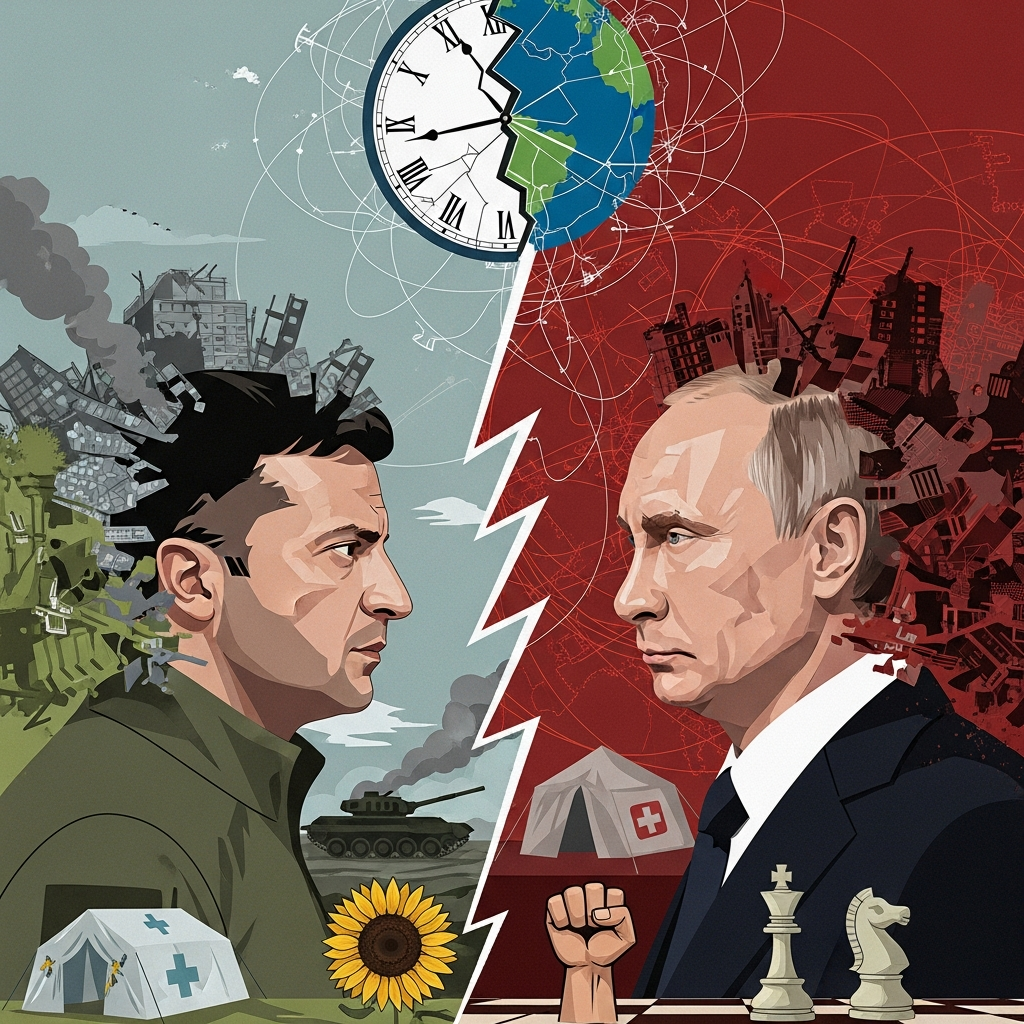
As the Ukraine war enters its fifth year, the world watches a conflict profoundly reshaping global security. Ukrainian President Volodymyr Zelenskyy asserts that Russia has failed to achieve its primary objectives. In a striking alignment, the Kremlin acknowledges its goals remain unmet, vowing to continue fighting. This critical juncture highlights a complex reality of immense human cost, grinding territorial disputes, and intense diplomatic efforts, all playing out against a backdrop of shifting international resolve.
This article unpacks the key dynamics of this protracted conflict. We explore the current state of play, the staggering human toll, and the critical role of international support. Expert analysis also sheds light on potential future scenarios. Understanding these factors is essential as the war continues to define the future of Europe and beyond.
A War of Attrition: Zelenskyy’s Resolve vs. Kremlin’s Unmet Goals
Four years into Russia’s full-scale invasion, the sheer resilience of Ukraine remains a defining narrative. On February 24, 2026, marking the start of the fifth year of the Ukraine war, President Zelenskyy delivered a poignant address. He declared Russia’s Vladimir Putin has not broken the Ukrainian spirit. Ukraine has preserved its statehood, defied early predictions of collapse, and defended its independence. Zelenskyy’s defiant message emphasized a commitment to a “strong, dignified, and lasting peace.” He stressed that any agreement must be genuinely accepted by Ukrainians.
Conversely, Kremlin spokesperson Dmitry Peskov offered a candid admission. He stated that Russia has not yet fully achieved its war aims in Ukraine. Peskov affirmed that military operations would continue until these objectives are met. This acknowledgment, while confirming a lack of decisive victory, underscores Moscow’s unwavering intent. The conflicting statements highlight a deep ideological chasm. Ukraine seeks peace based on its sovereignty. Russia insists on prosecuting a war it portrays as defensive, aimed at securing its “borders” and “strategic parity” against perceived NATO expansion.
The Staggering Human and Economic Toll
The conflict has tragically claimed hundreds of thousands of lives on both sides. Experts from the Center for Strategic and International Studies (CSIS) estimate Russian casualties at 1.2 million, including approximately 325,000 troop deaths. Ukrainian casualties are projected between 500,000 and 600,000, with around 140,000 troop deaths since February 2022. These numbers represent the deadliest war on European soil since World War II.
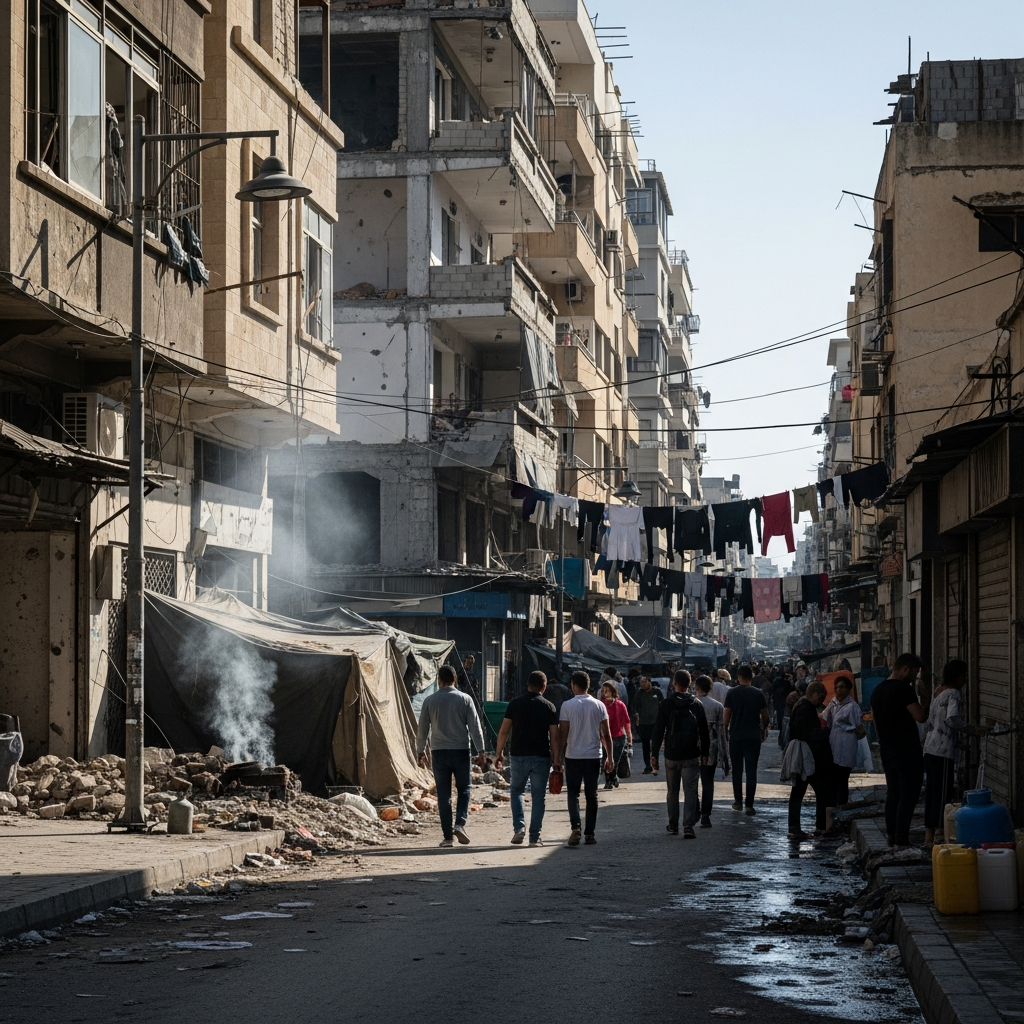
Beyond the battlefield, Ukrainian civilians endure immense suffering. Near-daily aerial attacks cripple infrastructure, causing widespread power outages during harsh winters. The war has scattered families and devastated communities. The personal account of Valeriy Kashkarov, a Ukrainian soldier who survived a sniper shot, powerfully illustrates this agony. He mourned the daily loss of “young brothers in arms,” echoing the profound grief felt across the nation. “Alleys of Glory” now commemorate fallen soldiers in every Ukrainian city. This constant exposure to loss creates an “abnormal new normality” for those living through the conflict.
The financial cost of this destruction is equally staggering. Post-war reconstruction for Ukraine is estimated at approximately $588 billion over the next decade. This figure comes from a joint report by the World Bank, EU, and UN. Even before the conflict, Ukraine was one of Europe’s poorest countries. The immense rebuilding task will require sustained international commitment.
The Diplomatic Battlefield and Lingering Deadlocks
Diplomatic efforts to halt the fighting have been fraught with challenges. The United States relaunched talks last year, leading to trilateral negotiations in Abu Dhabi and Geneva in February 2025. President Donald Trump also held meetings with Russian President Vladimir Putin in Alaska in August 2025. However, these discussions have largely remained deadlocked.
A primary sticking point is territorial control. Russia currently occupies roughly 20% of Ukrainian territory, including regions seized before 2022. Moscow demands full control of the eastern Donetsk region as a condition for any peace deal. It has threatened to achieve this by force if Kyiv resists. Ukraine, conversely, firmly rejects ceding any sovereign territory. Kyiv insists on robust security guarantees from allies, including the U.S., to deter future invasions. Yuriy Sak, a former advisor to Ukraine’s defence minister, asserts that Russia maintains “maximalist and unrealistic” negotiating positions. This unwillingness to negotiate in good faith has stalled peace talks.
Amidst these diplomatic struggles, a “Coalition of the Willing” of around 35 countries has met to discuss the conflict. Some members have even expressed readiness to deploy troops to ensure any potential ceasefire holds. However, Russia has rejected proposals for European troop deployment post-ceasefire. This further complicates prospects for a durable peace.
Shifting Tides: Territorial Gains and Western Support
Despite heavy losses, Russian troops have made slow, incremental advances on the front line in recent months. This is particularly true in the eastern Donbas region, which Moscow seeks to annex. The Institute for the Study of War reports that Russian forces captured only 0.79% of Ukrainian territory in the past year. This underscores the costly and painstaking nature of their progress.
Meanwhile, Ukraine has demonstrated remarkable tactical capabilities. Retired U.S. Air Force Gen. Philip Breedlove highlights instances where Ukraine “snatched back months of Russian gains in three days.” These rapid gains followed disruptions in Russia’s command-and-control systems, specifically mentioning the loss of the Starlink system. Carrie Filipetti of the Vandenberg Coalition sees these advances as evidence of “Putin’s war machine… continuing to atrophy.” She emphasizes that momentum is crucial in diplomatic negotiations. Significant Ukrainian gains could provide stronger leverage for a “lasting and equitable peace deal.”
International support remains a critical determinant of the war’s trajectory. Leaders from Finland, Sweden, and European Commission chief Ursula von der Leyen visited Kyiv to reaffirm Europe’s “unwavering” financial, military, and humanitarian commitment. Von der Leyen stressed that Europe “will not relent until peace is restored. Peace on Ukraine’s terms.” The G7 nations, including U.S. President Donald Trump, also issued a statement reiterating “unwavering support for Ukraine.”
However, challenges persist. Heather Nauert, a former U.S. Department of State spokesperson, notes that inconsistent Western support could prolong the conflict or tip the scales in Russia’s favor. The Moscow Times highlights growing tensions within Transatlantic cooperation. This diverts attention and leads to demands for Ukrainian concessions, sometimes framed as “realism” or “open blackmail” from certain European nations. Zelenskyy has repeatedly called for interceptor missiles from the U.S. for American-made Patriot air defense launchers. He notes that recent Russian aerial attacks have depleted Ukraine’s stocks, leaving cities vulnerable.
Future Scenarios: Stalemate, Momentum, or Escalation?
Experts outline three potential future scenarios for the Ukraine war, each with profound implications.
Scenario One: Prolonged Stalemate
This prediction envisions a continuation of attrition warfare. Neither side achieves a decisive breakthrough. Negotiations remain largely stalled. General Philip Breedlove asserts that despite holding significant territory, Russia is “not winning.” He points to Russia’s high casualties and limited gains over four years. Ukraine actively manages the conflict, preventing Russia from prevailing definitively.
Scenario Two: Ukrainian Momentum Reshapes Diplomacy
This scenario suggests that recent battlefield developments could shift the diplomatic landscape. Rapid Ukrainian gains, like those following Starlink disruptions, demonstrate potential for significant reversals. Filipetti emphasizes that sustained Ukrainian advances could provide Kyiv stronger leverage. However, Breedlove argues that such gains require a clear, public declaration from the West. A commitment not to allow Russia to win, backed by necessary support, would be a “game changer.” This would compel Putin to make difficult decisions.
Scenario Three: Escalation or Western Fatigue
This concerning path warns that inconsistent Western support could prolong the conflict. It could also potentially tip the scales in Russia’s favor. Nauert broadens the conflict’s scope to a struggle over “identity, faith, and the future of a free nation.” She cites Russian atrocities, including church destruction and child abductions. Retired Lt. Gen. Richard Newton stresses that “Peace is only possible when strength shapes the terms.” He calls for “unwavering support from the U.S. and Europe” to convince Moscow that aggression carries “unacceptable consequences.” General Breedlove warns that inadequate Western support is the “most dangerous scenario.” It risks allowing Russia to “take over Ukraine.” He critically contrasts a perceived “peace through weakness” approach in Ukraine with the “peace through strength” policy seen elsewhere.
These scenarios underscore the critical role of sustained, decisive Western support. It is crucial in shaping the war’s outcome. Warnings persist against wavering commitment or a lack of clear strategic resolve.
Frequently Asked Questions
What is the current state of territorial control in the Ukraine war?
Russia currently occupies approximately 19.5% to 20% of Ukrainian territory. This includes areas seized prior to the 2022 full-scale invasion. Despite slow and costly advances, particularly in the eastern Donbas region, Russian forces captured only about 0.79% to 1% of Ukrainian territory in the past year. This highlights a prolonged battle of attrition rather than significant shifts in control. Ukraine continues to defend its sovereign territory, with both sides experiencing high casualties for minimal gains.
Who are the key international players involved in Ukraine peace talks?
The United States has actively facilitated peace talks, which were relaunched last year. These included trilateral negotiations involving the U.S., Russia, and Ukraine. President Donald Trump has also held direct meetings with Russian President Vladimir Putin. Additionally, the G7 nations, including the U.S., have reiterated their support for these peace processes. European leaders like European Commission President Ursula von der Leyen and the “Coalition of the Willing” (comprising around 35 countries) are also deeply involved, offering political, financial, and military support while calling for a ceasefire.
What are the potential future scenarios for the Ukraine war?
Experts outline three main potential outcomes. The first is a prolonged stalemate, characterized by continued attrition warfare without decisive breakthroughs or significant negotiation progress. The second is Ukrainian momentum reshaping diplomacy, where significant battlefield gains by Ukraine could provide stronger leverage for a more favorable peace deal. The third and most concerning is escalation or Western fatigue, where inconsistent international support could prolong the conflict or allow Russia to gain a decisive advantage, potentially leading to a wider European crisis.
Conclusion
As the Ukraine war enters its fifth year, the human spirit of resilience confronts the brutal reality of protracted conflict. President Zelenskyy’s declaration of Russia’s failure, mirrored by the Kremlin’s admission of unmet goals, paints a picture of a grim stalemate. The staggering human cost, immense reconstruction challenge, and complex diplomatic dance continue to shape the narrative. With experts forecasting outcomes ranging from a prolonged stalemate to potential Ukrainian breakthroughs or dangerous Western fatigue, the world remains at a critical juncture. The future of Ukraine, and indeed European security, hinges on sustained international support and a clear path toward a strong, dignified, and lasting peace.