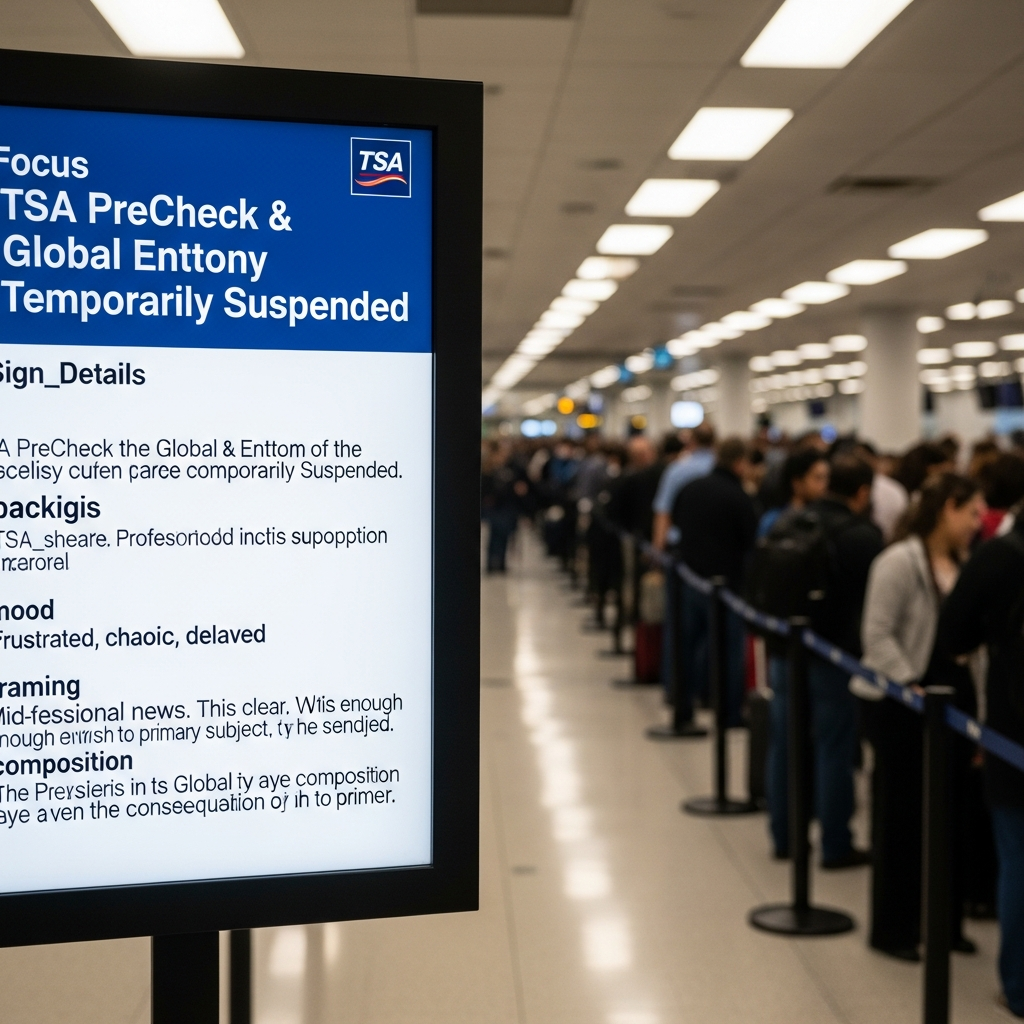
Millions of travelers are bracing for potential delays at U.S. airports and border crossings as the Department of Homeland Security (DHS) announces the temporary suspension of its highly popular expedited screening programs: TSA PreCheck and Global Entry. Effective Sunday at 6 a.m. Eastern, this abrupt halt is a direct consequence of a partial government shutdown, leaving passengers facing longer lines and increased frustration. The move highlights the real-world impact of ongoing political stalemates on everyday American life and travel.
Understanding the Sudden Suspension
The decision to suspend TSA PreCheck and Global Entry stems from a partial government shutdown that began on February 14, 2026. This shutdown affects a significant portion of the DHS, including the Transportation Security Administration (TSA) and U.S. Customs and Border Protection (CBP). Lawmakers have failed to agree on crucial funding for the agency, leading to this drastic measure. Homeland Security Secretary Kristi Noem confirmed the suspensions, stating that both TSA and CBP would now prioritize the “general traveling population” at all airports and ports of entry. This means a temporary end to “courtesy and special privilege escorts” previously afforded to enrollees.
What Triggered the DHS Funding Crisis?
The core of the funding dispute lies in intense negotiations between the White House and congressional Democrats. Democrats have demanded specific changes to DHS immigration operations, particularly in the wake of tragic incidents like the deadly shootings of Renee Good and Alex Pretti by federal immigration agents in Minneapolis, Minnesota. These demands are central to their opposition to a funding deal, creating a legislative impasse that directly impacts the agency’s ability to operate fully. The shutdown affects approximately 13% of the total federal civilian workforce, with critical agencies like FEMA, the Coast Guard, and the Cybersecurity and Infrastructure Agency also facing operational disruptions.
The Impact on Travelers and Airport Operations
The immediate fallout of the TSA PreCheck Global Entry suspension is expected to be significant. Millions of pre-approved travelers, who rely on these programs for swift passage through security checkpoints and customs, will now experience standard processing times. This change is anticipated to cause considerable inconvenience and widespread “headaches for passengers,” potentially leading to longer lines and increased wait times at already busy travel hubs.
How TSA PreCheck and Global Entry Work
TSA PreCheck is an indispensable membership program designed to streamline airport security screenings for eligible U.S. citizens and lawful permanent residents. Participants undergo a thorough application process, including a TSA background check, and pay a fee. With over 20 million enrollees as of 2024, the program allows travelers to use dedicated, faster security lanes, often avoiding the need to remove shoes, belts, or liquids from carry-on bags.
Similarly, Global Entry, a CBP program, caters to frequent international travelers. Open to U.S. citizens, lawful permanent residents, and citizens of nearly two dozen other countries, it expedites customs and immigration clearance upon re-entry into the United States. Both programs are fee-funded, leading to significant public frustration over their suspension despite not relying on direct taxpayer funds for their operation.
Political Backlash and Broader Shutdown Consequences
The decision to halt these popular travel programs has ignited a strong wave of criticism from Democratic lawmakers. Rep. Bennie Thompson of Mississippi, ranking member of the House Committee on Homeland Security, vehemently accused President Trump and Secretary Noem of “purposely punishing the American people and using them as pawns for their sadistic political games.” Other Democrats on the House Committee on Homeland Security publicly expressed outrage, suggesting the administration was “kneecapping the programs that make travel smoother and secure” and “ruining your travel on purpose.” These statements underscore the deep political dimensions of the shutdown, painting the suspension as a deliberate tactic rather than a purely operational necessity.
Unpaid Workers and Other Federal Services
Beyond travel programs, the government shutdown has broader, severe consequences. While many essential personnel, including most TSA, FEMA, and Coast Guard workers, are required to continue working, they are doing so without pay. This financial strain places a heavy burden on these dedicated federal employees and their families. Notably, personnel from ICE and Customs and Border Protection continue to receive pay, thanks to previous funding provisions.
In a related announcement, Secretary Noem also revealed that FEMA would suspend all non-disaster related responses to focus solely on actual emergencies. This decision is particularly concerning given the forecast for a significant winter storm expected to impact the Mid-Atlantic and Northeast United States, adding another layer of risk during the shutdown. This current partial shutdown follows a previous 43-day government shutdown, the longest in U.S. history, which concluded in November, highlighting a recurring pattern of political impasses affecting vital public services.
Navigating Airport Travel During the Suspension
With the TSA PreCheck Global Entry suspension in effect, travelers must adjust their plans. Here are some actionable tips:
Arrive Early: Plan to arrive at the airport significantly earlier than usual, especially during peak travel times. Standard security lines will be longer.
Prepare for Standard Screening: Be ready to remove shoes, belts, liquids, and electronics from your bags, as expedited lanes are no longer available.
Check Airline Updates: Monitor your airline’s website and app for any specific advisories or changes to check-in and boarding processes.
Stay Informed: Keep an eye on news updates regarding the government shutdown and potential resolutions that could reinstate these programs.
This situation serves as a stark reminder that while the core issues are political, their impacts ripple out, affecting millions of individuals planning their travel. Staying informed and adjusting expectations will be crucial for a smoother journey during this period of uncertainty.
Frequently Asked Questions
Why were TSA PreCheck and Global Entry suspended?
TSA PreCheck and Global Entry were suspended due to a partial government shutdown impacting the Department of Homeland Security (DHS). This shutdown resulted from a legislative impasse where Democrats opposed a funding deal for DHS, demanding changes to its immigration operations following recent incidents. The lack of agreement on funding forced DHS to prioritize essential security functions for the general traveling population over expedited services.
What alternatives do travelers have during the TSA PreCheck and Global Entry suspension?
During the suspension, travelers will revert to standard airport security and customs procedures. There are no direct alternatives that offer the same expedited benefits. Travelers are advised to arrive at the airport much earlier than usual, especially for international flights, and prepare for traditional screening processes, including removing shoes, belts, and liquids. Checking airline websites for specific advice and anticipating longer wait times are crucial steps.
Are TSA PreCheck and Global Entry fees refundable during a suspension?
The article does not explicitly state whether fees for TSA PreCheck and Global Entry are refundable during a suspension. These programs are typically fee-funded for their application and vetting processes, which are separate from daily operational costs. Historically, fees for government services are non-refundable, even during operational pauses. However, affected travelers should monitor official DHS and program websites for any specific announcements regarding fee adjustments or extensions of membership terms.
Conclusion: A Reminder of Government’s Reach
The temporary suspension of TSA PreCheck and Global Entry underscores the far-reaching consequences of political gridlock on the lives of everyday citizens. What begins as a funding dispute in Washington quickly translates into tangible disruptions, affecting travel plans and creating stress for millions. As the government shutdown continues, the focus remains on lawmakers to find a resolution that restores full functionality to critical agencies and services. Until then, travelers should prepare for a less efficient journey and remain vigilant for updates on this evolving situation.