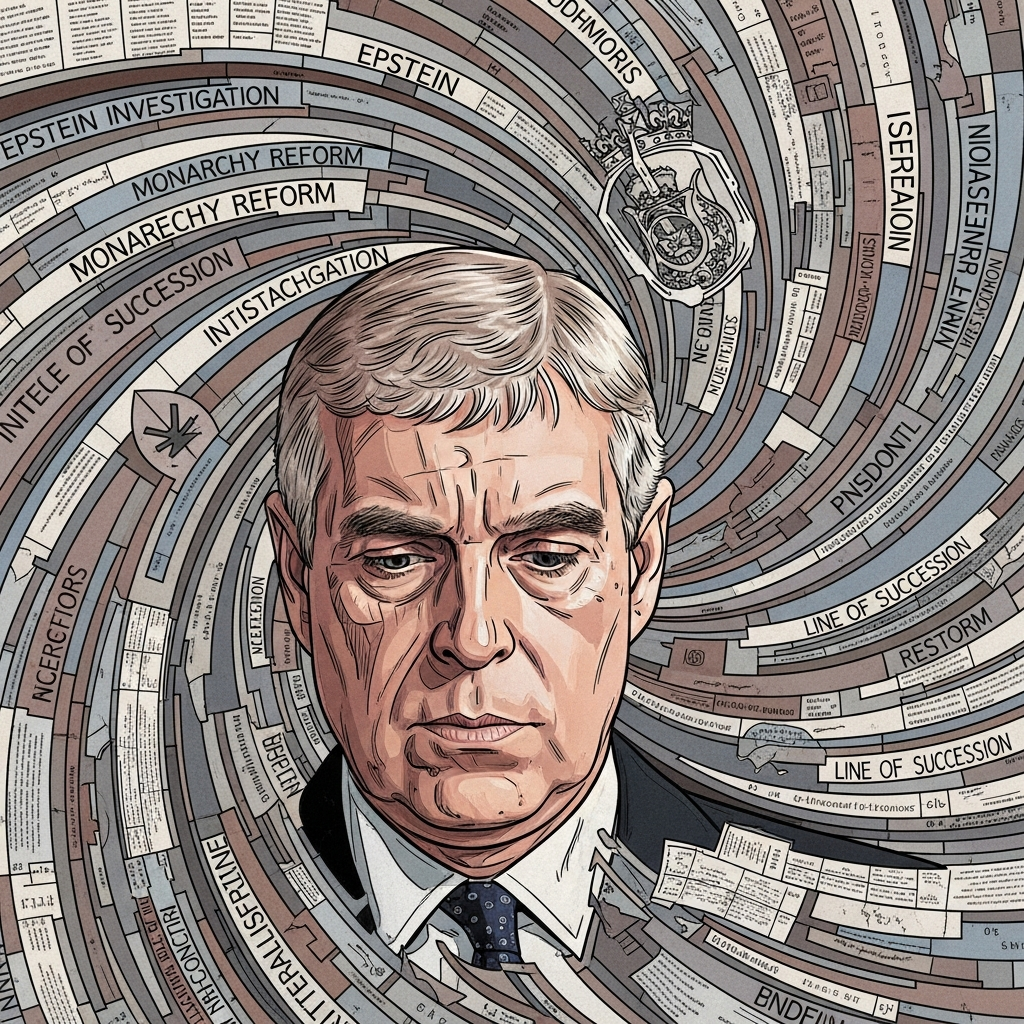
The British government is actively contemplating an unprecedented legislative move to formally remove Andrew Mountbatten-Windsor, known formerly as Prince Andrew, from the royal line of succession. This critical consideration follows his recent arrest and ongoing investigation concerning revelations from the Jeffrey Epstein documents, marking a pivotal moment for the monarchy. Such a bold step aims to safeguard the dignity and future stability of the British royal family during what many describe as its most significant crisis in generations. It would undoubtedly deliver a severe blow to Andrew, who, despite having been stripped of his royal status and honors last year, currently remains eighth in line to the throne.
This potential parliamentary action underscores a desperate desire within government and royal circles to insulate the wider institution from the ongoing controversy. Defence Minister Luke Pollard affirmed that the government has been collaborating “absolutely” with Buckingham Palace on these plans, deeming such a move the “right thing to do,” irrespective of the police investigation’s outcome. However, the legislative process itself would only commence after the current inquiry concludes.
The Arrest and Allegations: A Royal Firestorm
Andrew Mountbatten-Windsor’s arrest on Thursday, February 19, 2026, sent shockwaves through the UK. He was detained for 11 hours before being released “under investigation,” meaning he has neither been formally charged nor exonerated. Crucially, this arrest was specifically for suspicion of misconduct while in public office, rather than for any offenses directly involving his well-documented encounters with young women associated with the late convicted sex offender Jeffrey Epstein.
New details emerging from U.S. government documents suggest Andrew, while serving as an official trade representative for the British government between 2010 and 2011, may have shared confidential UK government information with Epstein. This allegedly included details about his trips to Southeast Asia and potential investment opportunities in Afghanistan. British police continue their extensive investigation, searching Royal Lodge, Andrew’s former Windsor residence, and questioning his former close protection officers for pertinent information. The legal challenge of proving “misconduct in public office” is significant, with no standard definition for what constitutes a public officer in such cases.
The Crown’s Stance and Public Pressure
King Charles III has publicly addressed the escalating crisis, reiterating his firm commitment to supporting the police investigation into his brother’s connections to Epstein. In a statement signed “Charles R.,” he declared, “My family and I will continue in our duty and service to you all.” The very necessity of such a public affirmation highlights the profound gravity of the situation. Andrew’s arrest is a historic event, marking the first time a senior member of the royal family has faced such an action in approximately 400 years, a parallel drawn to King Charles I during the English Civil War.
Public sentiment overwhelmingly supports Andrew’s removal from the succession line. A YouGov poll conducted shortly after the arrest revealed that a staggering 82% of Britons believe this action is necessary. This widespread public demand has fueled the government’s shift in stance, which, as recently as October 2025, had indicated no plans to introduce legislation altering the line of succession, citing concerns about consuming parliamentary time. However, the latest developments have prompted a re-evaluation.
Navigating the Complexities of Succession
Removing Andrew Mountbatten-Windsor from the Prince Andrew line of succession is a deeply complex legal and political undertaking. It requires more than just a simple decree. The process would necessitate:
An Act of Parliament: Legislation must be formally passed by both the Members of Parliament and peers in the UK Parliament, followed by Royal Assent from King Charles III.
Commonwealth Agreement: Crucially, the measure would also need the explicit agreement of all 14 Commonwealth realms where Charles III serves as Head of State. This includes prominent nations such as Canada, Australia, Jamaica, and New Zealand, making the process globally collaborative.
Historian David Olusoga noted the “desperate desire” within both government and the palace to create a “firewall” between this particular crisis and the wider monarchy. Julian Payne, King Charles III’s former communications secretary, provided insight into the royal family’s perspective, stating that the King likely views the situation through a lens that separates familial obligations from official duty. “They’re very clear: this is an individual. It is not a member of the Royal Family,” Payne asserted, regarding official institutional matters.
Historical Precedents and Future Implications
While unprecedented in modern times for an individual royal, legislative changes to the royal line of succession have occurred. The 2013 Succession to the Crown Act notably reformed succession rules, ending male primogeniture for those born after October 28, 2011. The most recent instance of an individual being removed from the line of succession by an Act of Parliament was in 1936, concerning former King Edward VIII and his descendants following his abdication.
Beyond his position in the Andrew’s succession order, the proposed legislation would also strip him of his role as a Counsellor of State. This significant role, which Andrew currently holds despite stepping back from public duties in 2019, empowers designated individuals to stand in for an ailing or absent monarch. However, these duties are typically performed by working royals, a group Andrew no longer belongs to. The broader context of the Epstein scandal, including its international dimensions with figures like Polish Prime Minister Donald Tusk announcing investigations into potential Polish links, further intensifies the scrutiny on all associated parties.
Andrew Mountbatten-Windsor has consistently denied any wrongdoing linked to his long-standing friendship with Epstein. However, if convicted of misconduct while in public office, he could potentially face a life prison sentence. The gravity of these developments highlights the immense challenges facing the British monarchy and the extensive fallout from Prince Andrew’s continued entanglement in the Epstein affair.
Frequently Asked Questions
What specific allegations led to Prince Andrew’s recent arrest?
Prince Andrew’s recent arrest on February 19, 2026, was specifically on suspicion of misconduct in public office. This stems from allegations that, while serving as a UK trade representative between 2010 and 2011, he shared confidential British government information with Jeffrey Epstein. This information reportedly included details about his official trips to Southeast Asia and potential investment opportunities in Afghanistan, as revealed in recently released Epstein documents. The arrest was not related to previous allegations of sexual offenses.
What is the process for formally removing someone from the royal line of succession?
Formally removing an individual from the royal line of succession is a highly complex process. It requires the passage of an Act of Parliament in the United Kingdom, necessitating approval from both the House of Commons and the House of Lords, followed by Royal Assent from the monarch. Crucially, this legislative action also requires the agreement of all 14 independent Commonwealth countries where the British monarch serves as Head of State, such as Canada and Australia, making it a multi-national undertaking.
Why is the British government now considering this legislative action despite previous reluctance?
The British government’s current consideration of removing Prince Andrew from the line of succession marks a significant shift from its previous stance, driven primarily by intense public pressure and the ongoing scandal. Following Andrew’s arrest for misconduct in public office and the fresh revelations from the Epstein documents, the government, with cross-party support, sees this as a necessary step to “preserve the dignity of the British royal family” and create a “firewall” to protect the wider monarchy. A YouGov poll indicated 82% public support for such a move, compelling the government to re-evaluate its position despite the legislative complexities.
Conclusion
The potential legislative action to remove Andrew Mountbatten-Windsor from the Prince Andrew line of succession signifies a defining moment for the British monarchy. It represents a proactive effort by the government and the Palace to address the profound challenges posed by his continued association with the Epstein scandal. While the path to such a change is intricate, demanding both parliamentary approval and the consent of Commonwealth realms, the overwhelming public sentiment and the gravity of the allegations suggest that this historic shift is increasingly likely. The outcome will not only redefine Andrew’s future but also shape the perception and resilience of the House of Windsor for generations to come.