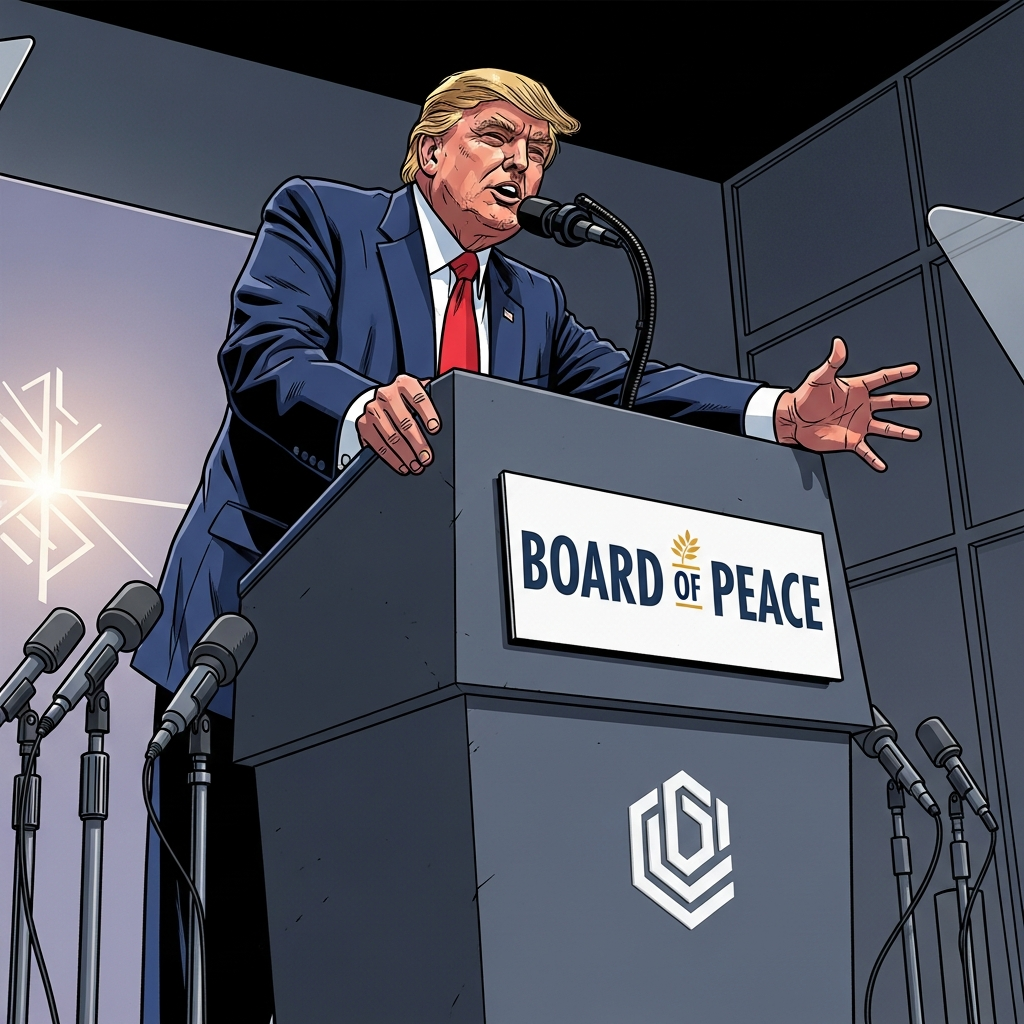
President Donald Trump recently announced a remarkable $10 billion U.S. commitment to rebuild Gaza. This pledge, made at the inaugural meeting of his self-proclaimed “Board of Peace,” immediately sparked intense debate and scrutiny. Framing the organization as the world’s premier body for global harmony, Trump positioned the initiative as a central pillar of his second term and a “coda to his presidency.” This ambitious plan aims to revolutionize peacemaking and oversee the reconstruction of Gaza, but it faces significant legal, financial, and diplomatic challenges right from the start.
The Inaugural Board of Peace Meeting
On February 19, 2026, Washington D.C. hosted the much-anticipated inaugural gathering of Trump’s Board of Peace. The event took place at the U.S. Institute of Peace, which was controversially seized by the administration last year and renamed the “Donald J. Trump U.S. Institute of Peace.” This move remains the subject of ongoing litigation, adding to the contentious nature of the board itself.
A New Global Body Emerges
Trump described the Board of Peace as the most influential and prestigious global body ever created. He highlighted its potential to intervene in “hot spots” worldwide, promising to “straighten out” Gaza and make it “successful” and “peaceful.” Representatives from over 40 countries attended, with some heads of state present alongside lower-level officials and observers. Attendees received distinctive red “USA” emblazoned MAGA-style hats, signaling the political undertones of the gathering.
Key Figures and International Presence
The meeting saw prominent U.S. figures, including Secretary of State Marco Rubio, Vice President JD Vance, Special Envoy Steve Witkoff, and Jared Kushner. International leaders like Hungarian Prime Minister Viktor Orbán and Argentine President Javier Milei, both strong Trump allies, were present. FIFA President Gianni Infantino also attended in a non-political capacity, pledging millions for soccer facilities in Gaza. During his opening remarks, Trump lauded the attending leaders as “the greatest world leaders” and criticized non-participating allies for “playing cute.”
The $10 Billion Question: Funding Gaza’s Future
The cornerstone of Trump’s announcement was the $10 billion U.S. financial commitment. This sum is intended for the Board of Peace initiative, primarily focused on Gaza’s reconstruction. Trump characterized this figure as a “very small number” when compared to the vast “cost of war,” equating it to “two weeks of fighting.”
The U.S. Pledge and Financial Commitments
Beyond the unilateral U.S. pledge, other significant financial commitments were unveiled. Member nations of the board collectively promised over $7 billion for Gaza relief. The U.N. Office for the Coordination of Humanitarian Assistance (OCHA) agreed to raise an additional $2 billion. Furthermore, FIFA pledged $75 million for building 50 mini-soccer fields, five full-sized fields, and a national stadium in Gaza. While these pledges total approximately $19 billion, they fall far short of the United Nations’ estimated $70 billion+ required for Gaza’s reconstruction over several decades.
Legal Scrutiny and Funding Controversies
Trump’s $10 billion pledge immediately triggered severe legal and ethical questions. Critics, including Senator Chris Murphy (D-Conn.), deemed it “totally illegal.” U.S. federal funds typically require congressional appropriation or specific statutory authority, neither of which accompanied Trump’s dramatic announcement. Shawn McCreesh highlighted the complete absence of details regarding the money’s source or whether congressional approval had been sought. This lack of clarity led many to question the binding nature of a presidential promise on U.S. finances. Journalist Brian Beutler drew a stark parallel, noting that the $10 billion sum mirrored a $10 billion lawsuit Trump filed against the U.S. Treasury for tax record disclosure, raising concerns of “double stealing.”
Rebuilding Gaza: Vision and Stabilization Efforts
A detailed multi-billion-dollar reconstruction plan for Gaza was a central theme of the meeting. The vision aims for rapid rebuilding and long-term economic integration for the war-torn region.
A Grand Reconstruction Plan Unveiled
Israeli billionaire Yakir Gabay, a member of the board’s executive committee, presented a “master plan.” This ambitious blueprint includes temporary housing for thousands near Rafah, eventually expanding into planned cities, high-tech industries, and modern transportation infrastructure. A promotional video shown at the event depicted futuristic towns and industry. It projected that by “year three,” Rafah, extensively damaged and bulldozed, would be “fully rebuilt, unemployment curbed, and Gaza connected to the world through an Abrahamic gateway.” This gateway would extend to India and Europe. The long-term vision forecasts Gaza as “self-governed, integrated into the region with thriving industries and housing for all” within 10 years.
The International Stabilization Force Takes Shape
To secure the rebuilding efforts, a substantial International Stabilization Force (ISF) is planned. U.S. Maj. Gen. Jasper Jeffers, the ISF commander, outlined a strategy for a 20,000-strong international force complemented by a 12,000-person local police unit. Initial commitments for troops came from Indonesia (up to 8,000 soldiers), Morocco, Kazakhstan, Kosovo, and Albania. Egypt and Jordan also agreed to train police personnel. The ISF plans an initial deployment near Rafah, in the area still occupied by Israeli forces, with gradual expansion into additional sectors currently controlled by Hamas.
The Hamas Dilemma: A Critical Roadblock
Despite the ambitious reconstruction plans, a major unresolved issue is the demilitarization of Hamas, which still controls half of Gaza. Trump briefly mentioned, “The world is now waiting on Hamas… And it’s the only thing that’s standing in the way.” Both Trump and Israeli Prime Minister Benjamin Netanyahu have stated that Hamas’s “demilitarization” could occur “the easy way or the hard way,” with a senior Netanyahu aide setting a 60-day deadline before Israel might resume conflict. Trump controversially declared the “war in Gaza is over,” though he acknowledged “little flames” still existed.
Global Reactions and Diplomatic Divides
The Board of Peace initiative has met with a mixed international reception, highlighting significant diplomatic rifts and skepticism.
Skepticism from Key Allies
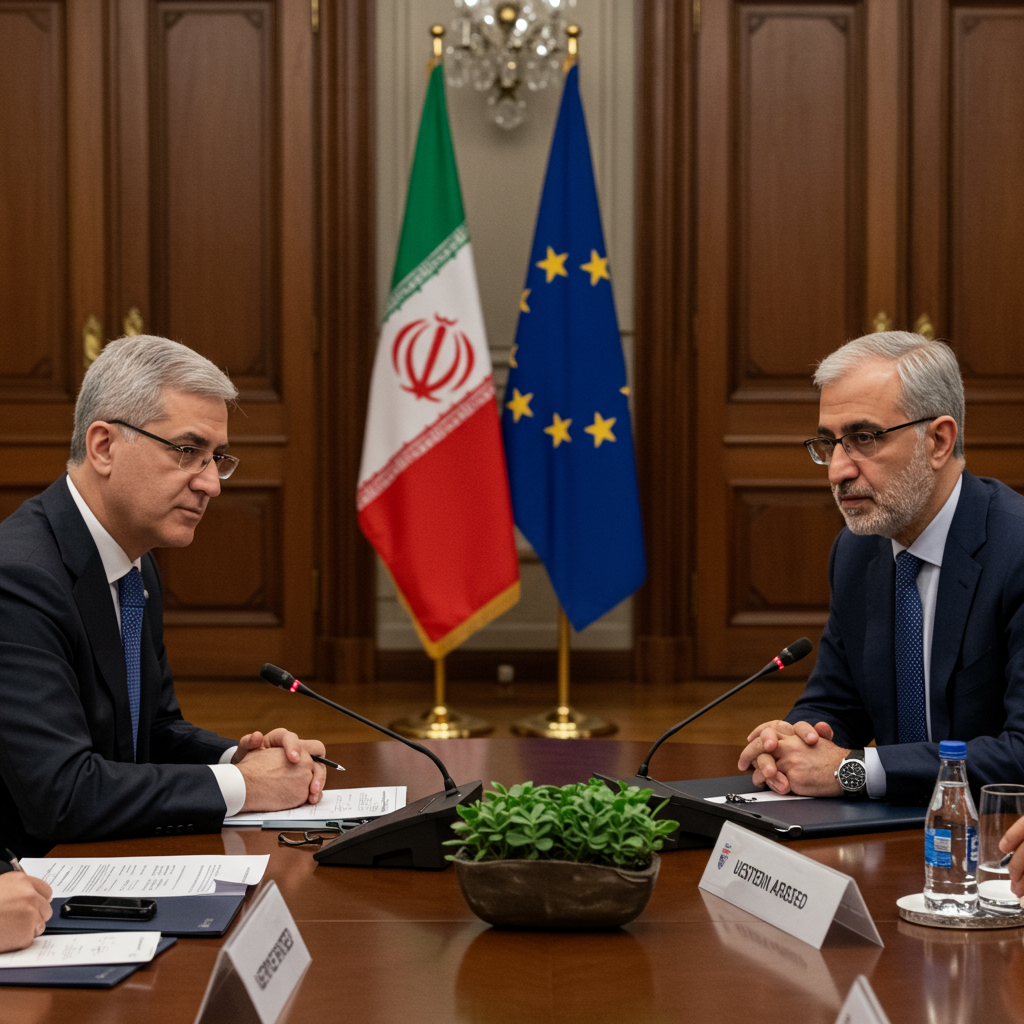
While Trump gathered support from certain nations, many traditional U.S. allies expressed strong reservations or outright declined invitations. The United Kingdom, France, Norway, and Sweden chose not to join, citing concerns that the board could undermine the United Nations. They also noted the absence of direct mention of Gaza in the Board’s charter. Pope Leo XIV of the Vatican also declined an invitation, emphasizing the UN’s primary role in crisis management. The European Union sent an observer but did not commit to joining, and Canada’s invitation was reportedly withdrawn by Trump himself.
Palestinian Representation: A “Colonialist Operation”?
A major point of contention and criticism revolved around the conspicuous lack of direct Palestinian representation on the Board’s executive body overseeing Gaza. Human rights experts and religious figures, including Cardinal Pierbattista Pizzaballa, condemned the initiative as a “colonialist operation,” where “others [are] deciding for the Palestinians.” While a separate technocratic body, led by Palestinian official Ali Shaath, is intended to oversee daily administration in Gaza, the overall absence of a direct Palestinian voice, especially after Israel joined the Board, remained a highly contentious issue. Mahmoud Al-Habbash, an adviser to Palestinian President Mahmoud Abbas, described it as a “temporary arrangement” rejected by Palestinian leadership, though he conceded it might be the “lesser of two evils.”
Redefining the UN’s Role?
Trump frequently framed the Board of Peace as a supplement, or even an alternative, to the United Nations. He has previously labeled the UN “ineffectual” and has put it at risk of fiscal collapse by withholding U.S. mandatory dues, which constitute nearly a quarter of its operating budget. During the meeting, Trump suggested the Board would effectively “oversee” the United Nations to ensure it “runs properly.” While pledging to “strengthen” and assist the UN “money wise,” his remarks underscored a desire to redefine the global body’s role, despite its Secretary-General António Guterres warning of imminent financial collapse without reforms.
Beyond Gaza: Broader Geopolitical Ambitions
The inaugural Board of Peace meeting served as a platform for Trump to address a range of broader geopolitical issues and express his political viewpoints.
Warnings to Iran and Regional Posturing
Throughout the event, Trump repeatedly characterized Iran as a significant “threat” to regional stability. He issued a stern warning, indicating a potential 10-day timeline for revealing plans for possible U.S. strikes if a “meaningful” deal is not reached regarding its nuclear program. Trump noted the U.S. had amassed its most significant air power in the region in decades, including ordering 22 additional B-2 stealth bombers. This aggressive stance coincided with increased U.S. military presence in the Middle East and ongoing speculation about potential conflict with Iran.
Political Musings and Self-Appraisal
Trump utilized the platform for familiar political gripes and self-congratulation. He boasted about military actions in Venezuela and took credit for the electoral victories of leaders he had endorsed, such as Argentina’s Milei and Hungary’s Orbán. He also revisited his public disappointment over not receiving the Nobel Peace Prize, humorously musing that when Norway agreed to host a future Board of Peace event, he initially thought it was for that award. He even praised FIFA President Gianni Infantino for giving him a “peace prize” after he felt “screwed by Norway.”
Frequently Asked Questions
What is President Trump’s Board of Peace, and what are its primary goals?
President Trump’s Board of Peace is a new international organization, unveiled on February 19, 2026, which he describes as the “premier world body for international peace and harmony.” Its primary goals include overseeing a comprehensive plan for Gaza’s reconstruction and security, intervening in global “hot spots,” and potentially redefining the role of the United Nations. Trump pledged $10 billion from the U.S. to the initiative and aims for Gaza to be “self-governed, integrated into the region with thriving industries and housing for all” within ten years.
How is the $10 billion U.S. pledge for Gaza reconstruction being funded, and is it legal?
President Trump unilaterally pledged $10 billion from the United States for Gaza’s reconstruction and the Board of Peace initiative. However, he did not specify the source of these funds or if congressional approval had been sought. This has led to significant controversy, with critics, including a U.S. Senator, deeming the pledge “totally illegal” due to federal laws requiring congressional appropriation for such expenditures. The lack of a clear funding plan or legal basis raises substantial questions about the pledge’s feasibility and accountability.
What are the key criticisms and international concerns surrounding the Board of Peace?
The Board of Peace faces significant criticism on multiple fronts. Many key U.S. allies, including the UK, France, and Sweden, declined to join, citing concerns that it could undermine the United Nations. A major point of contention is the conspicuous absence of direct Palestinian representation on the Board’s executive body overseeing Gaza, which critics have labeled a “colonialist operation.” Additionally, the initiative has drawn legal scrutiny over the legality of Trump’s $10 billion pledge and ethical concerns about its potential for “grift” and “monetization of foreign policy” by some commentators.
Conclusion
President Trump’s Board of Peace and its ambitious $10 billion pledge for Gaza’s reconstruction represent a bold and highly controversial new chapter in global diplomacy. While the initiative outlines an elaborate vision for rebuilding Gaza and promises to foster international peace, it immediately confronts a complex web of legal questions, financial ambiguities, and diplomatic resistance. The ongoing debate over its funding, its relationship with the United Nations, and the crucial issue of Palestinian representation will shape its trajectory. As the world watches, the ultimate impact and effectiveness of this new “Board of Peace” remain uncertain, with significant challenges ahead for both its proponents and the international community.