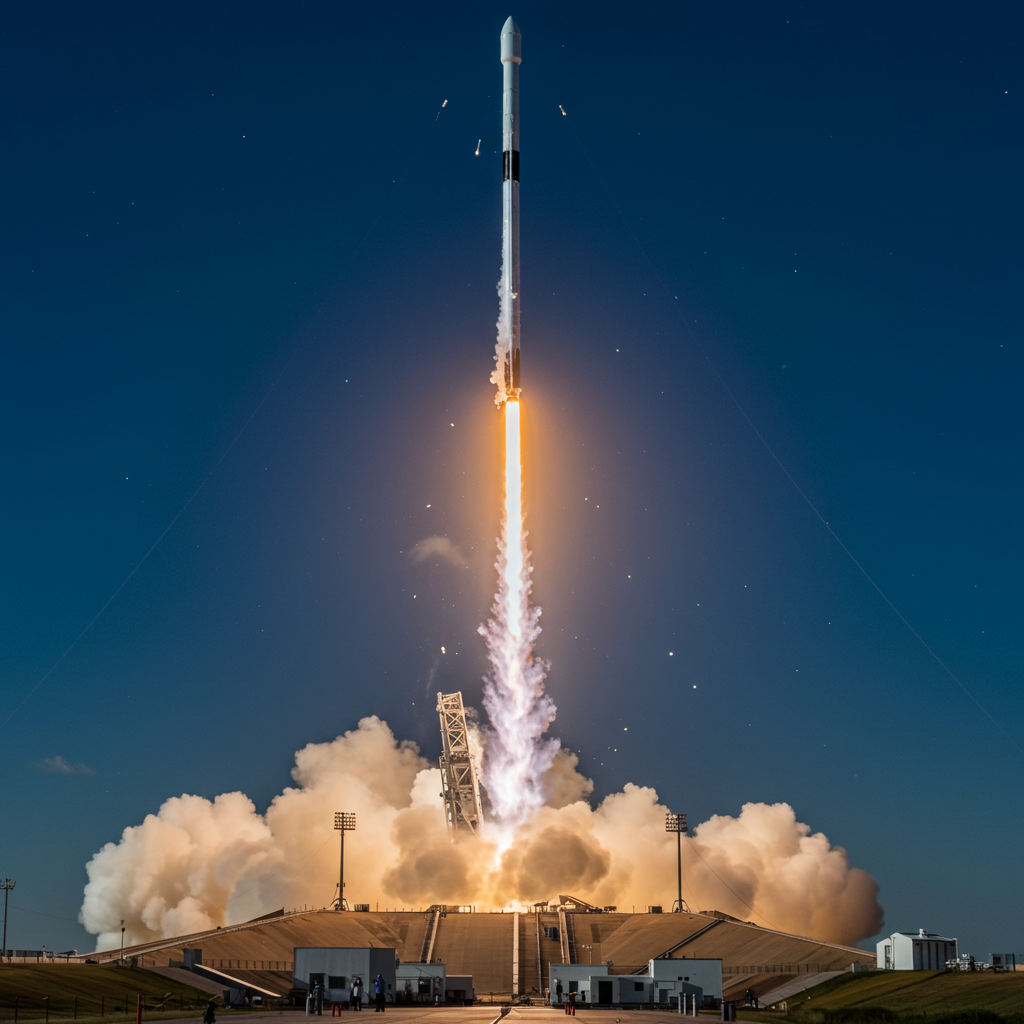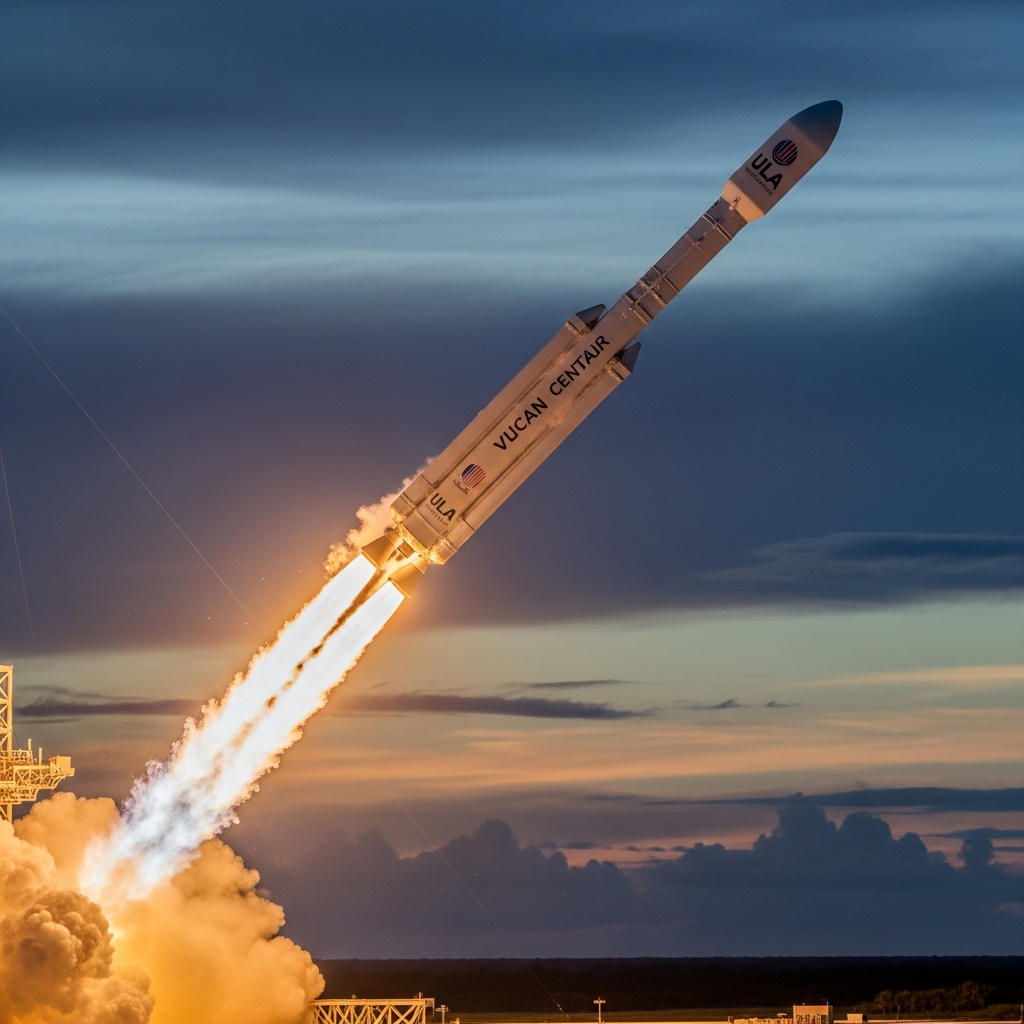
United Launch Alliance’s (ULA) cutting-edge Vulcan Centaur rocket once again demonstrated remarkable resilience, powering through a “significant performance anomaly” during its fourth-ever launch. This event, which occurred on February 12, 2026, saw the powerful launch vehicle successfully deploy two critical spy satellites for the U.S. Space Force into geosynchronous orbit from Cape Canaveral Space Force Station in Florida. Despite an early-flight hiccup involving one of its solid rocket motors (SRMs), the mission achieved its primary objective, highlighting the robust engineering behind ULA’s successor to the venerable Atlas V.
This latest incident marks the second such in-flight issue for the relatively new Vulcan Centaur, lending a sense of “deja vu” to observers in the aerospace community. As ULA and the Space Force initiate a thorough investigation, the focus remains on understanding the root cause and implementing corrective actions to ensure continued reliability for future national security missions.
The Latest Test of Resilience: February 2026 Launch Details
The recent launch, designated USSF-87, commenced smoothly, but early in its ascent, ground teams detected a “significant performance anomaly” on one of the four strap-on solid rocket motors. These powerful boosters, manufactured by Northrop Grumman, provide critical thrust during the initial phases of flight. Despite this unexpected event, the core Vulcan booster and its Centaur upper stage continued to operate nominally.
Gary Wentz, ULA’s vice president of Atlas and Vulcan Programs, confirmed the anomaly in an emailed statement following the launch. He emphasized that the booster and upper stage performed as expected, successfully delivering the sensitive spacecraft precisely to their intended geosynchronous orbit, located approximately 22,236 miles (35,785 kilometers) above Earth. This successful payload delivery, even with the motor issue, underscores the Vulcan Centaur’s built-in redundancy and advanced flight control systems designed to compensate for such challenges.
A Developing Pattern: Vulcan Centaur’s Anomaly History
The February 2026 incident is not an isolated event for the Vulcan Centaur, a launch vehicle still in its early operational phase. The “deja vu” sensation among space enthusiasts stems from a similar issue observed during its second flight in October 2024. That mission, a crucial test aimed at certifying the rocket for U.S. national security missions, also experienced an anomaly with one of its two SRBs less than 40 seconds after liftoff. The rocket momentarily veered off course, but its autonomous systems swiftly adjusted, correcting the trajectory and enabling the mission to reach its desired orbit successfully.
Subsequent investigations into the October 2024 incident revealed a manufacturing defect: the SRB’s nozzle detached during flight. ULA conducted a comprehensive review and implemented corrective measures. The U.S. Space Force, after careful evaluation, certified the Vulcan Centaur for national security missions in March 2025. Its first such operational flight in August 2025 successfully delivered an experimental navigation satellite to geosynchronous orbit without reported issues, demonstrating the rocket’s capability after the initial fix.
The Vulcan Centaur’s debut in January 2024, carrying the private Peregrine lunar lander, also had its share of drama, though the anomaly then was with the lander itself post-deployment, rather than the rocket. These early challenges are not uncommon in the development of new, complex launch systems. However, the recurring nature of the SRB anomalies prompts closer scrutiny.
The Imperative of Investigation: Ensuring Future Reliability
Following the latest anomaly, ULA has initiated a rigorous investigation in close collaboration with the U.S. government and contractor teams. This process will involve a meticulous review of all available technical data and imagery from the launch. A recovery team will also be established to collect any potential debris, providing crucial physical evidence for analysis. The primary goal is to identify the precise root cause of the SRM performance issue and to implement any necessary corrective actions before the Vulcan Centaur’s next mission.
The U.S. Space Force’s System Delta 80 team at Cape Canaveral is actively engaged, closely monitoring ULA’s “mission assurance space flightworthiness process.” This oversight is paramount for all national security space missions, ensuring that every rocket meets stringent reliability and safety standards. The findings from this investigation will dictate the timeline and any modifications required for future Vulcan Centaur operations, reinforcing the industry’s commitment to mission success and the safety of critical payloads.
Vulcan Centaur: A Cornerstone of Modern Space Access
The Vulcan Centaur stands as a testament to ULA’s commitment to reliable space access. It consists of the powerful Vulcan core stage, the versatile Centaur upper stage, and up to six strap-on solid rocket boosters, which provide flexible thrust configurations for various payload requirements. Designed as a direct replacement for ULA’s long-serving Atlas V and Delta IV rockets, the Vulcan Centaur is engineered to meet the demanding requirements of both national security and commercial space launches.
Its importance extends beyond military applications. The Vulcan Centaur is also slated to play a significant role in the burgeoning commercial space sector. For instance, Amazon’s ambitious Project Kuiper, a broadband megaconstellation designed to rival services like SpaceX’s Starlink, has selected the Vulcan Centaur as one of several launch vehicles for its extensive satellite deployment. This highlights the rocket’s anticipated commercial viability and strategic importance in the global space economy, placing it alongside other major players like Europe’s Ariane 6, which recently launched its Ariane 64 configuration carrying Amazon satellites. This competitive landscape underscores the demand for reliable and adaptable launch solutions, making the Vulcan Centaur’s performance critical.
Looking Ahead: The Future Path for ULA’s Flagship Rocket
It remains premature to fully understand the long-term impact of this second SRM anomaly on Vulcan Centaur operations. The aerospace industry is characterized by rigorous testing and continuous improvement, especially with new launch systems. While the recurring nature of these issues presents a challenge, the rocket’s ability to self-correct and successfully complete its missions speaks volumes about its inherent design strength and the capabilities of its flight control systems.
The forthcoming investigation results will be pivotal. Depending on the identified root cause, ULA might implement further design changes, manufacturing process adjustments, or enhanced pre-flight inspections. The U.S. Space Force’s continued oversight will ensure that all necessary measures are taken to guarantee the rocket’s reliability before it undertakes its next national security space mission. As space exploration continues to advance rapidly, the Vulcan Centaur is poised to remain a vital asset, navigating the complexities of launch with demonstrated adaptability and engineering excellence.
Frequently Asked Questions
What kind of anomaly did the Vulcan Centaur rocket experience on February 12, 2026?
During its fourth launch on February 12, 2026, the Vulcan Centaur rocket experienced a “significant performance anomaly” involving one of its four solid rocket motors (SRMs) early in the flight. Despite this issue, the Vulcan booster and Centaur upper stage performed nominally, successfully delivering two U.S. Space Force spy satellites directly to geosynchronous orbit. This marked the second time the Vulcan Centaur had an SRM issue, following an October 2024 test flight where an SRB nozzle detached due to a manufacturing defect.
How does the Vulcan Centaur compare to other modern rockets in the industry?
The Vulcan Centaur is ULA’s next-generation heavy-lift launch vehicle, designed as the successor to its long-standing Atlas V and Delta IV rockets. It’s built to meet demanding national security and commercial mission requirements, featuring a Vulcan core stage, Centaur upper stage, and up to six strap-on solid rocket boosters for flexible payload capacity. Competing in a dynamic market, it’s chosen by commercial ventures like Amazon’s Project Kuiper, alongside other major players such as SpaceX’s Falcon 9, Blue Origin’s New Glenn, and Europe’s Ariane 6, highlighting its significance in the modern space access landscape.
What are the implications of these recurring anomalies for Vulcan Centaur’s future missions?
The recurring solid rocket motor anomalies, while successfully mitigated in flight, necessitate thorough investigations by ULA and the U.S. Space Force. The findings will be crucial for identifying root causes, implementing corrective actions, and potentially refining manufacturing processes or pre-flight checks. The Space Force’s “mission assurance space flightworthiness process” will closely monitor these developments. While the rocket has demonstrated resilience, sustained reliability is paramount for national security payloads, meaning future mission schedules and configurations might depend on the successful resolution and certification of these issues.