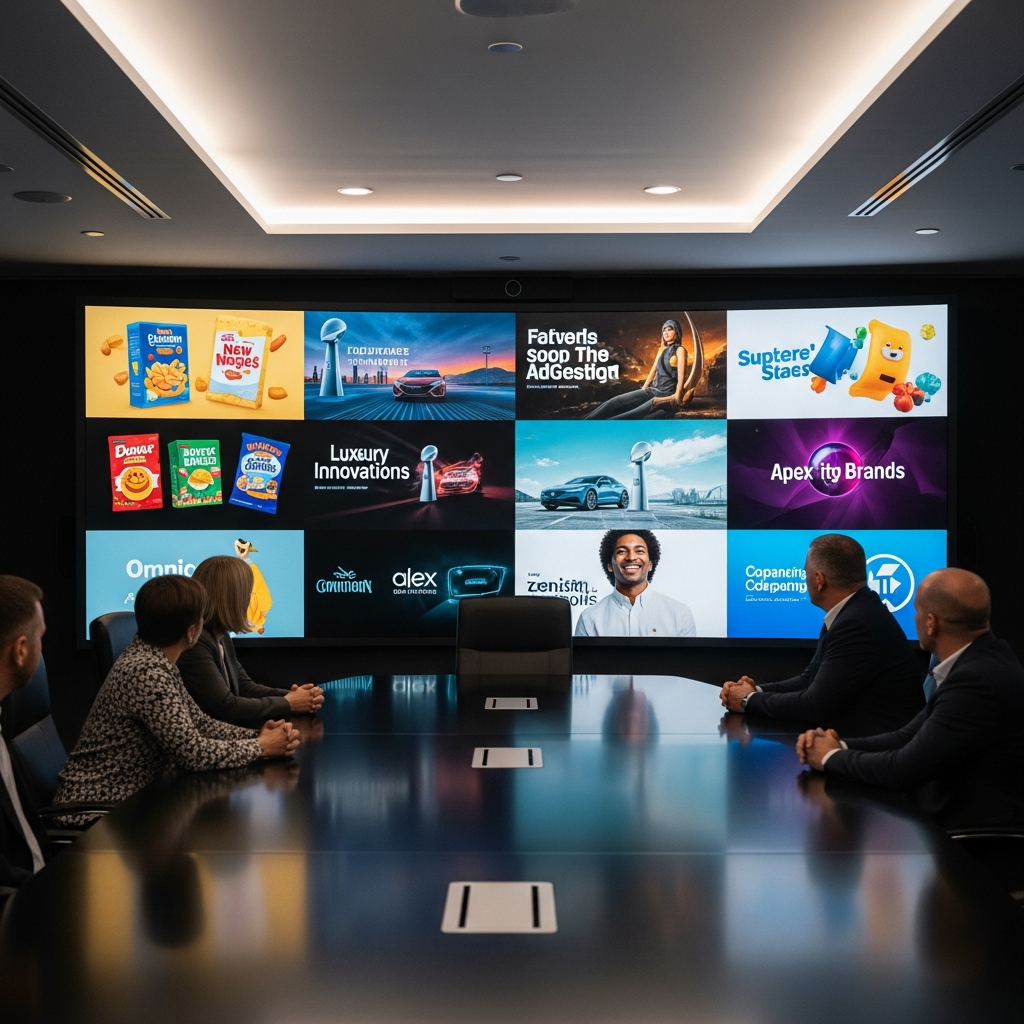
As the countdown to the 2026 Super Bowl begins, the advertising world is bracing for an epic showdown not just on the field, but during the commercial breaks. Industry experts are signaling a pivotal year for 2026 Super Bowl ads, where soaring costs are forcing a dramatic re-evaluation of marketing strategies. Advertisers are making more judicious choices, particularly concerning celebrity talent fees, while simultaneously embracing the burgeoning power of artificial intelligence to shape their messaging. This shift promises a unique blend of familiar star power and cutting-edge tech in the year’s most anticipated marketing spectacle.
The Soaring Price Tag of Super Bowl Advertising
Securing a coveted 30-second slot during the Super Bowl has always been an expensive endeavor, but for 2026, the price of admission continues its relentless climb. For some late-buying brands, a single commercial spot on NBC has reportedly surpassed an eye-watering $10 million, though most advertisers are settling closer to the $8 million mark. However, the network fee is just the beginning. When factoring in production, director fees, and, crucially, talent compensation, the “all-in” cost for a 2026 Super Bowl ad can easily range from a low of $12 million to upwards of $20 million. This financial pressure is the primary catalyst driving many of the strategic shifts now unfolding across the advertising landscape.
Celebrity Endorsements: A Strategic Rebalancing Act
For years, Hollywood’s biggest names commanded staggering paydays for their Super Bowl appearances. These fees were a significant driver of the overall cost inflation in big game advertising. However, in 2026, the tide is turning. Multiple industry sources indicate that brands are tightening their marketing budgets, particularly for individual star talent.
The era of $10 million to $15 million paydays for a single Super Bowl commercial is largely over. Instead, the new “sweet spot” for A-list talent typically falls within the $3 million to $5 million range. Higher fees are now reserved for rare instances where a specific celebrity is absolutely integral to the creative concept, making their involvement non-negotiable.
This doesn’t mean fewer celebrities; quite the opposite. Data from media tracking firm iSpot reveals a dramatic increase, with approximately 70% of Super Bowl spots now featuring stars, up from just 30% in 2018. Brands are simply adapting their approach. Many are opting for ensemble casts or smaller cameo roles, allowing them to spread their talent budget further. These roles often require just a few hours or a single day on set, commanding fees in the five or six-figure range, though some top-tier actors might still secure low seven-figure paydays for significant contributions.
Why Stars Still Covet Super Bowl Spots
Despite the adjusted fee structure, celebrities remain eager to appear in Super Bowl commercials. Being part of the “Big Game” is considered a significant cultural milestone, a sign of having “made it” to the upper echelons of American popular culture. The unparalleled reach — over 100 million undivided eyeballs — offers immense visibility that no other platform can match. As actor Jon Hamm noted, these commercials are “something people talk about not just on Sunday, but long after as well.”
The ensemble approach also allows brands to target diverse demographics. By mixing traditional actors with social media influencers, athletes, and musicians from different eras and platforms, advertisers can broaden their appeal. This strategy ensures broader audience engagement, from iconic figures to up-and-coming content creators, reaching a wider range of ages and consumer interests.
The AI Revolution in Super Bowl Advertising
Perhaps the most groundbreaking trend for 2026 Super Bowl ads is the significant emergence of artificial intelligence. AI is set to influence the Super Bowl not only in the content of the ads themselves but also in their creation. Expect a slew of commercials from AI companies showcasing their technology, as well as playful spots that poke fun at the rapidly advancing tech. More subtly, AI will be deployed behind the scenes to enhance and optimize creative output.
From Deepfakes to Ad Wars: How AI is Shaping Content
The applications of AI in ad production are diverse and rapidly evolving. We could see advanced deepfakes used to de-age celebrities, or sophisticated AI video models creating entire commercial narratives. Experts like Kenny Gold, managing director at Deloitte Digital, predict the possibility of the first “truly AI-orchestrated, integrated 360 activation” for a brand. This could involve AI managing everything from initial concept testing and narrative optimization to media sequencing, creator amplification on social platforms, and even post-game commerce strategies across various channels.
The rise of AI in advertising is so pronounced that it’s even sparked an “AI ad war” among tech giants. A public feud between OpenAI and Anthropic highlights this competitive landscape, with both companies planning Super Bowl ads to champion their respective AI platforms. Anthropic’s ad, created by humans, aims to position its Claude AI as advertising-free, while OpenAI CEO Sam Altman promises a spot celebrating “builders” and the transformative power of AI.
However, even with AI’s surge, the human element remains irreplaceable. While AI can optimize, generate, and process vast amounts of data, creativity, nuanced humor, and emotional storytelling still require human ingenuity. Kerry Benson, Senior VP of Creative at Kantar, emphasizes that “AI is not quite there yet” for truly captivating and memorable storytelling. Brands like Svedka, while creating ads “primarily” with AI, acknowledge the significant human input required to bring their visions to life.
Beyond Stars & AI: Other Key Advertising Trends for 2026
While celebrity fees and AI dominate the conversation, several other trends will shape the 2026 Super Bowl ads. Expect to see a significant presence from pharmaceutical companies, capitalizing on the booming GLP-1 drug market. Nostalgia will also play a strong role, with many spots leaning into themes tied to America’s 250th anniversary and the Winter Olympics, which often coincide with the game.
Top-tier directors like Yorgos Lanthimos, Taika Waititi, and Joseph Kosinski are continuing to lend their cinematic expertise to commercials, elevating the production quality. When it comes to emotional appeal, humor reigns supreme. About 70% of Super Bowl spots now feature comedy, a shift away from the more “heartfelt” emotions that once dominated. Brands understand that making people laugh is a powerful way to cut through the clutter and create memorable moments, as Bud Light and Hellmann’s Mayonnaise are expected to demonstrate with their comedic spots featuring Post Malone, Shane Gillis, Peyton Manning, and Elle Fanning.
The Enduring Value of the Super Bowl Platform
Despite the “eye-watering cost,” professional marketers universally agree that the investment in a 2026 Super Bowl ad is money well spent. There is simply no other single marketing opportunity that can replicate the immense reach and rapid brand awareness achieved during the Super Bowl. As Zachariah Reitano, CEO of Ro, explained, “In one night, you can move from a brand most people have never heard of to one your mom is texting you about.”
The Super Bowl creates a unique cultural “monoculture,” where over 100 million people share the same viewing experience, bypassing the algorithmic bubbles of modern digital media. This makes it an unparalleled platform for breaking through noise and making an instant, impactful connection with a massive audience.
Crafting a Breakthrough Ad in a Crowded Field
To stand out in such a crowded and competitive environment, advertisers must focus on core principles. According to Georgie Jeffreys, Head of Marketing for North America at Uber, a winning Super Bowl ad must be:
Super entertaining: This is paramount to grabbing and holding attention.
Clear in its core message: The brand’s takeaway should be central, not an afterthought.
- Memorable: An ad must resonate long after the final whistle.
- www.hollywoodreporter.com
- dknetwork.draftkings.com
- www.greenvilleonline.com
- saintswire.usatoday.com
- bolavip.com
Whether featuring a roster of A-list celebrities or opting for a more subtle approach, brands that successfully integrate these three elements have the best chance of achieving breakthrough success. The demand for creative storytelling that truly resonates has never been higher, solidifying the Super Bowl’s position as the ultimate stage for advertising innovation and impact.
Frequently Asked Questions
How are celebrity fees changing for 2026 Super Bowl ads?
For 2026 Super Bowl ads, celebrity fees are undergoing a significant rebalancing. While A-list talent previously commanded $10-$15 million per commercial, the new “sweet spot” is typically $3-$5 million. Brands are increasingly opting for ensemble casts or smaller cameo roles, allowing them to feature multiple stars for five to six-figure fees, rather than a single high-paid individual, to maximize their marketing budgets amidst rising ad slot costs.
What role will AI play in Super Bowl advertising this year?
AI is set to play a multi-faceted role in 2026 Super Bowl advertising. This includes ads from AI companies themselves, spots that humorously address AI, and the direct application of AI in production through advanced deepfakes for de-aging celebrities or AI video models creating entire commercials. AI will also be used behind the scenes for concept testing, narrative optimization, media sequencing, and integrated 360-degree campaigns, although human creativity remains crucial for nuanced storytelling.
Is investing in a 2026 Super Bowl ad still worth the cost for brands?
Yes, despite the exorbitant costs (up to $10 million for a 30-second slot, and $12-$20 million all-in), industry experts agree that investing in a 2026 Super Bowl ad remains uniquely valuable for brands. It offers an unparalleled opportunity to reach over 100 million viewers simultaneously, rapidly accelerating brand awareness and integrating a product into the cultural “monoculture” in a way no other marketing platform can. The ability to break through algorithmic bubbles and create instant, widespread buzz makes it a smart deployment of resources.