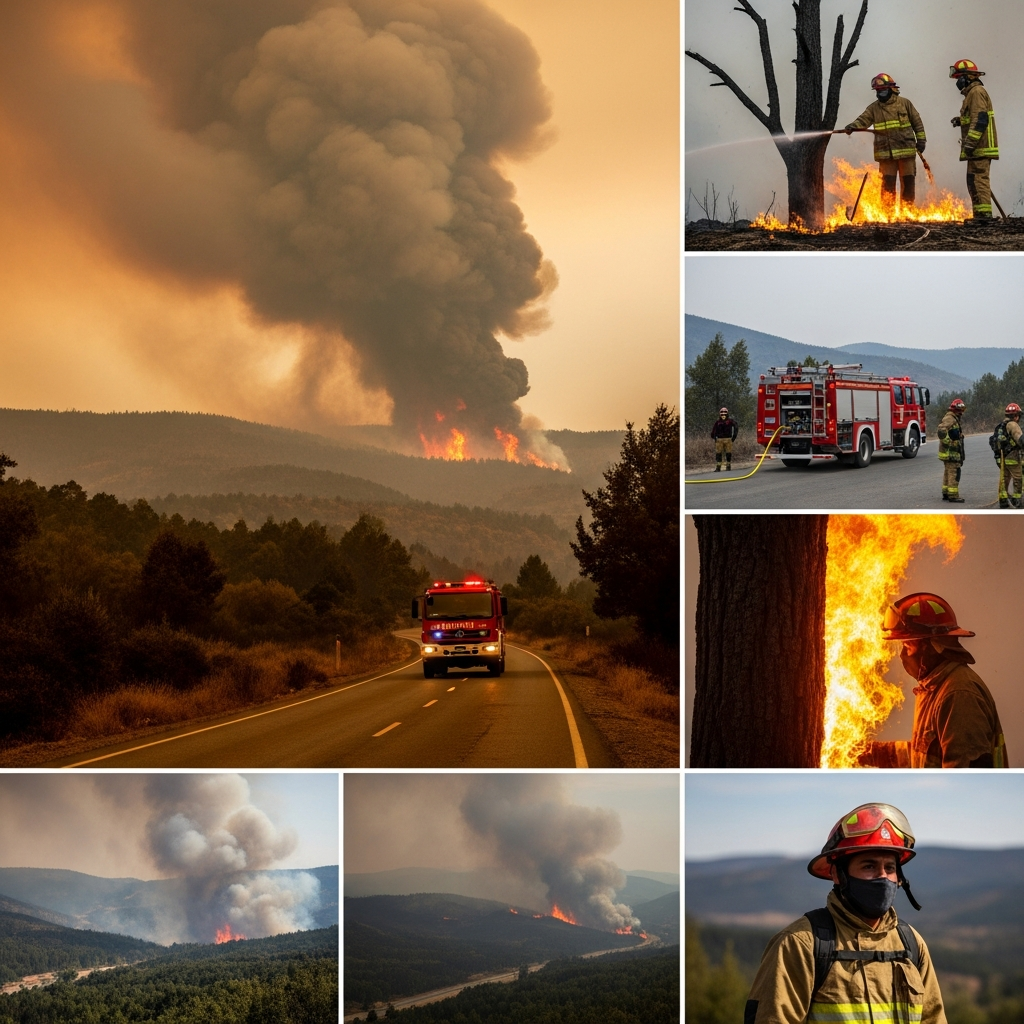
Deadly wildfires are tearing across central and southern Chile, leaving a trail of destruction and prompting a national emergency. As scorching temperatures and relentless winds fuel the inferno, communities face unprecedented challenges. This escalating crisis highlights the dire consequences of extreme weather, forcing thousands to flee and stretching emergency services to their limits. The Chilean government has declared a state of catastrophe, deploying all available resources to combat the rapidly spreading blazes and support affected residents.
A Nation Engulfed: Chile’s Wildfire Emergency
The scale of the current wildfire crisis in Chile is immense. President Gabriel Boric swiftly declared a “state of catastrophe” for the southern regions of Ñuble and Bío Bío. These areas, located approximately 500 kilometers (310 miles) south of the capital, Santiago, are at the epicenter of the devastation. This crucial declaration unlocks vital resources, including military assistance, to bolster the efforts of firefighters and emergency personnel. Boric underscored the gravity of the situation, affirming that “All resources are available” to confront the ongoing catastrophe.
The impact has been heartbreakingly severe. At least 18 lives have been tragically lost, with reports indicating most fatalities occurred in the hard-hit town of Penco. Across the affected regions, a staggering 20,000 to 50,000 people have been forced to evacuate their homes. Officials confirm that at least 250 homes have been completely destroyed, transforming vibrant communities into landscapes of charred remnants. Drone footage and eyewitness accounts reveal the harrowing speed with which flames consumed homes, cars, a school, and even a church, leaving behind only burned wreckage.
Communities Under Siege: Evacuations and Local Challenges
The human toll of these Chile wildfires extends beyond the immediate fatalities. Residents, often caught by surprise in the dead of night, recounted terrifying escapes. Matias Cid, a 25-year-old student from Penco, vividly described fleeing “with the shirts on our back,” stating that another 20 minutes could have meant certain death. Similarly, Alejandro Arredondo, a 57-year-old from nearby Lirquén, sought refuge on the beach, later surveying the devastation of his town.
The majority of evacuations have been concentrated in the Biobío towns of Penco and Lirquén, which together house around 60,000 residents. The swift movement of the fires often left little time for preparation, trapping many. Some residents initially chose to stay, believing fires would halt at forest edges, only to find the blazes rapidly becoming “completely out of control.” Amidst the chaos, smoke blanketed the sky in an ominous orange haze as families scrambled for safety.
Local officials have voiced concerns regarding the immediate government response. Rodrigo Vera, the mayor of Penco, expressed frustration over the perceived delay in military assistance while his community was actively burning. Such critical situations demand rapid coordination, and any perceived lag can intensify local distress and compound the challenges faced by those on the ground. President Boric has since traveled to Concepcion to oversee the emergency response and imposed a nighttime curfew in the most affected towns to manage the crisis.
The Relentless Force of Nature: Extreme Weather’s Role
The ferocity and rapid spread of the Chile wildfires are directly linked to adverse weather conditions. Chile, much like neighboring Argentina, has been grappling with extreme temperatures and intense heat waves since the beginning of the year. During the critical period of the fires, vast swaths of the country were under extreme heat alerts. Temperatures soared to as high as 38°C (100°F) from Santiago southwards to Bío Bío, creating an tinderbox environment.
Compounding the heat are strong, gusting winds. These winds act as a terrifying accelerator, fanning the flames and carrying embers over vast distances, igniting new blazes far ahead of the main fire front. This combination of high temperatures and powerful winds creates an incredibly challenging environment for firefighters, complicating their ability to control the fires and necessitating aggressive evacuation orders.
Chile’s CONAF forestry agency confirmed that firefighters were battling 24 active fires across the country as of Sunday morning. Despite nearly 4,000 firefighters, bolstered by armed forces, working tirelessly, the sheer scale and intensity of the blazes, driven by the weather, pose an enormous obstacle. Esteban Krause, head of a forest preservation agency in Biobio, highlighted that the forecast offered little immediate reprieve, with continued high temperatures and strong winds expected.
A Troubling Trend: Climate Change and Recurring Disasters
These current Chile wildfires are not isolated incidents but part of a disturbing pattern. South-central Chile has experienced increasingly severe wildfires in recent years. This trend is widely linked to the growing evidence of climate change’s impact on the country. Rising global temperatures contribute to more frequent and intense heat waves, prolonged droughts, and altered weather patterns that create ideal conditions for wildfires.
A tragic precursor to the current disaster occurred in February 2024. Fires near the city of Viña del Mar, northwest of Santiago, resulted in a catastrophic 138 deaths and affected approximately 16,000 people. This historical context underscores Chile’s heightened vulnerability to such natural disasters and the escalating nature of the threat. The recurring and often deadly fire events serve as a stark reminder of the urgent need for robust climate adaptation strategies and international efforts to mitigate global warming.
The intensity of these events underscores the profound changes happening in our global climate. Understanding these connections is crucial for developing long-term solutions and improving preparedness for future emergencies.
Responding to the Crisis and Looking Ahead
President Boric’s declaration of a state of catastrophe is a critical step, enabling greater coordination and faster deployment of essential resources. Beyond immediate firefighting, this declaration facilitates comprehensive support for displaced populations, including temporary shelters, food, and medical aid. The government has pledged full commitment to assist those affected, emphasizing the importance of national unity during these challenging times.
The ongoing efforts involve not just firefighters and military personnel but also local emergency services and volunteers. The spirit of community resilience is evident, with many residents, even under curfew, working to clear debris and assist in local fire suppression where possible. However, the path to recovery will be long and arduous, requiring sustained support and investment in rebuilding infrastructure and communities.
This disaster serves as a potent reminder of the escalating risks posed by climate change. It highlights the urgent need for enhanced disaster preparedness, improved early warning systems, and strategic land management practices to reduce fuel loads in vulnerable areas. Investing in resilient infrastructure and supporting communities in adapting to a changing climate are paramount for safeguarding lives and livelihoods in Chile and beyond.
Frequently Asked Questions
What regions are most affected by the current Chile wildfires?
The most severely impacted regions by the current wildfires in Chile are Ñuble and Bío Bío. These areas are located approximately 500 kilometers south of the capital, Santiago. Within these regions, towns like Penco and Lirquén in Biobío have experienced significant devastation, with many homes destroyed and most fatalities occurring there. The Chilean government has declared a “state of catastrophe” specifically for these two regions, indicating the concentration of the crisis.
How is the Chilean government responding to the wildfire crisis?
The Chilean government has declared a “state of catastrophe” in the Ñuble and Bío Bío regions, making all national resources available for emergency response. President Gabriel Boric has traveled to the affected areas, including Concepcion, to oversee operations. This declaration allows for military involvement to assist nearly 4,000 firefighters battling 24 active blazes. A nighttime curfew has been imposed in the hardest-hit towns to manage the situation and facilitate emergency efforts.
Why are these wildfires so severe, and what are the long-term implications?
The current Chile wildfires are exceptionally severe due to a combination of extreme heat waves, with temperatures reaching up to 38°C (100°F), and strong, gusting winds. These adverse conditions rapidly spread the flames and complicate firefighting efforts. The long-term implications are profound, including significant loss of life, widespread destruction of homes and infrastructure, and displacement of thousands. Furthermore, these recurrent severe wildfires are increasingly linked to climate change, suggesting a future with heightened risks and a greater need for robust climate adaptation, disaster preparedness, and ecological restoration efforts in Chile.
References
- www.aljazeera.com
- www.cbsnews.com
- www.theguardian.com
- <a href="https://www.lemonde.fr/en/environment/article/2026/01/18/chile-declares-state-of-emergency-after-wildfires-force-20-000-residents-from-their-homes6749549114.html”>www.lemonde.fr
- theannapurnaexpress.com