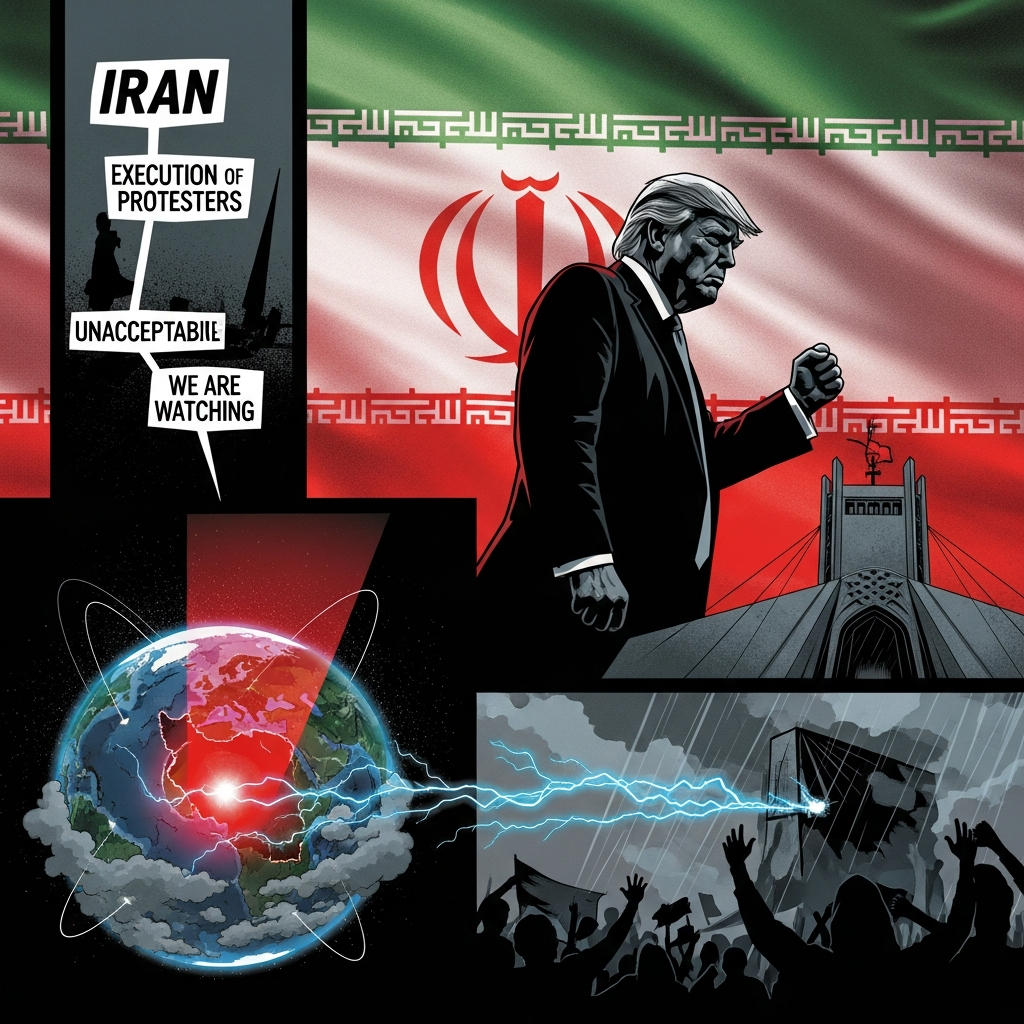
Former U.S. President Donald Trump has issued a stark warning to Iran, signaling “very strong action” if the nation proceeds with the execution of anti-government protesters. This formidable declaration comes amidst widespread reports of a brutal crackdown by Iranian authorities, raising alarm bells among international human rights organizations and global leaders alike. The situation has intensified an already volatile geopolitical landscape, with the US weighing various options to address the escalating humanitarian crisis.
Trump’s Urgent Warning to Tehran
The American stance against the Iranian regime’s actions is unambiguous. Donald Trump has publicly stated that if Iran proceeds with capital punishment for its demonstrators, the United States will respond decisively. “If they hang them, you’re going to see some things… We will take very strong action if they do such a thing,” Trump asserted in an interview with CBS News. He reinforced this message on his Truth Social platform, warning that Iranian authorities would “pay a big price” for the killings and urged citizens to “keep protesting.” Trump further announced the cancellation of all official meetings with Iranian representatives until the “senseless killing” ceases, adding the provocative slogan “HELP IS ON ITS WAY. MIGA!!!” – referring to “Make Iran Great Again.”
The Immediate Spark: Erfan Soltani’s Case
A specific case has brought the urgency of Trump’s warning into sharp focus. Relatives of Erfan Soltani, a 26-year-old protester detained recently, reported to BBC Persian that he faced imminent execution. The Hengaw Organization for Human Rights expressed profound concern, noting they had “never witnessed a case move so quickly.” Awyar Shekhi of Hengaw highlighted that Soltani received a death sentence in an “extremely rapid process” within just two days of arrest. This expedited judicial process, human rights groups argue, underscores the Iranian government’s intent to suppress dissent and instill fear among its populace.
A Nation in Turmoil: Scale of the Crackdown
The protests, initially sparked by profound economic grievances, have mushroomed into a nationwide movement demanding fundamental political change. These demonstrations have been met with overwhelming and deadly force by Iranian security forces. Reports from various human rights organizations paint a grim picture of the human cost, with casualty figures continuing to climb amid a pervasive communication blackout.
Unprecedented Casualties and Arrests
The US-based Human Rights Activists News Agency (HRANA) has confirmed the deaths of at least 2,403 protesters, including 12 children. Additionally, nearly 150 government-affiliated individuals have reportedly been killed in the unrest. Another NGO, Norway-based Iran Human Rights (IHR), confirmed at least 734 protester deaths, cautioning that the actual number is likely far higher, potentially in the thousands. An unnamed Iranian official also reported approximately 2,000 deaths, controversially blaming “terrorists.” The crackdown has also led to mass detentions, with HRANA reporting over 18,434 protesters arrested across the country.
The Information Blackout
The true scale of the bloodshed remains difficult to ascertain due to a near-total internet and communication shutdown. This blackout, lasting over 132 hours, has severely hampered independent reporting from inside Iran, leaving international news organizations struggling to verify information. Despite the restrictions, harrowing videos and accounts have slowly emerged, offering glimpses into the escalating violence and the profound suffering on the ground. NetBlocks, an internet monitor, has tracked the extended disruption, underscoring the deliberate suppression of information.
Roots of the Uprising: Economic Woes to Political Demands
The current wave of unrest, widely considered the most serious challenge to Iran’s clerical establishment since the 1979 Islamic Revolution, did not emerge in a vacuum. It was initially fueled by deep-seated public anger over Iran’s collapsing currency and the soaring cost of living, which have crippled the daily lives of ordinary citizens.
Escalation and Regime Response
These economic grievances swiftly evolved into broader demands for political reform and challenges to the authority of the ruling clerical establishment. Protests have reportedly spread to 180 cities and towns across all 31 provinces, indicating the widespread nature of public discontent. The Iranian authorities have responded with lethal force, often under the cover of the communication blackouts. Iranian Foreign Minister Abbas Araghchi has claimed the government engaged in dialogue but was forced to act against “trained terrorist groups.” Supreme Leader Ayatollah Ali Khamenei has echoed this, attributing the unrest to “foreign enemies” and “domestic mercenaries” aiming to destabilize the nation.
International Condemnation and US Strategy
The international community has largely condemned Iran’s violent suppression of protests, with the United States leading the charge for accountability. Global human rights organizations and the UN have voiced profound concern over the escalating violence and the threats of capital punishment.
Global Outcry and Diplomatic Pressure
UN Human Rights Chief Volker Türk has urged Iranian authorities to immediately halt all forms of violence and repression against peaceful demonstrators. He categorically condemned the labeling of protesters as “terrorists,” calling it an unacceptable justification for violence. Türk also expressed “extreme worry” over statements from Iranian officials suggesting the use of the death penalty through expedited trials and demanded the full restoration of internet access. The UK Foreign Secretary Yvette Cooper summoned the Iranian ambassador to protest the “horrendous and brutal killing.”
Trump’s Stance and Potential Measures
Beyond his vocal warnings, Donald Trump has indicated he is actively weighing various options, including military and covert tools, in response to the crackdown. He had previously announced 25% tariffs on any country trading with Iran, signaling a broader strategy of economic pressure. The US State Department has issued an urgent warning, advising American citizens in Iran to “Leave Iran now,” further escalating the diplomatic tension. This advice suggested citizens have an independent departure plan and consider land travel to neighboring countries if safe. Trump’s declaration of support for Iranian “patriots” and his cancelled meetings suggest a shift towards more direct and potentially interventionist policies.
Voices from the Ground: A Grim Reality
Despite the internet blackout, fragmented but consistent reports from within Iran paint a horrifying picture of the violence and suffering endured by the populace. Eyewitness accounts and leaked videos corroborate the severity of the crisis.
Hospitals Overwhelmed, Cities Scarred
Videos posted online, though difficult to verify, have shown people desperately searching for loved ones at facilities like the Kahrizak Forensic Centre in Tehran. Some footage reportedly showed numerous shrouded bodies and body bags. An activist shared a chilling account of bodies “piled up from every neighbourhood” at the center. Hospitals in the capital are reportedly overwhelmed, akin to “warzones,” facing critical shortages of supplies and blood, according to Prof. Shahram Kordasti, an Iranian oncologist based in London, who relayed messages from colleagues. A resident of Rasht, near the Caspian Sea coast, described their city as “unrecognisable,” with “Everywhere is burnt with fire.” Security checkpoints have become ubiquitous, with cars and phones routinely inspected by security forces.
Iran’s Defiance and Geopolitical Chessboard
In response to international condemnation and US threats, Iran’s government has maintained a defiant posture. It has accused the United States of meddling in its internal affairs and seeking pretexts for military intervention, drawing parallels to past foreign interventions in the region.
Regime’s Counter-Narrative
Iran’s Judiciary chief, Gholamhossein Mohseni Ejei, has warned that those involved in the unrest will be “dealt with seriously and severely.” Prosecutors have indicated that some individuals could face charges of “enmity against God” (moharebeh), a national security offense that carries the death penalty. This hardline stance signals the regime’s determination to crush the protests by any means necessary. Meanwhile, new videos, verified by BBC Persian, continue to emerge from cities like Arak, Tabriz, Urmia, and Khorramabad, showing clashes, gunfire, and protesters chanting powerful anti-regime slogans such as “Death to the dictator” – a direct reference to Ayatollah Khamenei – and “Reza Shah, may your soul rest in peace,” referencing the last monarch overthrown in 1979. These chants underscore a profound desire for systemic change and a rejection of the current clerical rule.
Frequently Asked Questions
What specific actions has Donald Trump threatened against Iran regarding protester executions?
Donald Trump has issued a severe warning, stating the U.S. will take “very strong action” if Iran executes anti-government protesters. He conveyed this in interviews and on social media, adding that Iran would “pay a big price” and that “HELP IS ON ITS WAY.” Trump also cancelled all meetings with Iranian officials and indicated he is weighing various options, including military and covert tools, alongside existing tariffs, to address the situation.
What is the estimated human cost and scale of the crackdown on Iranian protests?
Human rights organizations report a devastating human cost. HRANA confirmed over 2,400 protester deaths, including 12 children, and more than 18,400 arrests. IHR reported at least 734 confirmed protester deaths, with the actual number likely much higher. The protests have spread to all 31 provinces and 180 cities, met with deadly force and accompanied by a widespread internet blackout lasting over 132 hours, making verification difficult.
What factors led to the widespread anti-government protests across Iran?
The protests were initially sparked by deep public anger over Iran’s economic crisis, including the collapse of its currency and soaring cost of living. These economic grievances quickly escalated into broader demands for political change and challenges to the ruling clerical establishment. The demonstrations represent one of the most serious challenges to the Iranian government since the 1979 Islamic Revolution, signaling widespread discontent with the current regime.
Conclusion: A Volatile Standoff
The current standoff between the United States and Iran represents a critical juncture in international relations, with the fate of thousands of Iranian protesters hanging in the balance. Donald Trump’s unequivocal warning signals a potentially dramatic shift in US policy, moving beyond mere economic pressure to contemplate more direct action. The Iranian regime, deeply entrenched and defiant, appears determined to quash dissent, even at the cost of lives, viewing external pressure as an attempt to undermine its sovereignty. As global attention remains fixed on the unfolding crisis, the international community watches nervously to see if the warnings will translate into concrete action and what further humanitarian tragedy might unfold in Iran.