Humanity stands on the cusp of a monumental return to lunar space. NASA’s Artemis II mission, poised to send astronauts around the Moon for the first time in over 50 years, has entered its final preparatory phase. This pivotal mission aims to rigorously test critical spacecraft systems with a human crew, laying essential groundwork for future lunar landings and eventual journeys to Mars. Enthusiasts and experts alike eagerly anticipate the upcoming rollout of the Space Launch System (SLS) rocket and Orion spacecraft, with target launch windows now officially in sight.
NASA’s Artemis II: The Historic Countdown to Lunar Orbit
The excitement is palpable as NASA prepares for the next giant leap in lunar exploration. Artemis II represents a crucial step in the broader Artemis program, which seeks to establish a sustainable human presence on the Moon. This mission will not land on the lunar surface, but its objectives are no less vital for humanity’s deep-space aspirations.
Critical Rollout to Launch Pad 39B
A significant milestone approaches on January 17. On this date, NASA plans the monumental rollout of the Artemis II Space Launch System (SLS) rocket and Orion spacecraft. This colossal “stack” will travel from the iconic Vehicle Assembly Building (VAB) at Florida’s Kennedy Space Center. NASA’s massive Crawler-Transporter 2 vehicle will facilitate this complex maneuver. The destination is Launch Pad 39B. This four-mile journey promises to be a spectacle, potentially taking up to 12 hours. Lori Glaze, acting associate administrator for NASA’s Exploration Systems Development Mission Directorate, affirmed the progress. “We are moving closer to Artemis II,” she stated, noting that crew safety remains the top priority. Teams are diligently working around the clock, finalizing all tasks for this historic rollout.
Unveiling the Launch Windows: February 2026 and Beyond
Following the successful rollout, the mission team will focus on the primary objective: launch. NASA has identified an earliest potential launch window for Artemis II as February 6, 2026. This initial date opens a series of twelve additional possible launch opportunities. These windows extend through April 30, 2026. All launches will originate from the Kennedy Space Center. It’s important to remember that these target dates remain subject to change. Technical preparations, along with unpredictable weather conditions, could necessitate adjustments. This cautious approach underscores NASA’s unwavering commitment to mission safety and success.
Mission Objectives: Paving the Way for Humanity’s Lunar Return
Artemis II carries profound significance beyond its immediate launch. It serves as the ultimate proving ground for the Orion spacecraft and its life support systems. The mission’s success directly impacts all subsequent crewed lunar endeavors.
A Crewed Voyage Around the Moon
The Artemis II mission is designed as a 10-day trip. Four intrepid astronauts will embark on a journey around the Moon and back to Earth. Their voyage will take them approximately 4,700 miles beyond the lunar surface. This unprecedented distance for a crewed mission will thoroughly test Orion’s capabilities in deep space. Unlike the Apollo missions, Artemis II focuses purely on orbital flight. Its primary goal involves confirming that all spacecraft systems operate flawlessly with human crew members aboard. This rigorous test environment is crucial for validating the systems intended for future lunar landings.
Testing the Orion: A Crucial Deep Space Proving Ground
The core objective of Artemis II revolves around the Orion spacecraft. Engineers will scrutinize every aspect of its performance. This includes propulsion, communication, life support, and navigation systems. The presence of a human crew introduces dynamic elements not present during uncrewed flights. Astronauts will actively monitor, operate, and provide feedback on these complex systems. This hands-on validation is irreplaceable. It ensures Orion’s readiness for more ambitious missions, including those that will land humans on the Moon. The success of this orbital test is paramount for advancing NASA’s long-term lunar exploration strategy.
Meet the Trailblazers: The Four Astronauts Charting a New Course
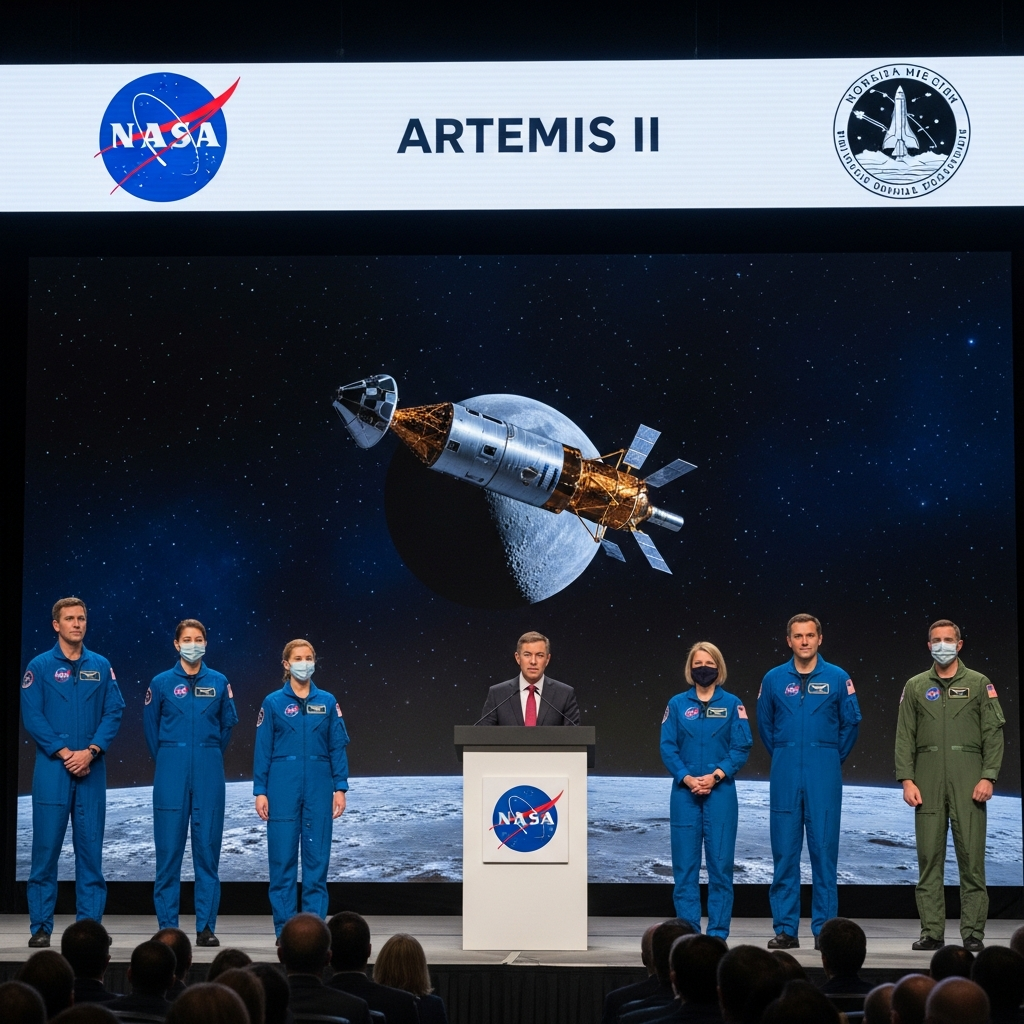
The four-person crew for Artemis II embodies the spirit of exploration and international collaboration. Their introduction during a ceremony in Houston, the traditional home of NASA’s astronauts, marked another significant milestone. This diverse team is ready to make history.
The crew includes:
Reid Wiseman (NASA): Mission Commander
Victor Glover (NASA): Pilot
Christina Koch (NASA): Mission Specialist (the first woman to fly a lunar mission)
Jeremy Hansen (Canadian Space Agency – CSA): Mission Specialist (the first Canadian to venture to the Moon)
Their combined expertise and dedication will be instrumental in the mission’s success. This crew represents the global commitment to advancing human spaceflight.
Engineering Excellence: Marshall’s Indispensable Role in Artemis II
Huntsville, Alabama’s Marshall Space Flight Center plays an absolutely critical role in the Artemis program. Its contributions are foundational to the Space Launch System (SLS) rocket’s development and readiness. Marshall’s expertise ensures the immense power required for deep space missions.
Leading SLS Development and Integration
Marshall Space Flight Center spearheads the development, integration, and ongoing operation of the SLS. This powerful rocket is the backbone of the Artemis missions, designed to propel heavy payloads and human crews beyond Earth’s orbit. Roger Baird, associate director at Marshall, highlighted the center’s deep involvement. Marshall has been integral to critical tests and reviews, continuously refining the SLS. Baird affirmed that Marshall’s teams ensure “this powerful system is ready for the challenges of crewed missions.” Their meticulous work included the precise stacking of solid rocket boosters and the assembly of the launch vehicle. The crew affectionately named this vehicle “Integrity.”
Rigorous Testing and Crew Readiness
The Marshall teams were instrumental in numerous pre-launch activities for Artemis II. They meticulously powered up the vehicle and rigorously tested its intricate systems. This included uploading flight software for the onboard computers. Such thoroughness ensures every component is prepared for launch. Beyond hardware, Baird emphasized the equal importance of human readiness. Crews have conducted comprehensive full mission simulations. These exercises cover pre-launch, launch, and ascent scenarios. They even include managing complex anomalies, preparing the team for any eventuality. Lessons learned from the successful uncrewed Artemis I test flight, launched a year prior, have directly informed these preparations.
From Artemis I to II: Lessons Learned and Overcoming Challenges
The journey to Artemis II has not been without its hurdles. The uncrewed Artemis I flight test in November 2022 provided invaluable data, though it also revealed areas needing further attention.
Artemis I successfully circled the Moon, demonstrating the SLS rocket’s raw power and Orion’s deep-space capabilities. However, upon its return to Earth, the Orion capsule exhibited unexpected damage. An “excessively charred and eroded bottom heat shield” was discovered, caused by the extreme heat of reentry into Earth’s atmosphere. This issue necessitated extensive further testing and modifications. Consequently, the mission’s launch has faced multiple delays. These setbacks have also pushed back the crewed Moon landing of Artemis III to at least 2027. This deliberate approach prioritizes astronaut safety and thorough system validation. NASA’s commitment to addressing these challenges head-on exemplifies its dedication to successful human spaceflight.
Artemis III and Beyond: The Vision for Sustainable Lunar Exploration
The Artemis program extends far beyond the upcoming Artemis II mission. It represents a long-term strategy for establishing an enduring human presence on the Moon and preparing for eventual human expeditions to Mars.
Targeting the Lunar South Pole for Future Landings
Artemis III, now targeting 2027, aims to return astronauts to the lunar surface. For this mission, NASA has identified a refined set of nine potential landing regions near the Moon’s South Pole. This region is of immense scientific interest. It contains permanently shadowed areas believed to harbor significant resources, most notably water ice. Sarah Noble, Artemis lunar science lead at NASA Headquarters, highlighted its uniqueness. “The South Pole differs significantly from the Apollo landing sites,” she noted, offering access to the Moon’s oldest terrain and cold, shadowed regions potentially holding water and other compounds. Sites like Haworth, Malapert Massif, and Nobile Rim are under consideration. These regions offer both scientific discovery and practical resource potential.
Laying the Groundwork for Mars Missions
Marshall’s influence extends significantly to Artemis III and future deep space exploration. Roger Baird confirmed that Marshall will manage industry-led human landing systems (HLS) for subsequent lunar landings. The center is actively partnering with private industry. Their goal is to develop advanced landers capable of safely transporting crews to and from the lunar surface. This foundational work on lunar landers directly prepares NASA for future human missions to Mars. Developing robust transportation systems for lunar operations provides invaluable experience and technology. This knowledge is transferable to the even greater challenges of Martian exploration. The Artemis program truly represents a stepping stone to the Red Planet.
The Broader Impact: Inspiring the Next Generation of Explorers
Beyond the scientific and engineering marvels, the Artemis program inspires. It rekindles humanity’s innate drive to explore the unknown. Seeing humans return to the Moon, and ultimately venture to Mars, ignites curiosity in new generations. It encourages STEM education and fosters international collaboration. The challenges overcome and the breakthroughs achieved drive technological innovation far beyond spaceflight. From advanced materials to life support systems, these developments often find applications that benefit life on Earth. Artemis represents not just a series of missions, but a global endeavor to push the boundaries of what is possible. It’s a testament to human ingenuity and our enduring spirit of adventure.
Frequently Asked Questions
When is NASA targeting the rollout and launch of Artemis II?
NASA is targeting January 17 for the critical rollout of the Space Launch System (SLS) rocket and Orion spacecraft to Launch Pad 39B at Kennedy Space Center. Following this, the earliest potential launch window for the Artemis II mission is February 6, 2026. There are twelve additional launch opportunities extending through April 30, 2026. However, these dates are subject to change based on technical preparations and weather conditions.
What makes the Artemis II mission different from previous lunar expeditions like Apollo?
Unlike the historic Apollo missions which landed astronauts on the Moon, Artemis II will not involve a lunar landing. Instead, its primary objective is to send four astronauts on a 10-day trip around the Moon, journeying approximately 4,700 miles beyond its far side. This mission’s core purpose is to thoroughly test all of the Orion spacecraft’s systems with a human crew in deep space, ensuring its readiness and safety for subsequent Artemis missions that will eventually return humans to the lunar surface.
How will the Artemis program pave the way for future human missions to Mars?
The Artemis program, particularly through missions like Artemis II and III, is designed to establish a sustainable human presence on the Moon. This lunar base will serve as a critical proving ground and “test bed” for technologies and procedures required for deeper space exploration, including Mars missions. Marshall Space Flight Center, for example, is managing the development of industry-led human landing systems (HLS) for lunar surface operations. The experience gained in developing advanced landers, practicing long-duration spaceflight, and utilizing lunar resources like water ice for fuel and life support will be directly applicable to the immense challenges of a human expedition to Mars.
The journey back to the Moon is well underway. Artemis II represents a crucial, complex, and captivating step in humanity’s deep space odyssey. As the Space Launch System and Orion prepare for their monumental rollout, the world watches, ready to witness the next chapter in lunar exploration unfold. This mission promises not just technological triumphs, but a renewed sense of wonder and possibility for generations to come.