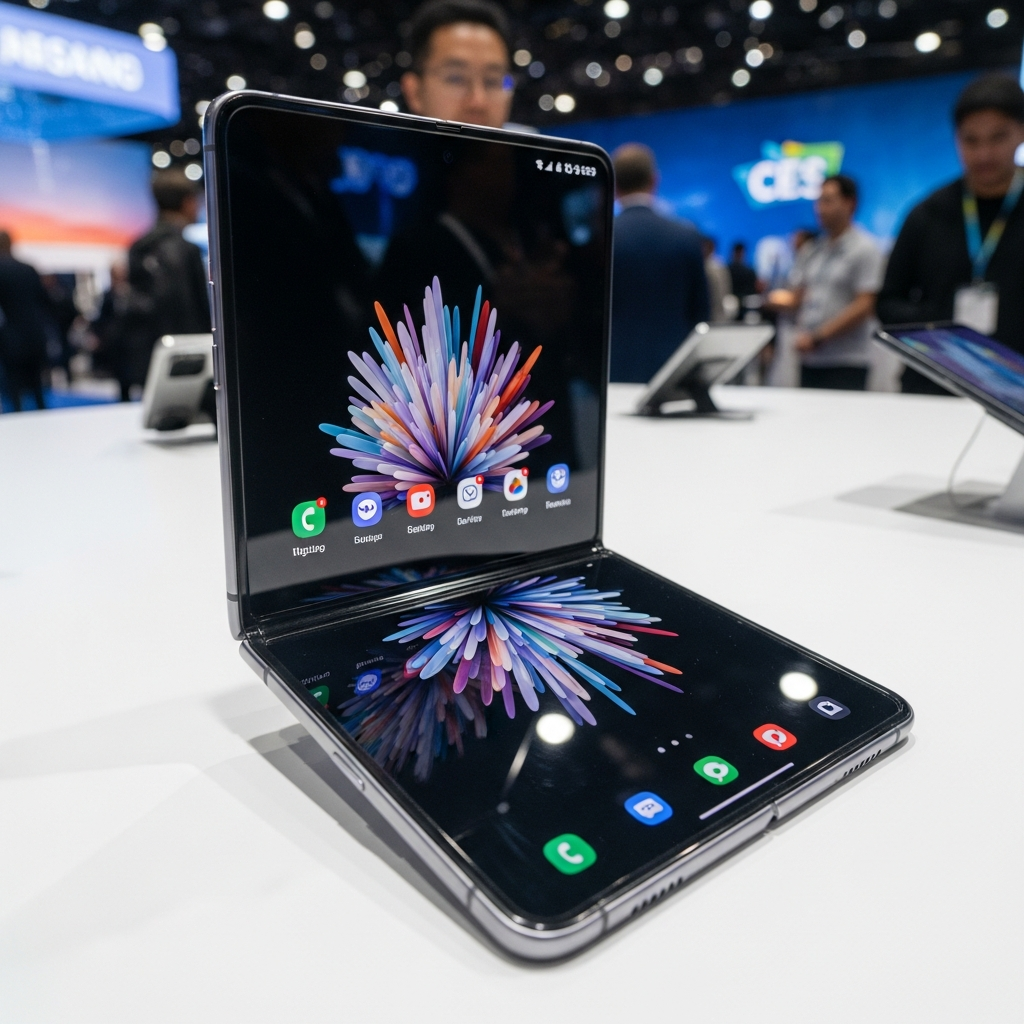
The future of mobile computing officially unveiled at CES 2026 with Samsung’s groundbreaking Galaxy Z TriFold. This revolutionary device, which boasts an unprecedented tri-folding design, left an indelible impression on industry experts and attendees alike. It’s a true testament to Samsung’s innovation, promising a full-sized tablet experience that genuinely fits into your pocket. If you thought foldable phones were old news, the Galaxy Z TriFold is here to redefine your expectations, delivering a level of immersion and productivity that demands to be experienced firsthand.
Experiencing the Next Evolution of Foldables
Stepping into the future, the Galaxy Z TriFold isn’t just another smartphone; it’s a paradigm shift. Unlike previous foldables that simply bend in half, this innovative device unfolds a second time, revealing an expansive display previously unimaginable in a pocketable form factor. Many, including myself, never anticipated such advanced technology hitting the market so swiftly. Yet, Samsung has exceeded all expectations, showcasing a device that feels both familiar and wildly futuristic.
Initial impressions of the Galaxy Z TriFold highlight its surprising in-hand feel. Despite housing an entire extra screen section compared to devices like the Galaxy Z Fold 6 or the daily-driven Galaxy Z Fold 7, it manages to maintain a comparable form factor when closed. This avoids the inconvenience one might expect from a “chunkier” device. A unique observation by reviewers was the presence of subtle “ridges” from the additional display segment, which unexpectedly enhanced grip without feeling intrusive. This blend of cutting-edge design and practical ergonomics makes the TriFold remarkably comfortable.
Unveiling the 10-Inch Canvas: More Than Just a Phone
The true spectacle of the Galaxy Z TriFold emerges when its dual hinges flex open, revealing a stunning 10-inch AMOLED main display. This isn’t a “mini-tablet”; it’s a genuine, full-sized tablet designed to slip into your pocket. The sheer expanse of the screen is breathtaking, immediately showcasing its potential for enhanced media consumption and productivity. Compared to smaller foldables, watching movies or playing games on the TriFold’s 4:3 aspect ratio display offers a vastly superior experience, eliminating awkward cropping and providing ample screen real estate. Reviews often note that watching YouTube on this screen rivals the experience of an iPad.
This expansive display transforms the device into a powerhouse for full tablet applications. While a robust ecosystem of Android tablet apps is still evolving, the TriFold’s size instantly signals its capability. It’s also perfectly suited for desktop-optimized websites, essentially becoming a miniature laptop when paired with a wireless keyboard and mouse. Reviewers found that for tasks like reading articles, the larger screen in portrait orientation made for a much more enjoyable experience. The integration of Samsung’s DeX desktop mode further amplifies its utility, enabling seamless multitasking with multiple resizable app windows. This positions the TriFold as a compelling alternative to carrying a separate laptop or a tablet-and-keyboard combination, especially with its support for external display connectivity.
Design, Durability, and Engineering Excellence
Samsung has poured years of foldable device experience into the Galaxy Z TriFold, resulting in an engineering marvel. Concerns about potential bulkiness are often dispelled upon first contact. When closed, it feels robust—described by one reviewer as a “tank”—yet transforms into an incredibly thin device in tablet mode. The TriFold measures 12.9mm thick and weighs 309g when folded, making it thicker and heavier than the Z Fold 7. However, when fully unfolded, its center section is a mere 3.9mm thick. This meticulous design ensures it feels solid and complete, resisting partial folding, and encouraging users to fully embrace either the cover screen or the full tablet experience.
The device’s robust construction utilizes durable materials like ceramic-glass fiber-reinforced polymer, Corning Gorilla Glass Ceramic 2, and Advanced Armor Aluminum. This combination contributes to its impressive sturdiness, addressing common durability concerns associated with foldables. Furthermore, Samsung has made significant strides in minimizing screen creases. Reviewers consistently note that the two creases are “barely visible” and “scarcely felt,” a considerable improvement over earlier foldable generations. The only minor aesthetic drawback cited is the Crafted Black finish, which tends to attract fingerprints.
The Art of Folding: Intuition and Innovation
One of the most critical questions surrounding a trifold device is the naturalness of its folding and unfolding mechanism. Unfolding the Galaxy Z TriFold generally feels intuitive and satisfying. However, folding it back up presents a slightly different challenge. The device requires a specific folding sequence (left side first, then right), and accidental mis-folds are common during initial use. Samsung, recognizing this, has implemented an ingenious solution: strong haptic feedback, akin to the phone “yelling at you,” coupled with a full-screen warning message, alerts users when they are attempting to fold it incorrectly. This thoughtful feature protects the flexible 10-inch display and streamlines the user experience.
Samsung has engineered the two complex hinges with two different types of magnets that assist in the opening and closing process, making it almost as effortless and tactilely pleasing as with the Z Fold 7. Impressively, when folded, the TriFold is not significantly wider than its bi-fold counterparts. The company has pushed the device’s slimness to its physical limits, with the current thickness primarily dictated by the size of the USB-C port itself. This suggests that future iterations might explore portless designs to achieve even greater thinness.
Performance, Camera, and Software Ecosystem
Under the hood, the Galaxy Z TriFold is powered by a custom Qualcomm Snapdragon 8 Elite for Mobile Platform for Galaxy. This specialized chipset offers slightly higher clock speeds, providing enhanced performance crucial for driving the device’s advanced features and large display. It comes equipped with a substantial 16GB of RAM, specifically designed to support its onboard AI operations and seamless multitasking. While the base model offers 512GB of storage, the absence of a 1TB option is noted as a missed opportunity, especially given the device’s likely appeal to business and enterprise users.
The camera system largely mirrors that of the acclaimed Z Fold 7, featuring a powerful 200MP f/1.7 main sensor, a 12MP f/2.2 ultrawide lens, and a 10MP f/2.4 telephoto lens with 3x optical zoom. While the 200MP camera is expected to capture exceptional photos, the 3x optical zoom is considered a little underpowered compared to some flagships. It also includes 10MP selfie cameras on both the cover and main displays. Running on Android 16 with Samsung’s One UI 8+, the Galaxy Z TriFold features deep integration with both Samsung Galaxy AI and Google Gemini. These AI capabilities are expected to truly shine on the expansive 10-inch display, enhancing everything from image editing to personalized assistance.
Key Considerations and Global Availability
The Galaxy Z TriFold houses a 5,600mAh battery, ingeniously split across its three segments, and supports 45W fast charging, promising a 50% charge in just 30 minutes. While substantial, this capacity is slightly less than the 7,000mAh+ silicon carbide batteries found in some newer rival phones.
One notable design quirk identified by reviewers is the device’s U-shaped fold. When fully unfolded, the cover screen is positioned in the middle of the back panel. This layout means the cover screen and carbon-fiber textured panels are frequently touched by fingers, making the device prone to smudging and necessitating regular cleaning with a microfiber cloth. Furthermore, unlike some competitors, the TriFold currently lacks the flexibility to operate in configurations other than fully open or fully closed. It also doesn’t support “Flex Mode” features seen in Z Fold or Z Flip devices, which enable unique app controls when partially open.
The Galaxy Z TriFold was officially announced on December 1st and is currently available only in South Korea, where its limited stock quickly sold out. Global release is planned for Q1 2026 across markets including the U.S., UAE, Singapore, Taiwan, and China. While Huawei launched a trifolding phone previously, the TriFold is poised to be the first globally available device of its kind, marking a significant milestone.
The most significant barrier to widespread adoption remains its anticipated price. Based on Korean pricing, the Galaxy Z TriFold is expected to cost upwards of $2,400 to $2,500, positioning it in the premium laptop price range and potentially surpassing the Z Fold 7’s already high cost. Despite this premium, the overwhelming sentiment from hands-on reviews is that the device’s significant upsides—its unparalleled display, versatile productivity, and robust engineering—are well worth the tradeoffs in size, weight, and cost for those who demand the ultimate mobile experience.
Frequently Asked Questions
What makes the Samsung Galaxy Z TriFold a ‘game-changer’ for mobile users?
The Samsung Galaxy Z TriFold stands out as a game-changer primarily due to its innovative tri-folding design, which allows a full 10-inch tablet display to be packed into a pocketable smartphone form factor. This unique engineering leap delivers an expansive screen that dramatically enhances media consumption, mobile gaming, and multitasking. Features like the optimized 4:3 aspect ratio, seamless DeX mode integration, and the ability to act as a “tiny laptop” when paired with accessories offer unprecedented productivity on the go. It effectively merges the capabilities of a premium phone, a versatile tablet, and a lightweight computer into a single device.
Is the Galaxy Z TriFold’s premium price justified by its features?
With an estimated price of $2,400-$2,500, the Galaxy Z TriFold sits at the very top of the smartphone market. However, many experts and hands-on reviewers argue that its advanced features, groundbreaking engineering, and significant user benefits justify the cost. The device offers a truly pocketable 10-inch AMOLED display, a robust and durable build using advanced materials, a powerful Snapdragon 8 Elite processor with 16GB RAM for AI and multitasking, and a versatile camera system. For users seeking the ultimate mobile productivity, entertainment, and a device that genuinely replaces multiple gadgets, the TriFold’s unique value proposition could indeed make the premium investment worthwhile.
How does the Galaxy Z TriFold compare in size and build to previous Samsung foldables?
The Galaxy Z TriFold is a more substantial device than its bi-fold predecessors, reflecting its expanded screen real estate. When folded, it measures 12.9mm thick and weighs 309g, making it noticeably thicker and heavier than the Galaxy Z Fold 7 (8.9mm thick, 215g). However, when fully unfolded, its central section is remarkably thin at just 3.9mm. Despite the increased complexity of two hinges, Samsung has utilized durable materials like ceramic-glass fiber-reinforced polymer and Advanced Armor Aluminum, making the TriFold feel exceptionally sturdy. Notably, the screen creases are much less visible and palpable compared to earlier Samsung foldables, showcasing significant engineering improvements in display integration.
—