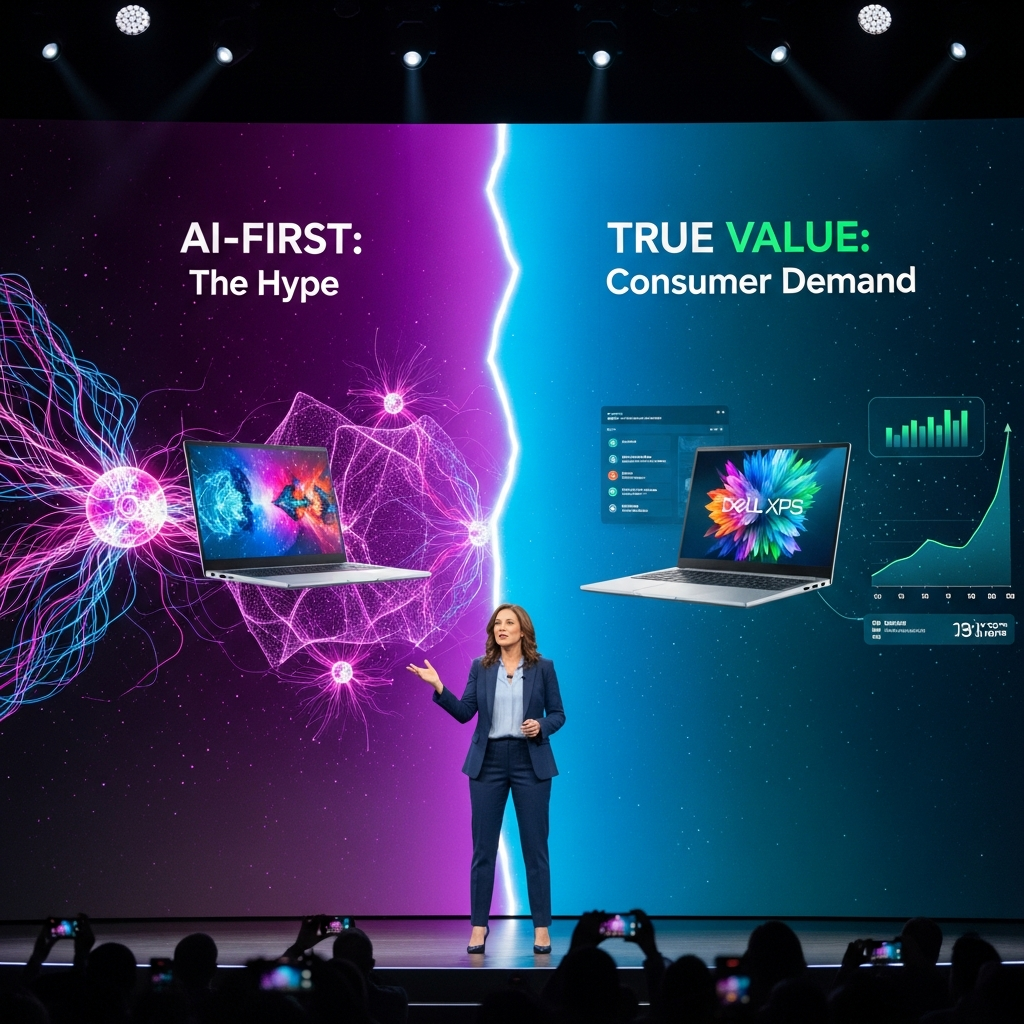
The relentless push for Artificial Intelligence (AI) in personal computers has dominated tech headlines for years. Yet, a surprising revelation from Dell at CES 2026 suggests a significant disconnect. Dell, a leading PC manufacturer, has candidly admitted that consumers are simply not buying PCs based on AI features. This bold acknowledgement marks a pivotal shift, indicating that the tech industry’s “AI-first” marketing strategy may be missing the mark with everyday users who prioritize tangible benefits and genuine value.
The Overwhelming AI Narrative and Consumer Fatigue
For years, “AI” has become an inescapable buzzword across the tech landscape. Every new device, from laptops to even seemingly unrelated gadgets, is often branded as “AI-powered” or boasting an “AI assistant.” This pervasive marketing, however, has frequently presented AI capabilities that are either rudimentary, difficult to understand, or offer little practical benefit to the average user. Many consumers, and indeed tech journalists, have expressed fatigue with this constant, often vague, AI messaging. The promise of revolutionary AI often translates into underwhelming, confusing features that fail to excite or persuade.
Tech’s AI Push: A Disconnect from User Needs
The enthusiasm for AI among tech companies and investors has been palpable. However, this internal industry drive often overlooks the actual needs and comprehension levels of the end consumer. Early AI implementations in PCs have sometimes struggled with basic tasks, leading to skepticism. This gap between ambitious AI promises and real-world utility has created a marketing environment ripe for re-evaluation. Many industry observers have long questioned whether the “AI PC” narrative truly resonates beyond tech enthusiasts.
Dell’s Candid Admission at CES 2026
At its CES 2026 pre-briefing, Dell delivered a refreshingly straightforward message. Unlike many of its peers, Dell notably downplayed AI in its product announcements. Jeff Clarke, Dell’s vice chairman and COO, touched upon broader industry trends, including an “un-met promise of AI” that was expected to drive user demand. This set the stage for a more grounded discussion.
Consumers Aren’t Buying Based on AI
The most striking admission came from Kevin Terwilliger, Dell’s head of product. He plainly stated, “One thing you’ll notice is the message we delivered around our products was not AI-first. So, a bit of a shift from a year ago where we were all about the AI PC.” Terwilliger elaborated that Dell’s consumer research revealed a clear truth: “they’re not buying based on AI.” He further noted that AI “probably confuses them more than it helps them understand a specific outcome.” This honest feedback from Dell highlights that consumers find current AI features more perplexing than beneficial when making a purchase decision.
Crucially, Dell isn’t abandoning AI development. The company confirmed that all its new devices announced at CES 2026 do include a Neural Processing Unit (NPU), the specialized hardware essential for local AI processing. This means the capability is present, but Dell has chosen not to lead with it in their marketing. This strategic pivot acknowledges that while AI hardware is integrating into devices, it’s not currently a compelling sales driver for the general public.
Why Consumers Aren’t Prioritizing “AI PCs”: Deeper Insights
Dell’s findings align with broader observations about consumer behavior. When purchasing a new PC, buyers typically focus on tangible, performance-driven attributes. These include:
Battery Life: A top concern for mobile users.
Overall Performance: Speed, multitasking capabilities, responsiveness.
Display Quality: Resolution, refresh rate, panel technology.
Design & Portability: Aesthetics, weight, thickness.
Price-to-Performance Ratio: Getting the best value for their investment.
AI features, in their current iteration, often fail to compete with these core priorities. Many users report minimal interest in AI, with some even expressing skepticism or concern about the technology. This suggests that without clear, indispensable AI applications, integrated features like Copilot or other AI-assisted tools don’t justify an upgrade or significantly influence purchasing decisions. The “un-met promise” of AI underscores a fundamental need for developers to create truly useful and intuitive AI experiences that translate into clear user benefits.
Challenging Microsoft’s “Copilot+ PC” Strategy
Dell’s candid assessment poses a direct challenge to Microsoft’s aggressive push for “Copilot+ PCs.” Microsoft has heavily invested in positioning AI as a primary catalyst for a new PC upgrade cycle, tying advanced Windows 11 features to NPU-equipped hardware. Features like Windows Recall, initially exclusive to Copilot+ PCs, have faced significant user backlash and privacy concerns. This indicates that forcing AI into the user experience without genuine demand or clear value can be counterproductive. Dell, as a major Windows OEM, being the first to openly admit this consumer disinterest suggests Microsoft’s significant bet on AI as a demand driver might be faltering.
What This Means for the Future of PC Marketing
Dell’s strategic shift could herald a broader re-evaluation within the tech industry. It encourages other companies to move beyond buzzwords and focus on what truly matters to consumers: practical value, performance, and a clear understanding of product benefits. This isn’t to say AI has no future in PCs, but rather that its integration needs to be more refined, genuinely useful, and less reliant on abstract marketing. The expectation is that companies will learn to “keep schtum” about AI until it matures into a technology that offers undeniable advantages to the end user.
Beyond the Hype: What Dell Did* Announce
While downplaying AI, Dell still showcased an impressive lineup of products at CES 2026. This included the highly anticipated return of the XPS laptop lineup, new high-end and entry-level Alienware gaming laptops, fresh iterations of its powerful Area-51 desktops, and a range of new monitors. These announcements focused on expanding their reach to consumers and gamers, emphasizing performance, design, and user experience—the traditional strengths that still resonate deeply with PC buyers. For instance, the Memorial Day sales featuring Alienware Aurora R16 and Area-51 PCs highlight powerful Intel Core Ultra processors and Nvidia RTX 50-series graphics cards, proving that raw performance and gaming prowess remain key selling points.
Frequently Asked Questions
Why aren’t consumers interested in AI PCs right now?
Consumers are not currently prioritizing AI PCs because the presented AI features often lack clear, tangible benefits for everyday use and can be confusing. Research, including Dell’s, indicates that users prioritize traditional PC attributes like battery life, overall performance, display quality, and value over integrated AI capabilities. Early AI applications have not yet demonstrated compelling reasons for users to upgrade specifically for AI, leading to skepticism and disinterest.
What should I prioritize when buying a new PC if not AI?
When purchasing a new PC, focus on specifications that directly impact your primary use cases. For general computing, prioritize processor speed (CPU), sufficient RAM, fast storage (SSD), and good battery life. Gamers should look for powerful graphics cards (GPU) like Nvidia RTX 50-series, high refresh rate displays, and efficient cooling systems. Always consider your budget and intended tasks to find the best balance of performance and features that deliver real value.
How might Dell’s stance influence other tech companies’ AI marketing?
Dell’s public admission could signal the beginning of a broader shift in the tech industry’s AI marketing strategies. As a prominent Windows OEM, Dell’s candor might encourage other manufacturers to re-evaluate their own AI messaging, potentially leading to a more authentic and value-driven approach. Instead of broad “AI-first” claims, companies may start focusing on specific, demonstrable AI applications that provide clear benefits, rather than relying on buzzwords to drive sales.
Conclusion
Dell’s surprising honesty at CES 2026 provides a critical reality check for the entire tech industry. By acknowledging that consumers are not buying PCs based on AI features and often find the concept confusing, Dell has taken a leading step towards more user-centric marketing. This pivot emphasizes that while AI hardware is becoming standard, the real challenge lies in developing genuinely useful AI applications that enhance the user experience in meaningful ways. Moving forward, the industry must focus on delivering concrete value, performance, and clear benefits, rather than relying on abstract buzzwords, to truly capture the interest of PC buyers. This shift could usher in an era of more authentic product development and marketing, ultimately benefiting consumers by delivering technology that genuinely matters to them.