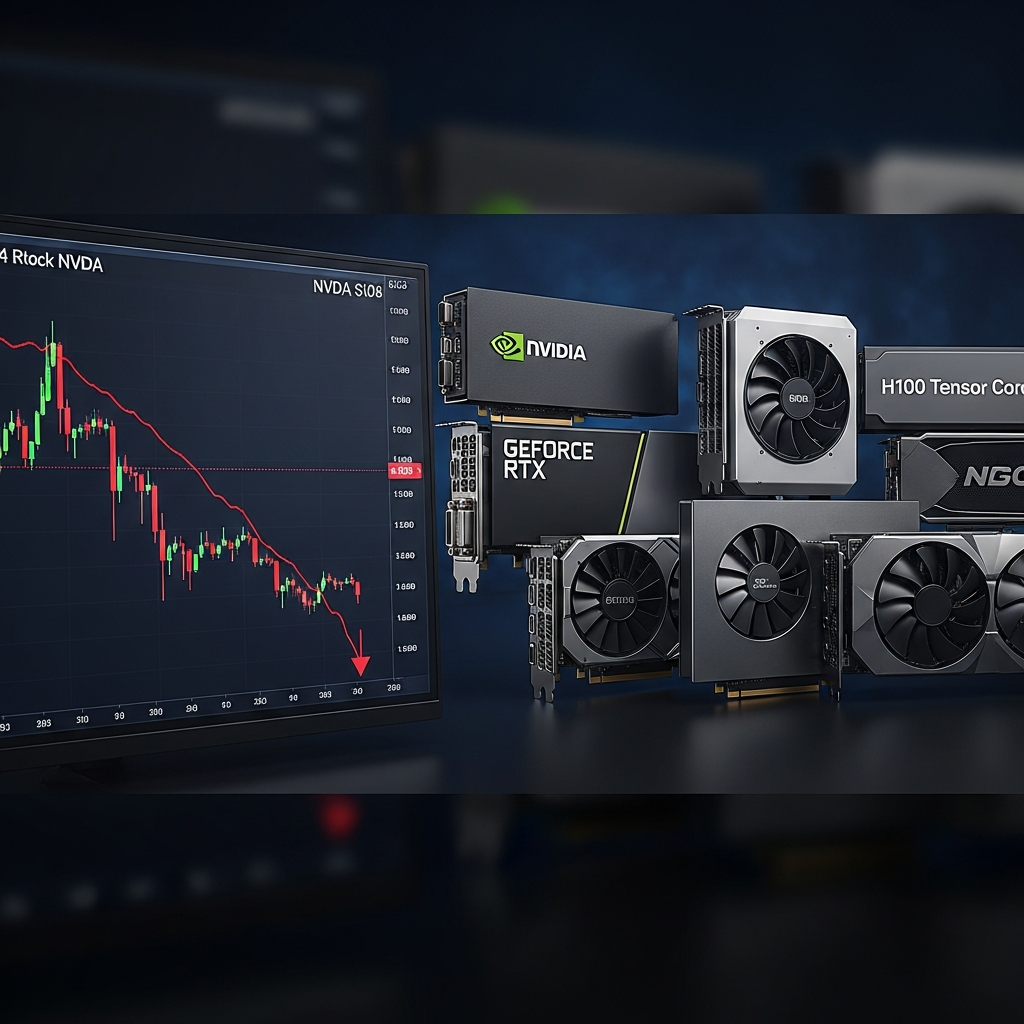
The technology sector is buzzing with concern as rumors of impending GPU price increases send ripples through the market. Shares of Nvidia (NASDAQ:NVDA), a bellwether in the artificial intelligence (AI) and gaming hardware space, experienced a notable slide. This downturn came amidst reports suggesting that several semiconductor giants, including Nvidia and competitor Advanced Micro Devices (AMD), are gearing up for significant price adjustments on their graphics processing units (GPUs) early next year. For investors and consumers alike, understanding the forces behind these potential changes and their broader market implications is crucial.
GPU Price Hikes on the Horizon: The Core Rumors
Reports circulating on December 30, 2025, indicated a palpable market reaction to whispers of GPU price hikes. Nvidia’s stock dipped approximately 1.2% following these headlines. The core of the rumor points to AMD initiating price increases as early as January 2026, with Nvidia potentially following suit around February 2026. While specifics for Nvidia remain hazy, details regarding AMD’s rumored adjustments suggest an increase of roughly $10 for every 8GB of VRAM. This could translate to price jumps ranging from $10 to $30 for graphics cards featuring 8GB to 24GB of video memory. Such changes, if implemented, would mark a shift in the competitive landscape for high-performance computing components.
Why Are GPU Prices Set to Rise? Understanding the Cost Pressures
Analysts are attributing these rumored price increases primarily to escalating cost pressures within the semiconductor industry. A significant driver is the rising price of memory components. This surge in memory costs is directly linked to the booming demand from the artificial intelligence (AI) data center sector. As AI applications become more sophisticated and prevalent, the need for powerful, memory-intensive GPUs accelerates. This increased demand for core components inevitably drives up manufacturing costs for graphics card producers. Essentially, the very technology fueling the AI revolution is simultaneously pushing up the price of its foundational hardware.
Broader Market Jitters: The “AI Bubble” and Economic Uncertainty
Nvidia’s recent stock performance isn’t occurring in a vacuum. Broader market trends, particularly anxieties surrounding a potential “AI bubble,” have been influencing investor sentiment for weeks. For instance, in November 2025, major US and Asian stock markets experienced significant declines. This happened despite a flurry of seemingly positive business news, including strong sales from Nvidia itself and better-than-expected hiring figures. The S&P 500, Dow Jones Industrial Average, and Nasdaq all closed lower, with tech-heavy indexes taking the biggest hit.
Wealthify investment consultant Colleen McHugh noted that November was a “bad month” for the Nasdaq due to persistent concerns about AI valuations. Nvidia, as a leading AI chip giant, often serves as a bellwether for the broader AI boom. Alphabet CEO Sundar Pichai even cautioned about some “irrationality” in the current AI frenzy. This underlying trepidation among investors, coupled with the high market concentration in “magnificent seven” tech companies like Alphabet and Apple, amplifies market nervousness when these stocks face headwinds.
Economic Crosscurrents: Interest Rates, Inflation, and Geopolitical Factors
Beyond AI jitters, investors are also on edge concerning the future path of interest rates and inflation. The delay of key US inflation data has added uncertainty regarding the Federal Reserve’s rate cut trajectory for the coming year. Mixed signals from the jobs market, with unexpected increases in job openings but also rising layoffs, further complicate the economic outlook. This opacity surrounding inflation and monetary policy creates a volatile environment.
Adding another layer of complexity for Nvidia specifically, recent reports have highlighted conflicting developments regarding its advanced H200 AI chip shipments to China. While former President Trump reportedly approved some shipments, subsequent reports indicated Beijing might limit access for Chinese companies. These geopolitical factors and supply chain uncertainties contribute to the overall unpredictability surrounding Nvidia’s future performance, making its stock susceptible to even minor rumors.
Analyst Outlook: Protecting Margins, Limited Demand Impact
Despite the immediate market reaction to the price hike rumors, analysts offer a nuanced perspective. They suggest that these modest price increases could serve a protective function, helping semiconductor suppliers safeguard their profit margins against the backdrop of rising component costs. In a competitive industry with high research and development expenses, maintaining healthy margins is paramount for continued innovation and growth.
Furthermore, analysts believe that, for the time being, the risk of these price increases being substantial enough to significantly “dent demand” for GPUs appears limited. The market anticipates that both consumers and businesses, particularly the booming AI data center sector, will largely absorb these moderate increases without a major impact on purchasing volumes. The insatiable demand for processing power, especially for AI workloads, often outweighs minor price fluctuations.
What’s Next? Monitoring Official Statements and Market Signals
The current situation underscores the importance of monitoring official communications from companies like Nvidia and AMD. Market participants and traders are keenly awaiting official statements, monitoring channel inventories, and scrutinizing future guidance from these firms in the coming weeks. These actions will be crucial in verifying whether the reported price increases are concrete plans or merely preliminary vendor pricing discussions. The initial market reaction, as evidenced by Nvidia’s share performance, could shift significantly once official confirmations or refutations are made public. Consumers planning a GPU purchase and investors tracking NVDA stock should pay close attention to these developments to make informed decisions.
Frequently Asked Questions
What are the primary reasons behind the rumored Nvidia GPU price increases?
The main drivers for the rumored GPU price increases, expected in early 2026, are escalating cost pressures within the semiconductor industry. Specifically, there’s a significant rise in memory component prices. This surge is directly linked to the booming demand from the artificial intelligence (AI) data center sector, which requires vast amounts of high-performance memory for its intensive computational tasks, thereby increasing manufacturing costs for GPU producers.
How can consumers track official Nvidia GPU pricing updates and announcements?
Consumers seeking official updates on Nvidia GPU pricing should monitor the company’s official newsroom, investor relations portals, and social media channels. Reputable tech news outlets and financial publications will also widely report any confirmed announcements. Additionally, keeping an eye on major retail partner websites and distributor channels can provide real-time indications of pricing shifts once they are officially implemented by Nvidia or its partners.
Should consumers consider purchasing an Nvidia GPU now, or wait for 2026 amidst price hike rumors?
The decision to purchase an Nvidia GPU now or wait into 2026 is complex given the current rumors. While potential price increases of $10-$30 per card are modest, they do represent an additional cost. However, analysts suggest these increases may not significantly impact overall demand. Consumers with an immediate need for a GPU might consider purchasing now to avoid any confirmed increases. Those without urgency might wait for official announcements, as market conditions and pricing could still fluctuate based on company guidance and broader economic factors.
Conclusion: Navigating a Dynamic GPU Market
The recent slide in Nvidia’s shares following rumors of impending GPU price increases highlights the dynamic and often unpredictable nature of the tech market. Driven by rising component costs fueled by insatiable AI demand, these potential price adjustments could protect supplier margins without necessarily “denting demand” significantly. However, these rumors occur amidst broader market anxieties concerning an “AI bubble,” economic uncertainty, and geopolitical complexities affecting chip shipments. Both investors and consumers must remain vigilant, monitoring official company statements and market signals closely. The coming weeks will be crucial in clarifying the future landscape for Nvidia GPUs and the broader semiconductor industry.