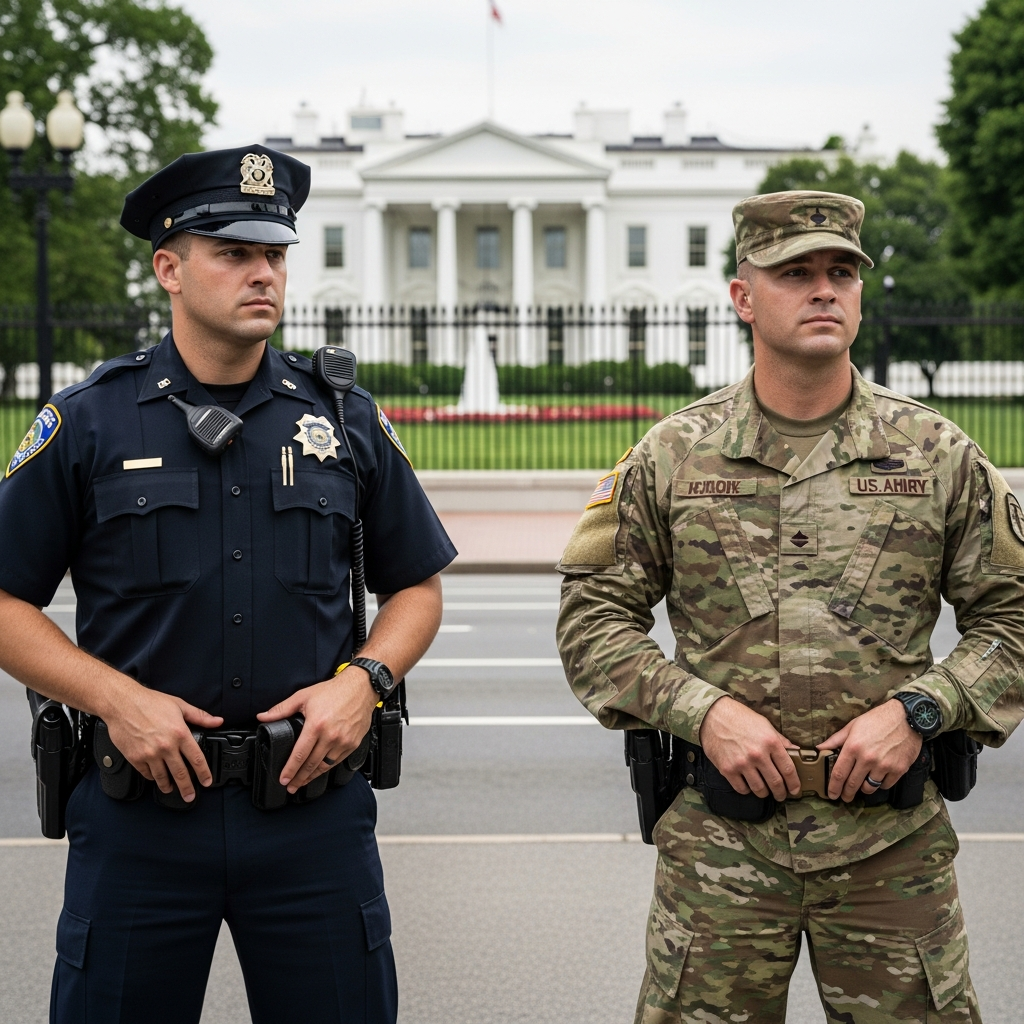
Washington D.C. authorities are actively exploring a significant operational shift, considering joint patrols between the Metropolitan Police Department (MPD) and National Guard members. This potential change in strategy comes in the immediate aftermath of a tragic shooting near the White House that resulted in the death of one National Guard member and critical injuries to another. This article delves into the details of the incident, the proposed security enhancements, and the broader political and social implications surrounding the decision to integrate security forces in the nation’s capital.
The Catalyst: A Tragic Shooting Near the White House
On November 26, 2025, a violent incident unfolded in Downtown D.C., blocks from the White House, leaving two National Guard members critically wounded. The shooting occurred around 2:15 p.m. near the intersection of 17th and I streets NW, close to Farragut Square. The attack, described by Mayor Muriel Bowser as “targeted,” prompted an immediate and widespread law enforcement response.
Victims and Their Valor
The National Guard members involved in the ambush were identified as Specialist Sarah Beckstrom, 20, and Staff Sgt. Andrew Wolfe, 24. Both Guardsmen sustained severe gunshot wounds to the head while on high-visibility patrols. Tragically, Specialist Beckstrom succumbed to her injuries. President Donald Trump reported that Staff Sgt. Wolfe was “fighting for his life” in the days following the attack. Their valor and quick response were highlighted by officials, with other National Guard members helping to subdue the shooter until law enforcement arrived.
The Suspect and Emerging Details
The suspect in the shooting was identified as Rahmanullah Lakanwal, a 29-year-old Afghan national. He reportedly approached the two National Guard members and opened fire. A Guardsman then shot and injured Lakanwal, who was subsequently taken into custody. Federal authorities, including the FBI, quickly launched a nationwide terrorism investigation, exploring potential ties to international terrorist organizations. Searches related to the investigation were conducted in Washington state and California, where Lakanwal resided with his wife and five children. Reports indicate he drove nearly 3,000 miles to Washington, D.C., to carry out the attack.
D.C. Authorities Weigh New Joint Patrol Strategy
In response to the unprecedented attack, D.C. police are collaborating with other law enforcement agencies to reassess their operational framework. A police department official informed WTOP that these discussions focus on how to bolster support for the ongoing National Guard deployment. The Washington Post, citing an internal message to department leaders, reported that troops are expected to begin patrolling alongside D.C. police. However, officials caution that this plan is still under consideration and could evolve.
From Separate Deployments to Integrated Security
This proposed integration marks a significant departure from previous arrangements. Since their initial deployment in D.C. in August 2025, National Guard members have primarily operated in separate capacities. They have been stationed near specific locations such as parks and Metro stations, generally maintaining a distinct presence from the city’s police officers. The move towards DC Police National Guard patrols suggests a more unified and coordinated security posture. This shift aims to enhance safety and deter future incidents in high-profile areas.
Official Statements and Ongoing Coordination
D.C. police spokesman Tom Lynch affirmed the inter-agency efforts. He stated, “Law enforcement agencies across Washington, D.C., including the Metropolitan Police Department, are working in close coordination with the National Guard to ensure the safety of our community.” Mayor Muriel Bowser’s office and the White House have been contacted for comment regarding these potential changes. The incident underscores the critical need for seamless communication and joint operations among all security entities safeguarding the capital.
The Broader Political and Immigration Landscape
The shooting ignited a fierce political debate, particularly concerning immigration policies and national security. President Donald Trump vehemently condemned the “monstrous, ambush-style attack,” labeling it “an act of evil, an act of hatred and an act of terror.” Speaking from Mar-a-Lago, he linked the incident directly to broader immigration concerns. He demanded a comprehensive re-examination of “every single alien who has entered our country from Afghanistan under Biden” and measures to remove any individual deemed not to “belong here or add benefit to our country.”
Presidential Response and Policy Shifts
Following President Trump’s remarks, the U.S. Citizenship and Immigration Services (USCIS) announced an indefinite halt to processing immigration requests for Afghan nationals. This suspension is pending a rigorous review of security and vetting protocols. The administration also ordered a review of all refugees admitted to the U.S. during the Biden administration. Critics, however, swiftly decried these policy changes as “unnecessary and cruel,” potentially impacting hundreds of thousands of people. An additional 500 National Guard troops were deployed to D.C., bringing the total to approximately 2,600, initially assigned to address “security and crime concerns” in the city.
Controversy Over Asylum Status and Vetting
Amidst the strong political rhetoric, crucial details about Rahmanullah Lakanwal’s background emerged, adding complexity to the immigration debate. Lakanwal arrived in the United States in September 2021 as part of “Operation Allies Welcome.” He had served for 10 years in the Afghan army alongside U.S. Special Forces. Despite initial statements from the Trump administration blaming the previous administration for his entry, sources from the nonprofit AfghanEvac confirmed that Lakanwal was granted asylum in April 2025 under the Trump administration. This revelation sparked significant controversy, with advocacy groups like AfghanEvac and the Council on American-Islamic Relations (CAIR) cautioning against using an “isolated and violent act” to “attack Afghan families” or “define or diminish an entire community.” They emphasized that Afghan immigrants undergo some of the most extensive security vetting processes.
Calls for Accountability and Community Impact
The incident has intensified calls for increased accountability in vetting processes. Attorney General Pam Bondi and FBI Director Kash Patel criticized the vetting, with Patel claiming, “you miss all the signs when you do absolutely zero vetting.” Beyond immigration, the political fallout included hints from AG Bondi at scrutinizing Democratic lawmakers and media figures for allegedly “encouraging acts of violence.” Mayor Muriel Bowser expressed unease about the National Guard deployment, stating, “These young people should be at home in West Virginia with their families.” This highlights the ongoing tension between enhanced security measures and their broader implications for the community and civil liberties in D.C.
Enhancing Security in the Nation’s Capital
The decision to implement DC Police National Guard patrols underscores a heightened commitment to security in Washington, D.C. While the specifics of the joint operations are still being finalized, the overarching goal remains clear: to prevent future acts of violence and ensure the safety of residents and visitors alike. This integrated approach, combining the local law enforcement expertise of the MPD with the additional resources and training of the National Guard, aims to create a more robust and visible security presence across the city. The capital continues to grapple with the aftermath of the attack, seeking a balance between rigorous security and maintaining the city’s open, democratic character.
Frequently Asked Questions
Why are D.C. police considering joint patrols with the National Guard?
D.C. police are considering joint patrols with the National Guard primarily in response to the tragic November 26, 2025, shooting near the White House. This incident resulted in the death of Specialist Sarah Beckstrom and critical injuries to Staff Sgt. Andrew Wolfe. The move aims to enhance security, provide greater support for the ongoing National Guard deployment, and deter future attacks by integrating the Metropolitan Police Department’s local law enforcement expertise with the National Guard’s resources, fostering a more unified and visible security presence in the nation’s capital.
Who was involved in the recent White House-area shooting and what were the immediate consequences?
The November 26, 2025, White House-area shooting involved National Guard members Specialist Sarah Beckstrom (20), who tragically died, and Staff Sgt. Andrew Wolfe (24), who was critically wounded. The suspect, Rahmanullah Lakanwal (29), an Afghan national, was also shot and taken into custody. The incident was quickly labeled a “targeted shooting” by Mayor Muriel Bowser, and the FBI launched a terrorism investigation. Immediate consequences included widespread political condemnation, President Trump’s call for reviews of Afghan refugee immigration policy, and the halting of immigration requests for Afghan nationals by USCIS, amidst controversy over the suspect’s asylum status.
How might this new joint patrol strategy affect security and community relations in Washington D.C.?
The new joint patrol strategy, integrating DC Police National Guard patrols, is intended to significantly enhance security and deter crime by increasing the visible presence of law enforcement and military personnel. This integrated approach could reassure residents and visitors, demonstrating a stronger, more coordinated defense against potential threats. However, it also raises questions about the militarization of civilian spaces and community relations. Mayor Muriel Bowser has expressed unease about the deployment, highlighting potential concerns regarding the appropriate role of military personnel in local policing and the perception it might create among the city’s diverse communities.
Conclusion
The proposed collaboration between D.C. police and National Guard members represents a pivotal moment for security in the nation’s capital. Triggered by a devastating White House shooting that claimed the life of Specialist Sarah Beckstrom and severely injured Staff Sgt. Andrew Wolfe, this strategic shift aims to create a more resilient security framework. While the implementation of DC Police National Guard patrols offers a strengthened response to threats, it also necessitates a careful consideration of its broader societal impacts. As D.C. authorities move forward, the balance between enhanced security and preserving community trust will remain a critical focus, ensuring both safety and the integrity of the capital’s civic life.