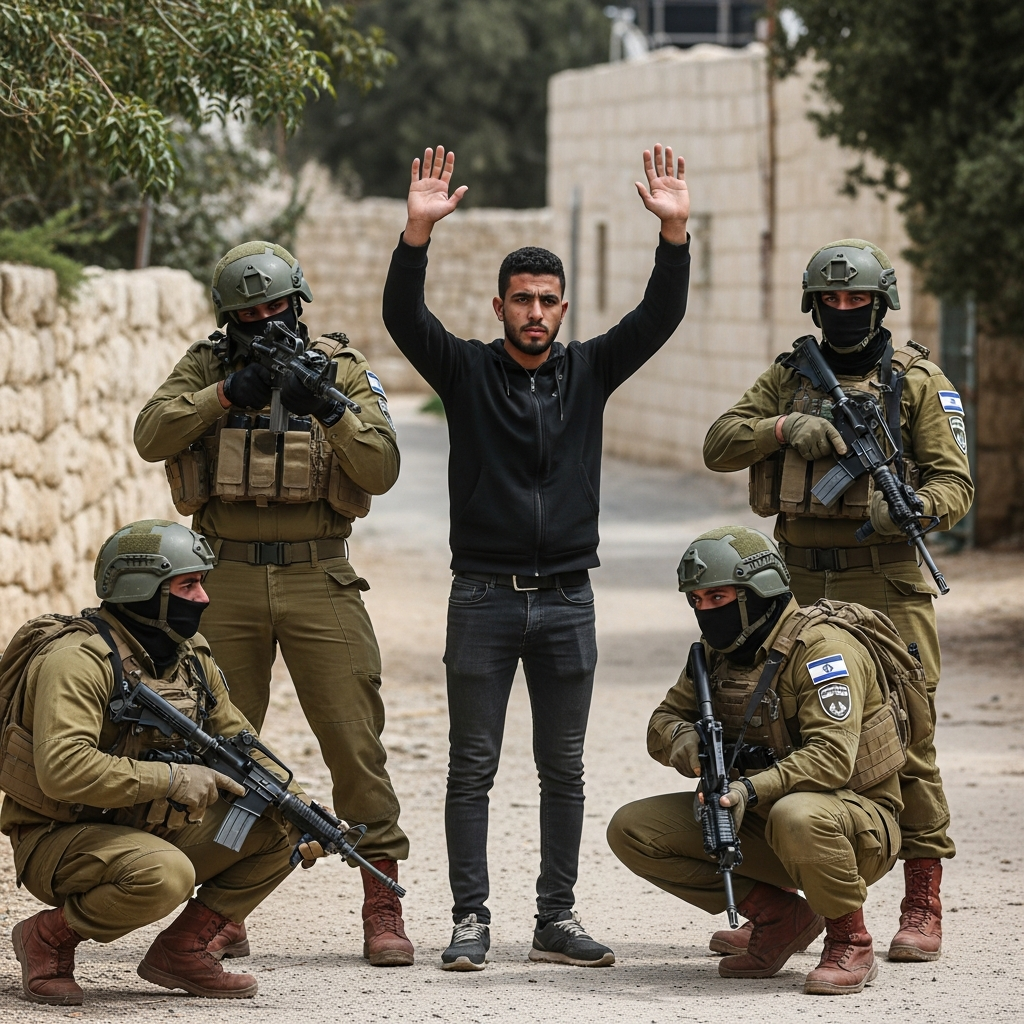
A recent and highly controversial incident in the occupied West Bank has ignited widespread condemnation after Israeli soldiers reportedly killed two Palestinian men following their apparent surrender. The event, captured on video and broadcast by Arab TV stations, shows the men reportedly unarmed and attempting to surrender before being shot. Palestinian authorities have denounced the deaths as “cold-blooded executions” and a blatant violation of international law, while the Israeli military has initiated an investigation. This tragic development unfolds against a backdrop of intensifying military operations, escalating violence in the West Bank, and ongoing regional instability.
Allegations of Extrajudicial Killing in Jenin
Last Thursday, November 27, 2025, during an Israeli army raid in the West Bank city of Jenin, two Palestinian men, Al-Muntasir Abdullah (26) and Yousef Asasa (37), were reportedly killed by Israeli soldiers. Video footage, aired by networks such as Egyptian TV station Al-Ghad, depicted a harrowing sequence of events. The visuals, though lacking sound, reportedly show the men on the ground, then ordered to move toward a garage entrance. Both men visibly lifted their shirts to demonstrate they were not carrying weapons or explosives, and one man held his hands in the air as they moved. Subsequently, while surrounded by troops on the ground, gunshots were heard, and the men appeared to slump down, seemingly lifeless. At least one soldier was reportedly seen firing a weapon.
The bodies of Abdullah and Asasa were subsequently taken by Israeli forces. Palestinian Prime Minister’s office and Foreign Ministry quickly condemned the incident. They labeled it a “heinous extrajudicial killing” and a “deliberate Israeli war crime,” accusing Israeli forces of executing the men “in cold blood.” These accusations underscore a profound concern among Palestinian officials and human rights advocates regarding adherence to international humanitarian law in the occupied territories.
Conflicting Narratives and Scrutiny of Investigations
In response to the graphic footage and severe accusations, the Israeli military confirmed it was investigating the deaths. A statement from the Israel Defense Forces (IDF) identified the two men as “wanted militants” from Jenin, claiming they had previously “thrown explosives and opened fire at troops.” The IDF acknowledged that “fire was directed toward the suspects” after they surrendered and exited a building, adding that the incident was “under review” and would be referred “to the relevant professional bodies.”
However, both Palestinian authorities and international human rights groups express deep skepticism about the efficacy and impartiality of such Israeli military investigations. Historically, these bodies have been criticized for rarely leading to prosecutions or significant accountability for Israeli troops involved in the deaths of Palestinians. This skepticism is further fueled by statements like that from Israel’s far-right National Security Minister, Itamar Ben-Gvir, who publicly backed the forces involved. This stark contrast in perspectives highlights the deeply entrenched distrust and the challenging path to justice in the region.
Broader Context: Escalating West Bank Violence
The incident in Jenin is not isolated; it is part of a significantly intensified pattern of Israeli military operations across the occupied West Bank. Since the October 7, 2023, attack that triggered the war in Gaza, Israeli forces have dramatically scaled up their activities. These operations, which Israel states are aimed at “cracking down on militants” and dismantling “terror infrastructures,” have seen a surge in raids, detentions, and confrontations. The Palestinian Prisoners’ Club reported over 100 detentions in the town of Tubas alone since Tuesday, underscoring the broad scope of these military actions.
Human rights organizations and Palestinian residents frequently accuse Israel of using excessive force in these operations, alleging that dozens of unarmed civilians have been killed. Beyond the immediate military clashes, the West Bank is grappling with a severe humanitarian situation. Reports from Human Rights Watch (HRW) indicate forced evictions and displacement in refugee camps like Jenin, Tulkarem, and Nur Shams, which HRW described as potential war crimes and crimes against humanity. UNRWA officials have also condemned “systematic destruction” and “re-engineering” of refugee camps, actions that raise serious questions about international law and civilian protection. These actions contribute to an already fragile environment, exacerbating tensions and civilian suffering.
The Rising Tide of Settler Violence
Compounding the military operations is a documented increase in Israeli settler violence in the West Bank. Palestinians report these attacks as frequent, often occurring in close proximity to Israeli troops, and resulting in minimal punishment for the perpetrators. While Israeli leaders often downplay these incidents as actions by a small minority, their cumulative impact on Palestinian communities is substantial, contributing to a sense of insecurity and injustice. This often unpunished violence further strains the already tense relations in the occupied territories and adds another layer of complexity to the human rights situation.
Regional Instability Beyond the West Bank
The fragility of the situation in the West Bank is mirrored across the broader Middle East. Despite a shaky ceasefire in Gaza, Israel is actively engaged on multiple fronts, signaling persistent regional instability.
Escalation in Southern Lebanon
On the same Thursday, Israel carried out another series of airstrikes on suspected Hezbollah sites in southern Lebanon. The military claimed to have struck and dismantled Hezbollah infrastructure, including launch sites and weapons storage facilities. This military action follows a recent escalation that included a rare strike in Beirut, which reportedly killed Hezbollah’s chief of staff. The United Nations has documented that Israeli strikes in Lebanon have killed at least 127 civilians, including children, since the ceasefire came into effect last year.
The Lebanese government has expressed its own concerns. Lebanese Prime Minister Nawaf Salam publicly criticized Hezbollah, a rare rebuke, accusing the Iran-backed militants of failing to deter Israeli airstrikes, protect the Lebanese people, or even safeguard the lives of its own leaders. These ongoing conflicts fuel concerns that the unrest could spill over, severely undermining the fragile Gaza truce and destabilizing the entire region. The upcoming visit of Pope Leo XIV to Lebanon, where he is scheduled to meet political and religious leaders, highlights the international community’s concern for the crisis-hit nation.
A Glimmer of Release: Mohammed Ibrahim’s Ordeal
Amidst the conflict and violence, a poignant humanitarian story emerged with the release of Mohammed Ibrahim, a 16-year-old Palestinian-American teenager. Ibrahim had been held in Israeli detention for nine months, arrested while visiting family in the West Bank. He was accused of throwing rocks at Israeli settlers, a charge he claims he only confessed to after being threatened with a beating by interrogators.
Upon his release on Thursday evening, Ibrahim was visibly thin, pale, with a shaven head, and showed signs of scabies. He was immediately embraced by his crying family and checked into a hospital. His family and lawyers consistently highlighted the poor conditions of his detention, including significant weight loss and a scabies infection. Ibrahim’s case underscores the challenges faced by young Palestinians in detention and raises questions about due process and human rights during military arrests.
Frequently Asked Questions
What are the main allegations surrounding the killing of the two Palestinian men in Jenin?
The primary allegations center on the claim that two Palestinian men, Al-Muntasir Abdullah and Yousef Asasa, were killed by Israeli soldiers in Jenin after they had visibly surrendered. Videos reportedly show them unarmed, lifting their shirts, and raising their hands before being shot. Palestinian authorities have condemned this as an “extrajudicial killing” and a “war crime” in violation of international humanitarian law, demanding international protection.
How has the Israeli military responded to the incident and what is the public perception of their investigations?
The Israeli military has announced an investigation into the deaths, stating the men were “wanted militants” and acknowledging that “fire was directed toward the suspects” after their surrender. However, Palestinian authorities and human rights groups largely express skepticism regarding these investigations. They point to a historical pattern where such probes rarely result in indictments or prosecutions of Israeli troops involved in the deaths of Palestinians, leading to widespread distrust.
What is the broader context of the Israeli military operations and violence in the West Bank?
The incident in Jenin occurs amidst a significant escalation of Israeli military operations in the West Bank since October 2023, aimed at countering “terror infrastructures.” These operations are coupled with a rising tide of Israeli settler violence, which Palestinians report as frequent and often unpunished. Human rights groups describe forced evictions, increased detentions, and systematic destruction in refugee camps, raising concerns about war crimes and a tightening of Israeli control under a “cruel system of apartheid.”
Conclusion: A Deepening Crisis of Accountability
The alleged extrajudicial killing of two Palestinian men in the West Bank, detailed through graphic video evidence, serves as a stark reminder of the escalating tensions and profound human rights concerns in the occupied territories. With conflicting narratives from Israeli military investigations and widespread Palestinian accusations of war crimes, the call for international scrutiny and accountability becomes more urgent. This tragic event, set against a backdrop of intensified military operations, rising settler violence, and broader regional instability stretching into Lebanon, highlights a deepening crisis. Without robust, transparent investigations and a commitment to international law, the cycle of violence and impunity in the Israeli-Palestinian conflict risks further eroding the possibility of lasting peace and justice.