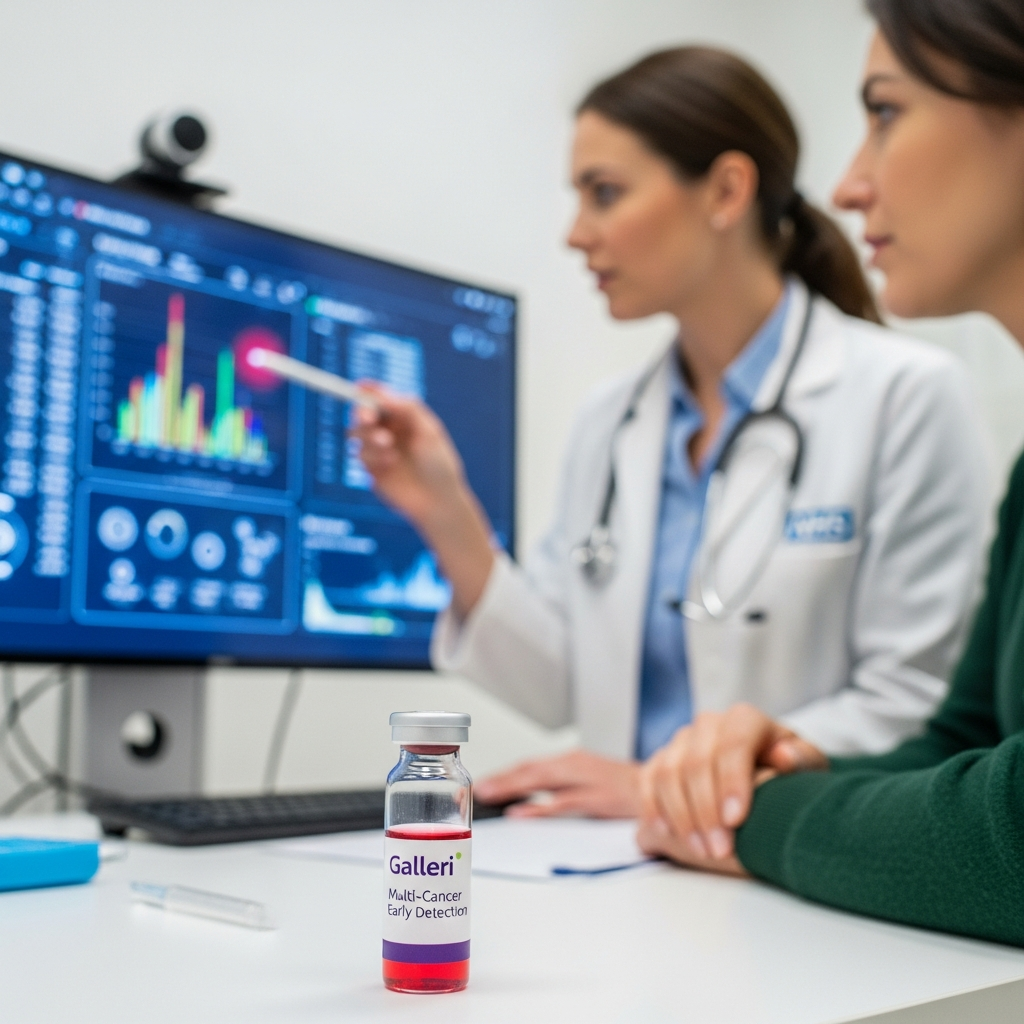
The dream of a simple blood test to detect multiple cancers early is closer than ever, sparking immense hope across the medical community and among patients worldwide. This groundbreaking potential is embodied by the new cancer blood test, Galleri, developed by US firm Grail, currently undergoing trials with the UK’s National Health Service (NHS). While initial findings have been described as “exciting,” a closer look at the data reveals critical nuances and challenges that temper premature celebration, urging a balanced understanding of its true capabilities. This article delves into the promise and the statistical realities of these innovative multi-cancer early detection (MCED) technologies, offering a comprehensive perspective for those seeking clarity.
The Promise of Early Detection: Why MCED Tests Matter
Late-stage cancer diagnosis remains a formidable global health challenge, with an alarming 70% of cancer-related deaths attributed to malignancies discovered at advanced stages when treatment options are often limited. Developing individual screening methods for every cancer type is simply not a scalable solution. This urgent need for comprehensive screening fuels the development of multi-cancer early detection (MCED) tests like Galleri. These technologies aim to revolutionize oncology by identifying molecular traces of tumors from a single blood sample, offering a potentially powerful tool to catch various cancers at stages when curative treatments have the highest chance of success.
The science behind these new cancer blood tests primarily involves detecting cell-free DNA (cfDNA) in the bloodstream. While healthy cells shed cfDNA naturally, tumor cells also release genomic fragments, which researchers can identify amidst the vastly larger quantity of normal DNA. Rapid advancements in DNA sequencing, accuracy, and reduced costs have made it possible to pinpoint these subtle cancer signals. Beyond Grail’s Galleri, other prominent players in this space include Exact Sciences, Singlera Genomics, and Burning Rock Biotech, each advancing unique approaches, such as analyzing DNA methylation patterns, to identify both the presence of cancer and its likely tissue of origin with impressive accuracy.
Unpacking the “Exciting” Initial Results from Galleri
The Galleri test, specifically, has garnered significant attention following the Pathfinder 2 trial, which involved over 23,000 individuals aged 50 and above from the US and Canada who had no prior cancer diagnosis. Headline figures emerging from this study initially appear to be a monumental leap forward in cancer screening.
According to preliminary reports, the test can detect signals from 50 different cancers and accurately identify the disease in 62% of people who receive a positive result. Furthermore, it demonstrated exceptional accuracy in ruling out cancer, with a reported 99.6% success rate among individuals confirmed to be disease-free. These statistics, particularly the high specificity, understandably generate optimism, suggesting a highly reliable tool for identifying cancer while minimizing false alarms for healthy individuals.
Decoding Positive Predictive Value (PPV)
While a 62% positive predictive value (PPV) might sound encouraging – meaning 62% of positive results were true positives – it’s crucial to understand its flip side. This figure also implies that a substantial 38% of positive test results were actually false alarms. For individuals receiving a positive result, this translates to a significant period of anxiety, uncertainty, and the need for further invasive and costly diagnostic procedures, only to discover there is no cancer present.
The Double-Edged Sword of High Specificity
The test’s reported 99.6% specificity, indicating its strong ability to correctly identify individuals without cancer, is indeed impressive. However, even this seemingly robust number has significant implications when considering widespread implementation. If, for instance, this new cancer blood test were rolled out to the more than 26 million people aged over 50 in the UK, a 0.4% false-positive rate would still generate over 100,000 false alarms. Such a volume of false positives would not only inflict immense psychological stress on individuals but also place an unsustainable burden on healthcare systems, requiring extensive follow-up diagnostics.
The Less Discussed Metric: Test Sensitivity
Perhaps the most critical aspect often overshadowed by the initial excitement is the test’s sensitivity—its ability to correctly identify those with cancer. For the Galleri test, sensitivity was reported at 40.4%. This means that the test missed approximately three out of every five cancers that were diagnosed within the following year among the trial participants.
This low sensitivity is a significant concern for any broad screening tool. Patients receiving a negative result from a new cancer blood test with this level of sensitivity might be falsely reassured, potentially delaying critical investigations and diagnosis for existing cancers. Such delays could allow a treatable cancer to progress to a more advanced, less manageable stage, undermining the very goal of early detection. Statisticians consistently caution that all reported PPV, specificity, and sensitivity figures are estimates and can vary, often performing less effectively outside of controlled trial environments.
Broader Context: Challenges in Cancer Screening
The complexities observed with the Galleri test are not unique but reflect universal challenges inherent in all forms of cancer screening. As experts in prostate cancer screening like Dr. Andrew Vickers highlight, the efficacy of any screening test, even established ones like the PSA test, hinges entirely on “how it is performed.” The debate often revolves around balancing the undeniable benefits of reduced mortality with the potential harms of overdiagnosis (detecting cancers that would never cause problems) and overtreatment.
Different cancers also show varying “amenability to early detection.” Some tumors, such as lung, ovarian, liver, and gastric cancers, shed more cfDNA, making them easier to spot. Conversely, thyroid, breast, and prostate cancers may shed less, making them harder to detect at very early stages. Experts even debate whether missing some very early, indolent growths might be beneficial, as many may never progress to problematic stages, thus avoiding unnecessary interventions and their associated side effects. These considerations underscore that a single multi-cancer early detection tool must navigate a complex biological and clinical landscape.
The Road Ahead for Multi-Cancer Early Detection
Despite its current limitations, the Galleri test, and MCEDs generally, represent a significant technological stride. However, critical questions remain about their widespread clinical utility and implementation. The test carries a substantial cost—around US$949 (£723) in the US—which raises concerns about accessibility and equitable distribution if proven effective. More importantly, there is currently no definitive evidence demonstrating that the widespread use of this new cancer blood test actually reduces cancer deaths, which remains the “gold standard” for proving a screening test’s true value.
Large-scale randomized controlled trials are crucial for answering this mortality question. The UK NHS, for example, is conducting a major Galleri trial, with results on outcomes expected in 2026. This trial measures the number of advanced cancers diagnosed, rather than cancer-specific mortality, due to the immense cost and time required for mortality endpoint studies. Furthermore, implementing MCEDs effectively requires clear clinical guidelines for clinicians and patients on how to proceed after a positive result, especially if the test cannot pinpoint the tumor’s origin. Healthcare systems may need to reorganize, establishing specialized centers to manage the influx of follow-up investigations. Patient education is also paramount to ensure that a negative MCED result does not lead individuals to skip established standard-of-care screenings, such as mammograms or colonoscopies, as these new cancer blood tests are intended to supplement, not replace, existing methods.
Key Takeaways for Patients
For individuals considering or encountering these new technologies, a balanced perspective is essential. While the promise of early detection is powerful, it’s vital to:
Understand the statistics: Be aware of the possibilities of false positives and the limitations in sensitivity.
Maintain existing screenings: Do not abandon proven screening methods like mammograms, colonoscopies, or cervical screens. MCED tests are currently seen as supplementary tools.
Engage with your doctor: Discuss the implications of any new test results thoroughly with your healthcare provider. They can provide personalized advice based on your risk factors and overall health.
Manage expectations: View these tests as a promising addition to the cancer-fighting arsenal, rather than a definitive, standalone solution.
Frequently Asked Questions
What are the main statistical limitations of new multi-cancer blood tests like Galleri?
While promising, new cancer blood tests like Galleri have significant statistical limitations. The “positive predictive value” (PPV) of 62% means 38% of positive results are false alarms. Crucially, the test’s “sensitivity” is around 40.4%, meaning it misses approximately three out of five actual cancers. Although “specificity” is high (99.6%), widespread use could still generate tens of thousands of false positives, leading to patient anxiety and significant healthcare system burdens for unnecessary follow-up procedures.
Where is the Galleri test currently being investigated or available for use?
The Galleri blood test, developed by Grail, is currently undergoing significant trials, most notably with the UK’s National Health Service (NHS). These large-scale randomized controlled trials aim to assess its real-world effectiveness and impact on cancer detection. In the United States, some multi-cancer early detection (MCED) tests, including Galleri, are available as “laboratory-developed tests” (LDTs) without formal FDA approval, generating real-world data while regulatory pathways continue to evolve.
Should individuals replace traditional cancer screenings with new blood tests?
No, experts strongly advise against replacing traditional, proven cancer screenings (like mammograms, colonoscopies, and cervical screenings) with new multi-cancer blood tests. These emerging tests are intended to supplement existing screening protocols, not substitute them. While promising, their low sensitivity means many cancers could still be missed, and their impact on reducing cancer mortality is still being investigated through ongoing clinical trials. It’s crucial to continue established screening practices and discuss all options with a healthcare provider.
Conclusion
The advent of the new cancer blood test marks an exciting frontier in oncology, offering a glimmer of hope for earlier detection across a spectrum of cancers. The Galleri test, along with other multi-cancer early detection technologies, holds genuine promise as a future addition to our screening arsenal. However, a critical examination of the data, particularly regarding its sensitivity and the implications of false positives, is paramount. As researchers continue to refine these tools and conduct large-scale trials, it is crucial for both patients and healthcare providers to approach them with informed optimism, recognizing that these tests are a significant step forward, but not yet a standalone panacea. A comprehensive and balanced strategy, integrating these innovations with established screening methods and diligent medical follow-up, will be key to truly transforming cancer outcomes.