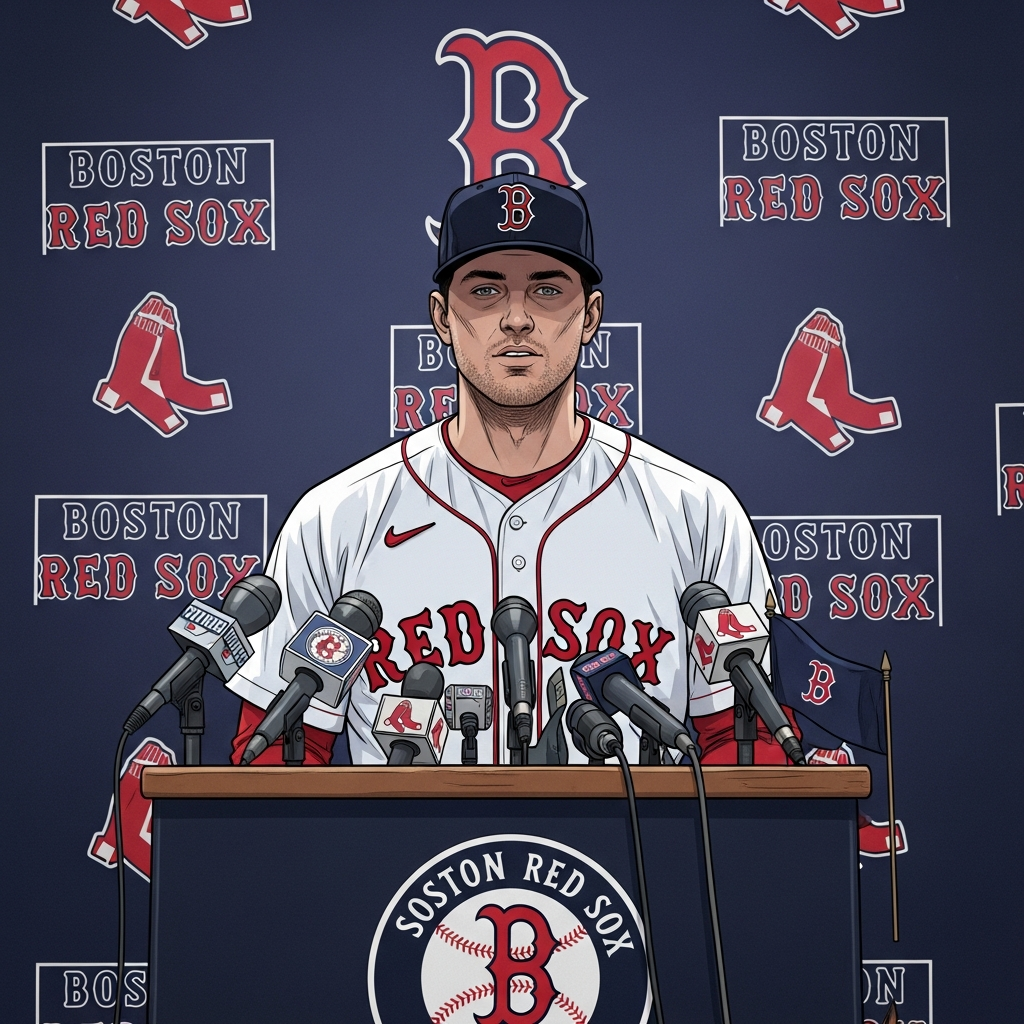
The Boston Red Sox have made a significant splash in the MLB offseason, officially acquiring veteran right-hander Sonny Gray from the St. Louis Cardinals in a trade announced this past Tuesday, November 25, 2025. This blockbuster move immediately reshapes the pitching landscape for both franchises, signaling Boston’s intent to contend and St. Louis’s commitment to a new rebuilding phase.
This strategic transaction sees the Red Sox bolster their rotation with a proven, durable arm, while the Cardinals receive two promising prospects and crucial financial relief. For Red Sox fans, the deal promises enhanced stability and playoff aspirations heading into the 2026 season.
The Blockbuster Deal: Key Players & Terms Unpacked
The trade details reveal a calculated exchange designed to benefit both sides’ long-term objectives. The Boston Red Sox secured Sonny Gray, a three-time All-Star, to slot into their rotation. In return, the St. Louis Cardinals received:
Brandon Clarke: A 22-year-old left-handed prospect known for a fastball that can hit 100 mph, complemented by a formidable slider. Clarke pitched 38 innings in Class A this season, tallying 60 strikeouts but also 27 walks with a 4.03 ERA. He represents a high-ceiling, longer-term play for the Cardinals.
Richard Fitts: A right-handed pitcher, turning 26 next month, who made 10 starts for the Red Sox in his rookie 2025 season. He posted a 2-4 record with a 5.00 ERA over 45 innings, striking out 40 but surrendering 11 home runs. Fitts offers immediate rotation depth for St. Louis.
Crucially, the Red Sox also received $20 million from St. Louis. This financial contribution significantly offsets Gray’s remaining salary, making the acquisition a savvy financial maneuver for Boston. Sources close to ESPN’s Jeff Passan confirmed these financial specifics. Gray’s existing contract was also adjusted, guaranteeing him $41 million for 2026 ($31 million salary) with a $30 million mutual option for 2027 that includes a $10 million buyout.
A New Ace in Boston: Gray’s Fit with the Red Sox
Sonny Gray, at 36, waived his no-trade clause to join the Red Sox, signaling his desire to play for a winning club. Boston’s chief baseball officer, Craig Breslow, publicly stated adding a starting pitcher behind Garrett Crochet was a primary offseason goal. Gray perfectly fits this need, providing not just experience but also consistent high-level performance.
Gray’s recent track record speaks volumes about his enduring effectiveness. Last season, he finished 14-8 with a 4.28 ERA, without missing a single start for St. Louis. He demonstrated exceptional strikeout ability, recording 201 punchouts last season after 203 in 2024. This places him alongside Garrett Crochet as one of only five pitchers to achieve at least 200 strikeouts in each of the last two seasons, according to ESPN Research. This pairing immediately creates a formidable one-two punch at the top of Boston’s rotation.
Beyond strikeout numbers, Gray’s command remains elite. He led the National League in 2025 with a 5.29 strikeout-to-walk ratio, placing fourth among all qualified pitchers in K/BB (5.3) for the 2025 season. His ability to limit walks and generate swings-and-misses (career-high whiff rate in 2024) is a testament to his refined pitching arsenal, particularly his potent sweeper pitch, which held opponents to a mere .150 average and generated 111 strikeouts. Gray’s strong control and secondary offerings are expected to ensure his effectiveness well into his late 30s, allowing him to pitch deep into games and alleviate pressure on the bullpen.
Bolstering Boston’s Rotation: Depth and Future Outlook
The acquisition of Gray transforms Boston’s starting pitching depth, a critical component for any playoff-contending team. With Garrett Crochet leading the charge, Gray is expected to slot in as the team’s No. 2 starter. This provides the Red Sox with a playoff-caliber arm boasting a career 3.26 ERA across six postseason starts, a crucial asset as Boston aims to build on its first playoff appearance since 2021.
Behind this established duo, the Red Sox boast a promising mix of young talent and veteran experience. The rotation depth includes:
Brayan Bello: A consistent performer with a 3.35 ERA in 2025.
Kutter Crawford: Expected back from injury in 2026.
Patrick Sandoval: Another veteran option returning from injury.
Left-handed prospects: Kyle Harrison (24), Payton Tolle, and Connelly Early, who threw important innings late in the 2025 season.
However, the team faces some challenges. Right-hander Hunter Dobbins tore his right ACL in July but anticipates a spring training return. Tanner Houck, a veteran right-hander, underwent Tommy John surgery in August and will likely miss most, if not all, of the 2026 season. Despite these injuries, the Gray acquisition provides significant stability. The Red Sox had previously explored other pitching targets like Joe Ryan from Minnesota, but ultimately opted for Gray, seen as a shorter-term, high-impact veteran play. This move is likely just the beginning of Boston’s offseason strategy, with further work needed to strengthen the bullpen and add an impact bat, especially with third baseman Alex Bregman now a free agent.
Cardinals’ Rebuilding Strategy: A New Direction Under Bloom
For the St. Louis Cardinals, the trade of Sonny Gray marks a clear turning point and the first major move under new President of Baseball Operations Chaim Bloom, formerly of the Red Sox. The Cardinals have been “stuck in neutral” for some time, missing the playoffs for three consecutive years and failing to advance past the wild-card round in the last six. This trade officially signals a commitment to a rebuilding phase, focusing on acquiring young talent, particularly pitchers, to cultivate the “next great St. Louis team.”
Bloom emphasized the potential of the acquired prospects. “[Fitts] has already begun his big league career, and with his power stuff and willingness to attack the strike zone, he has the ability to start games at the highest level for many years,” Bloom stated. He added, “Both have the potential to be part of our growing core for a long time.” Brandon Clarke, with his high-90s velocity and “wipeout slider,” offers a high ceiling if he develops his control. Richard Fitts provides immediate rotation depth, alongside existing young starters Matthew Liberatore and Michael McGreevy. The Cardinals will likely seek to acquire at least one more experienced arm to round out their rotation. Speculation also suggests that veteran slugger Nolan Arenado could be the next high-value player to be traded as the Cardinals fully embrace their new direction.
Sonny Gray’s Enduring Value and Contract Rework
Gray’s decision to waive his no-trade clause was motivated by two key factors: the opportunity to play for a winning, playoff-bound team and an improved financial package. His contract was successfully renegotiated from his original three-year, $75 million deal. Now, Gray is guaranteed $41 million for 2026 ($31 million salary) with a $30 million mutual option for 2027 including a $10 million buyout. This reworked agreement ensures a better immediate payday and aligns his future with Boston’s competitive ambitions.
Despite entering his age-36 season, Gray remains highly effective. While his ERA has seen minor fluctuations, ascending to 3.84 in 2024 and 4.28 in 2025 since his 2023 All-Star season in Minnesota (2.79 ERA, 2nd in AL Cy Young voting), his underlying metrics indicate sustained elite performance. In 2025, he set career-best marks in strikeout-to-walk ratio, walk rate, and chase rate. His durable track record, having pitched in the big leagues for 13 years and making the All-Star team as recently as 2023, coupled with his groundball-inducing style (contrasting with Joe Ryan’s flyball approach) makes him a reliable presence. His career 125-102 record with a 3.58 ERA across 330 starts underscores his consistent productivity.
Broader MLB Pitching Market Implications
The trade of Sonny Gray to the Red Sox, following Grayson Rodriguez’s move to the Angels, signals an early but active start to the MLB starting pitching market. While Gray was one of several veteran options discussed by teams like the Red Sox, many top free-agent starters remain available. Key names such as Framber Valdez, Ranger Suárez, Dylan Cease, Michael King, Zac Gallen, and Japanese standout Tatsuya Imai are still on the board. This indicates that numerous playoff-contending teams are still aggressively seeking impact arms, suggesting more significant trades and signings are on the horizon as the offseason progresses. Boston’s move for Gray might influence other teams to accelerate their pursuit of available pitching talent.
Frequently Asked Questions
What are the key terms of Sonny Gray’s contract with the Red Sox?
Sonny Gray’s contract was reworked as part of the trade. He is now guaranteed $41 million for the 2026 season, comprising a $31 million salary. Additionally, his deal includes a $30 million mutual option for the 2027 season, which comes with a $10 million buyout. This new structure represents an improved immediate payday for Gray and reflects Boston’s commitment to securing his services. The St. Louis Cardinals also sent $20 million to the Red Sox to help cover a portion of Gray’s salary.
How does Sonny Gray’s acquisition impact the Boston Red Sox’s starting rotation?
The Red Sox’s acquisition of Sonny Gray significantly strengthens their starting rotation, providing a formidable one-two punch alongside ace Garrett Crochet. Gray, a durable veteran who has recorded over 200 strikeouts in each of the last two seasons, is expected to slot in as the No. 2 starter. This pairing offers crucial stability and playoff experience, as Gray boasts a career 3.26 ERA in postseason starts. The move also adds depth behind them with pitchers like Brayan Bello, Kutter Crawford, and Patrick Sandoval, along with young prospects, despite injuries to Hunter Dobbins and Tanner Houck.
Why did the St. Louis Cardinals trade Sonny Gray, and what does it mean for their future?
The St. Louis Cardinals traded Sonny Gray as part of a strategic shift toward a rebuilding phase under new President of Baseball Operations Chaim Bloom. After missing the playoffs for three consecutive seasons, the Cardinals are prioritizing the acquisition of young talent, particularly pitchers, to build their next competitive core. In return for Gray, they received high-ceiling left-handed prospect Brandon Clarke and MLB-ready right-hander Richard Fitts. This trade, along with financial relief, signals the Cardinals’ intent to focus on developing their future roster, with speculation that other veterans like Nolan Arenado could also be part of future moves.
Conclusion
The trade for Sonny Gray represents a definitive statement from the Boston Red Sox: they are building to win now. By pairing Gray with Garrett Crochet, the team has significantly upgraded its starting rotation, addressing a critical need identified by Chief Baseball Officer Craig Breslow. This move not only provides an experienced, high-strikeout arm but also demonstrates a savvy financial strategy. For the St. Louis Cardinals, the deal signifies a new era under Chaim Bloom, prioritizing long-term prospect development over immediate veteran presence. As the MLB offseason continues, this trade sets an exciting precedent, hinting at more dynamic roster changes across the league. Red Sox fans can now look forward to a more formidable pitching staff leading the charge into the 2026 season.