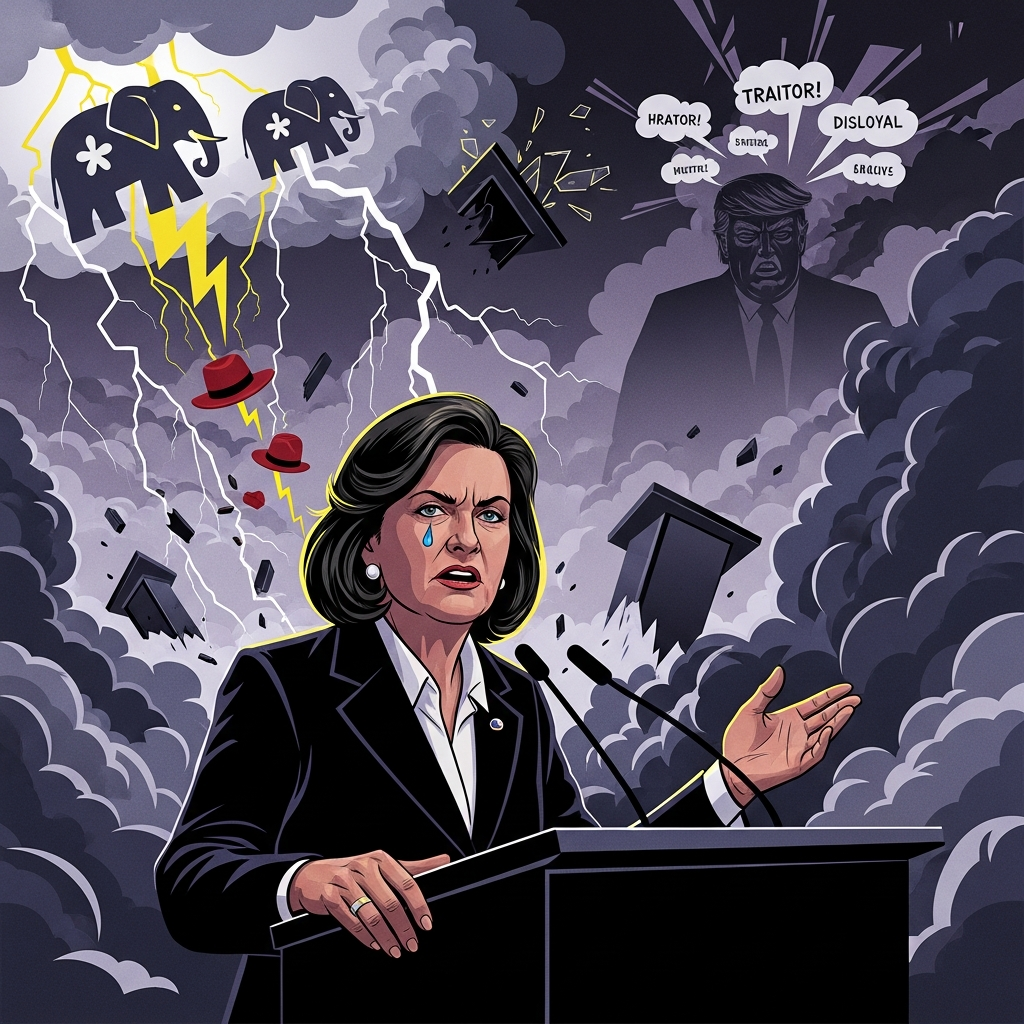
Marjorie Taylor Greene, the controversial Republican congresswoman from Georgia, has abruptly announced her resignation from the House of Representatives. Effective January 5, 2026, her departure sends shockwaves across the political landscape. This unexpected move comes amidst a highly public and bitter feud with former President Donald Trump. Her decision sparks intense speculation about her motivations, future political ambitions, and the immediate impact on the Republican Party. Political figures from both sides of the aisle have reacted sharply, offering a mix of scorn, support, and strategic analysis.
The Political Quake: Greene’s Sudden Departure
Congresswoman Marjorie Taylor Greene delivered her surprise resignation late on a Friday, detailing her decision in a 10-minute video post. She cited a refusal to be a “battered wife” following a significant public fallout with Donald Trump. Her statement highlighted the strain of being expected to defend Trump against impeachment, especially after he had “hatefully dumped tens of millions of dollars” against her. Greene claimed he tried to destroy her political career. This dramatic analogy immediately captured national attention, framing her exit as a stand for personal and political dignity.
Beyond her fractured relationship with Trump, Greene expressed broader discontent with the Republican Party. Her grievances included the handling of the Jeffrey Epstein files, U.S. financing of foreign conflicts, and growing concerns over the cost of living and healthcare. The Georgia Republican’s decision is set to take effect early next year, leaving her 14th Congressional District without representation and necessitating a special election to fill the seat.
A Fiery Fallout: Trump’s Role in Greene’s Exit
The escalating feud between Marjorie Taylor Greene and Donald Trump appears to be a central catalyst for her resignation. Once a staunch ally, Greene found herself at odds with the former President over several issues. Trump’s initial reaction to her announcement was scathing. He took to Truth Social, labeling her “Marjorie ‘Traitor’ Brown” and claiming she quit due to “PLUMMETING Poll Numbers.” Trump also threatened a primary challenger, asserting she “would have no chance of winning” without his endorsement. He suggested her association with Kentucky Congressman Thomas Massie “did not help her” and that she “went BAD” after he refused to return her “never ending barrage of phone calls.”
Greene’s perspective differed starkly. She pointed to Trump’s alleged attempts to undermine her by backing a candidate against her. This perceived betrayal, she argued, made her position untenable. Interestingly, Trump later softened his stance. In an interview with NBC News, he expressed appreciation for her service and, somewhat incongruously, said he would “love to see” her resume her political career after a “little rest.” He described Greene as a “nice person” but simply “disagreed with her philosophy.”
A significant point of contention was Greene’s persistent demand for the release of the Jeffrey Epstein files. Initially, Trump dismissed these calls, viewing them as a distraction. However, as public and Republican pressure mounted, Trump eventually reversed course. He signed a bill compelling the US Justice Department to release the documents within 30 days, effectively aligning with Greene’s original demand. This shift underscored the complex and often fluid nature of their political dynamic.
Sharpshooters and Supporters: Political Reactions Unveiled
The news of Marjorie Taylor Greene’s resignation immediately triggered a torrent of reactions from across the political spectrum, highlighting the divisive nature of her public persona.
AOC’s Scathing Critique
Democratic Congresswoman Alexandria Ocasio-Cortez, a frequent ideological sparring partner of Greene, offered a particularly sharp dismissal. Ocasio-Cortez claimed Greene was “carefully timing her departure just 1-2 days after her pension kicks in.” She also questioned the sincerity of Greene’s stated reasons, especially concerning healthcare. “Her ACTIONS have not backed up the rhetoric,” Ocasio-Cortez declared, pointing out Greene’s past votes for Medicaid cuts and reductions in Affordable Care Act (ACA) tax credits. This was contrasted with Greene’s later criticisms when ACA premiums soared. Ocasio-Cortez also revived earlier criticisms regarding Greene’s stock purchases before Trump announced a pause on tariffs, an allegation Greene has consistently denied.
Republican Allies and Critics
Within Republican circles, reactions were decidedly mixed. Kentucky Congressman Thomas Massie, an ally of Greene who also publicly challenged Trump on the Epstein files, expressed deep regret. He stated he was “very sad for our country but so happy for my friend Marjorie.” Massie lauded Greene as embodying “what a true Representative should be,” urging others to read her statement for its perceived honesty.
Conversely, Barbara Comstock, a former Republican House member and a vocal Trump critic, applauded Greene’s decision. Comstock echoed the “battered wife” analogy, suggesting Greene refused to endure Trump’s abuse and political pretense. Georgia GOP Chairman Josh McKoon issued a more measured statement, acknowledging Greene’s departure. He praised her tenure, highlighting her “legacy as a bold voice for the grassroots” and commending her for never backing down as a political outsider.
Other Public Figures Weigh In
Beyond Congress, figures like David Hogg, a Parkland school massacre survivor and gun control advocate, posted a terse “See ya!” on X. Hogg and Greene had previously clashed, notably over a 2019 video where Greene called Hogg a “coward.” MAGA activist Laura Loomer celebrated the news, making serious accusations about Greene’s alleged insider trading and suggesting she “LOOMERED” the congresswoman. These varied responses underscore Greene’s polarizing effect on American political discourse.
Unpacking the “Battered Wife” Analogy: Dignity or Strategy?
Marjorie Taylor Greene’s powerful “battered wife” analogy, signifying her refusal to passively accept political pressure from Trump, offers a unique insight into her perceived dynamic with the former president. She framed her resignation as a pursuit of self-respect and dignity, stating a desire to spare her district a “hurtful and hateful primary” orchestrated by Trump. This implies a decision made to protect her constituents and potentially the broader Republican Party from internal strife.
However, many observers speculate that Greene’s dramatic exit may be a calculated political maneuver – a “long game” rather than a genuine retreat. Vanity Fair and NOTUS previously reported on beliefs that Greene harbored presidential ambitions for 2028, or at least aims for a Senate or gubernatorial run in Georgia. Greene has explicitly denied these specific aspirations, calling the reports “baseless gossip” and stating she had “no desire to have anything to do with the Senate.” Her public denial also followed past rejections of similar rumors.
Trump himself seemed to interpret her resignation as a strategic move driven by political weakness, asserting she “never would’ve survived a primary” once he withdrew his support. Greene’s significant political transformation, from promoting QAnon conspiracies to making appearances on mainstream programs like The View and CNN where she apologized for past rhetoric, further fuels speculation. This rebranding effort raises questions about the sincerity of her shift versus a strategic attempt to broaden her appeal to a wider electorate.
What’s Next for Georgia’s 14th District and Beyond?
Marjorie Taylor Greene’s resignation will have immediate and long-term implications. Gabriel Sterling, former Georgia Secretary of State COO, confirmed that her departure necessitates a special election to fill the remainder of her term in Georgia’s 14th Congressional District. This sudden vacancy will likely intensify political maneuvering in the state.
More broadly, Greene’s exit further narrows the Republican Party’s already slim majority in the House of Representatives. This could make control of the chamber even more contentious heading into the 2026 midterm elections. While Greene denied any “4D chess move” behind her resignation, stating she intends to “go back to the people she loves,” her future in public life remains a subject of intense debate.
Will she pursue another office, perhaps state-level, once the immediate political storm subsides? Will her efforts to rebrand herself succeed in cultivating a broader political base? Her journey from a figure associated with extreme conspiracy theories to a more mainstream, albeit still controversial, presence suggests a willingness to adapt. The coming months will reveal whether this resignation marks a genuine step back, or a strategic pause before a new chapter in Marjorie Taylor Greene’s volatile political career.
Frequently Asked Questions
Why did Marjorie Taylor Greene resign from Congress?
Marjorie Taylor Greene announced her resignation, effective January 5, 2026, primarily citing a refusal to be a “battered wife” after a public fallout with Donald Trump. She objected to being expected to defend Trump against impeachment after he had allegedly “dumped tens of millions of dollars” against her. Greene also expressed broader dissatisfaction with the Republican Party on issues like the release of the Jeffrey Epstein files, foreign conflict financing, and domestic concerns over the cost of living and healthcare.
How did political figures react to Marjorie Taylor Greene’s resignation?
Reactions were sharply divided. Donald Trump initially called her “Marjorie ‘Traitor’ Brown” and suggested she quit due to poor poll numbers, though he later softened his stance. Alexandria Ocasio-Cortez criticized Greene’s timing, linking it to her pension, and questioned the sincerity of her reasons given past voting records. Republican Congressman Thomas Massie expressed sadness for the country but happiness for his friend, praising her as a “true Representative.” Former Republican Barbara Comstock lauded the decision, echoing Greene’s “battered wife” analogy.
What are the speculated future political ambitions for Marjorie Taylor Greene?
Despite Greene’s denials, many observers speculate her resignation could be a strategic move for future political ambitions. Reports from sources like Vanity Fair and NOTUS suggested she was considering a presidential run in 2028 or a bid for Senate or Governor in Georgia. Greene has explicitly denied these specific plans, calling them “baseless gossip.” However, her significant political transformation and rebranding efforts indicate a potential “long game” strategy, leaving her future involvement in politics an open question.
The unfolding drama surrounding Marjorie Taylor Greene’s resignation is more than just a personal political decision. It reflects deep ideological rifts within the Republican Party and highlights the complex, often tumultuous, relationship between power, loyalty, and ambition in American politics. As Georgia prepares for a special election and the nation watches, the true motivations and future path of this prominent, polarizing figure remain a captivating unknown.