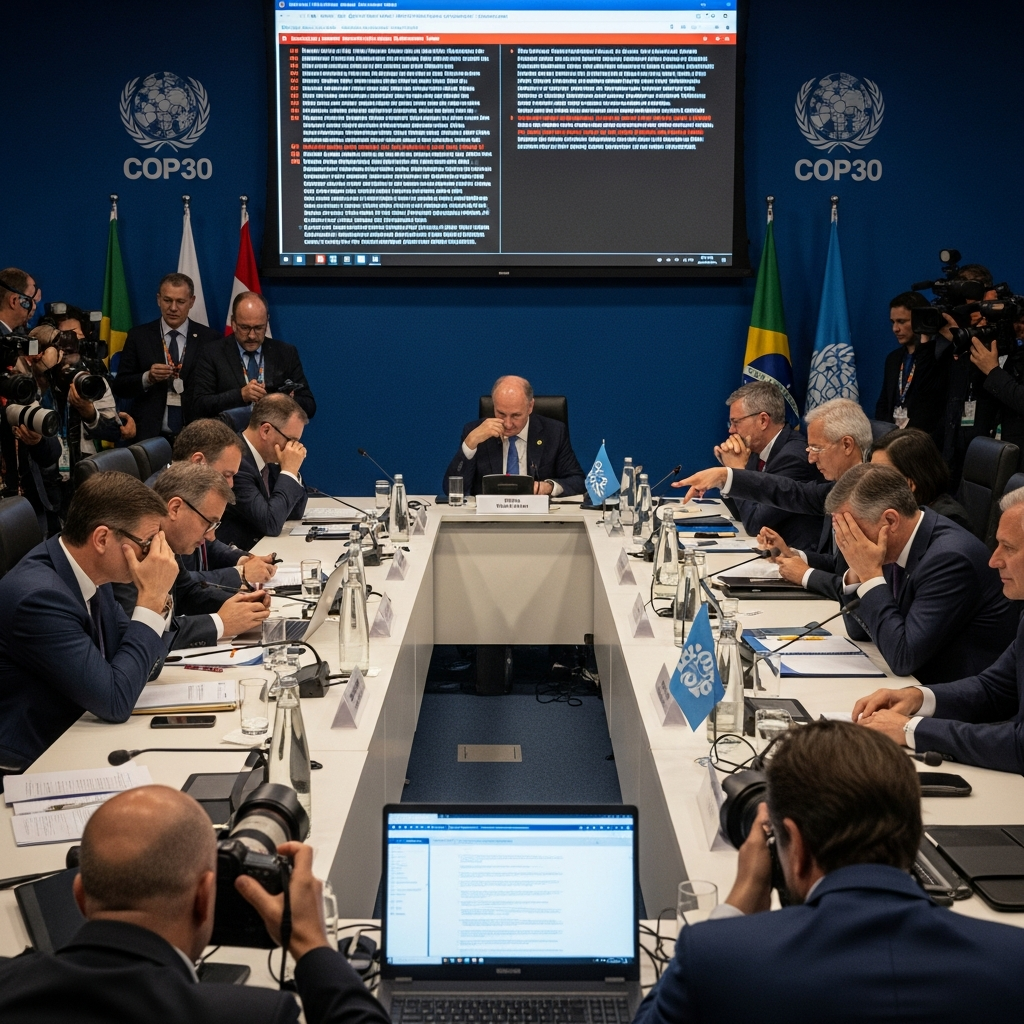
The world watches with bated breath as the UN climate talks, COP30, in Belem, Brazil, stretch beyond their scheduled deadline. A profound deadlock over the future of fossil fuels has cast a long shadow over negotiations, threatening to derail a crucial global agreement aimed at averting the worst impacts of the climate crisis. This unexpected extension underscores the immense challenges facing international cooperation on climate action, particularly when economic interests clash with urgent environmental demands.
As negotiators hold closed-door meetings, the core of the dispute remains a proposed deal lacking any explicit mention of phasing out fossil fuels. This omission has ignited widespread concern among climate activists, scientists, and numerous nations, who view a clear roadmap away from coal, oil, and gas as indispensable for safeguarding the planet. The high stakes involved mean that every word, or indeed, every omitted word, carries significant weight in shaping our collective future.
Why Fossil Fuels Are the Unyielding Battleground
The persistent divisions at COP30 highlight a fundamental tension in global climate policy. On one side stand powerful oil-producing nations and economies heavily reliant on fossil fuels. These countries staunchly resist any agreement that prescribes a definitive timeline for phasing out these energy sources, viewing such demands as an existential threat to their economic stability. Their reluctance transforms negotiations into a high-stakes poker game, where national interests often supersede global consensus.
Conversely, a substantial bloc of countries, including many susceptible to climate change’s harshest effects, are unwavering. They refuse to endorse any deal that fails to provide a clear, actionable plan for transitioning away from fossil fuels. This significant “stand-off,” as described by UK energy secretary Ed Miliband, makes the annual COP summits inherently difficult. Miliband aptly characterized the process as a “nightmare” yet “the best process we’ve got” for addressing a global problem demanding global cooperation.
The Urgency of Transition and the 1.5°C Limit
The scientific consensus is stark: fossil fuels are the primary driver of climate change. Their combustion releases greenhouse gases that trap heat, leading to rising global temperatures. The UN Environment Programme issued a grim warning ahead of COP30, indicating that the world is “very likely” to breach the critical 1.5-degree Celsius (2.7-degree Fahrenheit) warming limit within the next decade. This limit, a cornerstone of the Paris Agreement, represents a threshold beyond which the risks of catastrophic climate impacts — from extreme weather to irreversible ecosystem damage — significantly escalate.
Breaching this limit would trigger a cascade of severe consequences for billions globally. Amnesty International recently highlighted this danger, reporting that the continued expansion of fossil fuel projects directly imperils at least two billion people, roughly a quarter of humanity. These warnings amplify the pressure on negotiators to deliver an ambitious and effective agreement, not just a compromise that kicks the can down the road.
The Thorny Issue of Climate Finance and Global Equity
Beyond the direct debate over fossil fuels, a second major sticking point revolves around climate finance. Developing countries, many of which bear the brunt of climate change impacts despite contributing minimally to historical emissions, are demanding greater financial assistance. These nations, often in the Global South, face increasing extreme weather events, from devastating droughts to catastrophic floods, which disrupt livelihoods and impede development. They argue that wealthier, industrialized nations, having built their economies on fossil fuel consumption, must shoulder a larger share of the financial burden for both mitigation and adaptation.
Nafkote Dabi, climate policy lead at Oxfam International, strongly echoed this sentiment. She asserted that any final agreement lacking a just and equitable roadmap, backed by “real support for the Global South,” is simply “unacceptable.” Dabi emphasized that developed countries should lead the phase-out of fossil fuels, doing so “first and fastest,” while actively financing low-carbon development pathways for less affluent nations. This call for climate justice underscores the deeply ingrained inequities that permeate international climate negotiations.
The Long Road to Consensus: A Common COP Occurrence
The current deadlock, extending talks past their scheduled Friday conclusion, is not an anomaly for COP summits. These annual conferences frequently run into overtime, a testament to the complexity of achieving consensus among nearly 200 sovereign nations with diverse economic realities and priorities. COP30 President Andre Correa do Lago implored delegates, stating, “This cannot be an agenda that divides us. We must reach an agreement between us.” However, bridging such profound differences requires more than diplomatic appeals; it demands significant political will and a willingness to compromise on fundamental economic structures.
As negotiations continue, observers note that a draft proposal released earlier in the week by the host country, Brazil, notably dropped any explicit options for tackling oil and gas. This suggests intense pushback or significant concessions made during earlier stages of the talks, further complicating the path to a decisive agreement on fossil fuel phase-out. The outcome of these prolonged discussions will ultimately reflect the global community’s resolve to prioritize long-term planetary health over short-term economic gains.
Frequently Asked Questions
Why are fossil fuels so contentious at COP30, leading to a deadlock?
Fossil fuels are the primary driver of climate change, making their phase-out critical for limiting global warming. However, countries heavily reliant on oil, gas, and coal for their economies vehemently resist explicit phase-out commitments in final agreements, fearing economic disruption. Conversely, many nations and climate experts argue that any deal without a clear roadmap for transitioning away from fossil fuels is insufficient to address the climate crisis, creating a deep and persistent division at COP30.
What is the significance of the 1.5-degree warming limit mentioned at COP30?
The 1.5-degree Celsius (2.7-degree Fahrenheit) warming limit is an internationally agreed-upon target under the Paris Agreement. It represents a critical threshold beyond which scientists predict a significantly higher risk of severe and irreversible climate change impacts, such as extreme weather events and ecosystem collapse. The UN Environment Programme warned that the world is “very likely” to exceed this limit within the next decade, underscoring the urgent need for decisive action on fossil fuels at COP30.
How does the COP30 deadlock impact the Global South?
The deadlock, particularly concerning climate finance and the pace of fossil fuel phase-out, disproportionately impacts countries in the Global South. These developing nations are often more vulnerable to the effects of climate change, despite having contributed the least to historical emissions. They require significant financial aid and technology transfer from wealthier nations to adapt to extreme weather and transition to low-carbon economies. A lack of agreement means continued exposure to climate risks and slower progress towards sustainable development for these regions.
The Path Forward: Uniting for a Sustainable Future
The extended negotiations at COP30 in Belem are a stark reminder of the immense challenge in forging a truly global consensus on climate action. The chasm between nations over fossil fuels and climate finance highlights not just environmental policy debates, but fundamental disagreements about economic justice, historical responsibility, and future development pathways. As the world teeters on the brink of irreversible climate damage, the outcome of these talks will profoundly shape our ability to secure a sustainable future. The pressure is on for delegates to transcend national interests and deliver an agreement that truly reflects global resolve to protect our planet for generations to come.