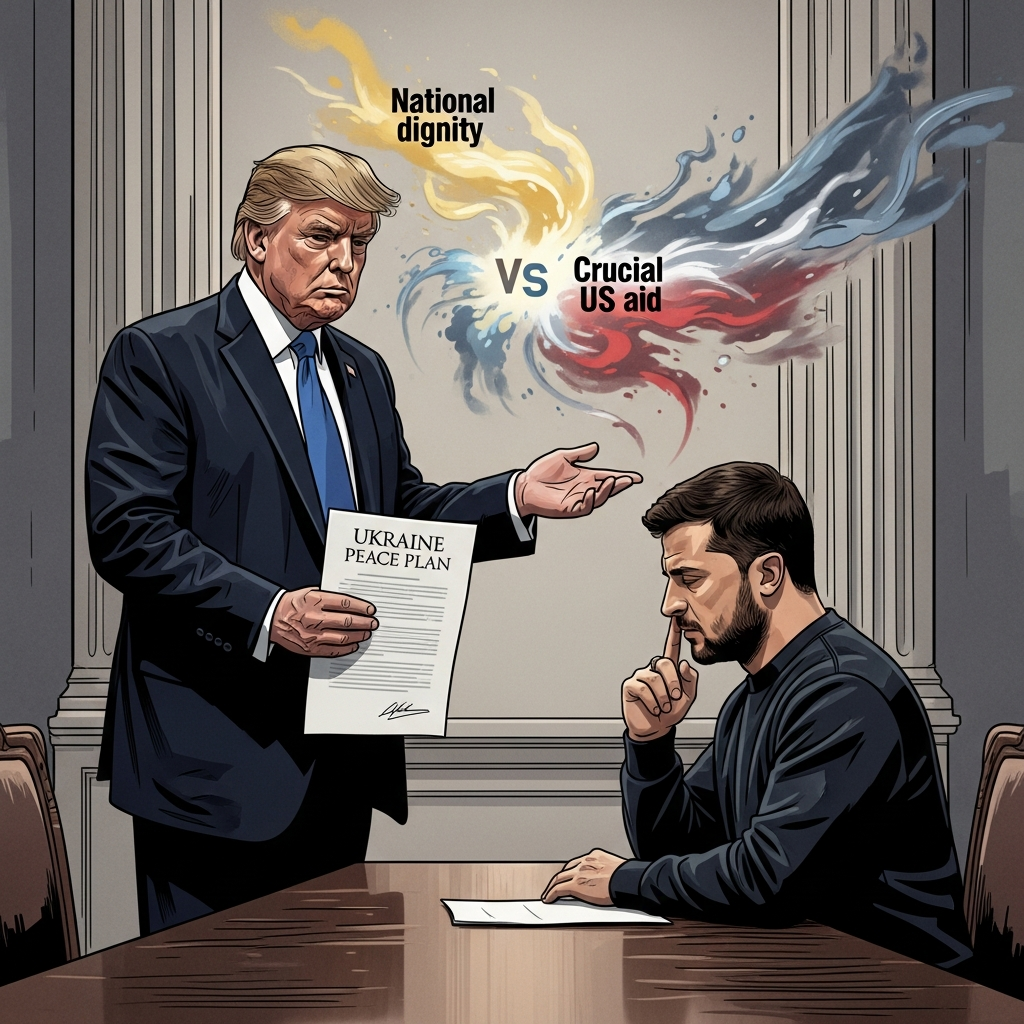
Ukraine faces its gravest challenge yet as the Trump administration forcefully pushes a 28-point peace plan demanding significant concessions to Russia. Ukrainian President Volodymyr Zelenskyy has described this as an “impossible choice,” weighing national dignity against the risk of losing a crucial U.S. partnership. This proposed deal, drafted with Russian input, has sent shockwaves through Kyiv and European capitals, sparking urgent diplomatic efforts to safeguard Ukraine’s sovereignty amidst intense pressure from Washington. As the conflict grinds on, the international community watches closely to see if Ukraine can navigate this precarious diplomatic tightrope.
The Controversial 28-Point Peace Proposal
The Trump administration’s initiative for peace, reportedly developed in late October by U.S. envoy Steve Witkoff and Russian envoy Kirill Dmitriev, is a comprehensive yet highly contentious 28-point document. It aims to rapidly conclude the conflict, with President Trump setting an ambitious Thanksgiving deadline for agreement. However, its terms are overwhelmingly favorable to Moscow, raising serious concerns about Ukraine’s future and global security norms.
Unpacking the Demanding Terms
The leaked draft of the peace plan outlines severe requirements for Ukraine, many of which echo long-standing Kremlin demands previously dismissed by Kyiv as non-starters. These include:
Territorial Cessions: Ukraine would be compelled to relinquish control of significant territory. This includes areas currently occupied by Russian forces, such as Crimea and parts of the Donetsk and Luhansk regions, to be recognized as “de facto Russian.” Crucially, the plan also demands the surrender of swaths of territory not yet occupied by Russia, effectively freezing the conflict along current front lines in regions like Kherson and Zaporizhzhia. This would allow Russia to retain key cities like Mariupol and secure its land bridge to Crimea.
Military Reduction: Ukraine’s armed forces would face a drastic reduction, potentially by more than half, and would be prohibited from possessing long-range weaponry.
NATO Abandonment: A constitutional ban on joining NATO would be imposed on Ukraine, effectively ending its aspirations for Western military alliance. The plan also places restrictions on NATO itself, obliging the alliance not to expand further or station troops in Ukraine.
Elections and Amnesty: Ukraine would be required to hold elections within 100 days of the agreement. Additionally, a “full amnesty” for all parties involved in the war is stipulated, a highly controversial clause given widespread evidence of Russian atrocities.
- Russia’s Reintegration: The plan aims to end Russia’s isolation from the West, paving the way for the removal of sanctions and inviting Moscow to rejoin the G-7.
- foreignpolicy.com
- abcnews.go.com
- www.theguardian.com
- www.rferl.org
- www.bbc.com
These provisions are widely seen by Ukrainian and European officials as tantamount to capitulation, undermining Ukraine’s sovereignty and setting a dangerous precedent for international relations.
The Questionable Security Guarantees
In return for these substantial concessions, the plan reportedly offers “reliable security guarantees” for Ukraine, potentially modeled on NATO’s Article 5. This implies the U.S. and its allies might respond with military force if Russia were to attack Ukraine again. However, the legal enforceability and credibility of such a guarantee are highly questionable. If merely an executive order, it could be easily overturned by a future U.S. president, reminiscent of the failures of past agreements like the 1994 Budapest Memorandum and the 2015 Minsk Agreements. Analysts note these guarantees lack specifics on how a “decisive coordinated military response” would materialize, especially with the proposed ban on NATO troops in Ukraine.
Zelenskyy’s Unprecedented Dilemma: Dignity or Alliance?
Ukrainian President Volodymyr Zelenskyy faces immense pressure to accept the American-brokered deal. In a poignant address to his nation, he framed the situation as “one of the most difficult moments in our history,” outlining a stark choice: “Either the loss of our dignity or the risk of losing a key partner” – referring, of course, to the United States.
Vows, Vulnerabilities, and Domestic Pressures
Zelenskyy’s dilemma is compounded by several critical factors. Ukraine has suffered heavy losses on the battlefield, with Russia nearing the capture of Pokrovsk, a potentially significant victory following Avdiivka’s fall in early 2024. Domestically, Zelenskyy’s administration is grappling with a severe corruption scandal involving top officials, further straining national morale. The Ukrainian President powerfully vowed not to betray the country’s interests or constitution, drawing parallels to the unwavering resistance at the outset of the 2022 invasion. He acknowledged the desire for peace but hinted at the brutal realities: “even the strongest metal can break,” suggesting that compromises, however painful, might become necessary.
Strategic Engagement Amidst Dire Warnings
Despite the immense pressure, Zelenskyy has confirmed discussions about the plan with U.S. Vice President J.D. Vance and Army Secretary Dan Driscoll. He expressed respect for President Trump’s stated desire to end the bloodshed and affirmed Ukraine’s commitment to a “constructive search for solutions” with Washington. Zelenskyy also strategically warned that Putin would likely use peace talks to portray Ukraine as unwilling to accept peace while making unjust demands. This proactive stance aims to ensure Ukraine is not blamed for disrupting the diplomatic process, even as its core principles – non-recognition of Russian-occupied territories, full respect for sovereignty, and freedom to choose alliances – remain non-negotiable.
International Reactions: Alarm Bells Across Europe
The sudden emergence and demanding nature of the 28-point plan have largely caught Ukraine’s European allies by surprise, triggering widespread condemnation and a scramble for diplomatic coordination.
European Leaders Denounce “Capitulation”
European leaders have vociferously rejected the proposal, with many labeling it a “capitulation.” French President Emmanuel Macron, German Chancellor Friedrich Merz, and Britain’s Keir Starmer have all engaged in calls with Zelenskyy to reaffirm solidarity. They insist that any peace agreement must be genuinely fair, respect Ukraine’s sovereignty and “red lines,” and consider the existing line of contact as the “starting point” for territorial discussions. Estonian Prime Minister Kaja Kallas warned that rewarding aggression through such a deal would set a “very dangerous” global precedent. Ukrainian politicians and civil society have overwhelmingly dismissed the plan as one-sided and an affront to the nation’s dignity, especially as it was presented on “Dignity and Freedom Day.”
Russia’s Calculated Response
Russian President Vladimir Putin confirmed Moscow’s possession of the 28-point plan, suggesting it “could be the basis for a final peace settlement.” Putin claimed this was a “modernized” version of proposals discussed during a summer summit in Alaska. While expressing readiness to show “flexibility,” Putin also accused the Trump administration of pausing the process because Ukraine is unwilling to accept it. He warned that Ukraine and its allies harbored an “illusion that they can inflict a strategic defeat on Russia on the battlefield,” vowing that if Kyiv refused to discuss the proposals, Russia would continue its military efforts to seize more cities and achieve its objectives by force. Experts like Tatyana Stanovaya suggest Moscow might still find fault with certain provisions, such as the proposed 600,000-troop cap for Ukraine’s army, which is higher than past Russian demands.
The Broader Context: Battlefield Realities and US Leverage
The timing of this intense U.S. pressure is critical, coinciding with Ukraine’s difficult battlefield situation and internal political challenges. The Trump administration appears to be leveraging these vulnerabilities to push the deal forward.
Evolving Military Aid and Intelligence Dynamics
The pressure from Washington includes strong threats to cut off crucial U.S. intelligence and military assistance if Ukraine does not comply. U.S. officials, including U.S. Army Secretary Dan Driscoll and Vice President J.D. Vance, have conveyed a message to Kyiv that “things will only get worse in the long term” for Ukraine if the proposal is not accepted. While Ukraine’s reliance on U.S. military aid is not as critical as in 2022 (with European and Ukrainian arms production significantly increased), a shutoff of U.S. intelligence could have severe “battlefield implications,” as observed after a similar disruption in March. Ukraine also heavily relies on U.S. natural gas for winter and U.S. air defense missiles, particularly the Patriot system. The potential loss of the U.S. as a strategic partner could empower Putin to intensify attacks.
The Path Forward: Uncertainties and Unwavering Resolve
Ukraine finds itself at a pivotal crossroads, navigating an “impossible position” as described by BBC’s security correspondent Frank Gardner. The dilemma between preserving national dignity and retaining vital U.S. support presents a profound test for President Zelenskyy and the Ukrainian nation. Refusing U.S. pressure could potentially lead to an upswing in Zelenskyy’s domestic public approval, demonstrating resilience against external dictates. However, the strategic cost of losing U.S. support, especially intelligence and critical air defense, is immense.
Zelenskyy continues to engage with European and NATO allies, including the European Commission President and NATO Secretary-General, to ensure their “principled stances” are considered. The future of Ukraine, and indeed the broader geopolitical landscape, hangs precariously in the balance, determined by Kyiv’s response to this unprecedented diplomatic challenge and the unpredictable trajectory of international relations. The war, meanwhile, persists, with ongoing Russian attacks underscoring the urgency and tragic stakes of any proposed peace.
Frequently Asked Questions
What are the key concessions Ukraine would make under Trump’s 28-point peace plan?
Under the proposed 28-point peace plan, Ukraine would be required to make significant concessions, including relinquishing control of territory not currently occupied by Russia, such as parts of the eastern Donbas region, and de facto recognizing Russia’s control over Crimea and other occupied areas. Additionally, Ukraine would have to drastically reduce its military size, abandon its aspirations to join NATO, and accept a constitutional prohibition on such membership. The plan also includes a contentious provision for “full amnesty” for all parties involved in the war.
How is the Trump administration pressuring Ukraine to accept the peace deal?
The Trump administration is applying intense pressure on Kyiv through various means. This includes threatening to cut off crucial U.S. intelligence sharing and military assistance, particularly critical air defense missiles and natural gas for winter. U.S. officials like Vice President J.D. Vance and Army Secretary Dan Driscoll have reportedly conveyed warnings that Ukraine’s situation will “only get worse” if the deal isn’t accepted. Furthermore, President Trump has set a tight deadline, aiming for an agreement by Thanksgiving Day, to expedite the process.
What are the broader geopolitical implications if Ukraine accepts or rejects the proposed peace plan?
Accepting the plan, widely viewed as a “capitulation,” could set a dangerous global precedent, signaling that aggression can be rewarded with territorial gains and undermining international norms of sovereignty. It would also likely cause significant domestic unrest in Ukraine and strain relations with European allies who have rejected the plan’s terms. Conversely, rejecting the plan risks alienating the U.S. as a key partner, potentially leading to a severe cut in vital intelligence and military aid, which could have devastating battlefield implications and encourage Russia to intensify its offensive to achieve its goals by force.