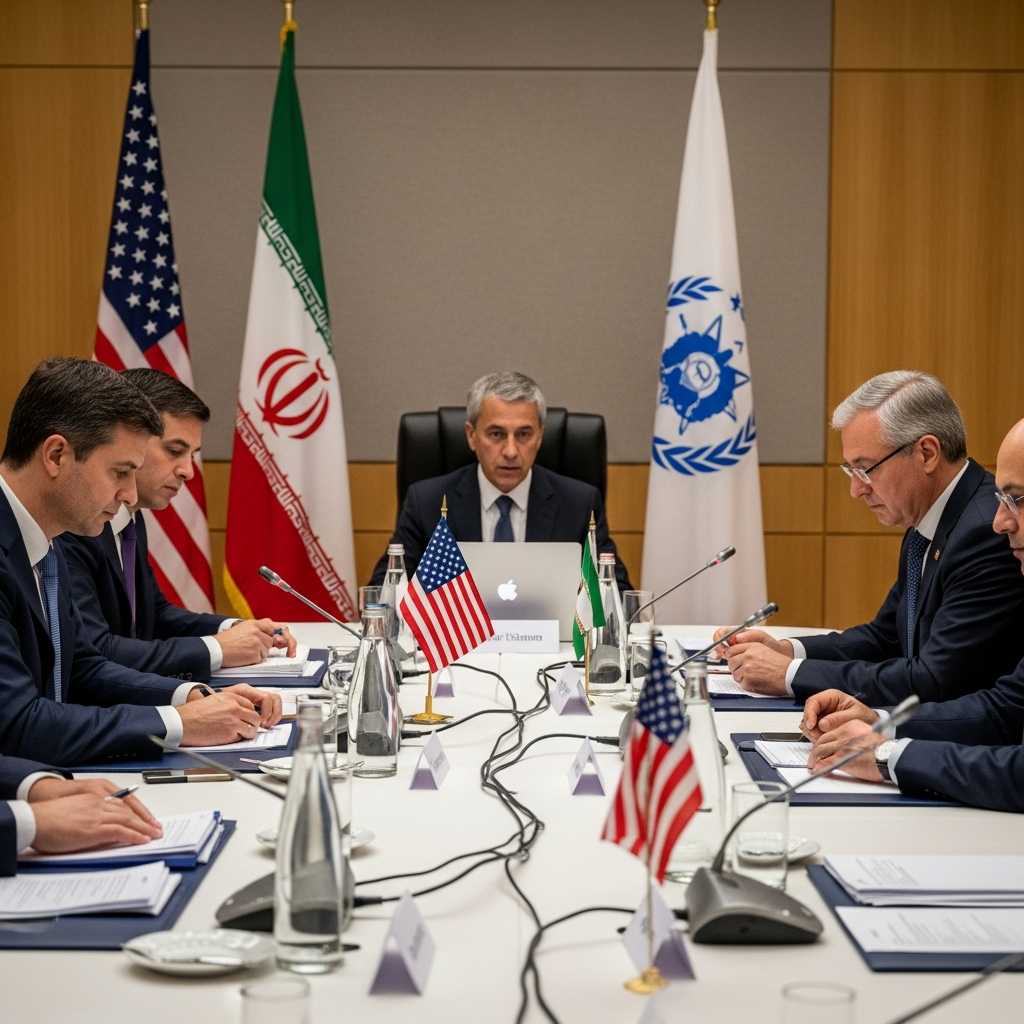
The world’s gaze is fixed on Geneva as pivotal talks between the United States and Iran unfold, aiming to navigate the complex landscape of Iran’s nuclear program and crippling sanctions. These aren’t just diplomatic discussions; they represent a high-stakes geopolitical tightrope walk with profound implications for global security, regional stability, and even the future trajectory of international financial markets, from the US Dollar to crude oil prices.
Unpacking the Geneva Negotiations: A Diplomatic Tightrope
A new round of US-Iran nuclear talks has convened in Geneva, heralded by Omani Foreign Minister Sayyid Badr bin Hamad bin Hamood Albusaidi with an optimistic note of a “positive push” towards finalizing a deal. Iran’s Foreign Minister, Seyed Abbas Araghchi, echoed this sentiment, emphasizing the critical importance of “constructive engagement and using the path of dialogue” for a lasting nuclear pact. Tehran has even signaled its intent to draft a potential deal within days and share it with the US.
The Clash of Core Demands
Despite the diplomatic overtures, the chasm between US and Iranian demands remains deep. Iran’s non-negotiable prerequisites for any agreement are clear: an affirmation of its “peaceful nuclear program,” the complete lifting of all US sanctions, and the unequivocal upholding of Tehran’s rights to uranium enrichment. Araghchi suggested focusing on “basic things” for a deal potentially stronger than the 2015 Joint Comprehensive Plan of Action (JCPOA), indicating a desire for a more streamlined, foundational agreement. However, he also issued a stern warning, affirming Iran’s right to self-defense.
In stark contrast, Washington’s conditions are significantly more stringent. The US demands a complete ban on uranium enrichment, the removal of existing uranium stockpiles, severe restrictions on Iran’s ballistic missile program, and a reduction in its support for regional proxy groups. Analysts widely perceive these American demands as “exceptionally challenging” for Iran to accept, underscoring the formidable obstacles that must be overcome in these Iran-US talks in Geneva.
A Fragile Hope Amidst Lingering Skepticism
Iranian President Masoud Pezeshkian has expressed optimism about “encouraging signals” from recent discussions. He stressed, however, that Iran remains prepared for “any potential scenario,” closely monitoring US actions. Foreign Minister Araghchi, despite the deep divisions, sees a “historic opportunity to strike an unprecedented agreement,” conveying Tehran’s resolve for a “fair and equitable” deal achieved promptly. Iran’s Deputy Foreign Minister, Majid Takht Ravanchi, further affirmed the nation’s readiness to do “whatever necessary” with “all sincerity and goodwill,” hoping for reciprocal gestures from the American side.
The Shadow of Military Tensions
These delicate diplomatic efforts are unfolding against a backdrop of escalating military tensions. The United States has significantly increased its military presence in the region, including the deployment of fighter jets and transport aircraft to Jordan’s Muwaffaq Salti Air Base and military buildups at other strategic sites. The Red Sea region has also seen an amassing of US military forces, with more warships reportedly en route. This heightened activity follows previous indirect discussions held in Muscat and an earlier round in Geneva, illustrating a continuous, albeit tense, effort to negotiate despite profound mutual distrust.
Iran, for its part, has reaffirmed its strong resolve for self-defense. Defence Minister Aziz Nasirzadeh met with Armenian Defense Minister Suren Papikyan in Tehran, underscoring Iran’s national security posture even as its diplomatic corps pushes for a breakthrough in the US-Iran negotiations. The skepticism surrounding the success of these talks remains high, with figures like US Secretary Marco Rubio noting the historical difficulty of reaching “real deals with Iran.”
Global Markets on Edge: The Economic Ripple Effect
The geopolitical uncertainty surrounding the Iran-US talks in Geneva has had a tangible impact on global financial markets, with the US Dollar and WTI crude oil prices showing distinct reactions.
The US Dollar’s Resilience
The US Dollar Index (DXY) has exhibited remarkable strength amidst these ongoing geopolitical developments and diplomatic exchanges. Following a period of consolidation in FX markets, the Dollar appears poised for a significant breakout. Its recent rebound and ability to hold above key technical levels, coupled with an RSI (Relative Strength Index) above neutral, suggest an increased probability of an upside move. This resilience is often characteristic of the Dollar acting as a safe-haven asset during times of global uncertainty. A decisive break above the 98.00 resistance level is a key indicator for a sustained upward trend, contingent on the persistence of Middle East tensions.
WTI Crude Oil: A Bullish Outlook Fuelled by Risk Premium
WTI crude oil has been a top-performing asset class in 2026, registering a substantial year-to-date gain. This robust performance is primarily attributed to a persistent “geopolitical risk premium” stemming from rising tensions in the Middle East and the uncertainty surrounding the US-Iran negotiations.
Despite a recent minor pullback caused by a higher-than-expected surge in US crude inventories, the broader bullish narrative for oil prices remains intact. The price action has formed a potential “bullish flag” configuration, indicating a likely continuation of its upward trend. WTI crude oil prices have been holding firmly above key support levels, notably around $63-$64, reinforcing the idea that the Iran risk premium continues to support elevated prices. A breakthrough in the talks, however, could see this premium dissipate, potentially leading to a significant downside for oil prices, with analysts projecting a return to the $59 level or lower.
Challenges and the Path Forward for the Iran-US Talks
The US-Iran nuclear talks represent an incredibly complex diplomatic challenge. The profound disagreements on core issues, combined with a backdrop of military posturing and historical distrust, make a quick resolution unlikely. For an agreement to be reached, both sides will need to demonstrate significant political will and a willingness to compromise on long-held positions.
The global community keenly watches these Iran-US talks in Geneva, recognizing their potential to either de-escalate regional tensions and reshape international relations or deepen existing divides. The trajectory of these negotiations will not only determine the fate of Iran’s nuclear program but also influence the stability of the Middle East and impact the global economic landscape for years to come.
Frequently Asked Questions
What are the core disagreements in the Iran-US nuclear talks in Geneva?
The primary points of contention in the Iran-US nuclear talks center on Iran’s nuclear program and US sanctions. Iran demands the affirmation of its “peaceful nuclear program,” the complete lifting of all US sanctions, and the upholding of its uranium enrichment rights. Conversely, the US insists on a complete ban on enrichment, the removal of existing uranium stockpiles, restrictions on Iran’s ballistic missile program, and a reduction in its support for regional proxy groups. These starkly contrasting demands highlight the deep divisions that must be addressed for any progress.
How are global financial markets reacting to the US-Iran negotiations?
Global financial markets are reacting with significant volatility and a notable “geopolitical risk premium.” The US Dollar Index (DXY) has shown remarkable strength and is poised for a breakout, often acting as a safe-haven asset amidst the uncertainty created by the US-Iran diplomatic exchanges. Simultaneously, WTI crude oil prices have maintained a strong bullish bias, driven by rising tensions in the Middle East and the uncertainty of the talks. While a surge in US inventories caused a temporary dip, the underlying geopolitical risk ensures oil prices remain elevated, with potential for significant downside if a deal is reached.
Why do some consider the current Iran-US talks a “historic opportunity” for a deal?
Iranian Foreign Minister Seyed Abbas Araghchi views the current Iran-US talks as a “historic opportunity to strike an unprecedented agreement” due to Iran’s stated commitment to a “fair and equitable” deal and its unwavering stance on non-proliferation (“Iran will under no circumstances ever develop a nuclear weapon”). This, combined with Iran’s expressed desire for a less convoluted, more foundational agreement than the 2015 JCPOA, suggests an openness to diplomacy that, if met with reciprocal goodwill from the US, could lead to a significant breakthrough.
The current US-Iran nuclear talks in Geneva represent a critical juncture for international diplomacy and global stability. With high stakes for both regional peace and global financial markets, the path forward remains fraught with challenges. The world awaits to see if this “historic opportunity” can translate into a tangible, lasting agreement that reshapes the future of US-Iran relations and the broader Middle East.
Word Count Check: 1198