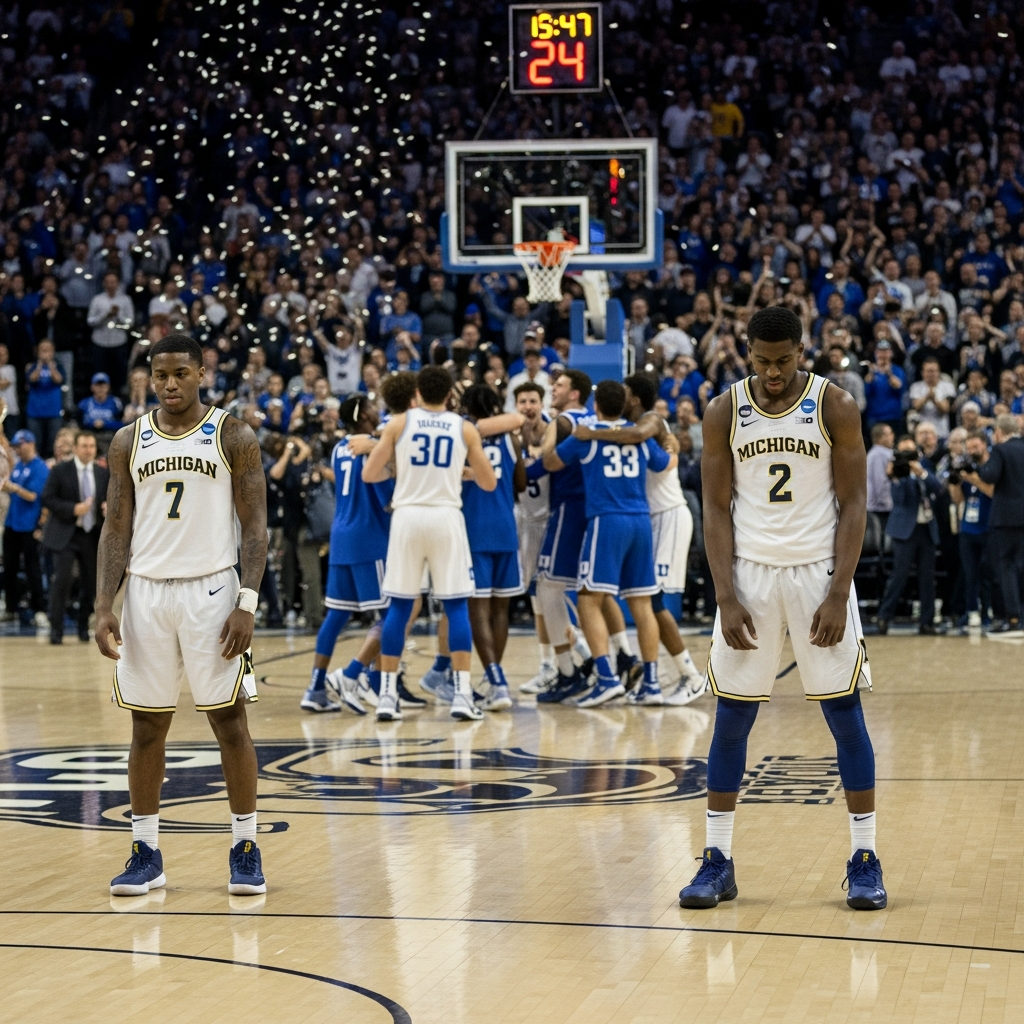
The college basketball world witnessed an instant classic as the undefeated No. 1 Michigan Wolverines faced the formidable No. 3 Duke Blue Devils in a high-stakes neutral-site showdown in Washington D.C. While Michigan battled fiercely, they ultimately fell 68-63, marking their second defeat of the season. This electrifying matchup offered crucial insights into both teams as they navigate the path toward March Madness. We delve into the critical factors that shaped this epic contest and what they mean for Michigan’s championship aspirations.
Championship Atmosphere in the Capital
From the moment the ball tipped off, Capital One Arena pulsed with the energy of a Final Four showdown. Dueling chants from passionate fan bases pierced the air. Every possession felt incredibly weighty. Both Michigan and Duke understood the immense stakes. This game, despite lacking direct conference or NCAA Tournament seeding implications, felt like a deep postseason clash. The intensity was palpable, setting a national stage for elite college basketball.
Fouls and Controversies: A Game of Whistles
Referee decisions played a significant role in shaping the game’s narrative. The whistle blew frequently, impacting key players on both sides. Michigan’s promising big man, Aday Mara, quickly collected two fouls within the first ten minutes. A third foul at the 7:08 mark sidelined him for the rest of the first half. His absence directly preceded a 6-0 Duke run. This momentum shift tied the game at 33, swinging control towards the Blue Devils.
Duke wasn’t immune either. Star forward Cameron Boozer picked up his fourth foul with 8:42 left in the second half. His temporary benching created a crucial window for Michigan. The Wolverines attacked the paint, with Morez Johnson Jr. and Mara combining for 13 points to trim Duke’s lead to just one. However, Boozer’s return was immediate and impactful. He drew a foul, sank two free throws, then hit a three-pointer, extending Duke’s lead to six. Later, a goaltending call on Mara, which appeared incorrect but was upheld, further solidified Duke’s advantage. Multiple reports highlighted what many Michigan fans considered controversial calls favoring Duke, including a questionable travel call against Yaxel Lendeborg and uncalled fouls on Duke that contrasted with frequent calls against Michigan. These moments profoundly influenced game flow and player availability.
Lendeborg’s Emergence: A Lone Bright Spot
Amidst Michigan’s offensive struggles, UAB transfer Yaxel Lendeborg delivered a standout performance. His play suggested he’s rapidly climbing NBA Draft lottery boards. Lendeborg started scorching hot, hitting all five of his field goal attempts in the first half. He consistently drew fouls, racking up Duke’s personal foul count. He finished the first half with an impressive 16 points and four rebounds, committing only one foul and one turnover.
Despite cooling off in the second half, Lendeborg made critical plays. He grabbed two offensive rebounds on a single possession. Then, he patiently found his spot beyond the arc, sinking a huge three-pointer with 3:24 remaining. This pivotal shot brought Michigan within a single point. Lendeborg concluded the game with a game-high 21 points, seven rebounds, and three assists. His ability to perform at such a high level when other Wolverines struggled is a significant positive. It offers hope for Michigan as they head into the crucial tournament stretch.
Guard Play: Young Guns Step Up
Michigan’s backcourt faced an early challenge when Elliot Cadeau went to the bench holding his arm around ten minutes into the game. He later returned with a large arm brace. In his absence, young guards L.J. Cason and Trey McKenney answered the call. Cason confidently drained a couple of threes and aggressively attacked the rim, tallying seven first-half points. McKenney demonstrated tenacious defense, effectively switching onto Boozer multiple times without being exploited. Even after Cadeau’s return, McKenney remained a force. Late in the second half, he forced two consecutive steals, helping Michigan stay competitive. Their resilience provided valuable minutes and showcased Michigan’s depth.
Cold Shooting and Elite Perimeter Defense
This highly anticipated contest quickly evolved into a defensive slugfest. Both teams boasted impressive perimeter defense, and it was on full display. Despite generating quality looks and setting up shooters around the arc, three-point shooting was largely a non-factor. Michigan shot a dismal 3-for-13 in the first half and an equally poor 3-for-12 in the second. Duke wasn’t much better, converting 4-of-12 from deep in the first half and 2-for-7 after halftime.
This low-scoring affair underscored the defensive prowess of both squads. Coaches were forced to emphasize interior scoring on nearly every possession. Michigan, typically a strong shooting team (51.4% field, 36.1% three-point), saw a dramatic decline. They finished at 40% overall and a dismal 24% from long range. Some observers even pointed to the use of a Wilson NCAA ball, rather than Michigan’s usual Nike ball, as a potential minor factor in the shooting woes. Regardless, Duke’s defensive intensity, particularly their ability to block in the lane, was critical.
The Rebounding Reckoning: Duke’s Dominance on the Glass
One of the most decisive factors in Duke’s victory was their absolute dominance on the boards. The Blue Devils outmatched Michigan 41-28 in the rebounding battle. Critically, Duke secured a whopping 13 offensive rebounds compared to Michigan’s mere eight. This disparity translated directly into second-chance points, with Duke holding an 18-11 advantage.
The impact of this rebounding superiority was evident in crunch time. With less than 20 seconds remaining and Duke holding a three-point lead, the Blue Devils missed a layup. This could have given Michigan a crucial final possession. However, Duke secured their 13th offensive rebound of the game, leading to free throws that sealed Michigan’s fate. Mara’s foul trouble certainly contributed to Michigan’s struggles on the glass. However, if these teams meet again in the NCAA Tournament, Michigan’s coaching staff must devise a comprehensive solution for rebounding. This glaring weakness proved to be the difference-maker.
Frequently Asked Questions
What were the primary factors contributing to Michigan’s defeat against Duke?
Michigan’s 68-63 loss to Duke stemmed from several key issues. Significant foul trouble for big man Aday Mara disrupted Michigan’s interior defense and allowed Duke to capitalize. The Wolverines also suffered from widespread shooting struggles, converting just 40% of field goals and a dismal 24% from three-point range. Perhaps most critically, Duke dominated the rebounding battle, especially on the offensive glass (13 offensive rebounds to Michigan’s 8), leading to crucial second-chance points that sealed the game late. Controversial referee calls were also cited as impacting the game’s flow.
Who were the standout performers for Michigan in the Duke game?
Despite the loss, transfer forward Yaxel Lendeborg delivered an exceptional performance for Michigan. He scored a game-high 21 points, adding seven rebounds and three assists, and showcased his versatility and scoring ability even when others struggled. Young guards L.J. Cason (7 first-half points) and Trey McKenney (strong defense, two key steals) also stepped up admirably when Elliot Cadeau was briefly sidelined with an arm injury, proving valuable in keeping Michigan competitive throughout the matchup.
How does this loss impact Michigan’s prospects for the NCAA Tournament?
This defeat, Michigan’s second of the season, likely costs them the coveted No. 1 overall seed in the NCAA Tournament. However, the game itself, despite the outcome, demonstrated Michigan’s ability to compete at the highest level. The “championship feel” of the contest suggests they are a legitimate Final Four contender. For future success, Michigan must address their rebounding deficiencies and improve offensive consistency when facing elite perimeter defense. Yaxel Lendeborg’s emergence, however, is a strong positive sign for their tournament hopes.
Looking Ahead: Lessons from a High-Stakes Clash
Michigan’s tough loss to Duke was far more than just another game. It served as a critical barometer for the Wolverines’ national championship aspirations. While the defeat might cost them the top overall seed, the intense battle underscored their potential. The performances of players like Yaxel Lendeborg, even amidst team struggles, offer optimism. However, the glaring issues of rebounding and inconsistent shooting, compounded by foul trouble and controversial calls, provide valuable lessons. As Michigan moves closer to the postseason, addressing these areas will be paramount. This epic matchup against Duke, highly contested until the final buzzer, serves as a powerful reminder of the challenges and opportunities awaiting Michigan Basketball on their journey through March.