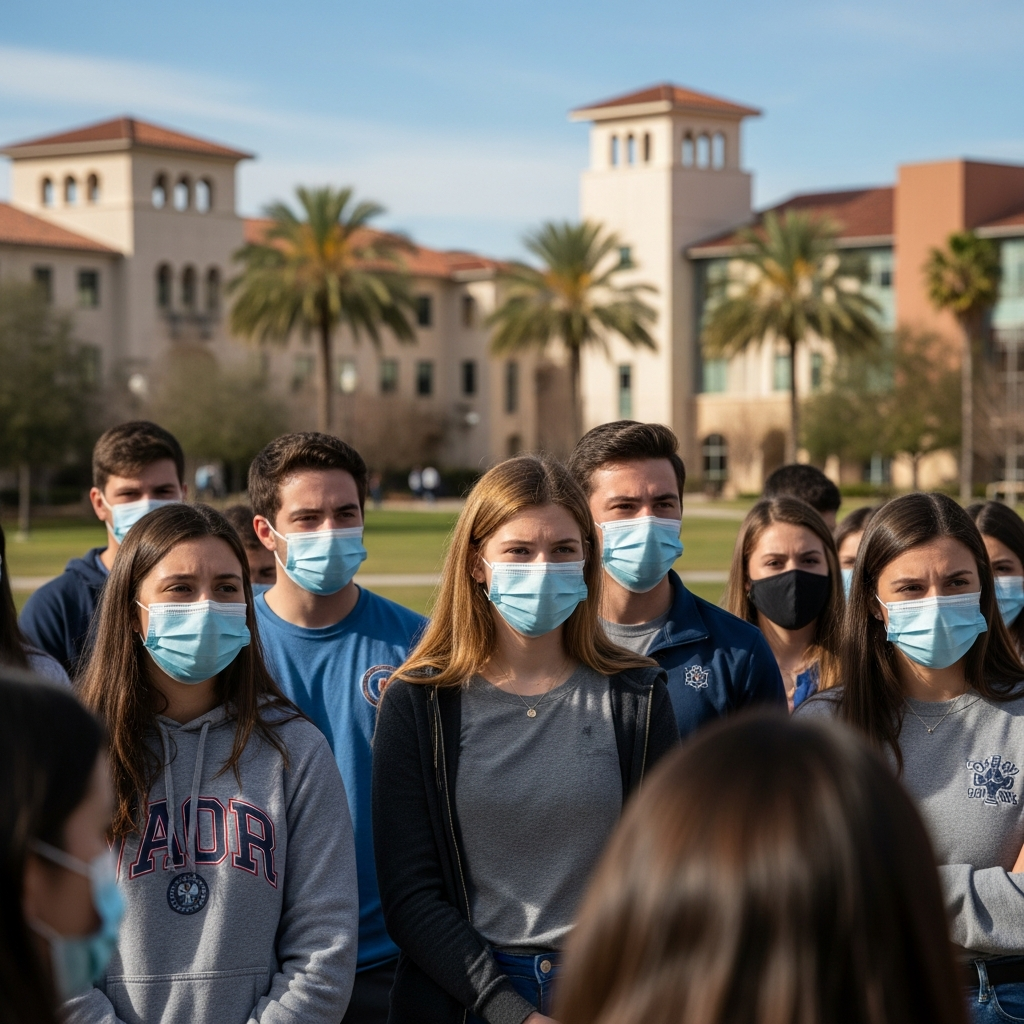
The United States is witnessing a concerning resurgence of measles, a highly contagious disease once declared eliminated. At the forefront of this worrying trend is Southwest Florida, where Ave Maria University in Collier County has become an epicenter for an escalating outbreak. Initial reports confirmed 57 measles cases among students, with seven individuals remaining contagious as the virus spread through the close-knit campus community. This Ave Maria University measles outbreak serves as a stark reminder of measles’ highly infectious nature and the critical importance of vaccination.
The Unfolding Crisis at Ave Maria University
The measles outbreak at Ave Maria University gained national attention, notably highlighted by pediatric emergency physician and social media influencer Dr. Beachgem10 (Dr. Meghan Martin). The university, home to approximately 1,300 students, primarily residing in dorms, reported that as of February 11, 50 students had recovered and developed natural immunity, while seven remained within the contagious period. Earlier, 54 students had been affected, with five in quarantine due to the rash by February 9.
Despite Ave Maria University stating that the “vast majority” of its students and staff were vaccinated, the virus spread rapidly. The Florida Department of Health (DOH) confirmed 46 measles cases in Collier County, predominantly among teenagers and young adults, with 23 cases in the 15-19 age group and 22 in the 20-24 age bracket. In response, the university implemented isolation protocols for infected students, offered on-campus testing and vaccination, and even established a second clinic to manage the growing number of cases.
Understanding Measles: A Highly Contagious Threat
Measles, caused by the rubeola virus, is “super contagious,” as Dr. Martin emphasized. It can linger in the air for up to two hours after an infected person leaves a room. This airborne transmission makes it incredibly difficult to contain, particularly in congregate settings like dormitories, barracks, or schools. The CDC confirms that colleges and universities are historical hotspots for measles. An unvaccinated person has a staggering 90% chance of contracting measles if exposed.
Symptoms typically appear 7-14 days post-exposure. These include a high fever, often exceeding 104°F, a persistent cough, runny nose, and red, watery eyes (conjunctivitis). Distinctive small white spots, known as Koplik spots, can appear inside the mouth. A characteristic blotchy rash emerges three to five days after initial symptoms, starting on the face and spreading across the body, lasting about a week.
While often uncomfortable, measles can be lethal. Complications range from ear infections and bronchitis to severe pneumonia. Critically, encephalitis, or brain inflammation, can lead to permanent neurological damage, seizures, blindness, or even death. Vulnerable groups, including children under five, adults over 20, pregnant women, and immunocompromised individuals, face the highest risk of severe complications.
The Critical Role of Vaccination and Declining Rates
The measles-mumps-rubella (MMR) vaccine remains the most effective defense against this disease. Dr. Martin and other experts highlight its impressive efficacy: one dose offers 93% protection, while two doses increase protection to 97%. Dr. Raul Enad, who operates a clinic in Ave Maria, further explained that missing the second dose means foregoing an additional 7% protection.
The resurgence of measles, including the Ave Maria University measles outbreak, is directly linked to declining vaccination rates across the U.S. Herd immunity, the level of vaccination needed to protect the entire community, typically requires 95% coverage. Florida’s MMR vaccination rates, previously near 93-94% before the COVID-19 pandemic, plummeted to 88.8% for the 2024-2025 school year. This places Florida among 13 states with rates below the critical 90% threshold. Nationally, MMR coverage among kindergarteners also fell below the 95% target, dropping from 95% in 2019 to 92% in 2023. This decline is largely attributed to vaccine hesitancy and the spread of misinformation.
Florida’s Widespread Measles Surge
The Ave Maria University measles outbreak is part of a much larger statewide problem. Between February 1 and February 7, Florida reported 50 new confirmed cases, a nearly 373% jump from the previous week. This brought the state’s total for 2026 to 68 confirmed cases – an alarming 850% increase compared to all cases reported in 2025. Collier County, largely due to the university outbreak, accounted for approximately 67% of Florida’s cases. Other affected Florida counties included Duval (8 cases), Escambia, and Manatee (3 cases each).
The national landscape is equally concerning. The CDC reported 733 U.S. measles cases through February 5, 2026. This number for January and early February alone already exceeded a quarter of all cases reported in 2025 (2,267 cases). South Carolina, in particular, has seen an even larger outbreak, with health officials confirming 933 cases, making it the largest single measles outbreak in the U.S. in over three decades. The vast majority (859 out of 876 with known status) of these cases were among unvaccinated individuals.
Expert Calls to Action and Public Health Directives
In light of the escalating situation, health experts and public officials are urging prompt action. Dr. Mehmet Oz, Administrator of the U.S. Centers for Medicare and Medicaid Services, and Dr. Martin have both strongly advocated for unvaccinated Americans to receive the MMR vaccine, emphasizing its critical role in controlling the spread. The Florida Department of Health is offering the MMR vaccine free of charge and provides pre- and post-exposure options at its Naples and Immokalee locations.
Crucially, if you suspect measles exposure or are experiencing symptoms, health officials advise calling your primary care provider or the Department of Health first before visiting a medical office, urgent care, or hospital. This allows healthcare teams to implement necessary precautions, preventing further transmission within healthcare settings.
The measles resurgence has also sparked political debate. Florida State Surgeon General Joseph Ladapo has expressed plans to eliminate mandatory childhood vaccines for public school attendance, though legislative action would be required for changes to vaccines like MMR. In South Carolina, Senator Margie Bright Matthews introduced a bill to eliminate religious exemptions for measles vaccine requirements, a move met with strong opposition from Attorney General Alan Wilson, who argued against curtailing personal liberty.
Safeguarding Your Community: Essential Preventative Measures
The return of measles after its elimination in 2000 is a severe public health setback. The Ave Maria University measles outbreak underscores the vulnerability of even partially vaccinated populations in dense settings. Maintaining a stable immune system through stress reduction, adequate vitamin intake, and sufficient sleep, as suggested by Dr. Enad, can also offer some support, but it is not a substitute for vaccination.
The most powerful tool we have is widespread vaccination. Protecting yourself and your community from measles means ensuring that you and your eligible family members are fully vaccinated with the MMR vaccine. Heightened awareness, proactive communication with health authorities, and adherence to public health guidelines are vital to prevent further spread and protect the most vulnerable among us.
Frequently Asked Questions
What are the key symptoms of measles, and how serious is the Ave Maria University outbreak?
Measles symptoms typically include a high fever (over 104°F), cough, runny nose, red eyes, and a characteristic blotchy rash that starts on the face and spreads downwards. The Ave Maria University measles outbreak is serious, with 57 confirmed cases and seven students still contagious as of recent reports. It highlights the virus’s highly contagious nature in close living environments, capable of lingering in the air for up to two hours. Complications can be severe, including pneumonia, encephalitis, and even death, especially in vulnerable populations.
Where can I get vaccinated or find resources if I suspect measles exposure in Florida?
If you suspect measles exposure or are experiencing symptoms, it is crucial to contact your primary care provider or the Florida Department of Health (DOH) first before visiting any medical facility. This helps prevent further spread. The Florida DOH offers the MMR (measles, mumps, and rubella) vaccine free of charge and provides pre- and post-exposure options at its Collier County locations in Naples and Immokalee.
How effective is the MMR vaccine, and why are measles cases increasing despite its availability?
The MMR vaccine is highly effective: one dose provides 93% protection against measles, and two doses increase that protection to 97%. Measles cases are increasing, including the Ave Maria University measles outbreak, primarily due to declining vaccination rates. Florida’s MMR vaccination rate dropped below the critical 95% herd immunity threshold to 88.8% for the 2024-2025 school year. This decline, driven by vaccine hesitancy and misinformation, creates pockets of susceptible individuals where the highly contagious virus can easily spread.
Conclusion
The Ave Maria University measles outbreak serves as a potent reminder of measles’ enduring threat and the fragility of public health when vaccination rates decline. The rapid spread in Southwest Florida and across the nation underscores the urgent need for renewed vigilance. While experts like Dr. Beachgem10 and Dr. Oz call for widespread vaccination, it is a collective responsibility to protect our communities. Prioritizing the MMR vaccine, staying informed, and adhering to public health guidance are crucial steps to reverse this concerning trend and safeguard public health.