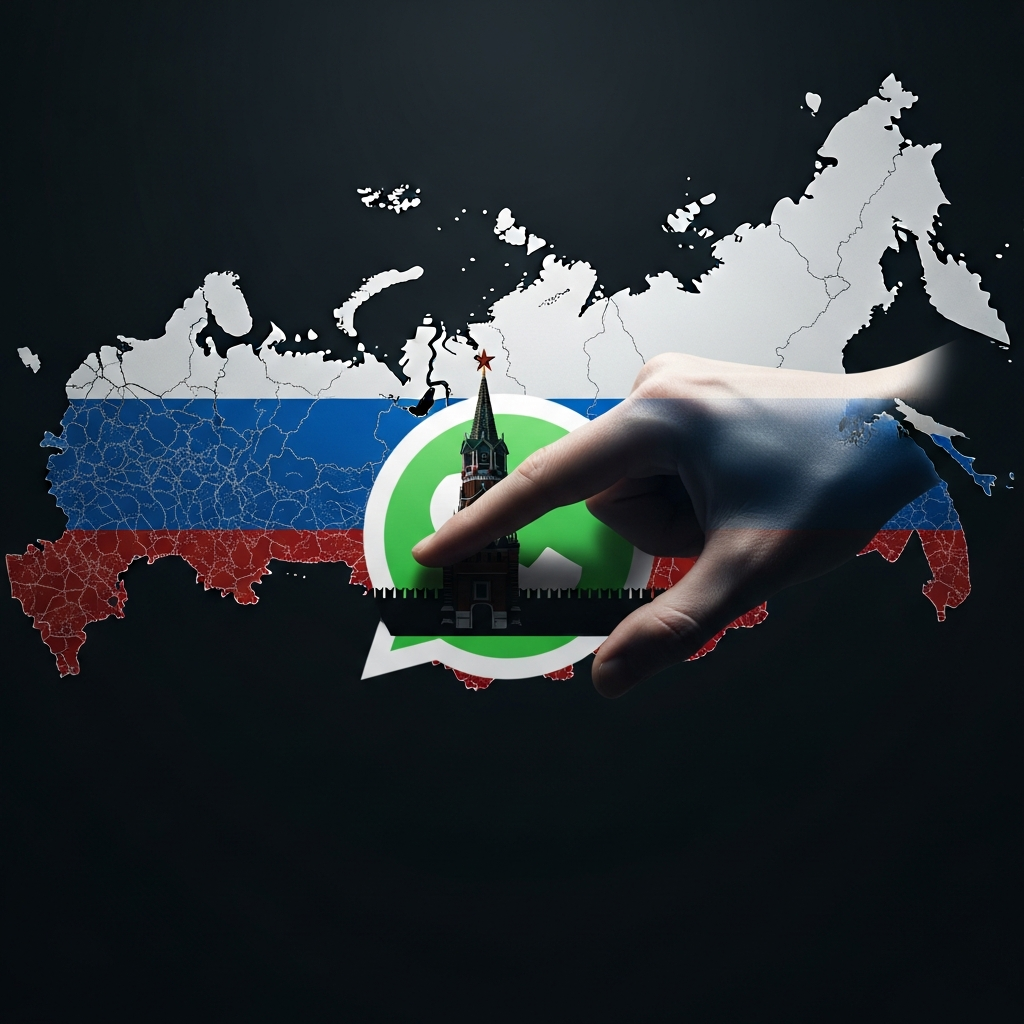
Russia has reportedly escalated its campaign to isolate its citizens from global digital platforms, attempting a “full block” of WhatsApp, the Meta-owned messaging service. This aggressive maneuver, confirmed by Meta, is part of a broader Kremlin strategy to drive millions of Russian users onto a state-controlled communication platform, which critics decry as a surveillance tool. The move signals a critical juncture in Russia’s pursuit of a “sovereign internet,” aiming to tighten its grip on information flow and foster a digital ecosystem more susceptible to state oversight and censorship.
The Kremlin’s Digital Crackdown: Isolating Users from Secure Communication
The attempt to fully block WhatsApp, a service with over 100 million users in Russia making it the country’s most popular messaging app, marks a significant escalation. WhatsApp characterized the action as a “backwards step” that threatens user safety by isolating individuals from private and secure communication. Despite the challenges, the company affirmed its commitment to keeping users connected, though specifics on the extent of the block’s success or mitigation efforts remain undisclosed. This incident is not isolated; it follows a pattern of digital suppression by Russian authorities, including restrictions on other popular messaging apps like Telegram and wider Meta platforms.
“Max”: Russia’s State-Sponsored “Super App” for Control
Central to Russia’s strategy is the promotion of “Max,” a state-sponsored communications application. Touted as a “super app” akin to China’s WeChat, Max reportedly boasts 55 million users and offers a blend of messaging and government services. However, a crucial distinction underscores international concerns: Max operates “without encryption.” This lack of end-to-end encryption has fueled widespread criticism that the app is primarily designed for surveillance, enabling authorities to track user activities and communications. Russian state media has consistently dismissed these claims as false.
To ensure adoption, Moscow has mandated that Max be pre-installed on all new devices sold in Russia starting from 2025. Furthermore, public sector employees, teachers, and students have reportedly been compelled to use the platform. This top-down push for a national digital tool highlights a clear policy direction: to replace global, secure communication channels with domestically controlled alternatives.
A Pattern of Digital Suppression: Targeting Telegram, Meta, and Beyond
The current effort against WhatsApp is interwoven with a broader, intensifying crackdown on foreign social media and messaging services in Russia. Telegram, another widely used messaging app with over 60 million daily Russian users, experienced significant disruptions, with reports of slower traffic and delays in media downloads. Pavel Durov, Telegram’s Russian-born founder, publicly condemned these actions, asserting that “Restricting citizens’ freedom is never the right answer.” He emphasized Telegram’s unwavering commitment to “freedom of speech and privacy,” irrespective of governmental pressure.
The crackdown on Telegram even drew rare criticism from a diverse spectrum of Russian figures, including frontline troops, pro-war bloggers, and exiled opposition voices, underscoring the platform’s vital role in communication across various segments of society. Beyond messaging apps, Meta Platforms itself was designated an “extremist organization” in Russia in 2022, leading to the blocking of Facebook and Instagram, which are now largely accessible only via VPNs. In December last year, Russian authorities also blocked Snapchat and imposed restrictions on Apple’s video calling service, FaceTime, signaling a comprehensive effort to control diverse digital communication avenues. Russia’s media monitoring agency, Roskomnadzor, has been instrumental in this campaign, having previously removed Meta-owned platforms from its online directory and issued repeated warnings to WhatsApp regarding compliance with local laws.
The Geopolitical Undercurrent: Data Residency and Sovereignty
At the core of Russia’s justification for these stringent measures are demands for data residency and national security. Russian authorities claim that foreign platforms like WhatsApp and Telegram have refused to store Russian users’ data within the country, as required by local legislation. This stance provides the Kremlin with a pretext to compel compliance or block services that do not conform.
Kremlin spokesperson Dmitry Peskov articulated the conditions for WhatsApp’s potential return, stating that it hinges on Meta’s willingness to “fulfil the legislation” and engage in “dialogue with Russian authorities.” Peskov issued a stark warning: if Meta maintains an “uncompromising position” and demonstrates an unwillingness to “align with Russian legislation, then there is no chance” for an agreement. This ultimatum underscores Russia’s strategic aim to assert its digital sovereignty, compelling foreign technology companies to operate under its legal frameworks or face expulsion. This intensified push for digital control is inextricably linked to the broader geopolitical context that emerged following Russia’s full-scale invasion of Ukraine in February 2022, accelerating efforts to reduce reliance on external digital infrastructure.
Implications for Users and the Future of Digital Freedom
The implications of Russia’s aggressive digital isolation strategy are profound, particularly for its citizens. The attempted block on WhatsApp, coupled with the promotion of Max, directly challenges the right to private and secure communication. Users face the prospect of increased surveillance, political censorship, and a diminished ability to access uncensored information. While citizens have historically found ways to circumvent such bans, for example, through VPNs, the state’s ongoing efforts to control digital communication channels represent a significant threat to online freedom. The ultimate success of Russia’s “sovereign internet” vision and the resilience of its digital population remain critical questions as the conflict between governmental control and digital autonomy continues to unfold.
Frequently Asked Questions
What is Russia’s “sovereign internet” strategy and how does the WhatsApp block fit into it?
Russia’s “sovereign internet” strategy is a comprehensive government initiative aimed at creating an online space isolated from Western technology and foreign influence, thereby increasing its vulnerability to state control. The attempted block on WhatsApp, along with restrictions on other foreign platforms like Telegram, Instagram, and Facebook, is a direct component of this strategy. By limiting access to global, encrypted communication services and promoting state-controlled alternatives like the “Max” app, the Kremlin seeks to centralize control over information flow, enhance surveillance capabilities, and ensure digital independence, particularly intensified since the 2022 invasion of Ukraine.
How does Russia’s attempt to block WhatsApp affect its citizens and digital freedom?
The attempt to block WhatsApp significantly impacts Russian citizens by potentially cutting off a primary channel for private and secure communication for over 100 million users. WhatsApp explicitly states this move is a “backwards step” that will diminish user safety. It pushes users towards state-controlled applications like “Max,” which lacks encryption and is widely criticized as a surveillance tool, raising serious concerns about privacy and political censorship. This broader strategy curtails digital freedom by limiting access to uncensored information and independent communication platforms, making citizens more susceptible to governmental oversight.
What conditions could lead to WhatsApp’s return to Russia, according to the Kremlin?
According to Kremlin spokesperson Dmitry Peskov, WhatsApp’s return to Russia hinges on its parent company, Meta, complying with Russian legislation and engaging in dialogue with Russian authorities. This specifically refers to Meta’s willingness to fulfill demands such as storing Russian users’ data within Russia, a requirement that foreign platforms have largely resisted. Peskov stated that if Meta maintains an “uncompromising position” and demonstrates an unwillingness to “align with Russian legislation,” then there would be “no chance” for an agreement to lift the ban.
Conclusion
The Kremlin’s determined efforts to “fully block” WhatsApp and aggressively promote its state-sponsored “Max” app represent a significant escalation in Russia’s campaign for digital isolation. This strategic push for a “sovereign internet,” driven by concerns over data residency and national security, is widely viewed by Meta, Telegram’s founder Pavel Durov, and digital rights advocates as a deliberate move towards increased surveillance and censorship. As Russia continues to restrict access to secure, private communication channels, the struggle between governmental control and the fundamental right to digital freedom intensifies, with profound implications for millions of users and the global future of an open internet.