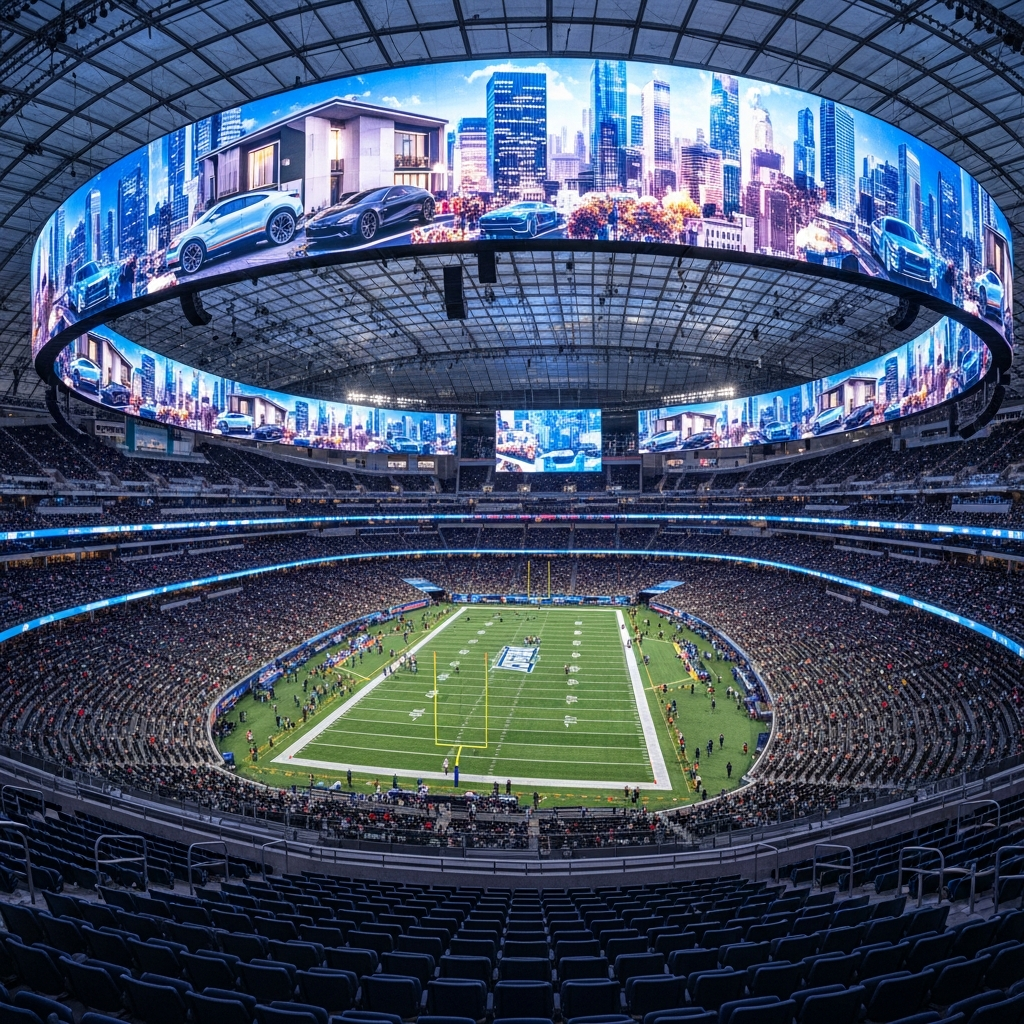
Super Bowl LX in 2026 was more than just a championship game between the Seattle Seahawks and New England Patriots. It became a significant battleground for advertisers, particularly those showcasing artificial intelligence. From groundbreaking product demonstrations to satirical takes on AI fears, “Super Bowl AI ads” were undeniably the main event of the commercial breaks. These highly anticipated spots, costing brands between $7 million and $10 million for a mere 30 seconds, not only reflected major cultural shifts but also set new benchmarks for creative marketing.
The AI Takeover: A Defining Trend of Super Bowl LX
The landscape of Super Bowl advertising underwent a dramatic transformation in 2026. A notable trend was the sheer volume of AI-related content. Experts observed that nearly a quarter of all pre-released commercials for Super Bowl LX centered on artificial intelligence. This represented a “full-on flood,” dominating ad breaks in a manner previously seen with automotive companies. The focus wasn’t just on showcasing AI products; it extended to leveraging AI in the creation process itself.
A Flood of Innovation: AI’s Broad Presence
The sheer diversity of AI applications presented in these ads was striking. Companies from tech giants to beverage brands utilized AI as a core theme. This widespread adoption signaled AI’s maturation beyond niche tech circles into mainstream consumer consciousness. From intelligent chatbots to AI-powered eyewear, the technology permeated various industries, reflecting its growing impact on daily life.
The Stakes: Millions for 30 Seconds
With an astounding price tag of up to $10 million for a 30-second slot, brands poured millions more into production, celebrity endorsements, and pre-game marketing. The immense investment meant every ad had to deliver a clear, impactful message. For AI-focused brands, this translated into demonstrating real-world utility while navigating public perceptions about the technology.
AI in the Spotlight: Top Performers & Strategic Plays
Several “Super Bowl AI ads” stood out, earning high praise from consumers and critics alike. These commercials often combined emotional resonance with clear product benefits, defining what it meant to be effective in the AI advertising space.
Google Gemini: The Heart-Tugging Product Demo
Google’s ad for its Gemini AI service earned top honors from Northwestern University’s Kellogg School of Management review. Titled “New Home,” the commercial skillfully blended emotional appeal with a clear demonstration of Gemini’s utility. Viewers saw a mother and son use the AI to envision their new home, transforming bare rooms into personalized spaces with simple prompts. This powerful ad was celebrated for being more of a product demonstration than a traditional commercial.
Anthropic Claude: Shading the Competition
Anthropic, a new player in the Super Bowl ad arena, chose an unconventional strategy for its Claude chatbot. Instead of directly selling its product, the ad playfully “threw shade” at rival OpenAI. With the tagline “Ads are coming to AI. But not to Claude,” it humorously depicted a helpful AI assistant suddenly promoting unwanted products. This provocative approach generated significant online discussion and effectively differentiated Claude from its competitors.
Amazon’s AI Offerings: Alexa+ & Ring Search Party
Amazon showcased multiple AI innovations. Its Alexa+ commercial, starring Chris Hemsworth, used satirical dark humor to address common fears about AI. Hemsworth comically accused Alexa+ of malicious acts, subtly introducing the enhanced intelligence and capabilities of the updated assistant. Simultaneously, Amazon’s Ring spotlighted its new “Search Party” feature. This AI-powered community network helps reunite lost pets, demonstrating a heartwarming, practical application of AI in everyday life. The Ring ad scored highly on iSpot’s likeability rankings.
Meta’s Vision: Oakley AI Glasses & Wearable Tech
Meta continued its push into wearable AI with an ad for Oakley-branded AI glasses. Featuring celebrities like IShowSpeed and Spike Lee, the commercial highlighted the glasses’ capabilities for athletes and adventurers. Users could capture dynamic moments, film basketball dunks in slow motion, and even post to Instagram hands-free. This campaign reinforced Meta’s commitment to integrating AI into consumer-facing hardware.
Beyond the Giants: AI Across Diverse Sectors
The AI presence extended beyond the tech behemoths. Ramp, an AI-powered spend management platform, featured actor Brian Baumgartner from “The Office,” humorously showing how AI automation streamlines workloads. Rippling, a cloud-based workforce management platform, debuted with a comedic spot about onboarding an alien monster, underscoring AI’s role in simplifying HR. Even health company Hims & Hers leveraged AI, promoting its “MedMatch” tool for personalized treatment recommendations, cleverly mocking extreme longevity pursuits. Website builder Wix also showcased its new AI-powered Wix Harmony platform, promising effortless site creation through conversational AI.
The Bold & the Baffling: AI Ads That Missed the Mark
Not all “Super Bowl AI ads” resonated positively with audiences or critics. Some struggled to convey a clear message, leading to confusion and lower rankings.
Svedka’s AI-Generated Controversy
Vodka brand Svedka launched what it claimed was the first “primarily” AI-generated national Super Bowl spot, “Shake Your Bots Off.” Featuring dancing robot characters, the ad aimed for bold innovation. However, it generated significant debate about AI’s impact on creative jobs and was described by some critics as “deliberately creepy.” On the USA TODAY Ad Meter, Svedka landed among the bottom five, indicating a polarizing reception.
Coinbase & Ai.com: The Clarity Challenge
Coinbase, for the second time in five years, finished last on the USA TODAY Ad Meter with “Everybody Coinbase.” The Kellogg School review also gave it an “F” grade. Despite featuring a Backstreet Boys song, the ad failed to clearly articulate what the crypto exchange does or its benefits. Similarly, an ad for “Ai.com” received a failing grade from the Kellogg panel due to its ambiguous messaging. These examples underscore the critical need for clarity and product definition, especially for complex or nascent technologies.
Measuring Impact: How AI Ads Fared with Viewers & Experts
The performance of “Super Bowl AI ads” was evaluated through various lenses, revealing a mix of successes and challenges. Different metrics provided unique insights into audience reception and expert opinion.
USA TODAY Ad Meter Insights: General Performance
The official USA TODAY Ad Meter, a consumer poll, ranked Budweiser’s “American Icons” as the overall top commercial for Super Bowl 2026. While many AI ads didn’t reach the very top, several tech-focused spots performed respectably. For instance, Amazon Alexa+ ranked 11th, and the NFL’s two commercials landed in the top 20. However, the polarizing nature of some AI ads was evident, with Svedka and Coinbase ranking among the lowest.
iSpot’s Likeability Scores: Connecting with Emotions
iSpot, another ad-tracking firm, measured commercial “likeability” based on consumer feedback. NFL’s “Belief Is a Superpower” took the top spot, but several AI-related ads also scored high. Ring’s “Search Party for Dogs” achieved a very high likeability score (755), praised for its feel-good story and AI-powered lost pet feature. Amazon’s Alexa+ also performed well (720), showcasing that humor and relatable scenarios can make AI more palatable to audiences.
Kellogg School’s Expert Review: The A-Grades and F-Bombs
The Kellogg School Super Bowl Advertising Review offered an expert perspective. They awarded “A” grades to ads that combined emotional or humorous impact with clear product utility. Google Gemini AI earned the top “A” for its effective product demonstration and emotional connection. Anthropic’s Claude chatbot also received an “A” for its clear, differentiating message. Conversely, Coinbase and Ai.com received “F” grades for their lack of clarity regarding product and benefits, highlighting the importance of a well-defined message, especially for innovative technologies.
The Future of Advertising: What Super Bowl LX Taught Us About AI
Super Bowl LX served as a potent showcase for the burgeoning role of AI in advertising. The sheer volume and diverse approaches demonstrated its significance as both a subject and a tool.
Key Takeaways for Marketers
The success of “Super Bowl AI ads” hinged on striking a balance between innovation and clear communication. Marketers learned that emotional connection and a tangible demonstration of AI’s benefits are paramount. Simply featuring AI isn’t enough; the message must resonate and clearly articulate value. Humor, satire, and heartwarming narratives proved effective in demystifying complex technologies. Brands that clearly explained their AI product’s purpose and impact fared far better than those that relied on abstract concepts.
Ethical Considerations & Creative Debates
The presence of AI in Super Bowl LX also ignited conversations about ethics and creativity. Svedka’s AI-generated ad, for instance, sparked debates about the role of AI in creative industries. Anthropic’s jab at OpenAI raised questions about competitive marketing in the AI space. As AI continues to evolve, advertisers will need to navigate these ethical landscapes carefully, ensuring transparency and responsibility in their use and portrayal of the technology.
Frequently Asked Questions
What were the most prominent AI-related ads in Super Bowl LX (2026)?
Super Bowl LX featured a significant number of AI-focused commercials. Among the most prominent were Google’s Gemini AI (“New Home”), praised for its emotional product demonstration, and Anthropic’s Claude chatbot, which strategically differentiated itself from competitors. Amazon showcased both its Alexa+ (with Chris Hemsworth) and the AI-powered “Search Party” feature for Ring cameras. Meta promoted its Oakley AI glasses, while companies like Ramp, Rippling, Hims & Hers, and Wix also featured AI-driven platforms. Even Svedka vodka controversially used primarily AI-generated content for its ad.
How did expert panels and audiences react to the AI commercials during Super Bowl 2026?
Reactions to the AI commercials were mixed, ranging from high acclaim to significant criticism. Google’s Gemini ad was crowned the best by the Kellogg School of Management for its clarity and emotional appeal. Ring’s AI-powered pet search ad also scored high on iSpot’s likeability metrics. However, some AI ads struggled; Coinbase’s “Everybody Coinbase” finished last on the USA TODAY Ad Meter and received an “F” from Kellogg for failing to clearly explain its service. Svedka’s AI-generated ad was polarizing, while an ad for “Ai.com” was deemed confusing by experts.
What does the surge in AI ads in Super Bowl LX mean for future advertising trends?
The surge in AI ads in Super Bowl LX signals a pivotal shift in the advertising industry. It highlights AI’s growing mainstream relevance, not just as a behind-the-scenes tool but as a central product or feature to be advertised. For future trends, it suggests that brands will increasingly integrate AI into their offerings and marketing narratives. The emphasis will likely be on clearly demonstrating AI’s practical benefits, fostering emotional connections, and addressing consumer concerns. This trend also implies continued innovation in ad creation, potentially involving more AI-generated content, while sparking ongoing debates about ethics and creativity in the digital age.
Conclusion
Super Bowl LX truly marked a turning point, with “Super Bowl AI ads” moving from a nascent trend to a dominant force. From Google’s top-rated Gemini spot to Amazon’s innovative Ring feature and Anthropic’s bold competitive play, artificial intelligence took center stage. While some AI commercials stumbled due to a lack of clarity, the overall message was clear: AI is now an integral part of our cultural and commercial landscape. For marketers, the lessons from Super Bowl LX are invaluable, emphasizing the need for compelling storytelling, transparent communication, and genuine value proposition when showcasing AI. As technology continues its rapid advancement, we can expect AI to shape the future of advertising in even more profound and dynamic ways.