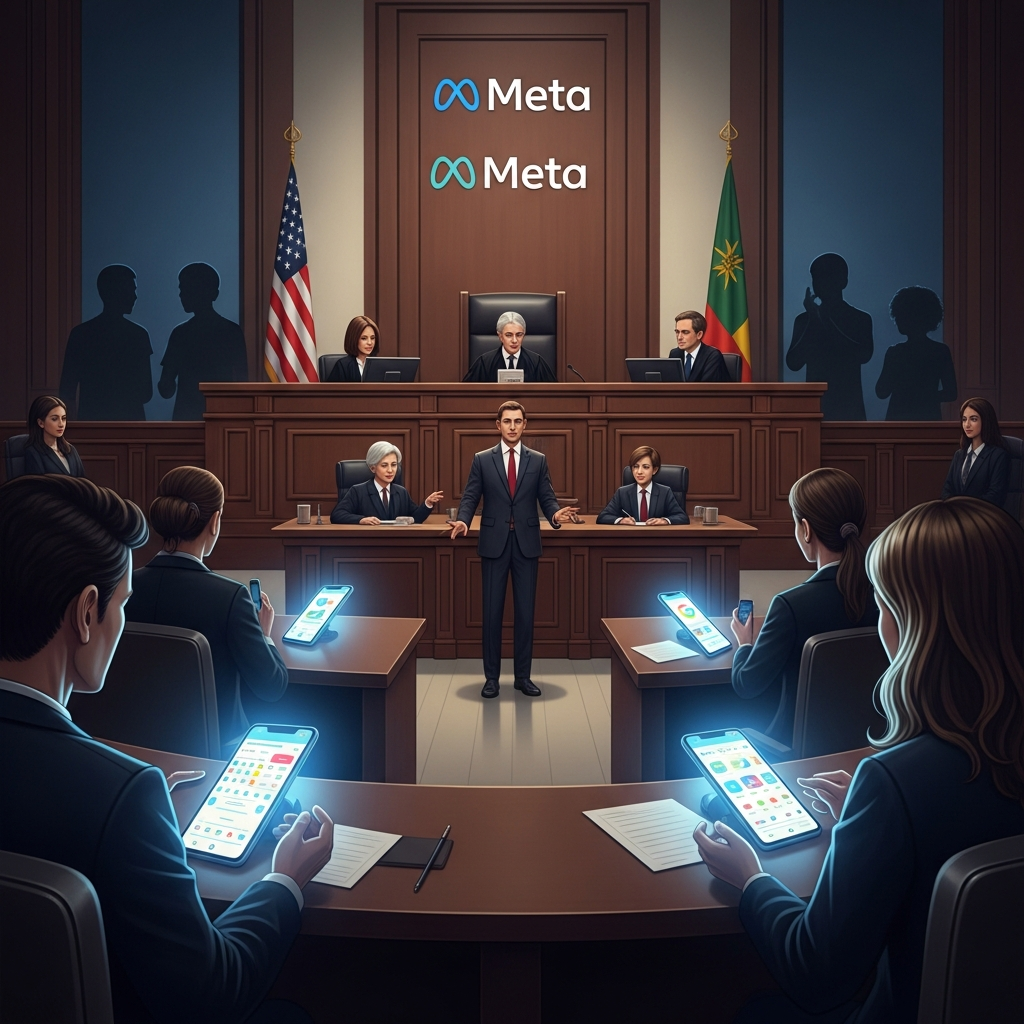
A groundbreaking legal battle has commenced in Los Angeles, setting the stage for a historic confrontation between aggrieved users and some of the world’s largest tech companies. This social media addiction trial represents a pivotal moment, as Meta (the parent company of Facebook and Instagram) and Google (owner of YouTube) face accusations of deliberately designing their platforms to be addictive, leading to significant mental health issues in young people. The outcome of this and related lawsuits could profoundly reshape the digital landscape and how platforms interact with their youngest users.
This bellwether trial in Los Angeles County Superior Court centers on a 19-year-old plaintiff, K.G.M., who alleges that her early and prolonged engagement with social media fostered addiction and exacerbated severe mental health challenges, including anxiety, depression, and suicidal thoughts. Her lawsuit, alongside similar claims from hundreds of families and school districts, asserts that these tech giants leveraged sophisticated psychological and neurobiological techniques, akin to those historically employed by the tobacco industry, to maximize user engagement and advertising revenue. Critics argue that design elements like “infinite scroll” and “autoplay” are not mere features but calculated mechanisms engineered to keep users constantly engaged.
Unpacking the Allegations: Deliberate Design for Addiction
The core of the plaintiffs’ argument revolves around the concept of deliberate design. Attorneys contend that social media platforms are not just passively hosting content but are actively engineered to create and sustain addiction, particularly among minors. They point to internal company documents and studies as evidence. For instance, Meta’s “Project Myst” reportedly surveyed teens and parents, revealing how children experiencing trauma or stress were especially vulnerable to platform addiction, with existing parental controls proving largely ineffective.
Evidence presented includes internal Google documents that, in some contexts, compared company products to a casino, highlighting the deliberate use of engagement tactics. Similarly, Meta employee communications are cited where Instagram was explicitly referred to as “like a drug,” and employees described themselves as “basically pushers.” These revelations underscore the plaintiffs’ claim that the companies were not only aware of the addictive potential but actively cultivated it, even listing young children as target audiences in internal documents despite public assurances of safety. Features like the ubiquitous “like” button are also under scrutiny, accused of exploiting a fundamental craving for “social validation” that is particularly potent for teenagers.
The Plaintiff’s Story and Legal Strategy
K.G.M., the central figure in this Los Angeles bellwether trial, began using YouTube at age 6 and Instagram by age 9, reportedly posting 284 videos before completing elementary school. Her case is crucial because its resolution could influence thousands of similar lawsuits globally. The legal strategy aims to circumvent traditional protections for tech companies, such as Section 230 of the Communications Decency Act. This federal law generally shields platforms from liability for content posted by users.
However, plaintiffs’ attorneys are focusing on the design choices and business decisions made by the companies, rather than the user-generated content itself. This approach mirrors product liability cases successfully brought against industries like tobacco and automotive. Matthew Bergman, an attorney for many plaintiffs, views reaching trial as a “monumental victory,” anticipating that previously undisclosed corporate documents and high-level testimony will shed light on these design intentions. Before this specific trial, Snapchat and TikTok, initially named in K.G.M.’s lawsuit, reached undisclosed settlement agreements with the plaintiff, avoiding trial in this particular case.
The Defense: Denials and Complexities
Meta and Google are mounting vigorous defenses, firmly refuting the allegations of deliberate harm. Both companies assert their commitment to providing safer and healthier experiences for young people, highlighting years of investment in safety features and collaboration with experts and law enforcement. Meta has stated its disagreement with the lawsuit, expressing confidence that evidence will demonstrate its longstanding commitment to supporting young users and detailing “meaningful changes” made to its services, such as introducing built-in protections for teen accounts.
Meta also argues that adolescent mental health is a “deeply complex and multifaceted issue,” influenced by a wide array of stressors including academic pressure, socioeconomic challenges, and substance abuse, rather than being solely attributable to social media. Google spokesperson José Castañeda echoed these sentiments, denying the allegations and emphasizing their efforts to develop age-appropriate experiences and robust parental controls.
Paul Schmidt, representing Meta in K.G.M.’s trial, challenged whether the platforms were a substantial factor in her mental health struggles. He presented K.G.M.’s health records, pointing to numerous difficult childhood circumstances, including emotional abuse, body image issues, bullying, and a volatile home life, as primary contributors. Schmidt cited one of K.G.M.’s mental health providers who reportedly indicated social media was “not the throughline of what I recall being her main issues.” A significant point of contention for the defense is the very term “social media addiction,” with legal experts noting a lack of a widely recognized medical or psychological definition or legal standard for it.
Beyond Los Angeles: A Broader Legal Offensive
The Los Angeles trial, expected to last six to eight weeks with top executives like Mark Zuckerberg and Instagram CEO Adam Mosseri slated to testify, is just one front in a wider legal offensive against tech giants. This tech giants lawsuit parallels historical “Big Tobacco” litigations, signaling a growing public and legal determination to hold platforms accountable.
Concurrently, a separate trial has begun in New Mexico, where State Attorney General Raúl Torrez accuses Meta of failing to protect young users from sexual exploitation, arguing that the company’s algorithms “proliferate material that can be harmful.” Investigators reportedly found fake underage accounts were “inundated with solicitations for sex” and pornographic content within minutes of posting. Meta denies these civil charges, accusing Torrez of “cherry-picking select documents” and making “sensationalist” arguments.
Furthermore, a federal bellwether trial in Oakland, California, scheduled for June, will be the first to represent school districts suing social media platforms over harms to children. Over 40 state attorneys general have also filed lawsuits against Meta (and TikTok in many states), alleging these companies contribute to the youth mental health crisis through deliberately addictive platform designs. These widespread actions underscore a coordinated effort to compel systemic changes in the industry, reflecting a global shift, with countries like France and Australia enacting new laws to restrict children’s access to social media.
Frequently Asked Questions
What exactly are social media companies accused of in these addiction trials?
Social media companies like Meta (Instagram, Facebook) and Google (YouTube) are accused of intentionally designing their platforms with features that are highly addictive, especially for younger users. Plaintiffs allege that design choices such as “infinite scroll,” “autoplay,” and “like” buttons exploit neurobiological vulnerabilities, leading to mental health issues like anxiety, depression, body image problems, and even suicidal thoughts. The lawsuits argue these design elements are not accidental but are calculated strategies to maximize engagement and advertising revenue.
Which companies are involved and what’s the status of these lawsuits beyond Los Angeles?
The primary defendants in the Los Angeles bellwether trial are Meta (Instagram, Facebook) and Google (YouTube). Snap (Snapchat) and TikTok, initially named, settled with the plaintiff for undisclosed sums before trial. Beyond Los Angeles, a separate trial against Meta has begun in New Mexico, focusing on allegations of failing to protect children from sexual exploitation. Additionally, a federal bellwether trial representing school districts is scheduled for June in Oakland, California. Over 40 state attorneys general have also filed lawsuits against Meta (and TikTok in many states) regarding similar claims of contributing to the youth mental health crisis through addictive platform designs.
What are the potential broader impacts or outcomes of these social media addiction trials?
The outcomes of these landmark social media addiction trials could have profound and far-reaching implications. A victory for the plaintiffs, particularly in bellwether cases, could pave the way for thousands of similar lawsuits and result in substantial financial damages. More significantly, these trials aim for injunctive relief that would mandate fundamental changes to how platforms are designed and establish industry-wide safety standards. This could lead to a re-evaluation of current business models, a greater emphasis on user well-being over engagement metrics, and potentially influence future state and federal legislation regarding digital well-being and child safety online.
The Future of Digital Well-being
These trials represent a crucial turning point, moving the conversation from individual responsibility to corporate accountability for platform design. The legal battles challenge the notion that tech companies are merely neutral conduits for user-generated content. Instead, they scrutinize the very architecture of social media, asking whether these digital environments are inherently harmful, particularly for developing minds. Regardless of the immediate verdicts, the widespread attention generated by these lawsuits, coupled with executive testimony and the unsealing of internal documents, is already fostering greater public awareness and legislative pressure.
The debate over youth mental health in the digital age is far from over. However, these landmark trials are undeniably pushing the tech industry toward a reckoning, demanding greater transparency and potentially ushering in an era where digital well-being is prioritized alongside innovation and profit. For parents, educators, and users alike, understanding these developments is crucial as we navigate the evolving landscape of online interaction and strive for a healthier digital future.