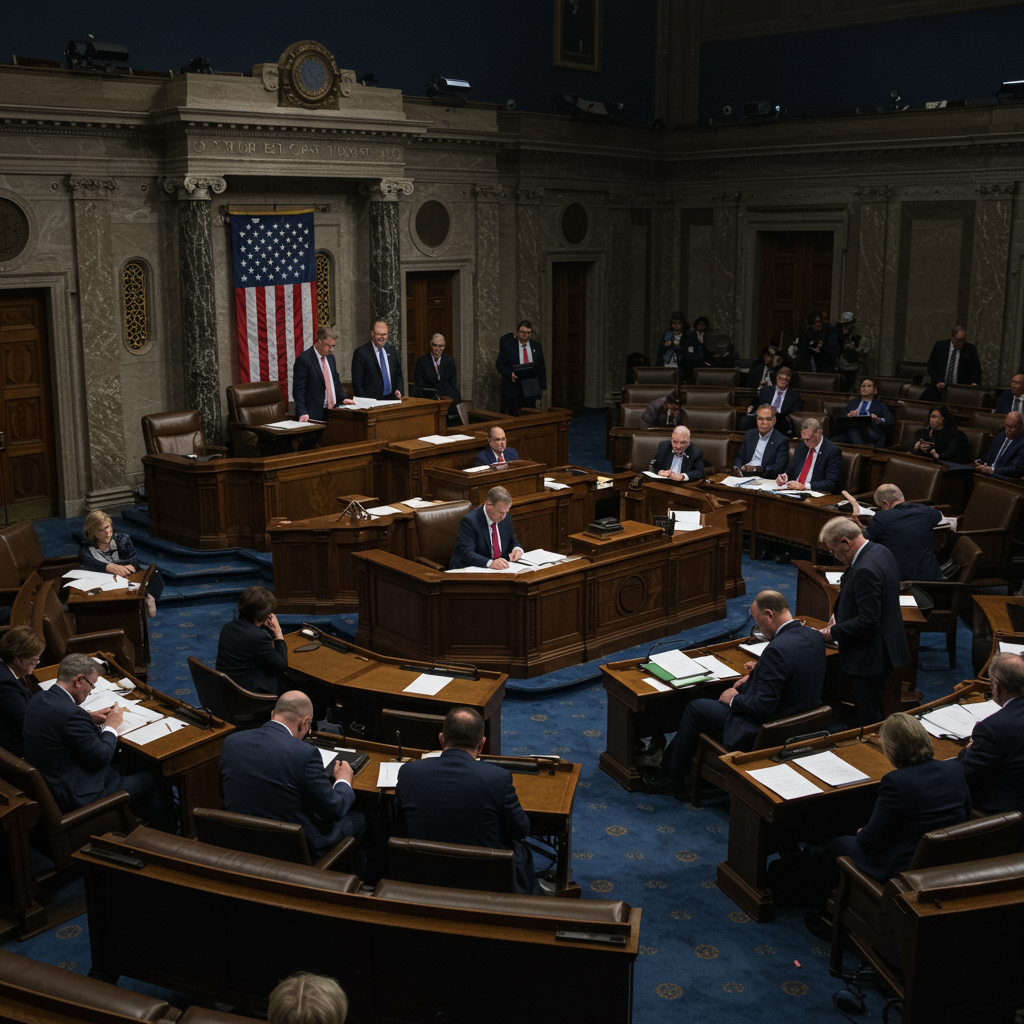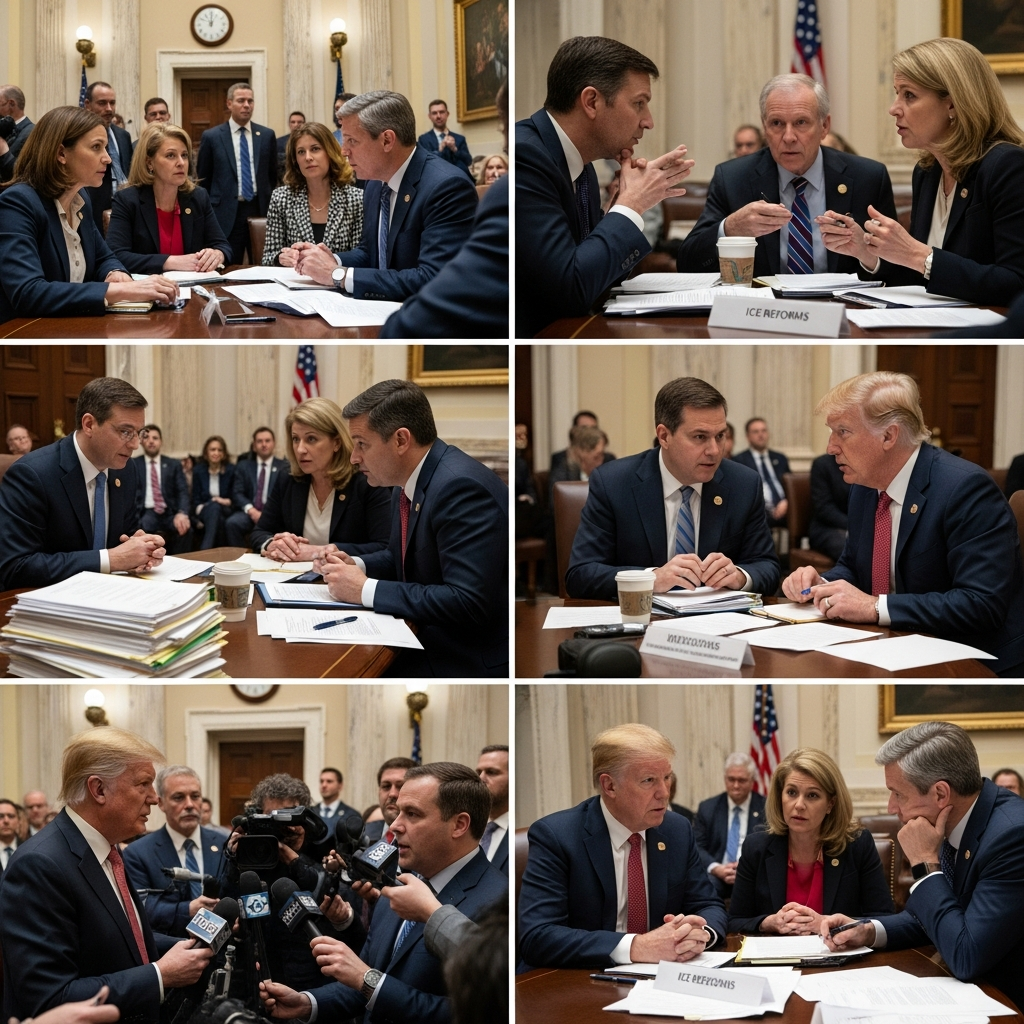
A critical deadline looms for the Department of Homeland Security (DHS), threatening another partial government shutdown. As funding for key federal agencies is set to expire by Saturday, February 8, 2026, intense negotiations are underway between Democratic leaders and the White House. The core of this high-stakes dispute centers on Democratic demands for significant, “dramatic” reforms to federal immigration enforcement policies, particularly concerning Immigration and Customs Enforcement (ICE). With both sides digging in, the nation watches anxiously as the clock ticks towards a potential disruption impacting critical services from border security to airport operations.
Homeland Security Funding at Risk: The Looming Shutdown
The immediate crisis stems from a unique legislative maneuver. President Donald Trump previously agreed to separate the DHS spending bill from a larger package, extending its funding only through February 13, 2026. This created a narrow window for Congress to negotiate new restrictions on ICE and other federal officers. Now, that window is rapidly closing. Democratic leaders, including Senate Democratic leader Chuck Schumer (D-N.Y.) and House Democratic leader Hakeem Jeffries (D-N.Y.), have declared a White House counterproposal “incomplete and insufficient.” They argue it lacks necessary details and fails to address widespread concerns about ICE’s conduct.
Democrats Push for Sweeping ICE Reforms
The impetus for these demands comes from recent, tragic events. Democrats specifically cite the fatal shootings of two protesters in Minneapolis last month—ICU nurse Alex Pretti, killed by a U.S. Border Patrol officer on January 24, and Renee Good, shot by ICE agents on January 7. These incidents have fueled calls for immediate, stringent oversight of federal agents.
Democrats’ comprehensive list of demands aims to overhaul immigration enforcement practices:
Judicial Warrants: A requirement for federal agents to obtain judicial warrants before entering private property or detaining individuals.
Improved Identification & Transparency: Mandating better identification for DHS officers, including removing masks and showing clear identification, and fostering improved coordination with local authorities.
Stricter Use-of-Force Standards: Implementing revised and stricter policies governing the use of force by federal officers.
Ending Racial Profiling: A clear prohibition against targeting individuals based on race or ethnicity.
Legal Safeguards: Establishing robust legal protections at detention centers.
Protestor Protection: Banning the tracking of protesters using body-worn cameras.
Targeted Arrests: Ending indiscriminate arrests and ensuring all detentions are lawful and justified.
Citizenship Verification: Requiring verification of non-U.S. citizenship before any individual can be detained.
House Democratic leader Hakeem Jeffries underscored the urgency, stating, “Dramatic changes are needed at the Department of Homeland Security before a DHS funding bill moves forward. Period. Full stop.” This firm stance reflects broader public sentiment, with polls indicating nearly two-thirds of Americans believe ICE’s immigration crackdowns have gone too far.
Republican Resistance and Counter Demands
Republicans, however, have largely pushed back against many of these Democratic proposals. While expressing initial optimism about “forward progress” in the “rare negotiations,” Senate Majority Leader John Thune (R-S.D.) acknowledged the difficulty of finding common ground on immigration.
House Speaker Mike Johnson (R-La.) explicitly rejected the demand for ICE officers to remove their masks. He argued such a measure would expose agents and their families to “great harm,” including doxing and targeting, emphasizing the need for “reasonable and achievable” solutions. Tennessee Sen. Bill Hagerty echoed this sentiment, accusing Democrats of attempting to “motivate a radical left base” and “threatening the safety and security of our agents.”
While Republicans generally support the inclusion of body-worn cameras for DHS officers—a provision already present in the original DHS bill—they balk at many other Democratic asks. Furthermore, Republicans have their own legislative priorities, including requiring proof of citizenship for voter registration and implementing restrictions on cities deemed inadequately enforcing immigration laws.
The White House Stance and Path Forward
The White House, while agreeing to enter negotiations, has not publicly detailed its counterproposal. Press secretary Karoline Leavitt indicated the administration is open to discussing some items on the Democratic list. However, she deemed others “nonstarters,” asserting they lack “common sense.” This leaves significant gaps to bridge before any comprehensive agreement can be reached.
The political stakes are exceptionally high. A DHS shutdown would have far-reaching consequences, extending beyond immigration enforcement. Key agencies such as the Federal Emergency Management Agency (FEMA), the Transportation Security Administration (TSA), and U.S. Customs and Border Protection (CBP) would see their operations curtailed. Senator Thune has warned that a shutdown could lead to “more travel problems,” reminiscent of the 43-day government closure experienced last year. This poses a tangible threat to public safety and daily life across the nation.
Lawmakers have explored various avenues to avert a full shutdown. One suggestion involves separating funding for ICE and Border Patrol, allowing the rest of DHS to be funded by the deadline. However, Senator Thune has been cool to this idea, instead advocating for another short-term extension for all of DHS to buy more time for negotiations. This approach faces strong resistance, as many Democrats are unlikely to vote for another extension without tangible progress on their demands. The impasse leaves the ball squarely “in the Republicans’ court,” as stated by Jeffries, with the deadline rapidly approaching.
Frequently Asked Questions
Why are Democrats demanding reforms to ICE and federal immigration agencies?
Democrats are demanding reforms due to recent incidents, specifically the fatal shootings of two protesters by federal agents in Minneapolis. They argue these events highlight a need for increased accountability, transparency, and stricter oversight of federal immigration enforcement. Their demands include judicial warrants for agents, better identification, stricter use-of-force standards, ending racial profiling, and legal safeguards at detention centers, to ensure more humane and lawful conduct.
What critical federal agencies would be impacted by a DHS shutdown?
A Department of Homeland Security (DHS) shutdown would impact several vital federal agencies beyond just Immigration and Customs Enforcement (ICE) and U.S. Customs and Border Protection (CBP). These include the Federal Emergency Management Agency (FEMA), responsible for disaster response; the Transportation Security Administration (TSA), which manages airport security; and other essential components of national security. A shutdown could lead to significant disruptions in travel, delayed disaster relief, and compromised border security operations.
What are the primary sticking points preventing a resolution to the DHS funding dispute?
The main sticking points are the Democratic demands for sweeping reforms to immigration enforcement and Republican resistance to these changes. Democrats insist on judicial warrants, agent identification, use-of-force standards, and an end to racial profiling, citing recent incidents. Republicans, while open to some measures like body cameras, largely balk at proposals they view as undermining agent safety or operational effectiveness, such as removing masks. They also have their own demands, like voter ID laws, complicating compromise.
Conclusion: A High-Stakes Stalemate
The ongoing negotiations over Homeland Security funding represent a critical juncture for both immigration policy and governmental functionality. With a partial government shutdown looming, the profound differences between Democrats and the White House on immigration enforcement reforms have created a high-stakes stalemate. The outcome will not only determine the future of key federal agencies but also significantly impact the lives of countless Americans, from those affected by immigration policies to travelers relying on secure transportation. As the February 8th deadline draws near, intense pressure mounts on lawmakers to find common ground and avert a disruptive shutdown.