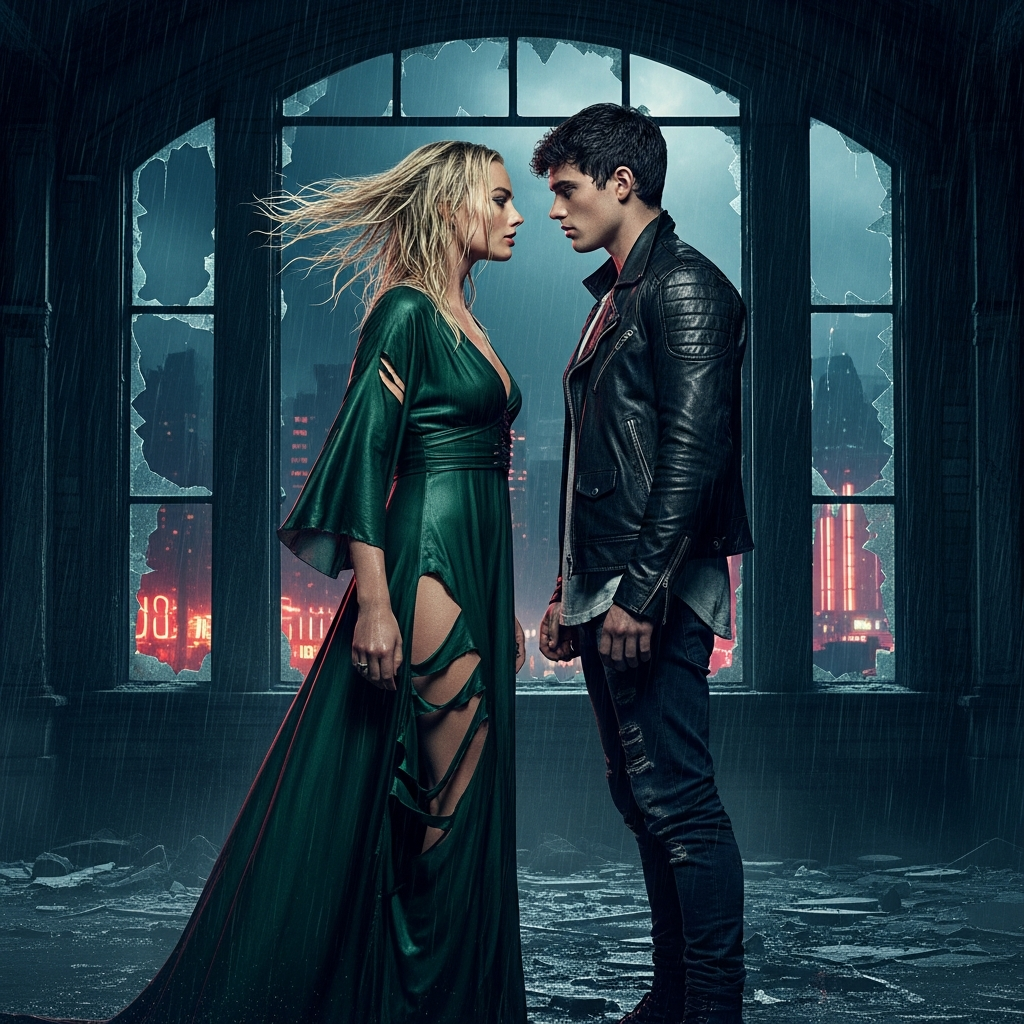
Emerald Fennell’s new cinematic take on Emily Brontë’s Wuthering Heights has sparked a whirlwind of discussion, leaving critics and audiences profoundly divided. Starring Margot Robbie as Catherine Earnshaw and Jacob Elordi as Heathcliff, this adaptation arrives with a reputation for audacious style and provocative sensuality. It’s a film that aims to re-contextualize the classic tale of obsessive love and vengeance for a modern era, often described as “Wuthering Heights for the Bridgerton generation.” Its polarizing reception underscores its unique place in the long history of Brontë adaptations, promising either a thrilling reinvention or a shallow misfire depending on who you ask.
A Bold New Vision for Brontë’s Classic
Emerald Fennell, known for her distinctive and often shocking directorial voice in films like Promising Young Woman and Saltburn, approaches Wuthering Heights not as a faithful retelling, but as a “reinvention.” This “defiantly anti-academic interpretation” aims to capture the raw, tempestuous emotions of reading the novel for the first time, perhaps at a young age. Fennell herself signifies this departure with quotation marks around the film’s title, suggesting a unique, subjective take. Critics note her previous work, Saltburn, served as a conceptual “warmup” due to its visual exploration of grand estates and its casting of Jacob Elordi as a coveted figure. This new film doubles down on her signature aesthetic: opulent, anachronistic, and designed to jolt the audience awake.
Stylistic Daring: Anachronism and Exaggeration
The most striking aspect of Fennell’s Wuthering Heights is its “full-blown stylistic assault.” From its opening scene, a jarring image of a hanging, the film establishes a dark, heightened tone. Cinematographer Linus Sandgren is widely lauded for making “every scene pops,” showcasing “lushness” and “breathtaking use of color.” Production designer Suzie Davies creates environments that are both opulent and absurd, featuring “jellied extravagances” on dining tables and Catherine’s bedchamber walls matching her skin tone with “blue-vein marbling.” Costume designer Jacqueline Durran’s wardrobe is “astonishing and undeniably lovely,” yet deliberately out of period, serving to present the love story as “transcendent, unfolding beyond the limits of time and history.”
The film’s soundtrack further enhances this anachronistic vibe, blending orchestral scores with “synthy, swoony ballads” and original songs by Charli XCX. This “heavy-breathing visual and musical style” is a deliberate choice, intended to make prior adaptations feel “primly buttoned-up.” The aesthetic is frequently compared to Tim Burton or Baz Luhrmann, even “American Horror Story,” evoking a “frantically, exhaustingly Baz Luhrmann-esque” feel for some. It’s an “extravagant swirl: sexy, dramatic, melodramatic, occasionally comic, and often swoonily romantic,” infused with contemporary touches.
An Unapologetic Sensuality
Fennell’s interpretation also stands out for its “heightened sexual candor” and overt sensuality. Many critics describe it as an “incredibly moist movie,” glistening with fluids. Specific scenes highlighted for their explicitness include Catherine inserting eggs into Heathcliff’s bed, Heathcliff licking Catherine’s fingers clean after she self-pleasures on the moors, and even a stable tryst with “whips and bridles.” The film is said to “raise the temperature whenever possible,” treating the story as an “erotic fantasy” that finds “eroticism in everything from a runny egg yolk to a mouthful of grass.” This emphasis on physical desire and “passion to leave a stain” is a significant departure from more reserved adaptations, potentially shocking some purists.
Plot Deviations and Character Reinventions
Fennell takes significant liberties with Brontë’s original narrative, often simplifying the complex plot. Crucially, the film “abolishes” Catherine’s brother Hindley and his family, merging some of his darker characteristics into Mr. Earnshaw, who lives to an old age tormenting young Heathcliff. The entire second half of the novel, which focuses on the descendants and the cyclical nature of the Earnshaw/Linton feuds, is completely omitted. Brontë’s elaborate framing devices and unreliable narration by Mr. Lockwood and Nelly Dean (though Nelly, played by Hong Chau, is present) are also excised, removing the novel’s “ghostly melodramatic hearsay.”
Heathcliff’s character, traditionally described as “dark-skinned,” has its racial component consciously removed. Here, Jacob Elordi’s Heathcliff is presented as a wealthy orphan from Liverpool with a chip on his shoulder. Catherine (Margot Robbie) evolves towards a “combative, quasi-incestuous desire” with Heathcliff. Edgar Linton (Shazad Latif) is portrayed as Catherine’s husband, while Isabella Linton (Alison Oliver) is entangled in a “sadomasochistic marriage” with Heathcliff that Fennell “literalizes and carnalizes,” depicting her as a “smirkingly consenting sub” rather than a victim. These alterations have been a major point of contention for those loyal to the source material.
The Polarizing Critical Response
The critical landscape for Emerald Fennell’s Wuthering Heights is sharply divided. Some critics hail it as a “must-see movie” and an “enthralling retelling,” praising its “bold and engaging” approach that results in a “transcendent love story.” It’s seen as Fennell’s “best film to date,” showing “new depth.” These reviewers appreciate the “innovative, exhilarating, and anachronistic spin” and its commitment to “raw, obsessive love,” even if “glossier, louder.”
However, a significant contingent of critics views the film as an “emotionally hollow, bodice-ripping misfire.” Detractors question if Fennell even read the novel, arguing it is “not anything close to Brontë’s story,” and “devoid of its source’s nuance and complexity.” For these critics, the stylistic daring comes at the expense of narrative depth, character complexity, and the raw emotional power of Brontë’s original. The film is described as “depressingly uninspired,” “astonishingly hollow work,” and a “vapid Brontë adaptation.” Some find a “tonal confusion,” questioning whether the explicit sexuality is meant to be shocking, amusing, or merely a “nervous snicker.” It’s labeled as “garish and stylized fan fiction” that, despite its visual splendor, feels “oddly shallow and blunt” and “undernourishing.”
Captivating Performances, Divided Chemistry
Margot Robbie and Jacob Elordi, embodying “Old Hollywood glamour,” are central to the film’s appeal. Their on-screen chemistry is a point of debate: some critics describe it as “captivating,” “sizzles,” and “undeniably electric,” while others find it merely “flickers” or even “chemistry-free.” Elordi, in particular, receives praise as a standout Heathcliff, deemed “compelling, charismatic, romantic, and dastardly,” portraying a “broken heartthrob driven by love and madness.” Yet, some felt he lacked the “primal ferocity” expected, finding him surprisingly “pro-consent” in some scenes. Robbie’s Catherine is often seen as “nimbly captur[ing] the depths of Cathy’s sometimes-petty heart,” though some reviews found her performance “unremarkable” or “faintly ridiculous,” depicting her as a “gothic Scarlett O’Hara”—selfish, vain, and vindictive.
Beyond the leads, supporting performances generally receive positive mentions. Alison Oliver’s portrayal of Isabella Linton is frequently singled out for her “wicked” performance and “comic timing.” Hong Chau as Nelly Dean and Martin Clunes as Mr. Earnshaw also earn critical praise, with Clunes’ portrayal even described as “pretty much pinch[ing] the whole film.”
Connecting to Fennell’s Cinematic Universe
Fennell’s Wuthering Heights inevitably draws comparisons to her previous, equally provocative films. While some critics see it as her “best film to date,” showcasing “new depth,” others caution that it “risks smothering those whom Saltburn struck as too much” or lacks the “live-ammo impact” of her earlier works. This adaptation reinforces Fennell’s distinct directorial signature: a fearless exploration of human vulgarity, complex desires, and opulent yet disturbing aesthetics, pushing audiences to confront uncomfortable truths, even if through a highly stylized lens.
Frequently Asked Questions
What are the core stylistic elements that define Emerald Fennell’s “Wuthering Heights”?
Emerald Fennell’s adaptation is marked by extreme stylization and anachronism. It features opulent and surreal production design, period-defying costumes by Jacqueline Durran, and breathtaking cinematography by Linus Sandgren, all contributing to a “full-blown stylistic assault.” The film also incorporates a modern soundtrack, including original songs by Charli XCX, alongside traditional orchestral scores. This approach results in a “heightened sexual candor” and an overall “heavy-breathing visual and musical style” designed to make the classic tale feel fresh and intensely sensual.
How does Fennell’s adaptation deviate from Emily Brontë’s original novel?
Fennell takes significant liberties with Brontë’s text. She omits the character of Hindley, Catherine’s brother, and the entire second half of the novel focusing on the descendants. Brontë’s elaborate framing devices and unreliable narrators are also largely removed. Heathcliff’s ambiguous “dark-skinned” racial identity from the novel is also consciously removed, portraying him as a wealthy orphan from Liverpool. The film reinterprets key relationships and plot points, emphasizing a more explicit and often combative sensuality between Catherine and Heathcliff, with scenes like Catherine’s self-pleasuring on the moors and Heathcliff’s cruel marriage to Isabella being “literalized and carnalized.”
Should purists of Emily Brontë’s “Wuthering Heights” watch Fennell’s film?
Literary purists should approach Emerald Fennell’s “Wuthering Heights” with an open mind, viewing it as a “reinvention, not an adaptation.” Many critics loyal to the source material found its numerous plot deviations and extreme stylistic choices to compromise the novel’s depth and nuance, labeling it “emotionally hollow.” However, if purists are willing to set aside traditional expectations and embrace a bold, highly stylized, and overtly sensual interpretation that prioritizes raw feeling over textual fidelity, they might find value in its visual splendor and unique take on the classic themes.
A Legacy of Divisive Passion
Emerald Fennell’s Wuthering Heights is undeniably a film that demands attention. It’s a visually stunning, audaciously conceived work that aims to capture the raw, untamed passion of Brontë’s novel through a distinctly contemporary lens. While its opulent design and fearless embrace of a sensual, anachronistic aesthetic have won over many critics, others contend that this stylistic boldness comes at the expense of narrative depth and the profound emotional power of the source material. Ultimately, whether it’s hailed as a masterpiece or dismissed as a misfire, Fennell’s latest will undoubtedly continue to ignite conversations, ensuring that this new Wuthering Heights remains a significant and polarizing entry in cinematic history. It’s a film for those willing to experience the classic tale stripped down, amplified, and re-imagined.