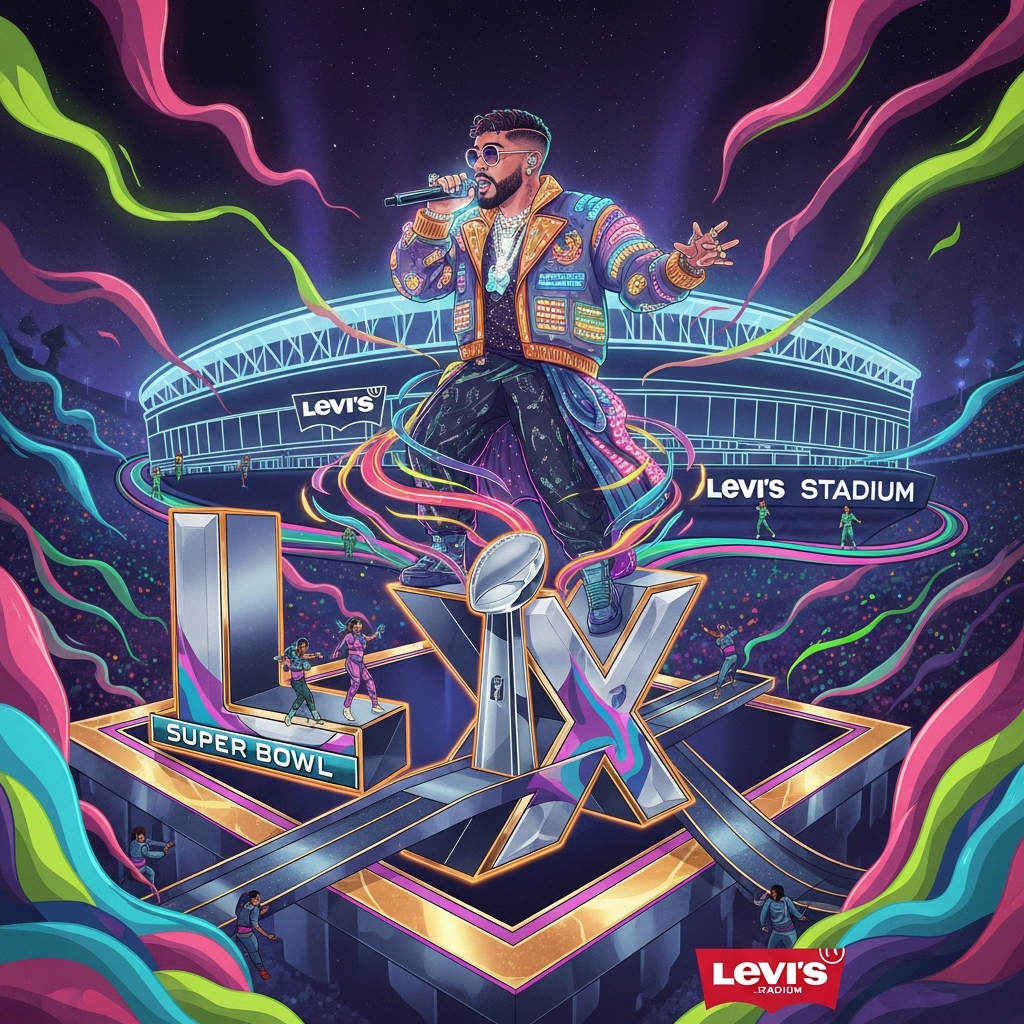
Bad Bunny’s Super Bowl LX halftime performance, held on February 8, 2026, at Levi’s Stadium in Santa Clara, California, ignited a global conversation. Far more than a mere musical spectacle, the Puerto Rican superstar delivered a “culture-forward celebration” that was deeply personal and politically charged. The show aimed to get people dancing, instill pride, and evoke happiness, leveraging music’s power to connect hearts. However, this vibrant display of Latin American identity became a flashpoint for intense debate, polarizing audiences and sparking significant criticism alongside widespread acclaim.
A Groundbreaking Halftime Spectacle: Vision & Performance
Bad Bunny, known for his unique blend of Latin trap and reggaeton, approached the Super Bowl stage with a clear vision. He sought to create a performance that transcended language barriers, believing music could foster connection even without explicit lyrical understanding. His explicit goals for the 13-minute show were simple: to inspire movement, cultivate a sense of pride, and infuse audiences with happiness and joy. Ultimately, the artist aimed for everyone watching to “feel good” after experiencing his performance, a sentiment he described as a profound “culture-forward celebration.”
On Stage: Key Moments and Symbolism
The performance was a visual and auditory feast, largely conducted in Spanish, reflecting Bad Bunny’s commitment to his roots. While it was widely anticipated as the first Super Bowl halftime performance sung entirely in Spanish, pop artist Lady Gaga made a surprise appearance, joining Bad Bunny for a rendition of Bruno Mars’s “Die With a Smile.” This moment showcased a blend of musical influences, adding an unexpected dynamic to the show.
Several symbolic elements resonated throughout the performance. Bad Bunny donned a mock football jersey displaying “Ocasio 64.” “Ocasio” is his real last name, and the number “64” was interpreted by many as a poignant reference to the initial, understated death toll of Hurricane Maria in Puerto Rico, a figure later revised to nearly 3,000. This subtle nod underscored his unwavering connection to his homeland and its struggles. Another powerful moment saw Bad Bunny hand what appeared to be a Grammy Award to a young Latino boy on stage, kneeling and gently rubbing his head as he imparted the message, “Cree siempre en ti” (“always believe in yourself”). This gesture of empowerment, while inspiring, quickly fueled a viral but false social media rumor that the child was Liam Conejo Ramos, a five-year-old immigrant recently detained by ICE. Representatives for both Bad Bunny and the Conejo Ramos family swiftly debunked this rumor, clarifying that the moment, though deeply symbolic, was not a direct reference to Liam. The show concluded with a message displayed on the Levi’s Stadium video board: “The Only Thing More Powerful Than Hate is Love,” a statement that was widely seen as a political declaration in a highly charged atmosphere.
Igniting a Firestorm: The Controversy Unpacked
Despite its artistic intent, Bad Bunny’s halftime show became one of the most polarizing Super Bowl performances in recent memory. Its strong cultural identity and implied political undertones quickly drew the ire of certain segments of the American public.
Trump’s Fury: “Worst, EVER!”
Among the most vocal critics was former President Donald Trump, who declared the performance “one of the worst, EVER!” in a post on Truth Social. Trump lambasted the show as “absolutely terrible” and an “affront to the Greatness of America,” asserting it failed to meet “standards of Success, Creativity, or Excellence.” His criticism extended to the Spanish lyrics, which he claimed made the performance incomprehensible, and the dancing, which he condemned as “disgusting,” particularly for young children globally. Trump viewed the show as a “slap in the face” to the nation and cynically predicted positive reviews from “Fake News Media,” whom he accused of lacking understanding of the “REAL WORLD.” This strong reaction came after the White House confirmed Trump would bypass the official halftime show in favor of Turning Point USA’s “All-American” alternative, headlined by Kid Rock, which also featured other conservative figures.
Broader Conservative Backlash & Immigration Debate
Trump’s sentiments echoed a broader disapproval from conservative influencers, including Harmeet Dhillon, Assistant Attorney General for Civil Rights. A significant point of contention was the show’s almost exclusive use of the Spanish language. Many critics connected the performance to ongoing national discussions surrounding illegal immigration and U.S. Immigration and Customs Enforcement (ICE) deportations. Bad Bunny’s choice of attire, the “Ocasio 64” jersey, further fueled speculation, interpreted by some as a subtle jab at the administration’s policies.
A Platform for Protest: “ICE OUT” Movement
Beyond the official broadcast, the Super Bowl grounds became a stage for grassroots protest. Approximately 15,000 Bad Bunny-themed, anti-ICE rally towels were clandestinely distributed to fans entering Levi’s Stadium. Organized by the group Contra-ICE, these towels, designed by L.A. illustrator Lalo Alcaraz, featured a punting bunny graphic and the unambiguous message “ICE OUT.” Shasti Conrad, a Contra-ICE leader, articulated the group’s philosophy as “Joy is resistance,” emphasizing the Super Bowl’s role as a crucial platform to demonstrate widespread opposition to government immigration policies. Bad Bunny himself has been an outspoken critic of immigration enforcement, notably declaring “ICE out… We are humans. And we are Americans” during a Grammy Awards acceptance speech. Green Day’s Billie Joe Armstrong also used a pre-game set to challenge ICE agents directly. This confluence of artistic expression and organized protest amplified the show’s political dimensions, ensuring its message reached a vast national audience.
Defiance and Celebration: Voices of Support
Amidst the controversy, Bad Bunny’s performance garnered significant praise, solidifying its place as a moment of cultural pride and artistic triumph for many.
NFL’s Endorsement & Artistic Merit
NFL Commissioner Roger Goodell staunchly defended the decision to feature Bad Bunny, hailing him as “one of the great artists in the world.” Goodell emphasized Bad Bunny’s understanding of the Super Bowl platform as a unique opportunity to “unite people” and “bring people together with their creativity, with their talents.” This official endorsement underscored the league’s confidence in the artist’s ability to deliver a impactful and unifying experience, despite the political interpretations.
Fan & Celebrity Praise: A Resonating Message
The halftime show resonated deeply with a substantial segment of fans and sports personalities. Former NFL star JJ Watt and New York Knicks point guard Jalen Brunson were among those who publicly praised the performance. LSU gymnast and social media influencer Livvy Dunne expressed considerable excitement, describing Bad Bunny as “amazing.” Dunne, who attended a prominent Super Bowl party, revealed a personal connection to his music, even sharing that his song “Monaco” was a track she seriously considered for a gymnastics floor routine. Her enthusiasm mirrored that of countless fans who saw the show as a vibrant celebration of Latin culture and a powerful moment of representation on one of the world’s biggest stages.
Beyond the Music: The Enduring Impact
Bad Bunny’s Super Bowl halftime show transcended its role as entertainment, becoming a significant cultural and political statement. It underscored the increasing intersection of art and social commentary, particularly concerning issues of identity and immigration in America. The performance demonstrated Bad Bunny’s immense influence not just as a musician, but as a potent voice for Latino and immigrant communities, using the global spotlight to challenge prevailing narratives and celebrate heritage. The event highlighted how major cultural platforms like the Super Bowl can become battlegrounds for competing ideologies, reflecting the diverse and often polarized landscape of national discourse. Ultimately, the show solidified Bad Bunny’s status as an artist unafraid to blend chart-topping music with powerful social messages, leaving an indelible mark on both pop culture and political dialogue.
Frequently Asked Questions
What was the main controversy surrounding Bad Bunny’s Super Bowl halftime show?
The main controversy stemmed from the show’s strong celebration of Puerto Rican and Latin American culture, primarily performed in Spanish. This drew sharp criticism from some conservative figures, including former President Donald Trump, who deemed it “absolutely terrible” and an “affront to the Greatness of America.” Critics also connected the Spanish-language performance to broader national debates on immigration and ICE policies, seeing it as a political statement on a widely watched American event.
How did the Super Bowl performance connect to Bad Bunny’s broader advocacy for immigrant rights?
Bad Bunny has been an outspoken advocate for immigrant rights, famously declaring “ICE out” during a Grammy Awards acceptance speech. His Super Bowl performance continued this theme through various subtle and overt messages. This included his “Ocasio 64” jersey, widely seen as a reference to Hurricane Maria, and the closing message “The Only Thing More Powerful Than Hate is Love.” Furthermore, grassroots groups distributed “ICE OUT” rally towels at the stadium, directly linking the show to a wider protest movement against immigration enforcement.
What was the general reception to Bad Bunny’s Super Bowl halftime show among viewers?
Reception to Bad Bunny’s Super Bowl halftime show was highly polarized. While it was fiercely criticized by some for its political undertones and predominantly Spanish language, it also garnered significant praise. Many fans, sports personalities, and the NFL Commissioner himself lauded the performance as a vibrant, unifying cultural celebration and an artistic triumph. It was seen by many as a powerful moment of representation for Latino identity on a global stage, despite the accompanying backlash.