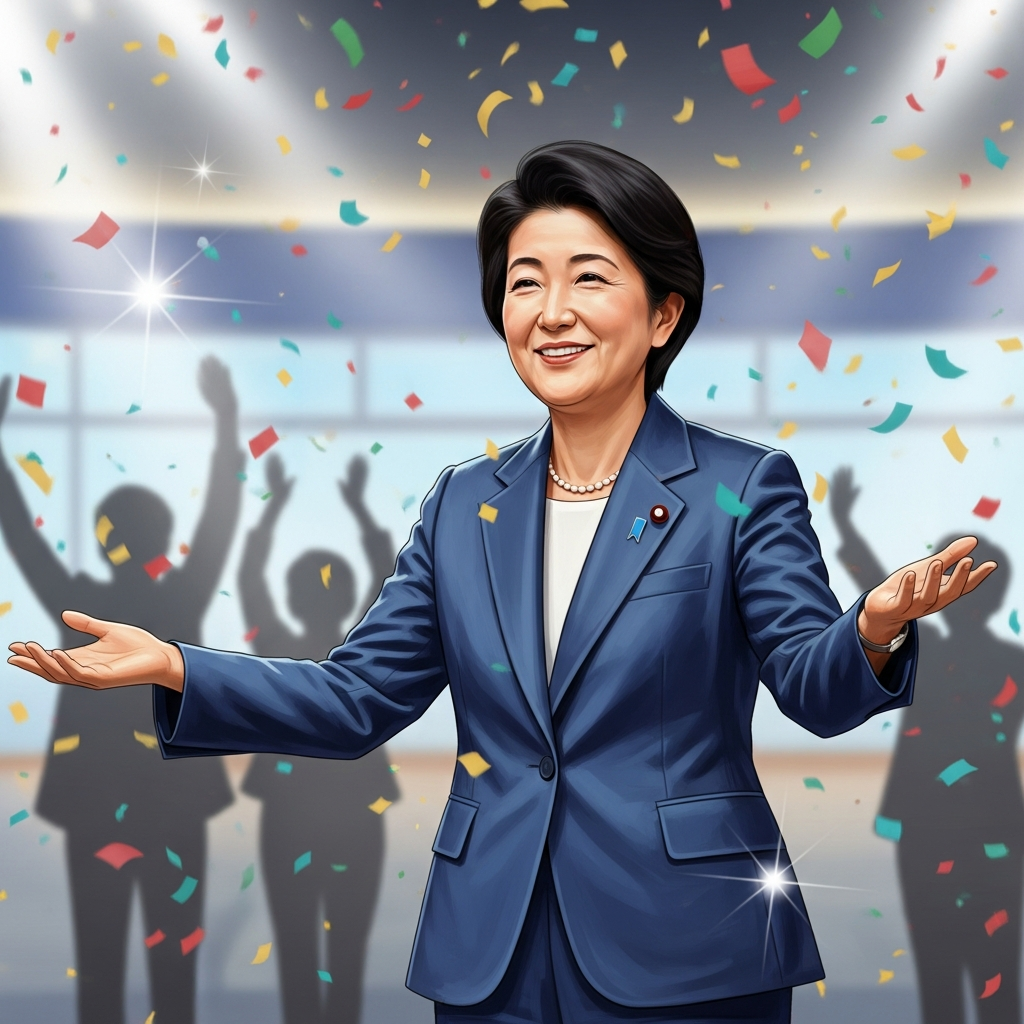
Japanese Prime Minister Sanae Takaichi has solidified her political power with a groundbreaking landslide victory in a snap general election held on Sunday, February 2, 2026. This decisive win grants her Liberal Democratic Party (LDP) an unprecedented supermajority, marking a significant turning point in Japan’s political landscape. The outcome empowers Takaichi to pursue an ambitious, often right-leaning agenda aimed at strengthening Japan’s economy and defense capabilities, impacting both domestic policy and international relations.
The Historic Mandate: Takaichi’s Unprecedented Triumph
In a stunning display of voter confidence, Prime Minister Sanae Takaichi’s Liberal Democratic Party secured a commanding two-thirds supermajority in the 465-member lower house of parliament. The LDP alone clinched 316 seats, easily surpassing the 261-seat absolute majority and setting a new record for the party since its 1955 establishment. With the additional 36 seats from its ally, the Japan Innovation Party (JIP), Takaichi’s ruling coalition now controls an impressive 352 seats. This electoral success marks the first time since World War II that a single party has achieved such a dominant two-thirds majority.
This overwhelming mandate carries profound implications for Japanese governance. The crucial two-thirds supermajority in the lower house grants Takaichi’s party the power to override votes in the upper house of parliament, providing broad legislative authority. Furthermore, the ruling coalition will now hold the numerical strength to chair all lower house committees, streamlining policy implementation. This unprecedented level of control positions Takaichi to enact significant reforms and drive her agenda forward with minimal legislative resistance.
A Strategic Gamble That Paid Off
Takaichi’s decision to call a snap election, just four months into her premiership, was a calculated risk. Since becoming Japan’s first female prime minister on October 21 (after winning the LDP presidency on October 4 on her third attempt), Takaichi had enjoyed remarkably high approval ratings. This popularity stood in stark contrast to the LDP’s recent struggles, which included scandals involving political funds and religious affiliations that had eroded voter support.
The snap election was a strategic move to leverage Takaichi’s personal appeal and translate it into a stronger, clearer mandate for the LDP. She aimed to demonstrate public endorsement for her vision and consolidate power, providing a fresh start for a party that had been hemorrhaging support. Her risky gamble paid off handsomely, solidifying her leadership and providing a powerful platform for her policies. Voters, braving fresh snowfall across parts of the country, turned out to endorse her direction.
A Leader Forged in Charisma and Controversy
Sanae Takaichi, a longtime lawmaker, rose to the pinnacle of Japanese politics as a surprising triumph in a deeply patriarchal system. Her leadership style is often described as ultraconservative, characterized by a “playful and tough” demeanor. She has captivated many voters with her notoriously strong work ethic, a savvy social media presence, and genuine charisma. Memorable moments, like an impromptu drum session with South Korean President Lee Jae-myung, generated public enthusiasm not witnessed since the era of her mentor, former Prime Minister Shinzo Abe.
Takaichi’s decisive approach and support for traditional values have drawn comparisons to former British Prime Minister Margaret Thatcher, whom she cites as inspiration. Her commitment to “work, work, work” has particularly resonated with younger voters, a demographic previously disengaged from politics. However, her tenure has not been without scrutiny. Her relentless work schedule, famously including 3 a.m. meetings with aides, has raised eyebrows. More significantly, her bold statements regarding Taiwan have created considerable diplomatic friction. In November, she broke Japan’s long-standing diplomatic ambiguity by telling parliament that a Chinese attack on Taiwan – an island merely 60 miles from Japanese territory – could trigger a military response from Tokyo. This stance “cratered” relations with Beijing, prompting retaliatory measures from China, including flight cancellations, restrictions on Japanese seafood imports, and increased military patrols.
Charting a Bold New Course for Japan
With this powerful new mandate, Prime Minister Takaichi is poised to implement a sweeping set of policies. Her immediate priority upon the lower house reconvening in mid-February will be to address a delayed budget bill. This bill is crucial for funding economic measures designed to combat Japan’s rising cost of living and stagnant wages, offering tangible relief to citizens and a boost to the weak yen. She has articulated a vision for a “responsible, proactive fiscal policy” to significantly shift Japan’s economic direction.
Looking further ahead, Takaichi has pledged to revise Japan’s security and defense policies by December. These revisions are expected to enhance Japan’s offensive military capabilities, potentially lifting a ban on weapons exports and further moving away from the nation’s postwar pacifist principles. This push for bolstered military strength is especially relevant given the escalating tensions with China and consistent pressure from the United States. Furthermore, Takaichi intends to implement stricter policies concerning foreigners, including tighter requirements for foreign property owners, a cap on foreign residents, and new anti-espionage measures. While these resonate with a segment of her far-right base, some experts caution they could impact civil rights. Her agenda clearly signals a more assertive and conservative Japan on both domestic and international fronts.
Geopolitical Ripple Effects: Allies and Adversaries
The results of Japan’s election have reverberated across the international stage. The victory received a strong endorsement from US President Donald Trump, who congratulated Takaichi on her “LANDSLIDE Victory.” Trump, who had a close bond with Takaichi’s late mentor Shinzo Abe, praised her “bold and wise decision” to call the election, further highlighting the strength of the US-Japan alliance. Takaichi, in turn, thanked Trump on social media, emphasizing the “LIMITLESS” potential of the partnership. Trump plans to welcome Takaichi to Washington in March, signaling continued close cooperation between the two nations.
While relations with the US appear robust, Takaichi’s increasingly assertive stance has undeniably strained ties with China. Her November comments on Taiwan led to significant diplomatic fallout, triggering a range of retaliatory actions from Beijing. Meanwhile, neighboring South Korea, a key partner in regional stability, observes these developments with caution. Experts like Leif-Eric Easley, a professor at Ewha Womans University, note that Seoul would be concerned by any Japanese attempts to revise its pacifist constitution or undertake a significant military buildup, given Japan’s wartime history. Despite these concerns, Takaichi is expected to maintain good relations with South Korea due to shared security interests regarding North Korea and China.
Economic Optimism and Political Futures
Financial markets reacted favorably to the clarity provided by Takaichi’s decisive victory. The Nikkei 225 Stock Average surged by more than four percent in morning trading, reflecting investor confidence in the stable political direction and Takaichi’s economic policy intentions. This market response underscores the importance of political stability for economic outlooks.
With no national election due until 2028, Takaichi now has a clear runway to pursue her ambitious policy goals without immediate electoral pressure. The opposition, fragmented and significantly weakened, faces an uphill battle. The new alliance between the Buddhist-backed Komeito and the liberal-leaning Constitutional Democratic Party of Japan saw their combined pre-election share of 167 seats halved, further consolidating the LDP’s power. Some voters, such as office worker Akihito Iwatake, even welcomed the LDP’s shift towards a more conservative stance under Takaichi, believing the party had become too liberal. While this strong mandate offers stability, Ritsumeikan University politics professor Masato Kamikubo suggested the election highlights a “problematic trend in Japanese politics” where political survival often overshadows substantive policy outcomes, potentially delaying necessary but unpopular reforms.
Frequently Asked Questions
What does Sanae Takaichi’s supermajority victory mean for Japan’s governance?
Prime Minister Sanae Takaichi’s Liberal Democratic Party secured a historic two-thirds supermajority in Japan’s lower house of parliament, controlling 316 of 465 seats. This means her government gains significant legislative power, including the ability to override votes in the upper house and propose amendments to the constitution. This mandate allows Takaichi to enact her policy agenda with fewer obstacles, providing a clear path for significant economic, security, and social reforms without facing immediate electoral pressure until 2028.
How might Prime Minister Takaichi’s policies impact Japan’s relations with China and the United States?
Takaichi’s victory is expected to strengthen Japan’s alliance with the United States, reinforced by a strong endorsement from US President Donald Trump and an upcoming meeting in Washington in March. However, her assertive stance, particularly her November statements on Taiwan suggesting a potential military response to a Chinese attack, has significantly strained relations with China, leading to retaliatory measures. While she aims to bolster Japan’s defense capabilities, this could also cause concern for South Korea, a key regional partner, regarding potential revisions to Japan’s pacifist constitution or military buildup.
What key economic and social challenges will Sanae Takaichi prioritize with her new mandate?
With her fresh mandate, Prime Minister Takaichi plans to prioritize several critical issues. Economically, she will address a delayed budget bill to fund measures combating the rising cost of living and stagnant wages, aiming for a “responsible, proactive fiscal policy.” Socially, she will tackle Japan’s rapidly aging population. On security, she plans to revise defense policies by December, potentially enhancing offensive military capabilities and moving away from pacifist principles. She also intends to implement stricter policies concerning foreigners, including tighter property owner requirements and anti-espionage measures.
Conclusion
Sanae Takaichi’s landslide victory represents a definitive turning point for Japan, ushering in an era of conservative leadership with an unprecedented mandate. Her personal popularity has undeniably reshaped the political landscape, granting the LDP the power to pursue a bold agenda focused on economic revitalization, enhanced national security, and significant social reforms. While facing critical domestic challenges and navigating complex geopolitical dynamics, particularly with China, Takaichi’s strong electoral success provides her a unique opportunity to shape Japan’s future for years to come.