The United States is currently grappling with a severe and rapidly escalating measles crisis, marking a dangerous resurgence of a disease once declared eliminated. Pockets of under-vaccinated communities, coupled with a national decline in immunization rates, are fueling explosive outbreaks across multiple states. South Carolina, facing the country’s most significant outbreak, exemplifies the urgent public health threat posed by this highly contagious viral infection. Health officials are sounding the alarm, emphasizing the critical need for immediate action to protect vulnerable populations and prevent further spread.
The Alarming Surge: A National Measles Crisis Unfolds
Measles cases are skyrocketing nationwide, with recent figures reaching numbers not seen in decades. This alarming trend threatens to undo the significant public health achievement of measles elimination in the U.S. by the year 2000. Experts highlight a direct correlation between declining vaccination coverage and the emergence of these widespread outbreaks.
South Carolina at the Epicenter of the Outbreak
South Carolina is currently battling the worst measles outbreak in the nation, with official reports confirming 558 infections since October. Within just a few days, 124 new cases were added, indicating a nearly 30% surge. The outbreak is heavily concentrated in Spartanburg County, though it has since spread to other areas, including Greenville County. Dr. Helmut Albrecht, an infectious disease physician, warned in a press conference that the state has “lost our ability to contain this with the immunity that we have,” adding that the situation is expected to “get worse before it gets better.” State epidemiologist Linda Bell has also underscored the “active, unrecognized community transmission of measles occurring,” posing an increasing risk, especially to unprotected individuals traveling to affected regions.
Nationwide Spread and Concerning Statistics
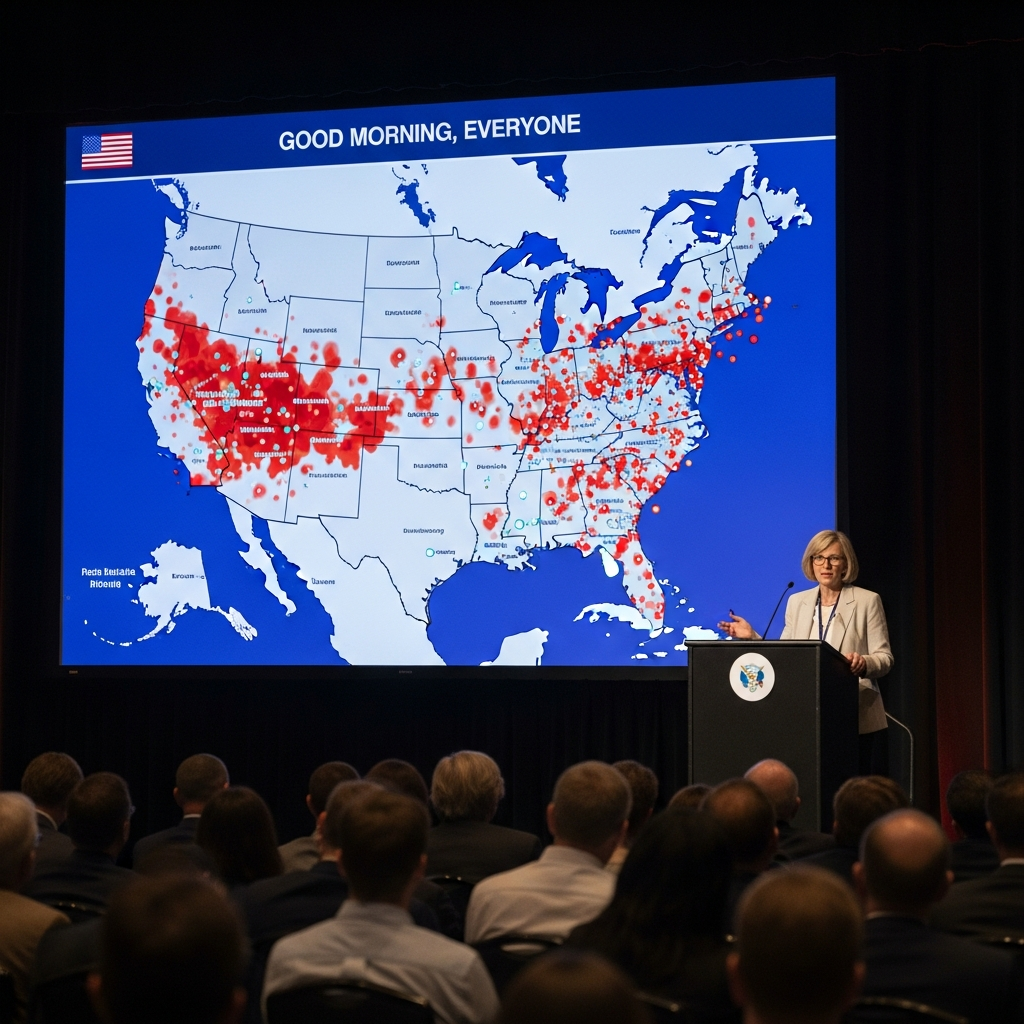
This local crisis is part of a broader national trend. The Centers for Disease Control and Prevention (CDC) has confirmed a staggering 1,596 cases this year, making it the highest annual total in over three decades. Some experts, like Dr. Paul Offit, suggest the actual count could be closer to 5,000, indicating the situation is “much worse” than official figures convey. Measles cases have been reported in numerous states, including Arizona, Florida, Georgia, North Carolina, Ohio, Oregon, Utah, Virginia, Texas, New Mexico, and Minnesota. The previous year, 2023, was already the worst for measles spread in the U.S. since 1991, with 2,144 confirmed cases across 44 states and three fatalities, all among unvaccinated individuals. As the outbreak expands, it becomes increasingly difficult to control, spawning new cases in neighboring states. North Carolina, for instance, has reported cases directly linked to the South Carolina outbreak.
Why Measles is Making a Dangerous Comeback
The resurgence of measles in the U.S. is not a random occurrence. It is largely attributed to a dangerous combination of declining vaccination rates and the pervasive spread of vaccine misinformation, creating fertile ground for this highly contagious virus to thrive.
Declining Vaccination Rates: The Root Cause
A critical factor in the current measles outbreak is the drop in national measles vaccination rates. To effectively protect communities from outbreaks, a collective immunity threshold of 95% is recommended by the CDC. However, the national rate has slipped to approximately 92.5%, leaving significant “pockets of opportunity” for the virus. In some areas, the situation is far more precarious. Spartanburg County schools in South Carolina, for example, have reported alarmingly low vaccination coverage, in some instances as low as 20%. Similarly, Buncombe County, North Carolina, found 87% of its schoolchildren attend facilities where fewer than 95% of students are vaccinated. This creates a “tinderbox” scenario, as described by public health director Stacy Ellis Matheson, where a localized outbreak can rapidly ignite into a “public health wildfire.” The rise in non-medical exemptions for school vaccine mandates, increasing from 0.6% in 2010-11 to over 3% in 2023-24, further exacerbates this vulnerability.
The Politicization of Public Health
The issue of vaccine hesitancy has been further complicated by political discourse and the spread of unscientific claims. Health Secretary Robert F. Kennedy Jr., a known vaccine skeptic, has a long history of questioning vaccine safety. While his recent announcement of an overhaul to the U.S. childhood immunization schedule did not include cuts to the MMR (measles, mumps, and rubella) vaccine, his past rhetoric has undeniably contributed to vaccine skepticism and confusion among parents. Senators from both parties have accused Kennedy of undermining vaccine access and politicizing vaccine policy. Dr. Adam Ratner, a pediatric infectious disease specialist, points out that such political discourse can “confuse and frighten parents.” While RFK Jr.’s HHS has not actively hampered response efforts during the recent Texas/New Mexico outbreak, his historical influence on public trust regarding vaccines remains a significant concern, contributing to the declining rates that set the stage for these crises.
Understanding Measles: A Highly Contagious Threat
Measles, though preventable, remains one of the most dangerous and contagious diseases known. Its return poses a serious risk, especially to unvaccinated individuals.
Symptoms, Complications, and Mortality
Symptoms typically appear 8-12 days after exposure and include a high fever, cough, runny nose, and red eyes (conjunctivitis). The characteristic red, blotchy rash usually emerges 3-5 days later, starting on the face and spreading downwards. While measles can be debilitating, its danger lies in its potential complications. These can range from ear infections, pneumonia, and severe diarrhea to more life-threatening conditions like acute encephalitis, or brain inflammation, which can lead to permanent brain damage in 1 out of every 1,000 cases. Death from neurologic or respiratory complications occurs in 1 to 3 out of every 1,000 cases. A rare but fatal long-term complication, subacute sclerosing panencephalitis (SSPE), can manifest 7-11 years post-infection, particularly in children infected before age two. Before widespread vaccination, measles caused 400-500 deaths annually in the U.S.
How Measles Spreads with Alarming Efficiency
Measles is exceptionally contagious, spreading through respiratory droplets when an infected person breathes, sneezes, or coughs. The virus can linger in the air for up to two hours after an infected person has left a room, making it easy to contract even without direct contact. An infected person can transmit the disease from four days before the rash appears until four days after. Unvaccinated or non-immune individuals have a staggering 9 in 10 chance of contracting the illness upon exposure. This high transmissibility means a single infected person can spread the virus to as many as 18 other unvaccinated individuals. Approximately one in eight measles cases has led to hospitalization, particularly affecting children under the age of five (27% of cases).
The Unwavering Protection of the MMR Vaccine
The measles, mumps, and rubella (MMR) vaccine stands as the most effective and only proven defense against measles. Its safety and efficacy are well-established, offering robust protection for individuals and communities.
Safety and Effectiveness: Your Best Defense
The MMR vaccine is highly effective, with over 97% of individuals developing immunity after receiving two doses. The second dose is crucial, providing protection for the approximately 5% who may not respond adequately to the first. It is important to note that while contracting measles after two vaccine doses is uncommon, immunization is safe for those already immune and does not transmit vaccine virus. During outbreaks, health departments may recommend a second dose for adults who previously received only one. The vaccine is the only way to prevent infection; treatments like high-dose Vitamin A are only recommended after a diagnosis to reduce illness severity, and should not be used for prevention.
Recommended Immunization Schedule
To ensure comprehensive protection, specific vaccination guidelines are in place:
Children: The first MMR dose should be administered after their first birthday, and a second dose before kindergarten (typically between ages 4-6). For infants traveling internationally, a first dose can be given as early as 6 months, though this does not replace the need for the standard doses at older ages.
Adults: Adults are generally considered immune if they have documentation of at least one MMR dose (or two for high-risk individuals), laboratory evidence of immunity, or prior infection, or were born before 1957. Adults who do not meet these criteria should receive at least two MMR doses unless medically advised otherwise.
What to Do If Exposed or Suspecting Infection
If you suspect measles exposure or infection, immediate action is vital to prevent further spread. You should wear a mask, isolate from others, and contact your doctor before visiting a healthcare facility. For unvaccinated individuals, an MMR vaccine or immune globulin injection administered post-exposure may reduce the risk of illness. Fully vaccinated individuals should monitor for symptoms for 21 days and contact their provider immediately if any symptoms develop.
Public Health Response and the Call to Action
Responding to a widespread measles outbreak requires a coordinated effort from public health authorities and individuals alike. Effective strategies are essential to contain the virus and restore community health.
Local, State, and Federal Efforts
The standard public health protocol for measles outbreaks typically involves local governments as the first responders, conducting crucial testing and surveillance. State governments then provide technical expertise, funding, communication, and implement interventions such as vaccine drives. The federal government, through the Department of Health and Human Services (HHS), generally offers supporting roles like expert or laboratory assistance, particularly for localized outbreaks. During the Texas and New Mexico outbreak, local and state officials effectively led efforts by establishing mobile vaccination and testing sites, with the CDC refreshing its measles tracker to commit to weekly updates. This tiered approach is crucial for a rapid and effective response.
A Shared Responsibility for Community Health
The current measles resurgence underscores a critical point: everyone shares the responsibility to take precautions and ensure vaccinations are up-to-date. The decline in collective faith in scientific consensus and the spread of misinformation have created conditions where a preventable disease like measles can regain a foothold. Maintaining high vaccination rates is not just about individual protection; it’s about safeguarding the entire community, including those who are too young or medically unable to receive vaccines. Healthcare providers play a pivotal role in guiding parents and individuals through factual, evidence-based information regarding immunization.
Frequently Asked Questions
What makes measles so dangerous and contagious?
Measles is exceptionally dangerous due to its potential for severe complications, including pneumonia, brain inflammation (encephalitis) that can cause permanent damage, and a rare but fatal long-term condition called subacute sclerosing panencephalitis (SSPE). It’s also one of the most contagious viruses known, spreading easily through airborne droplets. An infected person is contagious for eight days (four days before and four days after the rash appears) and can infect up to 18 other unvaccinated people. The virus can also linger in the air for up to two hours, making exposure possible even without direct contact.
Where are the current major measles outbreaks in the U.S.?
South Carolina is currently experiencing the largest measles outbreak in the United States, primarily centered in Spartanburg County. Other significant outbreaks have been reported in Texas (particularly Gaines County), New Mexico, Arizona, Utah, and Minnesota. Linked cases stemming from these outbreaks have also appeared in states like North Carolina, Ohio, and Washington. The CDC reports active outbreaks across 44 jurisdictions in 41 states, indicating a widespread national resurgence of the disease.
Should adults get the MMR vaccine if they’re unsure of their vaccination status?
Yes, adults who are unsure of their measles immunity should consult their healthcare provider about getting the MMR vaccine. You are considered immune if you have documented proof of at least one MMR dose (two doses if in a high-risk setting), laboratory evidence of immunity or prior infection, or if you were born before 1957. If you don’t meet these criteria, especially amidst current outbreaks, getting at least one, and potentially two, MMR doses is strongly recommended to protect yourself and contribute to community immunity. The vaccine is safe and effective for those already immune.
Conclusion
The current measles resurgence in the United States represents a serious public health challenge. The alarming rise in cases, driven by declining vaccination rates and the spread of misinformation, jeopardizes decades of progress in disease control. Measles is not a benign childhood illness; it is a highly contagious disease with the potential for severe, life-threatening complications. The MMR vaccine remains the most powerful tool we have to prevent infection and protect our communities. It is imperative that individuals consult their healthcare providers, ensure their immunizations are up-to-date, and rely on credible health information to make informed decisions. By taking collective responsibility, we can reverse this dangerous trend and restore the robust public health defenses needed to keep measles at bay.