A recent viral video alleging widespread fraud within Minnesota’s state-funded child care system has ignited a fierce public and political debate, prompting an immediate response from state leaders and drawing federal attention. The video, published by YouTuber Nick Shirley, quickly garnered millions of views across social media platforms, claiming to expose numerous empty day care facilities still receiving substantial taxpayer funds. This explosive content has thrust Minnesota’s Child Care Assistance Program (CCAP) under intense scrutiny, with state officials pushing back on some claims while affirming their commitment to combatting fraud.
Viral Allegations Spark Public Outcry
The controversy erupted following a video posted by independent journalist Nick Shirley, which showed him visiting several Minneapolis child care centers. Shirley’s video purported to reveal empty facilities despite these centers allegedly receiving millions in state and federal funding. He documented attempts to contact staff or observe children, often encountering locked doors or being turned away. The video quickly amassed over 1.6 million views on YouTube and more than 100 million views on X, captivating a national audience and drawing reactions from prominent figures, including FBI Director Kash Patel and U.S. Department of Homeland Security Secretary Kristi Noem. Shirley’s investigation suggested a pattern of fraud that could total over $100 million, echoing earlier whistleblower concerns from 2018.
Minnesota Officials Address the Claims
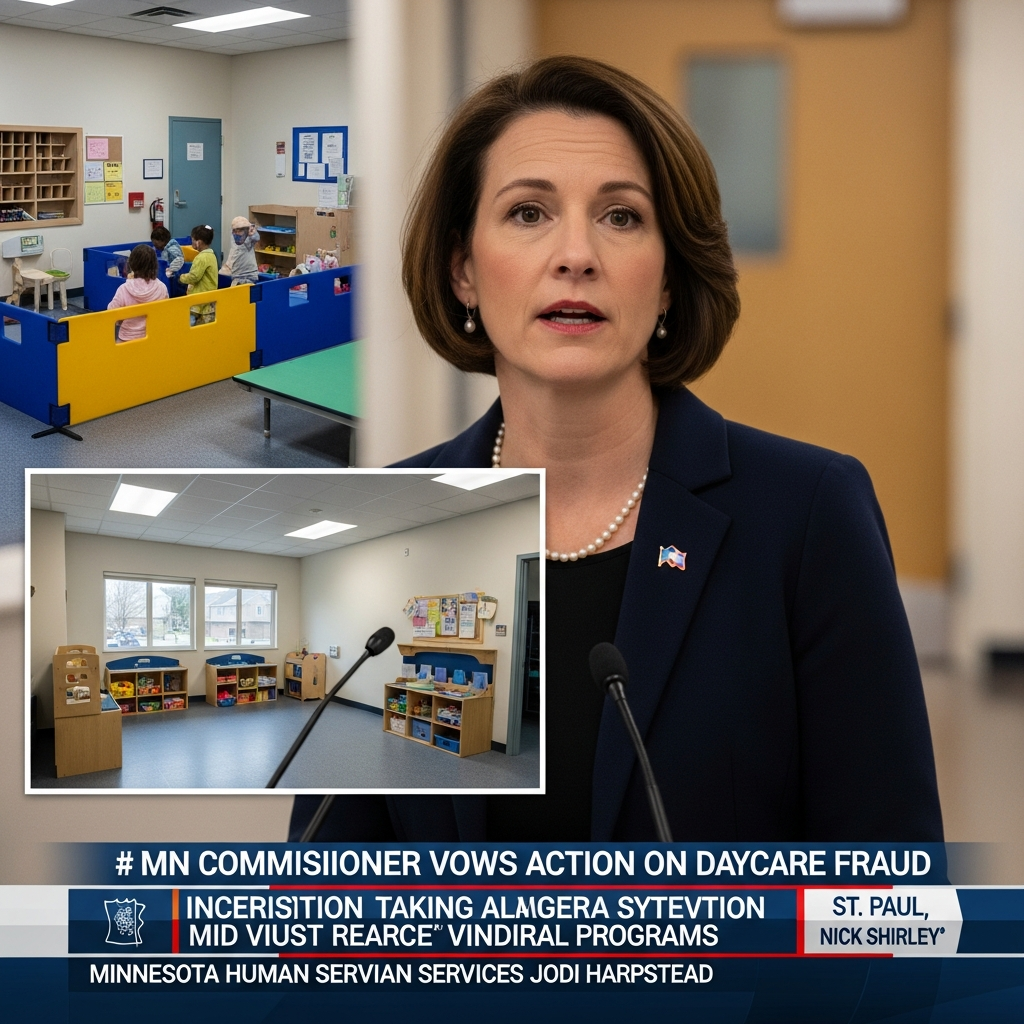
In response to the viral video’s claims, Tikki Brown, Commissioner of the Minnesota Department of Children, Youth, and Families (DCYF), held a news conference to address the public’s concerns. Commissioner Brown affirmed that her department takes all allegations of fraud “very seriously.” However, she also expressed “questions about some of the methods” employed in Shirley’s video, suggesting that his visits might not have occurred during operational hours or could have been to centers that were no longer active.
Brown emphasized that DCYF routinely conducts unannounced site visits to all licensed facilities annually as part of their standard licensing procedures. She specifically noted that each of the centers featured in Shirley’s video had received at least one such unannounced visit within the last six months. Crucially, during these official inspections, children were present, and the facilities appeared to be operating as expected.
DCYF’s Detailed Rebuttal and Ongoing Actions
To directly counter the video’s assertions, Commissioner Brown confirmed that DCYF staff immediately initiated additional unannounced site visits to all the facilities highlighted by Shirley. These rapid follow-up inspections were intended to thoroughly investigate the renewed concerns. Brown also clarified that previous, ongoing investigations into several of the specific centers mentioned in the video had “uncovered no findings of fraud.” She stated that no state payments to these particular child care centers had been suspended based on existing information.
Furthermore, Brown addressed specific examples from the video. She noted that the “Quality Learning Center,” prominently featured by Shirley, had actually closed “just over a week ago” due to space concerns, after initially notifying DCYF of its closure on December 19th. Another center, Mako Childcare, was confirmed to have closed “several years ago.” These details raised questions about the currency and accuracy of some of the video’s footage. Despite the state’s counter-arguments, 55 open investigations related to the broader Child Care Assistance Program continue, although none of them, according to Brown, involve fraud findings for the specific daycares in Shirley’s viral content.
Federal Involvement and Political Dimensions
The viral video’s impact extended beyond state lines, prompting a federal response. U.S. Department of Homeland Security Secretary Kristi Noem and FBI Director Kash Patel announced an increase in federal law enforcement resources dedicated to investigating “rampant government fraud” in Minnesota. A social media post from Homeland Security even depicted federal agents conducting a “massive investigation” in the Twin Cities. This federal intervention has intensified scrutiny, especially given existing tensions between state and federal enforcement, particularly concerning the large Somali community in Minneapolis-St. Paul, which operates many of the implicated daycares. The U.S. Attorney’s Office for Minnesota has pointed out that a significant number of defendants in various fraud schemes are Somali Americans, estimating potential fraud in federally funded programs to be as high as $9 billion since 2018.
The issue has also become a focal point in state politics. Republican lawmakers, including Minnesota Speaker of the House Lisa Demuth (R-Cold Spring), have called for greater transparency and more aggressive action from Governor Tim Walz’s administration. Demuth specifically demanded the release of documents related to fraud investigations, increased site visit resources, a review of state agency funds directed to Non-Governmental Organizations (NGOs), and a halt to payments in programs deemed high-risk for fraud. Republicans have criticized Walz’s efforts as “retroactive and performative,” arguing that fraud allegations were raised in GOP-led committee hearings “much before” recent state actions.
Governor Walz’s Administration Responds
Governor Tim Walz’s administration has largely dismissed the U.S. Attorney’s $9 billion fraud estimate and defended its record on combatting fraud. Seeking a third term, Governor Walz announced the appointment of Tim O’Malley, former head of the Minnesota Bureau of Criminal Apprehension, as a “fraud czar” to develop prevention measures across state agencies. In October, the Department of Human Services (DHS) had also initiated a third-party audit of 14 “high-risk” programs and moved to shut down a Medicaid-funded housing-stabilization program following federal investigations. Walz’s spokesperson emphasized the governor’s long-standing commitment to cracking down on fraud through criminal prosecutions, strengthened oversight, and external payment audits. These proactive measures aim to rebuild public trust and ensure accountability within the state’s substantial assistance programs.
Historical Context and Broader CCAP Challenges
Concerns about potential fraud within Minnesota’s child care system are not new. The current viral video builds upon months of investigative reporting by KSTP-TV (5 EYEWITNESS NEWS), which previously highlighted issues within the $400 million Child Care Assistance Program (CCAP). Earlier KSTP reports revealed instances where daycares received millions in tax dollars despite documented safety violations, spurring legislative calls for hearings and investigations into program oversight. Several of the same day care centers now featured in the viral video were also part of KSTP’s earlier scrutiny.
Moreover, a whistleblower’s claims of fraud within Minnesota’s CCAP program date back as far as 12 years, suggesting a persistent and complex challenge for the state. This intricate situation, involving a confluence of viral accusations, long-standing journalistic investigations, and varied official responses, underscores the ongoing difficulties in ensuring accountability and preventing fraud within large, federally funded state programs. The state continues to face the delicate balance of providing critical child care assistance while safeguarding taxpayer dollars from exploitation.
Frequently Asked Questions
What exactly did the viral video allege about Minnesota daycare fraud?
The viral YouTube video, created by Nick Shirley, alleged widespread fraud in Minnesota’s state-funded child care system. Shirley’s video claimed to expose numerous empty daycare facilities in Minneapolis that were still receiving millions in state and federal money. He documented attempts to visit these locations, often finding them inaccessible or without children present. The video suggested a pattern of fraudulent activity and estimated the potential financial losses to the state to be over $100 million.
How is the Minnesota Department of Children, Youth, and Families (DCYF) investigating these daycare fraud claims?
The Minnesota Department of Children, Youth, and Families (DCYF) responded by initiating new, unannounced site visits to all child care centers featured in the viral video. DCYF Commissioner Tikki Brown stated that prior unannounced inspections, conducted within the last six months as part of routine licensing, had consistently found children present at these facilities. While acknowledging broader fraud concerns, the DCYF’s investigations into the specific centers highlighted by the YouTuber had previously uncovered no findings of fraud, and no payments have been suspended for these daycares based on current information.
What actions is the Walz administration taking to prevent future child care assistance program fraud?
Governor Tim Walz’s administration has announced several measures to prevent future fraud in Minnesota’s child care assistance programs. These include hiring Tim O’Malley as a “fraud czar” to develop comprehensive prevention strategies across state agencies. Additionally, the Department of Human Services (DHS) has ordered a third-party audit of 14 “high-risk” state programs and has taken steps to shut down a Medicaid-funded housing-stabilization program following federal investigations. These efforts aim to enhance oversight, strengthen criminal prosecutions, and implement external payment audits to safeguard taxpayer funds.
The ongoing debate surrounding Minnesota’s child care system fraud highlights a complex issue with significant implications for both state finances and public trust. While officials are actively responding to allegations and implementing new preventative measures, the full extent of the problem and the effectiveness of these solutions remain subjects of intense scrutiny and ongoing discussion.