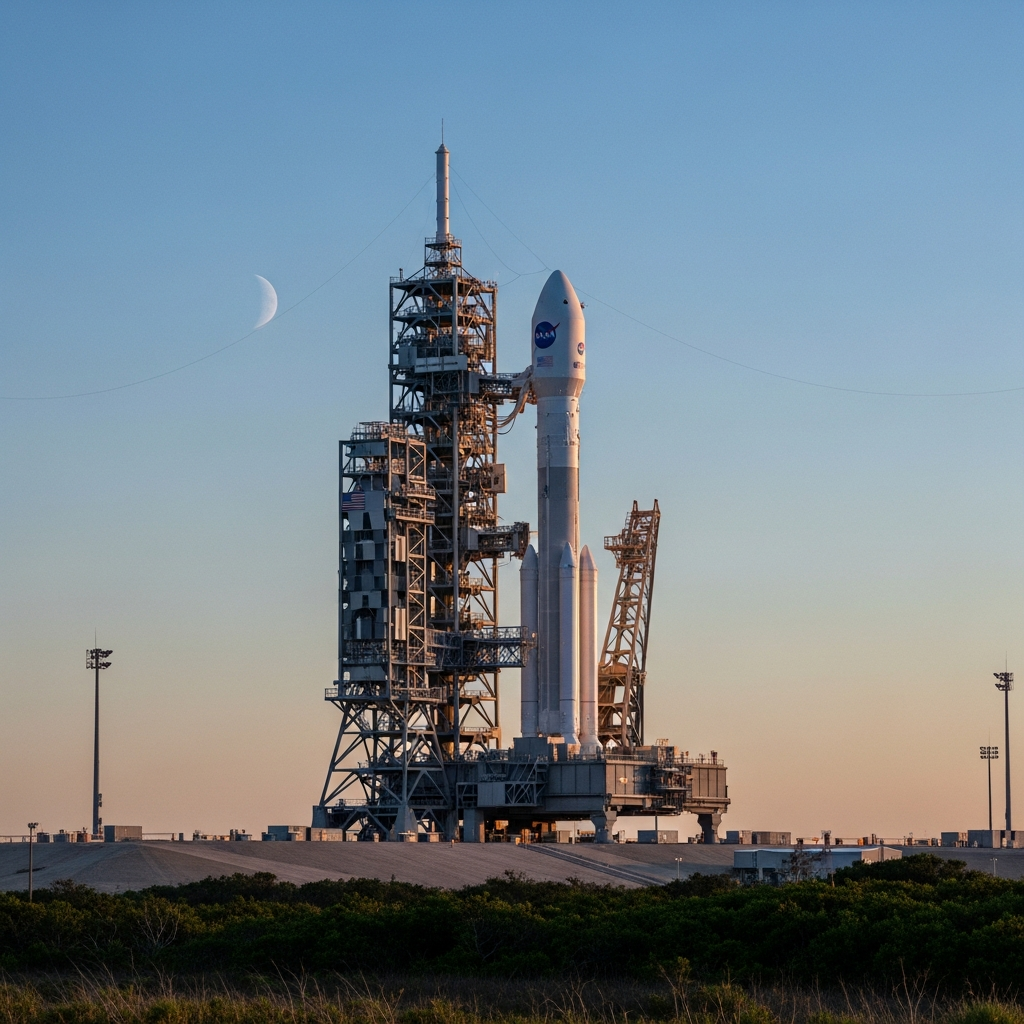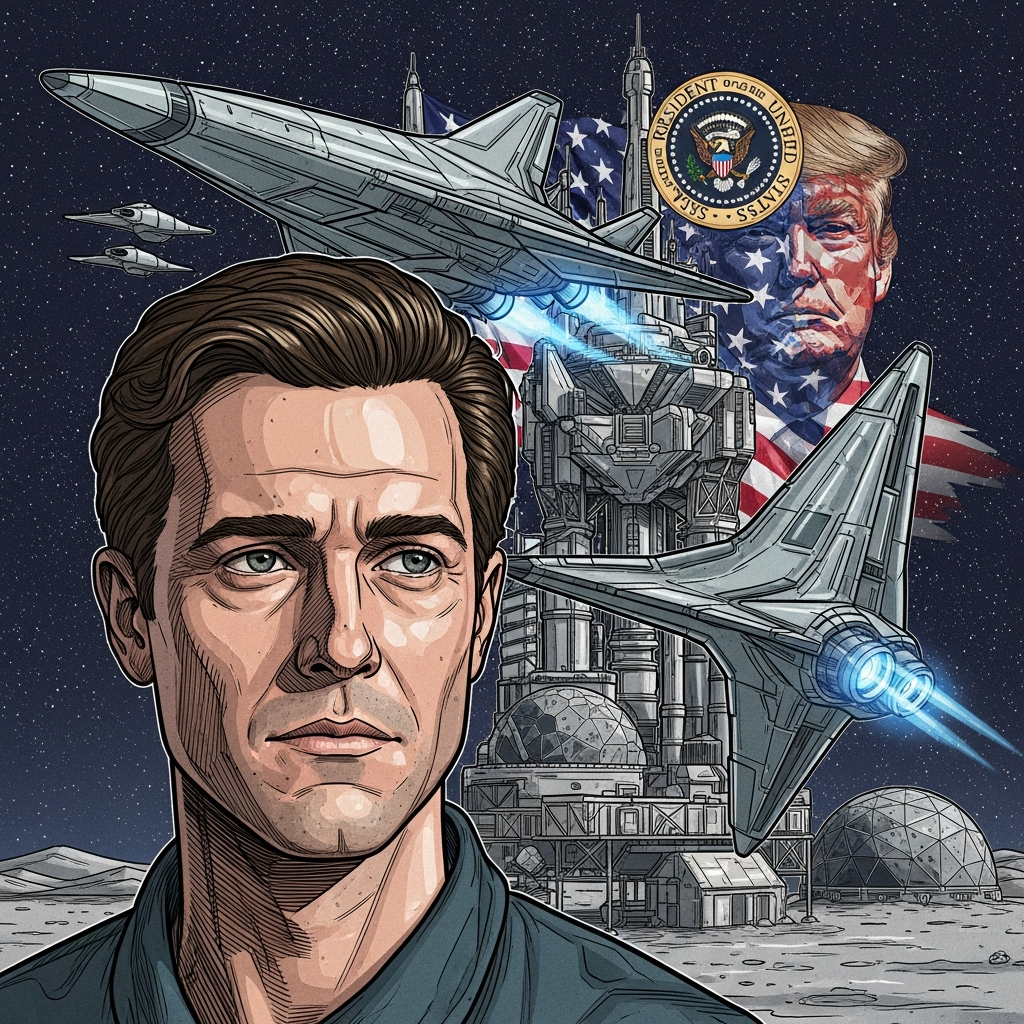
Jared Isaacman, a name synonymous with audacious private space missions and entrepreneurial prowess, found himself at the center of a pivotal moment for America’s space agency. Nominated by President Donald Trump to lead NASA as its 15th administrator, Isaacman’s vision promised a radical shift towards aggressive exploration and cutting-edge technology. However, his journey from private astronaut to potential NASA chief was fraught with political intrigue, culminating in a dramatic withdrawal of his nomination. This article delves into Isaacman’s ambitious plans for NASA Administrator, the controversies that shadowed his confirmation, and the underlying political currents that ultimately shaped his brief tenure as a prospective leader.
A Visionary for the Stars: Isaacman’s Bold NASA Agenda
Jared Isaacman, a billionaire entrepreneur and the commander of the groundbreaking Inspiration4 all-civilian space mission, brought an outsider’s perspective to the traditional realm of government spaceflight. Despite having no prior NASA, science, or government background, his direct experience in commercial spaceflight and his clear, decisive leadership style resonated with many. When President Trump tapped him for the NASA Administrator role, Isaacman quickly articulated a philosophy centered on achieving “the near impossible that no one else can do.” He believed NASA should focus on grand, “needle-mover” programs, rather than fragmented, smaller initiatives manageable by other entities.
His priorities for NASA were ambitious and multifaceted:
Asserting Leadership in Space: Emphasizing control over the “high ground of space,” especially given rising international competition.
Lunar and Martian Ambitions: Fulfilling lunar obligations, particularly in light of a new space race with China, while simultaneously developing capabilities for future Mars missions. Isaacman famously championed sending American astronauts to Mars, balancing this with existing Artemis program plans.
Commercial Space Integration: Assisting the burgeoning commercial space industry in developing “rapid, reusable, heavy-lift capability,” a stark contrast to past practices where NASA sometimes competed with private firms. He envisioned private companies like SpaceX and Blue Origin playing crucial roles in lunar efforts, alongside other private firms.
Pioneering Nuclear Propulsion: A passionate advocate for advanced space propulsion, Isaacman criticized existing “subscale” projects like DRACO. Instead, he pushed for a much larger, real-world applicable project focused on nuclear electric propulsion, vital for deep space exploration beyond the Moon. He drew parallels to the rapid nuclear development of the mid-20th century, urging NASA to embrace “big, bold things.”
Isaacman also envisioned a streamlined, more efficient NASA. He expressed a desire to cut through bureaucracy, dismantle “dozens of layers of leadership,” and challenge established programs. For instance, he openly criticized the Mars Sample Return program for its cost overruns, suggesting astronauts could retrieve samples more efficiently. He even proposed a shift towards “10 $100 million missions a year” for scientific endeavors, accepting a degree of failure for faster “time to science.”
The Contentious Confirmation Hearing and Political Tensions
Isaacman’s path to becoming NASA Administrator was far from smooth. His confirmation hearing before the Senate Committee on Commerce, Science, and Transportation on April 9, 2025, quickly became a point of contention. Senator Ed Markey (D-Mass.) emerged as a vocal critic, relentlessly questioning Isaacman about his “deep personal and financial ties” to SpaceX founder and CEO Elon Musk.
Markey highlighted Isaacman’s funding and participation in two orbital space missions aboard SpaceX Crew Dragon capsules: Inspiration4 (2021) and the upcoming Polaris Dawn (late 2024). Given SpaceX’s substantial interests before NASA, the senator stressed concerns about potential conflicts of interest. The most pointed questions revolved around whether Elon Musk was present during Isaacman’s interview with President Trump at Mar-a-Lago in late 2024. Isaacman’s evasive responses—stating he was there to meet the President and that Musk was “one of dozens of people around Mar-a-Lago”—led Markey to conclude that Musk was indeed in the room.
Despite the grilling, Isaacman firmly denied discussing his specific plans for NASA with Musk. He also faced scrutiny over the feasibility of simultaneously pursuing ambitious Mars and lunar missions under current funding levels, especially with a bipartisan law codifying a “moon-first, then Mars” approach. Isaacman maintained that a “world’s greatest space agency” wouldn’t need to make “tough trades,” asserting he would follow the law while still pushing for Mars. This stance contrasted with President Trump’s initial Mars-focused rhetoric and Musk’s known preference for prioritizing Mars exploration.
The nomination also unfolded amidst a backdrop of significant budget cuts and restructuring across government agencies, including NASA. Reports indicated the agency had recently eliminated key offices, like the Office of the Chief Scientist, and terminated $420 million in grants, adding pressure to Isaacman’s proposed ambitious agenda.
The Abrupt Withdrawal: Political Pettiness or Policy Alignment?
The speculation and controversy surrounding Isaacman’s nomination reached a climax on May 30, 2025, when the White House informed him that President Trump was “going in a different direction.” The decision became public the following day. Isaacman himself offered a candid explanation for his withdrawal: he believed his association with Elon Musk was the primary reason.
He noted that the timing of his removal was not coincidental, occurring on the very same day Musk formally departed his advisory role as a “special government employee” to the president. Isaacman characterized the move as a result of “some people that had some axes to grind” against Musk, positioning himself as “a good, visible target.” Multiple sources later corroborated this, pointing to Sergio Gor, an official in the White House Presidential Personnel Office, as the individual who acted against Isaacman after Musk’s departure, reportedly irked by Musk’s failure to consult him on certain decisions.
Isaacman explicitly rejected the idea that his past donations to Democratic candidates, which were publicly disclosed, were the cause. When pressed on whether the withdrawal was a “shot at Elon,” he invited listeners to “draw their own conclusions,” affirming that the prevailing interpretations “seem to check out.”
The White House, through press secretary Karoline Leavitt, offered little specific detail, stating only that the president has the right to remove nominees “if he so chooses” and emphasizing the desire for all nominees to be “aligned fully with the America First mission of this administration.” This left many to conclude that political maneuvering and personal rivalries, rather than a genuine misalignment of policy, led to the loss of a potentially transformative leader for NASA.
Jared Isaacman’s Vision: What Could Have Been
Isaacman’s unfulfilled potential as NASA Administrator left many wondering about the agency’s future trajectory. His sharp critique of the Artemis Program, which he saw as an “incredibly expensive” “giant disposable rocket program” reliant on outdated Space Launch System (SLS) hardware, underscored his desire for radical change. He likened continued reliance on SLS to using World War II-era planes in modern conflicts, emphasizing its logical fallacy for “affordable, repeatable, efficient exploration.” He advocated for flying Artemis II and III with existing SLS hardware to achieve immediate lunar goals and counter China, but then rapidly transitioning to deep space programs built on reusable technology.
His emphasis on nuclear propulsion, a “time to science” metric for research, and a lean, agile organization represented a significant departure from NASA’s traditional bureaucratic structures. While his confirmation faced challenges, his detailed vision provided a compelling alternative pathway for the future of U.S. spaceflight, one that prioritized speed, innovation, and bold, “near impossible” achievements.
Frequently Asked Questions
What was Jared Isaacman’s ambitious vision for NASA’s future?
Jared Isaacman envisioned NASA as a leader in “the high ground of space,” tackling “near impossible” missions that no other entity could achieve. His core plans included a rapid return to the Moon and establishing a permanent lunar presence, while simultaneously developing capabilities for human missions to Mars. He strongly advocated for a pivot towards reusable heavy-lift launch capabilities through enhanced commercial partnerships and championed advanced nuclear electric propulsion for deep space travel, criticizing the “subscale” nature of current projects. Isaacman also aimed to drastically reduce NASA’s bureaucracy and accelerate scientific missions.
What were the key challenges and controversies surrounding Isaacman’s NASA nomination?
Isaacman’s nomination faced significant hurdles, primarily due to his close ties with Elon Musk and SpaceX. During his contentious confirmation hearing on April 9, 2025, Senator Ed Markey repeatedly questioned Musk’s alleged presence during Isaacman’s interview with President Trump at Mar-a-Lago, citing concerns about conflicts of interest. Isaacman also had to address the feasibility of pursuing both Moon and Mars missions concurrently under current budget constraints, as a bipartisan law favored a “moon-first” approach. His nomination occurred amidst broader government budget cuts affecting NASA.
Why was Jared Isaacman’s nomination for NASA Administrator ultimately withdrawn?
Jared Isaacman’s nomination was withdrawn on May 30, 2025, primarily due to political infighting linked to his association with Elon Musk. Isaacman stated that his removal coincided with Musk’s formal departure from an advisory role to President Trump, suggesting “some people that had some axes to grind” against Musk used Isaacman as a “visible target.” While the White House cited a need for nominees to be “aligned fully with the America First mission,” Isaacman rejected claims that his past political donations were a factor, attributing the decision to political pettiness rather than a genuine policy disagreement.
The Future of Space Exploration
The withdrawal of Jared Isaacman’s nomination highlights the intricate interplay of ambition, politics, and personal connections in shaping the direction of national space agencies. While his vision for NASA Administrator offered a clear, bold path for U.S. space exploration, the circumstances of his de-nomination underscore the complex political landscape in Washington D.C. The debate over NASA’s priorities – balancing lunar returns with Mars ambitions, fostering commercial innovation versus traditional government programs, and embracing new technologies like nuclear propulsion – continues to evolve, influencing how humanity will reach for the stars in the decades to come.