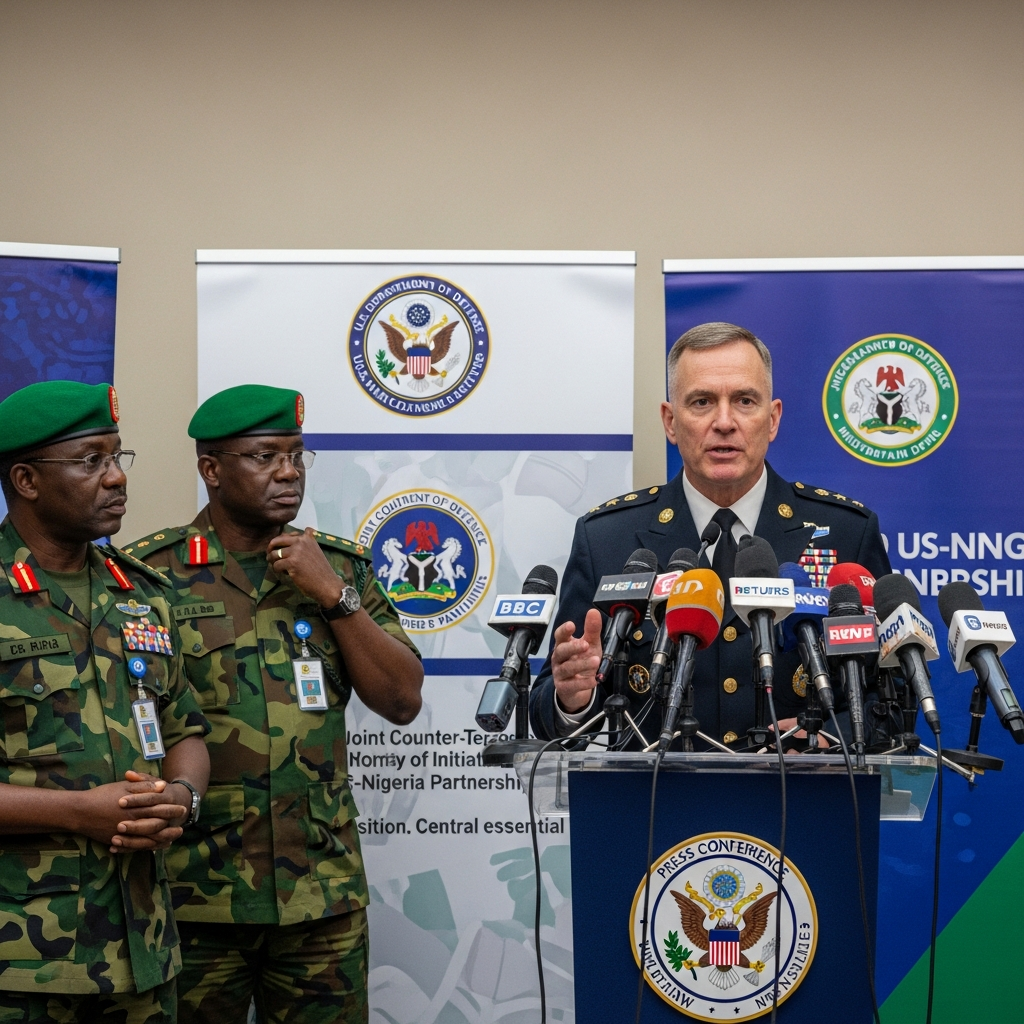
A significant joint military operation between the United States and Nigeria recently targeted terrorist elements in Nigeria’s northwestern region, sparking diverse interpretations of its motivations and implications. This high-profile action, confirmed by both nations, highlights ongoing efforts to combat violent extremism, yet reveals differing narratives on the precise nature of the threat. While the US leadership emphasized protecting Christians from “ISIS Terrorist Scum,” Nigerian authorities framed the strikes as part of broader counter-terrorism cooperation against all forms of violence, irrespective of religious affiliation.
The coordinated strikes underscore the complex security landscape in Africa’s most populous nation, where various armed groups pose persistent challenges. Understanding the nuances of this joint intervention requires examining the distinct perspectives of the participating countries and the evolving identity of the groups operating within the embattled northwest.
Unveiling the Joint Operation: A Christmas Day Engagement
On Christmas Day, a series of precision air strikes commenced against identified terrorist targets in northwest Nigeria. The US government, through then-President Donald Trump and Secretary of War Pete Hegseth, swiftly announced the intervention. President Trump declared a “powerful and deadly strike against ISIS Terrorist Scum in Northwest Nigeria,” asserting it was a direct response to the “viciously killing, primarily, innocent Christians.” He warned of “hell to pay” if the violence continued. Secretary Hegseth explicitly thanked the Nigerian government for its cooperation, indicating a coordinated effort.
Nigeria’s Ministry of Foreign Affairs and Defence Headquarters (DHQ) subsequently confirmed their involvement, framing the operations as integral to existing security cooperation with international partners. These strikes, involving intelligence sharing and strategic coordination, were described by Nigerian officials as “precision hits on terrorist targets” designed to degrade capabilities and minimize collateral damage. The DHQ affirmed that these actions received prior approval from Nigerian federal authorities, demonstrating a clear understanding and consent from Abuja.
Divergent Narratives: US Motives vs. Nigerian Realities
The framing of the joint strikes showcased a distinct divergence in emphasis between Washington and Abuja. US President Trump consistently linked the operations to protecting Christians, echoing previous warnings about an “existential threat” and allegations of Christian genocide in Nigeria. US Africa Command (AFRICOM) also corroborated that the strike, requested by Nigerian authorities, aimed to “protect Americans and disrupt violent extremist organisations,” leading to “multiple” ISIS terrorists killed. Reports suggest the US launched “more than a dozen Tomahawk cruise missiles” from a Navy ship, targeting two ISIS camps in Sokoto State.
Conversely, Nigerian authorities consistently pushed back against a purely religious framing of the conflict. Nigeria’s Ministry of Foreign Affairs spokesperson, Kimiebi Ebienfa, emphasized that “terrorist violence in any form — whether directed at Christians, Muslims, or other communities — remains an affront to Nigeria’s values.” The Nigerian government has historically rejected allegations of Christian genocide, arguing that the country faces a complex security situation involving diverse armed groups with varied motives, affecting people of all faiths. This nuanced stance underscores Nigeria’s commitment to national unity and its constitutional guarantee of protection for all citizens, irrespective of religious belief. The DHQ’s statement implied Nigeria provided the critical intelligence, with the US executing the aerial bombardment.
Who Were the Targets? Deconstructing the “Lakurawa” Threat
While the US explicitly named “ISIS” or “ISIL” as the target, security analysts provided a more specific identification for the groups operating in northwest Nigeria. Peace and conflict analyst Bulama Bukarti suggested the Nigerian government might have avoided naming ISIL in its initial statement because “there aren’t significant ISIS presence in that part of Nigeria.” Instead, analysts widely point to the Lakurawa group as the likely primary target of the joint strikes.
The Rise and Fall of Lakurawa
The Lakurawa group, also known as the Islamic State Sahel Province (ISSP) by some, represents a complex phenomenon in Nigeria’s northwest. They are often described as criminal gangs or “bandits” who emerged from the Sahel region. Their presence in northwest Nigeria dates back to at least 2017, when some traditional authorities in Sokoto reportedly invited them to protect local communities from rival bandit groups. However, this arrangement quickly soured. According to James Barnett, an Africa researcher with the Hudson Institute, these fighters “overstayed their welcome, clashing with some of the community leaders… and enforcing a harsh interpretation of sharia law that alienated much of the rural population.” Malik Samuel, a Nigerian security researcher, further noted that “Communities now openly say that Lakurawa are more oppressive and dangerous than the bandits they claim to protect them from.”
The Lakurawa group has become increasingly lethal in border states like Sokoto and Kebbi over the last year, frequently targeting remote communities and security forces. Nigerian military intelligence suggests the group has roots in neighboring Niger, with its activity escalating in Nigeria’s border communities following a 2023 military coup in Niger. This coup significantly fractured relations between Nigeria and Niger, impacting their multinational military operations along the porous border and potentially creating a vacuum exploited by groups like Lakurawa.
Distinguishing Regional Affiliations
It is crucial to distinguish the Lakurawa group from other ISIL-affiliated entities in Nigeria. While some analysts link Lakurawa to the Islamic State Sahel Province (ISSP), the more established ISIL presence is predominantly found in northeastern Nigeria. This includes the Islamic State West Africa Province (ISWAP), an offshoot of Boko Haram, known to operate extensively in the Sambisa Forest and Lake Chad regions. The differing geographical concentrations and operational methods highlight the localized and often fluid nature of extremist groups across Nigeria.
Strategic Implications and the Path Forward
The joint US-Nigeria strikes, while celebrated by some analysts like Bulama Bukarti as a positive step to degrade terrorist leadership and logistics, also raise questions about long-term impact. Military officials have reportedly expressed skepticism about the enduring effectiveness of airstrikes alone, given the entrenched nature of the conflicts. However, the operation undeniably showcased strengthened counter-terrorism cooperation, with US intelligence-gathering surveillance flights over Nigeria preceding the Christmas Day attack.
This collaboration is vital for Nigeria as it continues to grapple with multifaceted security challenges. The Nigerian government’s commitment to working with international partners, sharing intelligence, and strengthening its domestic security institutions remains paramount. While the immediate goal was to neutralize immediate threats, the broader objective involves disrupting terrorist networks, cutting off financing, and preventing cross-border threats, all while upholding human rights and protecting civilian lives. The complexity of the security situation in northwest Nigeria demands a comprehensive approach that addresses both immediate threats and underlying socio-economic drivers of conflict.
Frequently Asked Questions
What was the primary motive behind the recent US-Nigeria joint airstrikes in northwest Nigeria?
The primary motive, as articulated by the United States, was to target “ISIS Terrorist Scum” responsible for “viciously killing, primarily, innocent Christians” in Nigeria. US President Donald Trump emphasized this protection of Christians. However, Nigeria’s Ministry of Foreign Affairs framed the strikes as part of ongoing, structured counter-terrorism cooperation against violent extremism broadly, asserting that terrorist violence against any community – Christian, Muslim, or otherwise – is an affront to Nigeria’s values and international peace.
Who are the Lakurawa group, and why are they significant in northwest Nigeria’s security landscape?
The Lakurawa group, also known as the Islamic State Sahel Province (ISSP) by some, are criminal gangs or “bandits” prominent in northwest Nigeria, particularly in Sokoto and Kebbi States. Analysts believe they were the likely target of the joint strikes. They are significant because they initially emerged as protectors against other bandits but later became more oppressive, enforcing a harsh interpretation of sharia law and clashing with community leaders. They have roots in neighboring Niger and became more lethal following the 2023 Niger coup, frequently targeting remote communities and security forces.
How do these joint operations impact the broader security cooperation between the US and Nigeria?
These joint operations significantly underscore and potentially enhance the security cooperation between the US and Nigeria. They demonstrate a tangible commitment to bilateral collaboration, involving intelligence sharing, strategic coordination, and military support. While the US focused on its stated objective of countering ISIS, Nigeria highlighted the importance of upholding its sovereignty and strengthening its security institutions. The strikes confirm an active partnership aimed at weakening terrorist networks, disrupting logistics, and preventing cross-border threats, crucial for regional stability and addressing complex security challenges.
The joint US-Nigeria strikes represent a critical juncture in the ongoing fight against terrorism and violent extremism in Nigeria. While the differing perspectives on the operation’s specific motivations highlight the complexities of international partnerships, the underlying commitment to security cooperation remains robust. Addressing the nuanced threats posed by groups like Lakurawa, alongside established entities like ISWAP, will require sustained intelligence, military action, and a holistic strategy that supports peace and stability across all communities in Nigeria.