The Trump administration’s proposal to roll back federal fuel economy standards sparked intense debate. This significant policy shift aimed to relax regulations on vehicle efficiency, directly challenging decades of environmental policy. The move had profound implications for automakers, consumers, and the nation’s environmental trajectory. Understanding this complex issue requires examining the standards themselves, the proposed changes, and the far-reaching consequences across various sectors.
Understanding Corporate Average Fuel Economy (CAFE) Standards
Corporate Average Fuel Economy (CAFE) standards are regulations in the United States designed to improve the average fuel economy of cars and light trucks. Enacted by Congress in 1975 following the 1973 oil crisis, these standards aimed to reduce energy consumption. They push manufacturers to produce more fuel-efficient vehicles. The National Highway Traffic Safety Administration (NHTSA) sets the standards. The Environmental Protection Agency (EPA) enforces vehicle emissions standards, which are closely related. These two agencies jointly develop fuel efficiency and greenhouse gas emissions regulations. Automakers must meet a fleet-wide average, not specific targets for individual models. Failing to comply can result in substantial fines.
A Brief History of Fuel Efficiency Regulations
Initially, CAFE standards saw significant improvements in the late 1970s and early 1980s. However, they remained largely stagnant for nearly two decades thereafter. In 2007, Congress passed new legislation to increase CAFE standards. The Obama administration further strengthened these requirements. It set a target of 54.5 miles per gallon (mpg) for the 2025 model year. This ambitious goal sought to reduce greenhouse gas emissions and decrease America’s reliance on foreign oil. It also aimed to foster innovation in the auto industry.
The Trump Administration’s Proposed Rollback
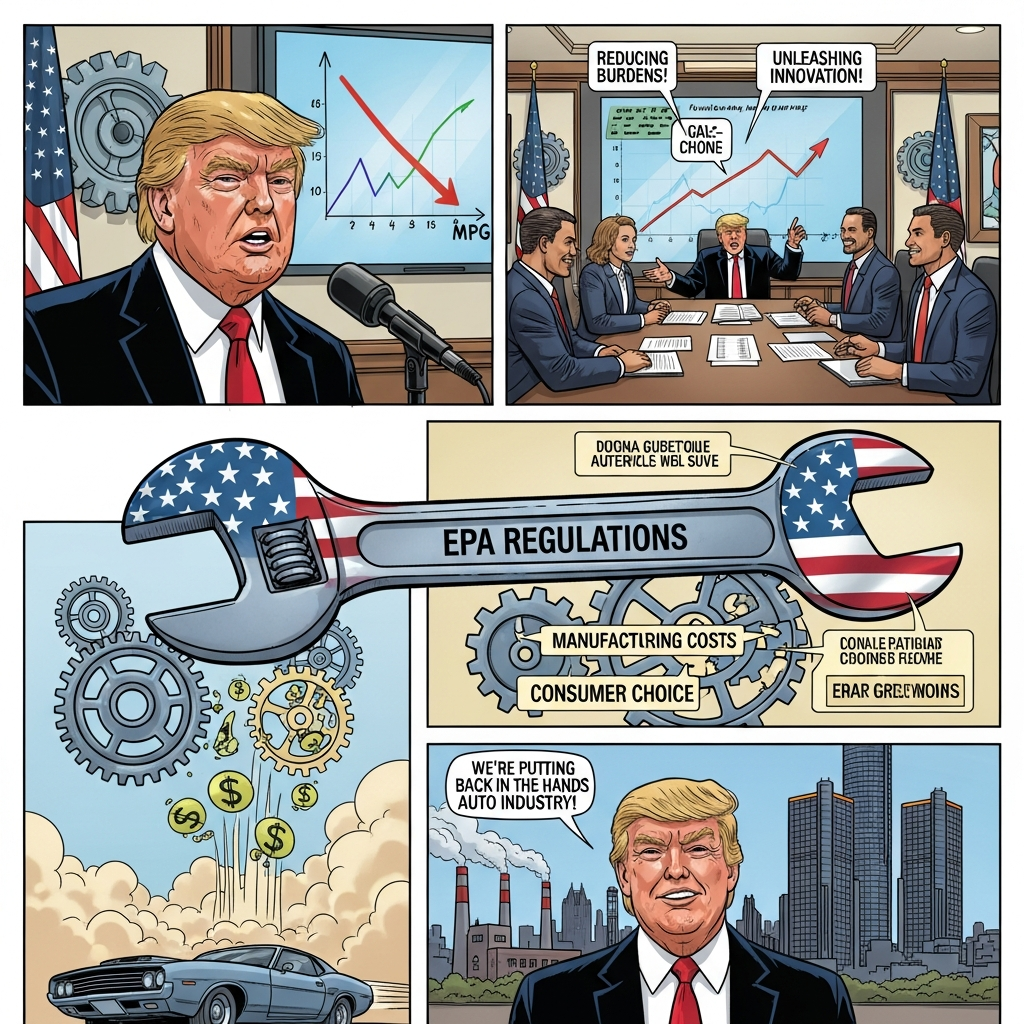
In 2018, the Trump administration announced its intention to revise these stringent fuel economy standards. The proposal, officially named the Safer Affordable Fuel-Efficient (SAFE) Vehicles Rule, targeted a halt to the annual increase in efficiency requirements. Instead of the Obama-era 5% annual increase, the new plan proposed freezing standards at roughly 37 mpg for model year 2020 through 2026. This represented a substantial departure from the previous administration’s climate goals. The administration argued the rollback would benefit consumers and the auto industry.
Key Aspects of the SAFE Vehicles Rule
The SAFE Vehicles Rule had several core components. First, it lowered the overall fuel efficiency targets. It proposed a freeze at 2020 levels for several years. Second, it challenged California’s authority to set its own, stricter vehicle emissions standards. For decades, California had a special waiver under the Clean Air Act. This allowed it to enforce tougher pollution limits. Other states often adopted California’s rules. The Trump administration sought to revoke this waiver, creating a unified national standard. This aspect of the proposal sparked significant legal battles. It pitted the federal government against California and more than a dozen other states.
Arguments Supporting the Rollback
Proponents of the rollback cited various economic and practical reasons. They argued that stringent standards made cars more expensive. This burden fell on consumers. Lowering standards, they claimed, would reduce vehicle prices. It would allow more Americans to afford new cars. This would stimulate the auto market. Furthermore, they suggested that consumers preferred larger vehicles like SUVs and trucks. These vehicles generally have lower fuel economy. The existing standards, they argued, forced automakers to produce smaller, less desired cars. This created a mismatch with market demand.
Economic Relief for Automakers
Automakers themselves expressed concerns about the feasibility and cost of meeting the Obama-era targets. They argued that the technology required for such efficiency improvements was expensive. These costs were passed on to buyers. The Trump administration presented the rollback as a lifeline. It would ease regulatory burdens. This, in turn, could prevent factory closures and job losses. The policy aimed to boost domestic manufacturing. It would allow companies greater flexibility in their product offerings. Energy independence was another key talking point. Less stringent standards would not overly restrict oil consumption.
Criticisms and Environmental Concerns
Opponents of the rollback voiced strong environmental and public health concerns. They argued that easing fuel efficiency standards would increase greenhouse gas emissions. This would exacerbate climate change. The transportation sector is a major contributor to these emissions. A rollback would counteract efforts to combat global warming. Higher emissions also lead to poorer air quality. This impacts public health, particularly in urban areas. Respiratory illnesses could worsen.
Broader Societal and Global Impacts
Environmental groups, public health advocates, and many states criticized the move. They emphasized the long-term costs of increased pollution. These costs include healthcare expenses and climate-related damages. They also pointed out a potential negative impact on America’s technological leadership. Stricter standards often drive innovation in cleaner technologies. Relaxing them could leave U.S. automakers behind global competitors. Many other nations continued to pursue higher efficiency goals. The legal challenge to California’s waiver was also a significant point of contention. This move was seen as undermining states’ rights to protect their environments.
The Policy’s Aftermath and Reversals
The SAFE Vehicles Rule faced immediate legal challenges from various states and environmental groups. The regulatory landscape remained uncertain for years. Automakers found themselves caught in the middle. They faced differing standards depending on the state. This created logistical complexities for manufacturing and sales. The Biden administration, upon taking office, quickly signaled its intent to reverse the rollback. In 2021, the EPA and NHTSA began the process of reinstating and strengthening federal fuel economy and emissions standards. This aimed to align the U.S. with ambitious global climate targets.
Future Outlook for Vehicle Efficiency
The ongoing push for cleaner transportation continues. The focus has shifted significantly toward electric vehicles (EVs). While traditional internal combustion engine (ICE) fuel economy remains important, the long-term trajectory points to electrification. Future regulations will likely encompass both aspects. They will aim for a substantial reduction in tailpipe emissions overall. The debate over the Trump administration’s rollback highlights the delicate balance. It balances economic considerations, consumer demand, and environmental protection in shaping automotive policy.
Frequently Asked Questions
What specific changes did the Trump administration propose for fuel economy standards?
The Trump administration, through its Safer Affordable Fuel-Efficient (SAFE) Vehicles Rule, proposed freezing federal fuel economy standards at roughly 37 miles per gallon (mpg) for model years 2020 through 2026. This was a significant reduction from the Obama-era target of 54.5 mpg by 2025. Additionally, the proposal sought to revoke California’s long-standing waiver under the Clean Air Act. This waiver allowed California to set stricter emissions standards than the federal government, a right adopted by many other states.
Which federal agencies regulate vehicle fuel economy and emissions in the U.S.?
Two primary federal agencies are responsible for regulating vehicle fuel economy and emissions in the United States. The National Highway Traffic Safety Administration (NHTSA) sets the Corporate Average Fuel Economy (CAFE) standards, which mandate the average fuel efficiency of new vehicles sold by manufacturers. The Environmental Protection Agency (EPA) establishes and enforces vehicle emissions standards, primarily concerning greenhouse gases and other pollutants. These two agencies typically collaborate to develop comprehensive regulations.
How do federal fuel economy standards influence new car pricing and availability for consumers?
Federal fuel economy standards significantly influence new car pricing and availability. Stricter standards often necessitate that automakers invest more in research and development for advanced fuel-saving technologies, such as hybrid systems, lighter materials, and aerodynamic designs. These additional costs can sometimes be passed on to consumers through higher vehicle prices. Conversely, relaxed standards might initially lower production costs for manufacturers, potentially leading to slightly cheaper vehicles. However, they could also reduce incentives for innovation, affecting the long-term availability of highly efficient or alternative-fuel vehicles.
Conclusion
The Trump administration’s proposed rollback of fuel economy standards represented a pivotal moment in U.S. environmental and automotive policy. It ignited a heated national debate. The core issue revolved around balancing economic interests with environmental responsibilities. While proponents emphasized affordability and consumer choice, critics highlighted the severe environmental and public health risks. This regulatory battle underscored the complex interplay between government policy, industry demands, and societal values. Though the rollback was largely reversed, its legacy continues to inform discussions. It influences the future of vehicle efficiency and climate action in the United States. The path forward for American automakers will certainly involve continued innovation and adaptation.