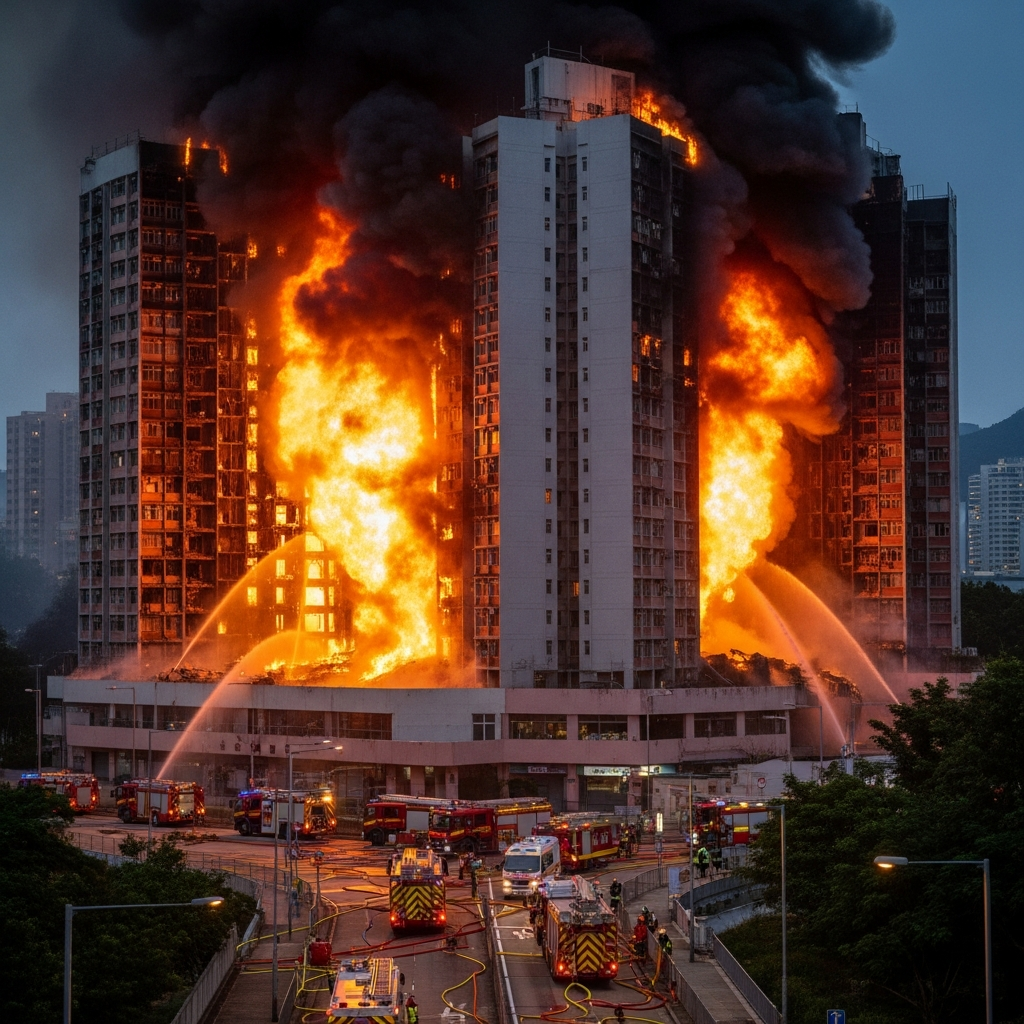
A devastating high-rise inferno recently ripped through a residential complex in Hong Kong, claiming the lives of at least 94 people. This catastrophic event, which unfolded in the Tai Po district’s Wang Fuk Court, now stands as one of the deadliest blazes in the territory’s modern history. The tragic incident, occurring on November 27, 2025, has sent shockwaves through the densely populated city and ignited urgent calls for a comprehensive review of construction and fire safety protocols.
The fire began on a Wednesday afternoon, quickly escalating into a raging conflagration that engulfed multiple towers. Emergency services battled the massive blaze for over 24 hours, facing immense challenges from falling debris, thick smoke, and blocked access. While firefighters worked relentlessly to control the flames and conduct perilous search-and-rescue operations, the heartbreaking death toll continued to climb. Over 70 people were injured, including 11 brave firefighters, underscoring the extreme dangers faced by first responders.
The Rapid Escalation: What Fueled the Inferno?
Investigations are actively underway to pinpoint the exact cause of the Hong Kong high-rise fire. Authorities believe the blaze originated in the bamboo scaffolding and construction netting covering the exterior of one of the 32-story towers. The fire then spread with alarming speed across seven of the Wang Fuk Court complex’s eight buildings. This unusually rapid propagation has become a central focus of the ongoing inquiry.
Experts and officials have highlighted several critical factors that may have contributed to the inferno’s swift and destructive path. Deputy Director of Hong Kong Fire Services, Derek Armstrong Chan, indicated that the fast spread was “likely related to these materials.” The city’s Security Secretary, Chris Tang, further pointed to two “unusual” circumstances:
Flammable Exterior Materials: The protective nets, waterproof canvas, and plastic sheeting used on the external walls facilitated a much greater and faster fire spread than standard, fire-retardant materials.
Sealed Windows: Glass windows were reportedly sealed with highly flammable styrofoam boards, creating additional fuel for the flames.
Windy conditions also likely played a significant role, fanning the blaze and helping it leap from structure to structure. Fire safety engineer Alex Webb described the incident as “quite shocking.” He noted that regulations typically prevent fires from spreading beyond their building of origin. The unique combination of construction materials and environmental factors appears to have circumvented these standard safety measures.
A Complex Under Renovation: Wang Fuk Court
Wang Fuk Court, a sprawling residential complex built in 1983, comprises nearly 2,000 residential units. It houses approximately 4,800 residents. Many of its inhabitants are older individuals, who may have faced greater difficulties evacuating quickly amidst the chaos. The complex was undergoing a major renovation project at the time of the fire, which is now a critical aspect of the investigation.
This major renovation project meant that many buildings were enveloped in the very materials that are now suspected of accelerating the fire. The discovery of highly flammable plastic foam panels attached to windows near elevator lobbies, even in an unaffected tower, further deepened concerns about the construction practices employed. These panels, believed to have been installed by the construction company, had an unclear purpose but posed a significant fire risk. This incident underscores the importance of stringent oversight in major building upgrades, especially in high-density urban environments.
The Gripping Aftermath: Rescues and Casualties
The human toll of the Wang Fuk Court fire is profound. Alongside the confirmed fatalities, dozens more were injured. Initially, contact was lost with hundreds of residents, highlighting the desperate scramble to account for everyone. Over 900 residents were evacuated to temporary shelters as their homes became uninhabitable.
Amidst the devastation, stories of heroism and survival emerged. Firefighter Ho Wai-ho, a 37-year-old veteran, tragically lost his life battling the blaze. Two Indonesian nationals working as foreign domestic helpers were also among the deceased. Yet, rescuers performed remarkable feats, including saving an older man from a 31st-floor rooftop 20 hours after the fire started. Firefighters also evacuated numerous pets, offering a glimmer of hope amidst the despair. This shared experience prompted widespread local and international empathy.
Unraveling the Causes: Arrests and Investigations
Authorities have swiftly launched a multifaceted investigation into the catastrophe. Police arrested three individuals on suspicion of manslaughter: two directors and an engineering consultant from Prestige Construction and Engineering Co. This company was the registered contractor for the ongoing renovations at Wang Fuk Court. Senior Superintendent of Police Eileen Chung stated there was reason to believe those in charge were “grossly negligent.” Police searched the company’s offices, seizing documents as evidence.
In a further development, Hong Kong’s anticorruption agency initiated a separate investigation. This probe will examine potential corruption related to the renovation project itself. These parallel inquiries underscore the gravity of the incident and the determination to uncover any systemic failures or illicit activities. The focus is squarely on whether safety standards were compromised or ignored.
Official Response and Policy Changes
Hong Kong’s top leader, John Lee, responded decisively to the tragedy. He announced a HK$300 million (US$38.6 million) fund to assist displaced residents. Each affected household will receive an emergency cash allowance of HK$10,000 (US$1,285). Over 500 people sought refuge in nine temporary shelters, receiving essential aid from local communities and charitable organizations.
The fire has also triggered a critical reevaluation of Hong Kong’s long-standing construction practices. Chief Secretary for Administration Eric Chan confirmed that while bamboo scaffolding has been a traditional fixture, its flame retardancy is inferior to metal alternatives. The government is now discussing a gradual replacement of bamboo scaffolding with metal, particularly in suitable working environments, to enhance safety. This marks a significant potential policy shift, as bamboo scaffolding has been linked to previous fatalities.
Furthermore, officials announced immediate inspections of all housing estates currently undergoing major renovation work. This proactive measure aims to ensure that scaffolding and construction materials across the city adhere strictly to safety standards. Secretary for Security Chris Tang confirmed that exterior wall protective materials would face rigorous scrutiny to ensure they meet fire-retardant standards. This incident will likely redefine Hong Kong’s approach to urban development and safety protocols, influencing future building codes.
Global Condolences and Community Support
The tragedy at Wang Fuk Court garnered significant international attention. Condolences poured in from around the world, including from U.S. consul general in Hong Kong, Pope Leo XIV, and Chinese President Xi Jinping, who urged “all-out efforts” to minimize casualties. This global outpouring of sympathy highlights the universal impact of such large-scale urban disasters.
Locally, the community rallied with remarkable speed and solidarity. Residents established makeshift relief points, collecting donations of essentials like bottled water, bread, and face masks. Volunteers at the nearby Tung Cheong Street Sports Center registered over 200 residents for rehousing, showcasing Hong Kong’s chronic affordable housing issue. Corporations such as Tencent, Xiaomi, Alibaba Group, and BYD Global, alongside Chinese billionaire Jack Ma, pledged significant financial donations, collectively contributing millions to the victims. The incident also caused widespread disruption, including bus route diversions, road closures, school suspensions, and even a temporary halt to campaigning for Hong Kong’s upcoming legislative election, reflecting the profound impact on daily life.
Frequently Asked Questions
What were the primary factors contributing to the rapid spread of the Hong Kong high-rise fire?
Investigators believe the fire rapidly spread due to highly flammable materials used in the ongoing renovations at Wang Fuk Court. Specifically, bamboo scaffolding, construction netting, waterproof canvas, and plastic sheeting on the building exteriors are suspected. Additionally, reports indicate that glass windows were sealed with flammable styrofoam boards. These materials, combined with windy conditions, allowed the blaze to quickly engulf seven of the complex’s eight towers, defying standard fire containment expectations.
What immediate actions did Hong Kong authorities take in response to the Wang Fuk Court tragedy?
Hong Kong authorities swiftly responded by launching a criminal investigation, leading to the arrest of three individuals from the renovation contractor on suspicion of manslaughter. The city’s anti-corruption agency also initiated a probe into potential corruption linked to the project. Top leader John Lee announced a HK$300 million relief fund for affected residents, providing emergency cash allowances. Officials also mandated immediate inspections of all ongoing housing estate renovations and began discussions to phase out traditional bamboo scaffolding in favor of metal alternatives for enhanced safety.
How might the Wang Fuk Court fire impact future construction and fire safety regulations in Hong Kong?
The Wang Fuk Court fire is expected to usher in significant changes to Hong Kong’s construction and fire safety regulations. The government is actively considering a complete transition from bamboo scaffolding to metal scaffolding for public projects, recognizing the former’s inferior flame retardancy. There will likely be more stringent enforcement and review of exterior building materials to ensure they meet fire-retardant standards. This tragedy may also prompt a comprehensive overhaul of building codes and oversight, with a focus on preventing similar rapid fire spread in high-rise, high-density urban environments.
Conclusion: A City Reflects and Rebuilds
The Wang Fuk Court fire is a stark reminder of the vulnerabilities inherent in dense urban living and complex renovation projects. The tragic loss of 94 lives has sparked a necessary, painful reckoning with existing safety standards and oversight. As investigations continue and policy changes are debated, Hong Kong faces the difficult task of supporting its affected residents while also implementing reforms to prevent such a devastating event from ever recurring. This incident serves as a critical case study for global cities facing similar challenges in managing urban development and ensuring the safety of their communities. The push for safer construction practices and more robust fire safety regulations will undoubtedly shape Hong Kong’s urban landscape for years to come.