Ireland’s government has announced over €500 million in motor fuel tax cuts, a dramatic step to calm widespread, disruptive protests that have snarled roads and threatened the nation’s energy supply. This significant financial package, unveiled by Prime Minister Micheál Martin, directly responds to weeks of escalating unrest. Truck and tractor drivers, frustrated by soaring fuel costs, have brought key infrastructure to a standstill, leaving over a third of the country’s petrol stations running dry. The crisis highlights the intricate balance between economic stability, public dissent, and global geopolitical pressures on energy markets.
The Fuel Crisis Grips Ireland: Protests Escalate
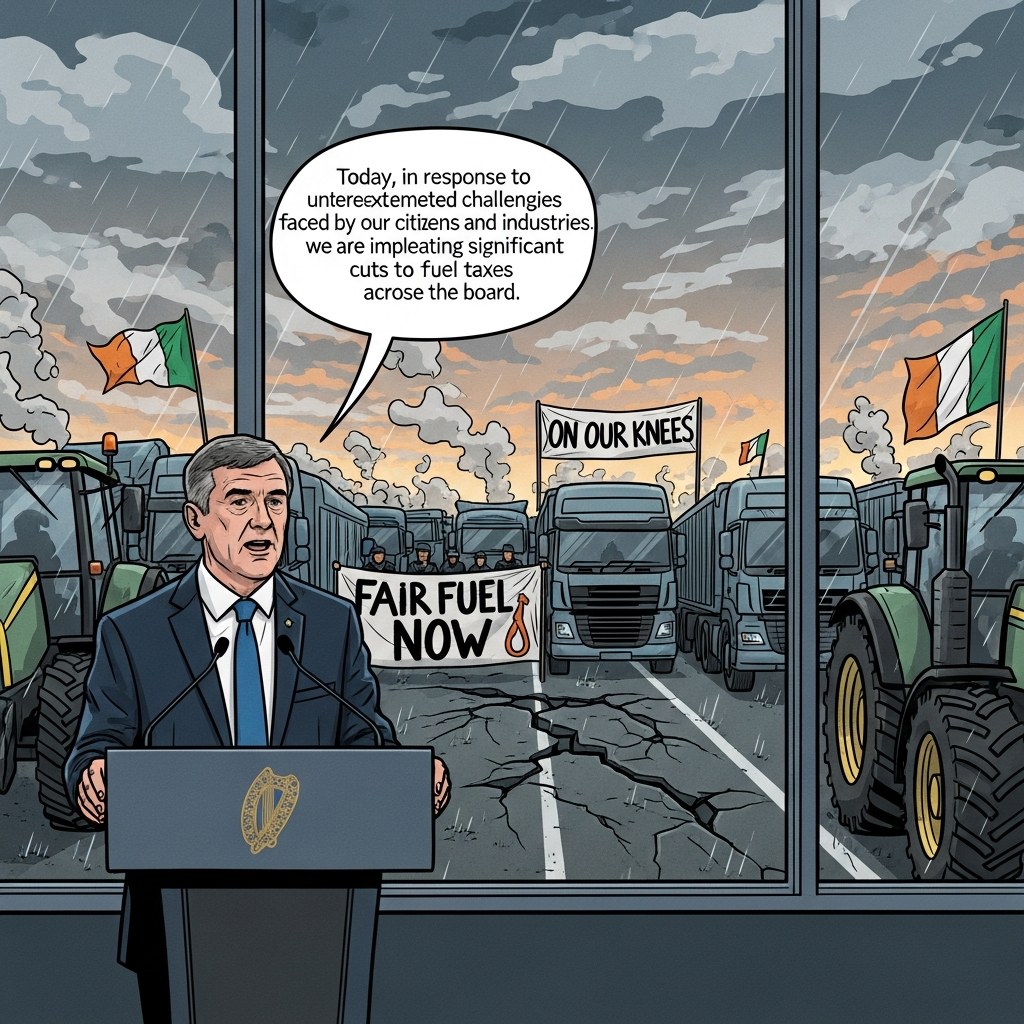
For over a week, Ireland has witnessed unprecedented Irish fuel protests. Hauliers, farmers, and other operators have blocked major roadways and strategic fuel depots. These “wildcat” demonstrations, largely orchestrated through social media, began on April 7, 2026. They rapidly escalated from slow-moving convoys in Dublin to full-scale blockades. Key targets included the ports of Galway and Foynes, Dublin’s central O’Connell Street, and critically, the country’s only oil refinery at Whitegate in County Cork.
The protests plunged Ireland into an emergency. As of April 11, nearly 35% of the republic’s 1,500 service stations reported fuel shortages. Daily life faced severe disruption. Major highways, including primary routes around Dublin and six other crucial roads, became impassable. Bus and Luas tram services also struggled. The sheer scale of the disruption prompted police to put all officers on notice. The military was on standby to assist in clearing vehicles. Protestors demanded immediate government action, specifically calling for caps on motor fuel prices or significant cuts to excise and carbon taxes.
Government Under Pressure: A €505 Million Response
On Sunday, April 12, 2026, Prime Minister Micheál Martin announced a substantial €505 million fuel tax cuts package. This came hours after authorities successfully cleared key blockades with police and army support. Martin emphasized that these measures were not a reward for the “unauthorised” protesters. Instead, he stated, they resulted from negotiations with official trucking and farming organizations. He also condemned the blockades as “unconscionable” and “illogical,” stressing the peril of losing refining capacity during a global energy crisis.
The premier acknowledged that the package might not immediately end all unrest. Scattered road blockades, especially on rural motorways, continued. The government’s National Emergency Coordination Group warned of heightened disruption to the economy and public services, including healthcare, even if protests ceased. The substantial aid package is subject to emergency legislation, which requires passage on Tuesday. Coincidentally, the main opposition Sinn Féin party plans a no-confidence motion in the government on the same day. This motion directly challenges the government’s handling of fuel taxes and the recent street standoffs.
Decoding Ireland’s Fuel Tax Relief Package
The government’s comprehensive response introduces several immediate and extended measures to alleviate the burden of high diesel prices and petrol costs. Effective midnight on Tuesday, additional excise duty cuts of 10 cents per liter will apply to both gasoline and diesel. These new reductions supplement earlier cuts implemented in March—15 cents on gasoline and 20 cents on diesel. These initial cuts, previously set to expire in May, will now extend until the end of July. The government hopes that global oil prices will stabilize by then.
Crucially, the planned May 1 hike in carbon taxes, levied alongside excise charges, has been delayed until November. Foreign Minister Simon Harris confirmed Ireland would seek European Commission approval for a temporary, higher discount on diesel excise tax. This targeted approach aims to support sectors most affected by rising fuel costs, particularly farmers and hauliers. The package also includes a new fuel subsidy support scheme specifically for the agriculture and fishing sectors. Furthermore, the government will enhance existing transport support schemes, extending benefits to all haulage operators, local link transport, and school transport services nationwide.
Global Factors Fueling Local Discontent
The surge in motor fuel prices is not unique to Ireland. It reflects a turbulent global energy market. Prime Minister Martin attributed the spike directly to the conflict in the Middle East, specifically citing the U.S.-Israeli war on Iran and Tehran’s closure of the Strait of Hormuz. This critical shipping lane for oil has exacerbated an already tight global supply. Ireland, like many other nations, faces the ripple effects of these international tensions.
Previous government attempts to mitigate rising prices, including a €235 million support package in March, proved insufficient. Those measures included temporary excise tax reductions, a suspension of the NORA levy on home-heating oil, and an increased diesel fuel rebate for truckers. While welcomed, many stakeholders, including former Irish Road Haulage Association President Eugene Drennan, deemed them “minimalist.” The continued international price hikes quickly overshadowed these efforts, leading to renewed public frustration and the current wave of widespread protests.
Economic Ripple Effects and Political Stakes
The protracted fuel crisis and the government’s response have significant economic disruption implications. Beyond the direct cost to consumers and businesses, the supply chain faced severe strain. The blockades at ports and the oil refinery underscored the vulnerability of Ireland’s infrastructure. Even with protests clearing, the National Emergency Coordination Group warned of ongoing disruption to the economy and vital public services, including healthcare, in the coming weeks.
Politically, the crisis intensified pressure on Micheál Martin’s government. Sinn Féin’s no-confidence motion highlights growing discontent with the government’s handling of the situation. The party argues the government has “lost the confidence of the public.” The situation created a dilemma for the government: concede to “wildcat” protesters, or risk further economic paralysis and public anger. Martin’s strategy of engaging with official bodies while condemning unofficial actions attempts to navigate this complex political landscape. The outcome of the emergency legislation and the no-confidence vote will shape the government’s immediate future.
The Road Ahead: Uncertainty and Future Energy Policy
Despite the substantial Ireland fuel tax cuts, the government remains cautious. Martin conceded no guarantees exist that the protests will cease. The long-term efficacy of the measures hinges on global oil price stability. The government hopes that by July, the international situation will have eased. However, the unpredictability of geopolitical events means this remains an uncertain prospect.
This crisis also brings into sharp focus Ireland’s energy independence and carbon reduction targets. While the carbon tax hike is deferred, the broader commitment to climate action remains. The reliance on fossil fuels, combined with global supply vulnerabilities, prompts questions about the pace and feasibility of Ireland’s transition to renewable energy sources. The events of April 2026 will undoubtedly shape future policy discussions around energy security, taxation, and managing public grievances in a volatile world.
Frequently Asked Questions
What caused the widespread fuel protests across Ireland in April 2026?
The protests were primarily caused by soaring motor fuel prices, particularly for diesel and petrol. Truck and tractor drivers, along with other operators, expressed deep frustration over these escalating costs, which they attributed to inadequate government action. Underlying global factors, such as the conflict in the Middle East and the closure of the Strait of Hormuz, contributed significantly to the international rise in oil prices, impacting Ireland directly. Protesters organized via social media, demanding immediate government intervention through tax cuts or price caps.
What specific measures did the Irish government implement to address the fuel crisis?
On April 12, 2026, the Irish government announced a €505 million fuel tax cuts package. Key measures included an additional 10 cents per liter cut on gasoline and diesel, effective April 14, and the extension of previous cuts (15 cents on gasoline, 20 cents on diesel) until the end of July. The government also postponed a scheduled carbon tax hike from May to November. Additionally, the package introduced new fuel subsidy schemes for the agriculture and fishing sectors and enhanced transport support for hauliers and public transport operators.
How did the fuel protests impact daily life and the economy in Ireland?
The Irish fuel protests caused severe disruption across the country. Over a third of Ireland’s fuel stations ran dry, and major roadways, including those around Dublin, were blocked. This led to significant traffic delays and affected public transport services like buses and the Luas tram. Critically, blockades at strategic locations like the Whitegate oil refinery and key ports (Galway, Foynes) threatened the nation’s energy supply chain. The government’s National Emergency Coordination Group warned of heightened disruption to the wider economy and public services, including healthcare, if the protests continued.
Conclusion
The swift implementation of over half a billion euros in Ireland fuel tax cuts represents a critical government intervention to address a severe national crisis. Triggered by unprecedented protests over rising motor fuel prices, these measures aim to stabilize the economy and restore public order. While offering immediate relief, the underlying challenges of global energy volatility and the delicate balance between climate targets and cost-of-living pressures remain. Ireland’s experience in April 2026 underscores the profound impact of international events on domestic policy and the powerful voice of public dissent in shaping national responses. The coming months will reveal the true efficacy of these cuts and the long-term implications for Ireland’s economic and political landscape.