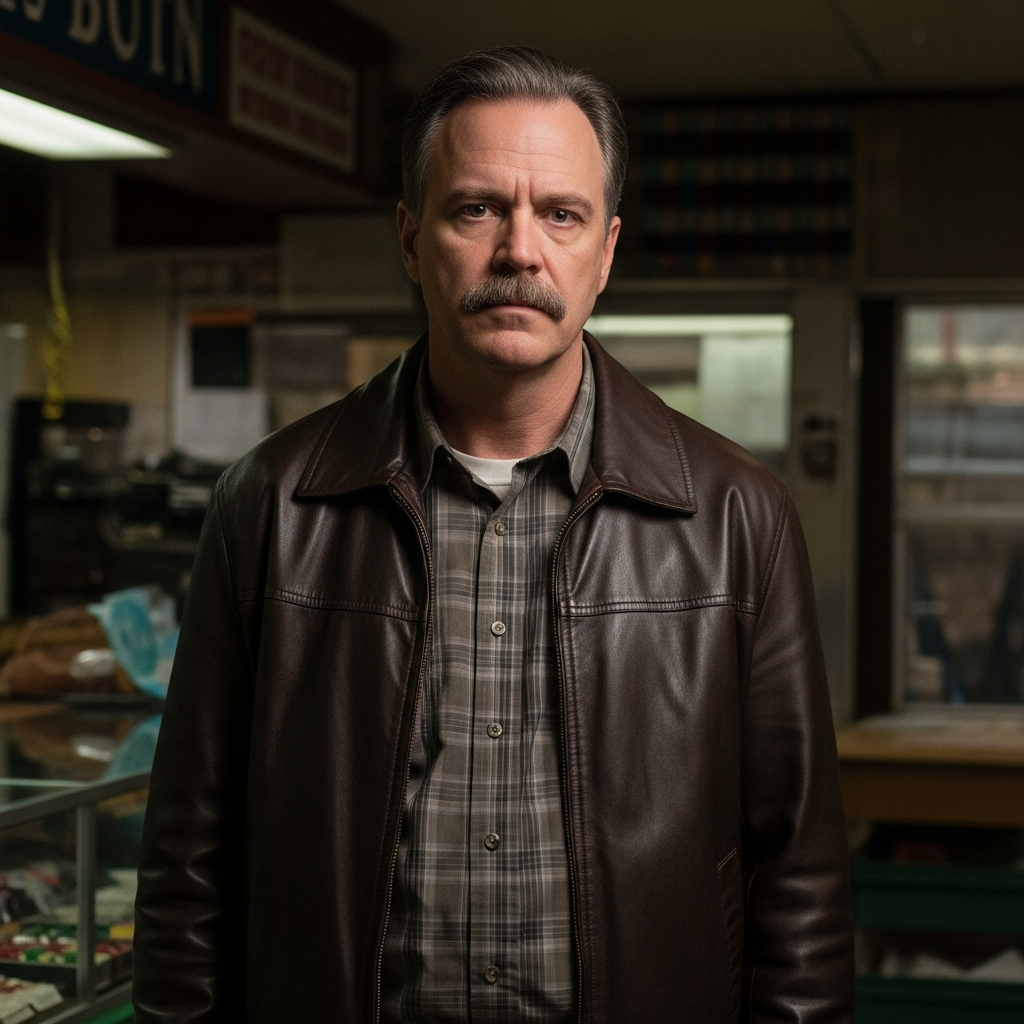
The HBO limited series “DTF St. Louis” captivated audiences with its deceptive premise, initially posing as a murder mystery before unfolding into a profound exploration of midlife loneliness and human connection. This article delves deep into the series finale, “No One’s Normal. It Just Looks That Way from Across the Street,” unraveling the shocking truth behind Floyd Smernitch’s death and examining creator Steven Conrad’s poignant vision. Prepare for a comprehensive breakdown of the complex relationships, unexpected humor, and the heartbreaking resolution that left viewers pondering the quiet desperation of adult life.
The Shocking Truth: Floyd’s Tragic End Revealed
For seven compelling episodes, “DTF St. Louis” led viewers down a winding path of suspicion, suggesting various culprits for the poisoning of ASL interpreter Floyd Smernitch (David Harbour). Detectives Donoghue Homer (Richard Jenkins) and Jodie Plumb (Joy Sunday) investigated Floyd’s best friend, weatherman Clark Forrest (Jason Bateman), who was having an affair with Floyd’s wife, Carol (Linda Cardellini). Carol herself was a suspect due to a significant life insurance policy, as was Floyd’s socially awkward stepson, Richard (Arlan Ruf).
However, the finale delivered an unconventional and devastating twist: Floyd was not murdered. Instead, he intentionally dosed his own Bloody Mary at the Kevin Kline Community Pool Center. In his final moments, Floyd used American Sign Language (ASL) to sign “I love you” to a horrified Richard, who arrived at the poolhouse unknowingly just as his stepfather made this fateful choice. This revelation recast the entire series, transforming it from a whodunit into a poignant study of self-destruction born from profound personal pain.
Creator Steven Conrad’s Vision: Loneliness and Unspoken Despair
Series creator Steven Conrad, the mastermind behind “DTF St. Louis,” envisioned the show as something far deeper than a conventional crime drama. He explained that the true essence of the series lay in the loneliness and disappointment of reaching midlife, grappling with “unsated appetites for something different, something better,” and the subsequent realization that these pursuits often lead to desperation. Conrad found inspiration in the prevalence of “cheat on your spouse” apps, seeing a Hitchcockian potential in the naive belief that intimacy could be shared without resonating connections or severe consequences.
For Conrad, Floyd’s death was a “sad but foreseeable” outcome, stemming from a lifetime of unspoken hurt and “impulsive decisions made to try to soothe some pain.” Floyd’s deepest fear, expressed early in the series, was for Richard to suffer “profound loneliness” and a life of “grown-up Cs.” The show’s title itself, “DTF St. Louis,” and its tagline, “All the excitement, none of the consequences,” were a “handshake with fate,” foreshadowing the inevitability of desperate outcomes. Conrad emphasized that while Floyd “could’ve survived letting Carol down,” he “couldn’t deal with letting Richard down,” making his stepson’s accidental discovery the ultimate catalyst for his tragic act.
Navigating Complex Relationships: Love, Betrayal, and Fraternal Bonds
The emotional landscape of “DTF St. Louis” was a intricate web of relationships, each contributing to the series’ tragic undercurrent.
The Love Triangle and Its Unconventional Depths
Clark and Carol’s affair was just one layer of infidelity. Floyd himself used the titular “DTF” app (a means for married people to meet new partners), and even met paramours like “Modern Love.” Yet, Floyd was aware of Clark and Carol’s connection and, recognizing their chronic lack of intimacy, he actually encouraged it. Sometimes, he even watched. This dynamic underscored Conrad’s focus on universal loneliness rather than simple romantic jealousy.
The intense bond between Clark and Floyd, often teetering on the edge of physical intimacy, was deliberately kept fraternal. Conrad intended this to highlight how isolation can confuse longing with deeper connection. As Clark confessed his love for Floyd at the pool, the scene resonated with a profound confusion of feelings. Clark, a lonely individual, couldn’t find physical attraction to Floyd, despite his deep affection. This dynamic, reminiscent of classic comedic duos like Laurel and Hardy, demonstrated that Clark “needs a pal more than he needs a lover.”
Floyd and Richard: A Tender, Challenged Connection
The relationship between Floyd and his stepson, Richard, was depicted with unusual tenderness. Despite Floyd’s financial struggles and the debt he brought to Carol’s life, his “sweetness” provided a crucial emotional anchor for Richard, particularly given Richard’s history with an abusive biological father. Floyd’s capacity to understand Richard’s violent outburst (which caused Floyd’s unique injury) was both “a blessing and a terrible curse,” ultimately influencing Floyd’s final assessment that “nothing was worth it tomorrow for him.”
Carol’s Choices: Truth Over Fortune
In the aftermath, Carol chose truth over financial gain. She helped detectives conclude that Floyd’s death was suicide, rendering his seven-figure life insurance policy worthless. Her primary concern was ensuring Richard understood Floyd’s last communication was “I love you,” imprinting this final act of unconditional love on his memory. Carol, driven by an instinct to protect and survive, will continue to “scrap” to safeguard Richard, grappling with the memory of Floyd as a sweet but financially burdensome “albatross.”
The Quirky Tone and Distinctive Language
“DTF St. Louis” masterfully blended its underlying depression with a unique, off-kilter humor and a distinctive, almost childlike language. Made-up slang like “voo” (for rendezvous) and the characters’ simplistic way of speaking underscored a central theme: the adult appetite for “consequenceless activity.” Conrad explained that this “fort” mentality allowed characters to engage in “naughty” behavior without confronting the “bad or cruel” realities of their actions. This tonal “bandwidth” was further expanded by memorable moments like the “Thunder Boys” rap, performed by Harbour and Bateman, which pushed the narrative into “purely make believe.”
The show’s portrayal of middle-aged sexuality and “kinks” was neither erotic nor mocking. Instead, it was presented as a clumsy, yet “brave,” attempt by characters to explore desires and find connection amidst changing bodies and fleeting attractions. This nuanced approach highlighted the often-complex, temporary solutions adults seek to fill deep voids.
The Emotional Detectives and Lingering Loneliness
Detectives Donoghue Homer and Jodie Plumb functioned less as conventional cops and more as “emotional detectives.” Their generational gap proved crucial; the younger, ethically non-monogamous Jodie illuminated for the older, traditionally monogamous Homer the complex “floor plan” of modern intimacy that drove the characters’ actions. This understanding of emotional conditions ultimately helped them make sense of the clues, leading to the suicide conclusion.
The finale’s haunting final shot of Clark, left “even more lonely and isolated,” symbolized the aggregate of adult decisions and the often-disastrous attempts to find “pressure valves” in a life devoid of simple “recess.” His return to an empty house, having lost his family, job, and best friend, underscored the show’s profound message: even those who seemingly “had everything” can remain utterly lost in themselves. Clark faces “a lot of grieving,” with a difficult future ahead.
Frequently Asked Questions
What was the true cause of Floyd Smernitch’s death in ‘DTF St. Louis,’ and why did creator Steven Conrad choose this ending?
Floyd Smernitch’s death was not a murder, but a suicide. He intentionally consumed a Bloody Mary laced with Amphezyne in the Kevin Kline Community Pool Center. Creator Steven Conrad chose this ending to pivot from a conventional murder mystery to a deeper exploration of profound midlife loneliness, the inability to articulate deep personal pain, and the tragic consequences of seeking “consequenceless activity.” He felt this resolution was a “sad but foreseeable” outcome, reflecting Floyd’s despair after realizing he couldn’t deal with the disappointment of his stepson, Richard.
How did the relationships between Floyd, Clark, Carol, and Richard contribute to the tragic finale of ‘DTF St. Louis’?
Each relationship was pivotal. Floyd’s desire for connection and his “sweetness” drew him to Clark, an affair with his wife Carol, and a tender bond with Richard. Clark’s own loneliness led him to encourage a complex intimacy with Floyd. Carol’s past trauma and present financial burdens fueled her actions. Richard’s accidental discovery of Floyd and Clark in a compromising situation, combined with his own history of violence (having caused Floyd’s injury), became the final catalyst. Floyd, already struggling with immense debt and feeling he had “let people down,” was unable to bear the thought of letting Richard down, leading to his fatal decision.
What deeper themes of midlife loneliness and intimacy did ‘DTF St. Louis’ explore beyond its initial murder mystery premise?
“DTF St. Louis” transcended its murder mystery façade to delve into themes of profound midlife loneliness, the search for connection, and the complexities of modern intimacy. Creator Steven Conrad aimed to depict the “tensions” of middle age – unsated appetites, fleeting attractions, and clumsy attempts to explore desires. The show explored how characters sought “consequenceless activity” through apps like “DTF,” but ultimately faced severe emotional repercussions. It highlighted the tenderness and challenges of step-parenting, and the universal struggle to articulate deep personal pain, often mistaking casual fun for genuine intimacy.
The Enduring Impact of “DTF St. Louis”
“DTF St. Louis” delivered a complete, albeit unconventional, set of answers. Its genius lay not in a dramatic crime resolution, but in its intimate exploration of human relationships, self-acceptance, and the nuanced complexities of life and death. The series remains a quietly remarkable study of tenderness and human connection, leaving a lasting impression on viewers who recognize the universal aches of midlife and the desperate lengths people will go to find a “pressure valve” in an increasingly isolating world. The show ultimately confirmed that, for some, all the sweetness in the world simply isn’t enough to save them.