A significant controversy has erupted surrounding the Centers for Disease Control and Prevention (CDC) and its acting director, Jay Bhattacharya. Allegations suggest a high-level attempt to block the publication of a crucial internal report. This report, according to anonymous CDC scientists, unequivocally concluded that COVID-19 vaccines deliver substantial benefits to public health. The revelations, first brought to light by the Washington Post, underscore broader concerns about scientific integrity and political interference within key governmental health agencies. This incident not only challenges public trust but also highlights the ongoing tension between scientific evidence and political agendas in shaping public health policy.
Allegations of Suppression: A Critical CDC Report Hidden
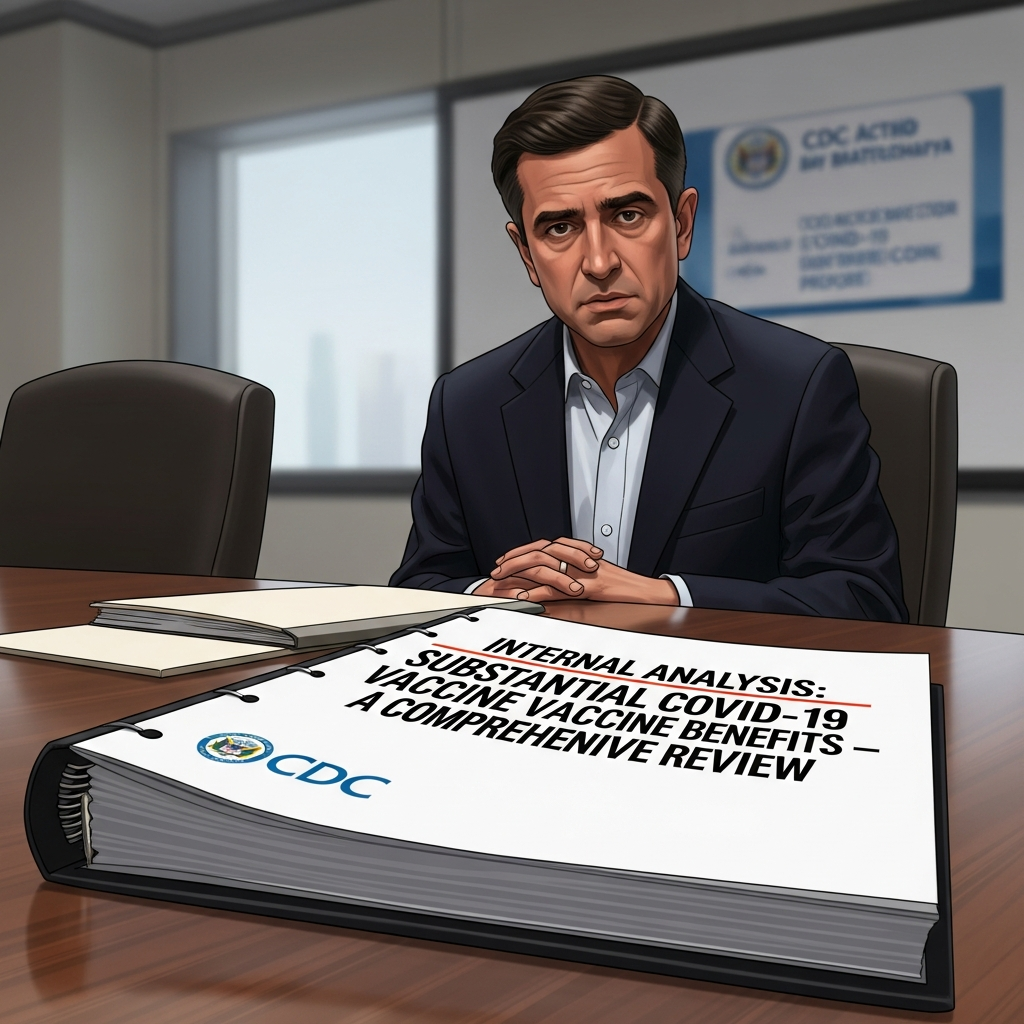
The heart of the controversy lies in a report prepared by CDC scientists. This internal study was intended for publication in the agency’s peer-reviewed journal, the Morbidity and Mortality Weekly Report (MMWR), on March 19. However, its release was reportedly halted by acting director Jay Bhattacharya. Sources, including two anonymous CDC scientists who spoke to the Washington Post, cited fears of retaliation as their reason for remaining unnamed. These scientists maintained that the blocked report contained compelling evidence of the COVID-19 vaccine’s effectiveness.
According to the detailed findings within the suppressed report, COVID-19 vaccines were found to drastically reduce the risk of hospitalization after an individual contracted the virus. Specifically, the study highlighted that healthy adults who received a vaccine reduced their risk of urgent care visits by 50 percent. Furthermore, their risk of a hospital stay decreased by an impressive 55 percent when compared to unvaccinated individuals. These statistics underscore a significant public health benefit that was reportedly withheld from the public.
Methodological Concerns or Political Maneuvering?
Dr. Bhattacharya’s stated reason for delaying the report centered on concerns about the study’s methodology. Andrew Nixon, a spokesperson for the Department of Health and Human Services (HHS), supported this stance, indicating that Dr. Bhattacharya aimed to ensure the “most appropriate methodology” was employed. However, this explanation raised immediate questions. The Washington Post pointed out a critical inconsistency: a week prior, the MMWR had published a similar report on the common flu vaccine using the exact same methodology. This precedent cast considerable doubt on the legitimacy of the methodological concerns cited for the COVID-19 vaccine study.
Critics argue that the timing and nature of the delay are “incredibly fishy.” Many see this incident as aligning with a broader pattern of actions by HHS Secretary RFK Jr. He is widely known as an “infamous vaccine skeptic” and has previously made highly controversial statements, including calling the COVID-19 shot the “deadliest vaccine ever made.” Such a narrative suggests that the suppression of positive vaccine data could be part of a larger, politically motivated strategy rather than a genuine scientific disagreement over methodology.
Broader Implications: Political Influence on Public Health
The alleged blocking of the COVID-19 vaccine report is not an isolated event but rather appears to fit into a larger pattern of “antivaxx moves” reportedly initiated by the HHS since Donald Trump appointed RFK Jr. to his secretarial role. This chain of events raises serious questions about the independence of scientific agencies and the potential for political appointees to influence public health messaging and policy for ideological reasons.
One significant action noted was the Food and Drug Administration (FDA), an agency under HHS, moving in 2025 to “greatly limit access to the vaccine.” Daniel Jernigan, a former CDC safety director, corroborated this view in his statements to the Washington Post. Jernigan suggested that blocking a report demonstrating vaccine effectiveness would be entirely consistent with a broader agenda aimed at reducing vaccine availability, particularly if steps had already been taken to limit access for vulnerable populations like children. This reinforces the perception that the actions were part of a coordinated effort.
Controversial Initiatives and Undermining Trust
Further evidence of a potential anti-vaccine agenda, as cited by critics, includes a highly controversial plan from late 2025. RFK Jr.’s HHS reportedly planned a “monstrous vaccine study” in Guinea-Bissau, West Africa. This proposed study would have intentionally withheld hepatitis B vaccines from 7,000 newborn children. Medical experts quoted in the article strongly contended that the true objective of this trial was for Trump’s political appointees to manufacture a “spurious association” between a well-established vaccine and vaguely defined neurological problems.
Dr. Paul Offit, director of the Vaccine Education Center at Children’s Hospital of Philadelphia, offered a strong critique of this approach. He stated that RFK Jr. possesses a “fixed, immutable belief that vaccines cause harm” and “will do everything he can to try and prove that.” This expert opinion underscores the deep-seated ideological motivations attributed to key figures within the HHS, suggesting that decisions are being driven by pre-existing beliefs rather than impartial scientific inquiry. Such actions, particularly the alleged suppression of beneficial data, can severely erode public trust in health institutions and undermine global immunization efforts.
The Call for Transparency and Scientific Integrity
The ongoing controversy surrounding the CDC’s internal report highlights a critical need for transparency and the unwavering protection of scientific integrity within public health institutions. When scientific findings, particularly those with significant public health implications, are allegedly suppressed or manipulated for political reasons, it creates an environment of distrust. This distrust can have severe consequences, impacting vaccination rates, public adherence to health guidelines, and the overall effectiveness of disease prevention strategies.
Maintaining the independence of scientific research from political pressures is paramount. Organizations like the CDC are entrusted with providing unbiased, evidence-based information to guide public health decisions. Any perceived or actual interference threatens this fundamental role. The episode serves as a powerful reminder for policymakers and the public alike to remain vigilant in safeguarding the scientific process, ensuring that critical health data is always made available to inform and protect communities. Open dialogue and accountability are essential to rebuilding and maintaining confidence in institutions that are vital for national and global well-being.
Frequently Asked Questions
What was the suppressed CDC report about and what did it find?
The internal CDC report, allegedly blocked from publication, detailed the significant public health benefits of COVID-19 vaccines. It found that healthy adults who received the vaccine reduced their risk of urgent care visits by 50 percent and their risk of a hospital stay by 55 percent after contracting the virus, compared to unvaccinated individuals. These findings underscored the vaccine’s critical role in minimizing severe outcomes from COVID-19.
Who were the key figures involved in the alleged report suppression and why is this controversial?
Acting CDC Director Jay Bhattacharya is accused of blocking the report, citing methodological concerns. This is controversial because a similar report on the flu vaccine, using the exact same methodology, was published by the MMWR a week earlier. Furthermore, HHS Secretary RFK Jr., a known vaccine skeptic, is implicated due to a perceived pattern of “antivaxx moves” within the HHS, including limiting vaccine access and planning a controversial vaccine study in Guinea-Bissau. This suggests political interference in scientific reporting.
What are the broader implications of political interference in scientific agencies like the CDC?
Political interference in scientific agencies can severely erode public trust in health institutions and data. When critical public health information, such as vaccine effectiveness, is allegedly suppressed or manipulated, it can lead to reduced vaccination rates, skepticism towards health guidelines, and undermine disease prevention efforts. It raises fundamental questions about scientific independence, accountability, and the integrity of public health decision-making, impacting national and global well-being.
Conclusion
The allegations surrounding the suppression of a CDC report on COVID-19 vaccine effectiveness spotlight a profound challenge to scientific integrity and public trust. The detailed findings within the report – indicating significant reductions in urgent care visits and hospitalizations – underscore the vital role vaccines play in public health. Yet, the reported actions by political appointees within the Trump administration’s HHS, particularly those attributed to Jay Bhattacharya and RFK Jr., suggest a deliberate attempt to sideline scientific evidence. This incident serves as a critical reminder of the need for unwavering transparency, robust protections for scientific independence, and continuous public vigilance to ensure that vital health information is never compromised by political agendas. Upholding these principles is essential for maintaining a healthy, informed society.